Legacy and Lessons

The End of a Reign and the Enduring Impact of Kashmir's Greatest King

Explore Lalitaditya's final years, his mysterious death during a northern campaign, and the complex legacy he left behind. Discover how Kashmir's golden age gradually faded, what lessons his life offers about power and duty, and why his achievements continue to resonate over twelve centuries later.

The Setting Sun

Every reign, however glorious, must end. Every empire, however vast, must face the test of succession. For Lalitaditya Muktapida, these questions arrived after nearly four decades of unparalleled achievement. He had defeated the Arabs four times. He had built an empire from Afghanistan to Bengal. He had constructed the Martand Temple and founded Parihasapura. By any measure, his reign was one of the most successful in Indian history.

Yet as he aged, shadows lengthened. The constant warfare that had brought glory also brought exhaustion. The empire that seemed so solid would prove fragile in less capable hands.

The Final Campaign and Mysterious Death

Kalhana's chronicle suggests Lalitaditya's military ambitions never diminished. Even in his sixties, he continued to lead campaigns personally. His final campaign was directed northward, possibly toward Central Asian territories or regions beyond the Himalayas.
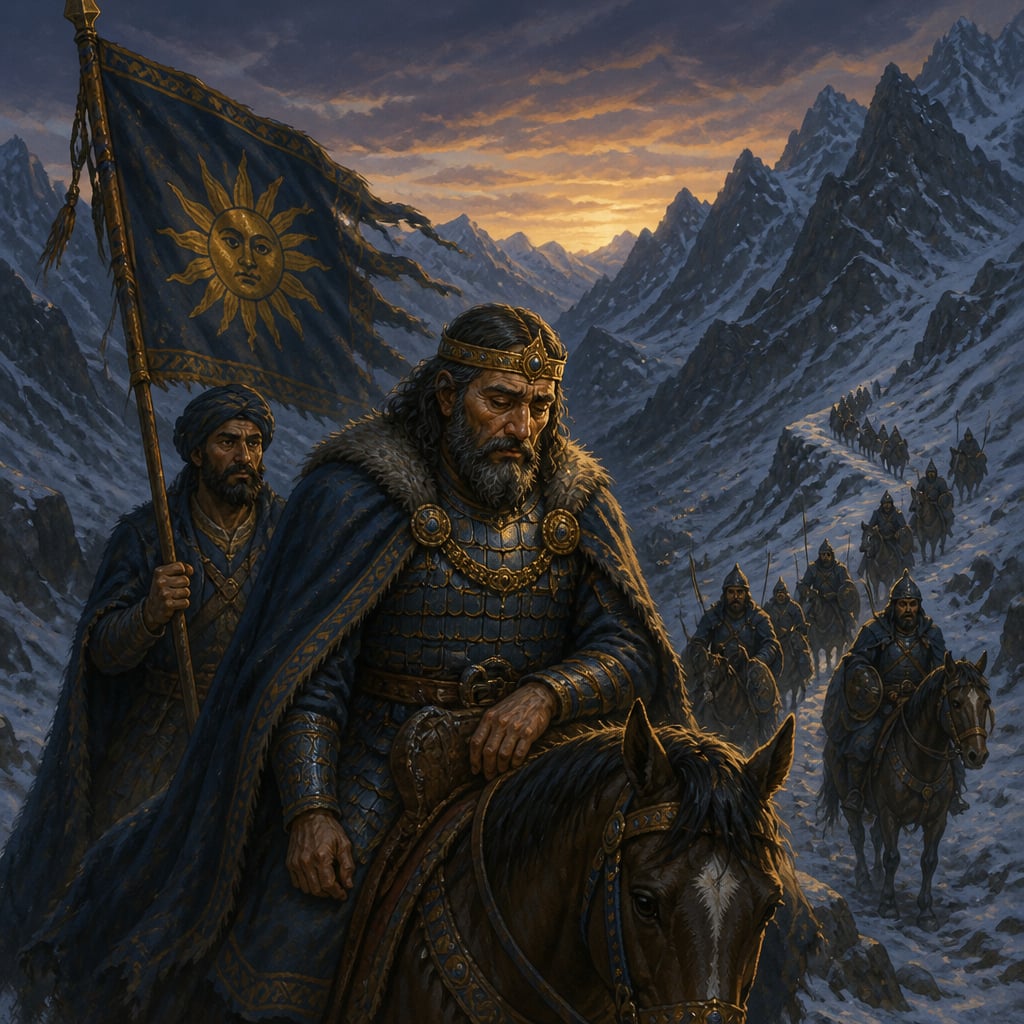
Lalitaditya leading his final northward campaign

In a remote northern region, far from home, Lalitaditya died. Whether from battle wounds, disease, or exhaustion, we do not know. Some accounts suggest he was caught in a snowstorm; others hint at betrayal by subordinates weary of constant campaigning.

Kalhana records his reign as lasting precisely 36 years, 7 months, and 11 days, an extraordinarily detailed figure suggesting Kashmir maintained careful records. Yet despite this long reign, succession planning proved inadequate. The location of his death, far from Kashmir, suggests that to the very end, Lalitaditya was actively leading his armies, refusing to become a figurehead.

The Succession Crisis and Fragmentation
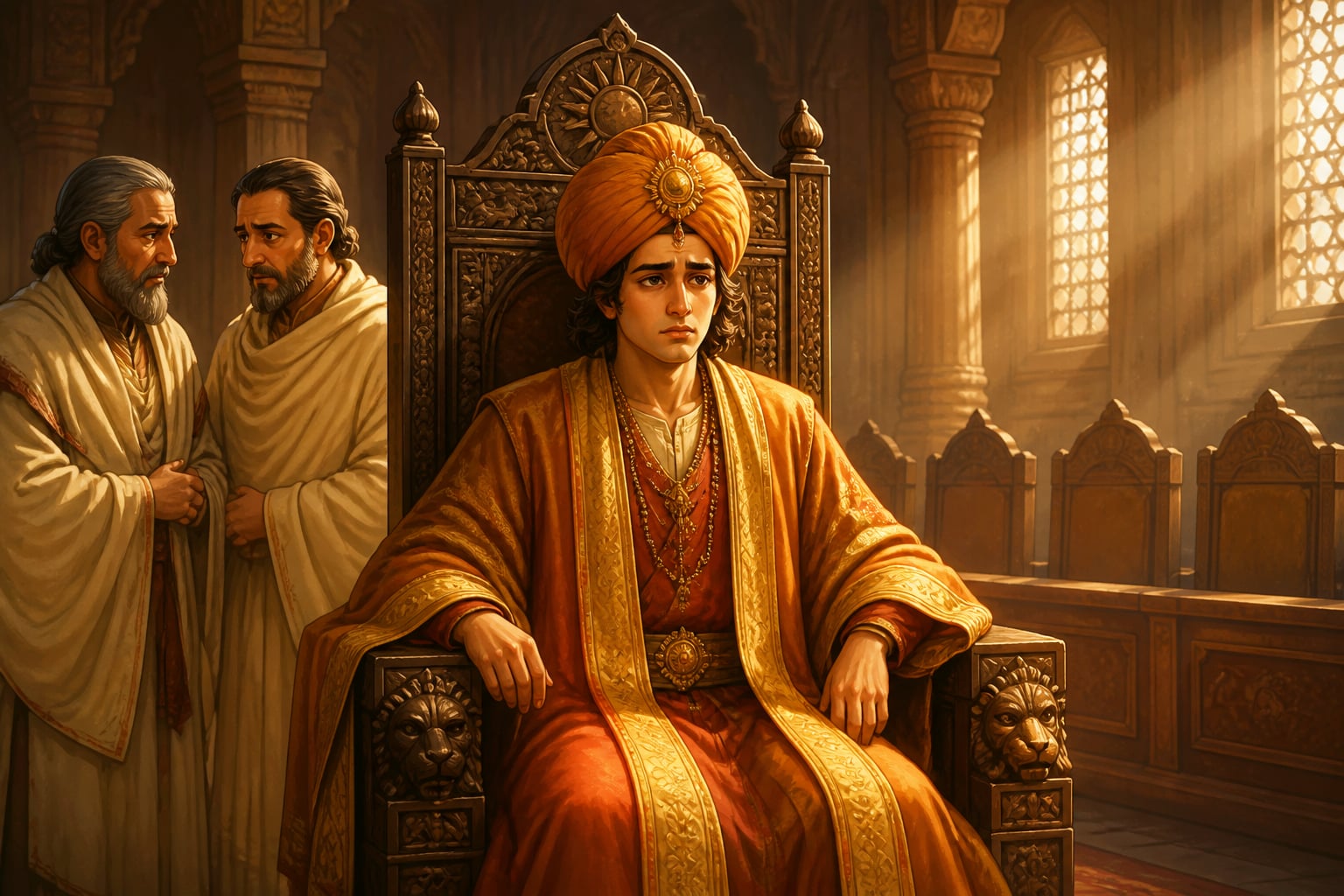
Kuvalayapida on his father's throne, unsure

Lalitaditya's son Kuvalayapida succeeded him, but sources suggest he lacked his father's capabilities. The Karkota dynasty would continue for another century but never again reach the heights achieved under Lalitaditya.

This pattern, extraordinary achievement followed by gradual decline, is common in history. Lalitaditya's military genius, administrative skill, and moral authority were personal attributes that couldn't be transferred to successors. Within a generation or two, Kashmir's empire had shrunk back to roughly the valley itself.

This fragmentation doesn't negate Lalitaditya's achievement, Alexander's empire fragmented immediately after his death; Ashoka's Mauryan Empire declined within generations. What matters is not that empires fall but what they accomplish while they endure.

The Enduring Cultural Legacy

While political empire proved transient, cultural legacy proved more durable. The Martand Temple, though eventually destroyed by iconoclastic invaders in the fifteenth century, left ruins so magnificent they still inspire awe. The architectural style developed during his reign influenced building throughout the Himalayan region for centuries. The scholarly traditions he patronized continued to flourish, making Kashmir a renowned center of learning for centuries after his death.

The works of poets like Bhavabhuti, created under Lalitaditya's patronage, remained part of Sanskrit literary canon, studied by scholars across India. The religious tolerance he exemplified became part of Kashmir's cultural identity, contributing to the valley's reputation as a place where different traditions could coexist peacefully.

Kashmir itself, raised from regional kingdom to major power during his reign, retained prestige and cultural influence even after losing political dominance. The memory of Lalitaditya's golden age became part of Kashmir's self-conception, a reference point for what the valley had achieved and could potentially achieve again.

Lessons from a Life

What lessons can we draw from Lalitaditya's life, viewed across twelve centuries?

First, preparedness meeting opportunity. Born into a time of both danger (Arab invasions) and opportunity (fragmented North India), he could have responded defensively, content to maintain Kashmir's independence. Instead, he prepared systematically, strengthening administration, building military capability, gathering intelligence, and when opportunities arose, he seized them decisively. Success came from preparation enabling him to exploit opportunities others missed.

Second, cultural achievement outlasts political power. His empire fragmented, but his temples and the literature he patronized endured. This suggests that investing in culture, architecture, learning, and institutions creates legacy more lasting than conquest alone. The sword conquers, but the scroll endures.

Third, different skills matter at different stages. The qualities needed to conquer, audacity, military genius, risk tolerance, differ from those needed to consolidate. Lalitaditya demonstrated both, but his successors typically mastered neither. Great leaders must evolve as their challenges change.

Fourth, personal capability cannot fully substitute for institutional strength. When he died, much that he built died with him because it depended on his individual capabilities rather than robust institutions that could function without him. Sustainable achievement requires building systems that outlast individuals.

The Living Memory

Kalhana writing the Rajatarangini four centuries later

Lalitaditya's fame spread beyond Indian sources. The great 11th-century Persian scholar Al-Biruni, who compiled extensive knowledge about India, mentions him as "Muttai", a rendering of "Muktapida" in Arabic script. This independent corroboration, written three centuries after his death, confirms his reputation had spread across the known world.

Over twelve centuries after his death, Lalitaditya remains vivid in Kashmir's cultural memory. The ruins of Martand Temple stand as testimony to his vision. He represents what Kashmir was at its peak, powerful, cultured, confident.

The Final Lesson

Perhaps the ultimate lesson is this: what matters is not whether achievements endure forever, nothing does, but whether we use our time and talents in service of purposes larger than ourselves. Lalitaditya transformed his kingdom, defended dharmic civilization, created beauty, and expanded what seemed possible.

His empire fragmented. But Kashmir had experienced greatness. His temples were destroyed. But they had been built, proving it possible. The sun that he worshipped rises and sets with perfect regularity, illuminating all without favoritism. In his best moments, Lalitaditya sought to embody these solar qualities in human form.

The sun has set on the empire of Kashmir. But the light of Lalitaditya's example continues to illuminate those who study his life and seek to learn from both his triumphs and his limitations.

Historical context

724-760 CE

Period of transition as Lalitaditya's death removed the dominant power in northern India; various regional powers began competing for supremacy; continued Arab pressure from the west; Kashmir's power declining but cultural influence persisting; development of regional kingdoms that would shape medieval Indian politics.

Living traditions

Lalitaditya remains Kashmir's greatest historical figure, symbol of the valley's golden age when it was powerful, prosperous, and culturally sophisticated. His memory is invoked in discussions of Kashmiri identity, heritage, and potential. The tension between his military achievements and cultural patronage, between expansion and consolidation, between personal genius and institutional strength, offers lessons for contemporary leadership. His life raises enduring questions about power, duty, legacy, and what we owe to future generations.

Reflection

More in Lalitaditya Muktapida

All lessons in Lalitaditya Muktapida ยท Lesser Known Guardians of Dharma course