The Courts Said No
Forty years of Munda petitions, the dikus, the forest laws, and why the next answer was a rising
From about 1858 to 1895 the Munda and Oraon sardars of Chhota Nagpur asked for their land back on paper, petitioning Ranchi, Calcutta and London in what is called the Sardari Larai, and lost. This scene-setter opens with a nineteen-year-old Birsa walking a forest-dues petition into Chaibasa in 1894, then lays out khuntkatti land, the dikus who took it, beth begari, the forest rules and the missions. It points ahead to the Ulgulan of 1899 and the Bastar Bhumkal of 1910, and to the Chota Nagpur Tenancy Act of 1908 that came only after the rising.
The Walk to Chaibasa
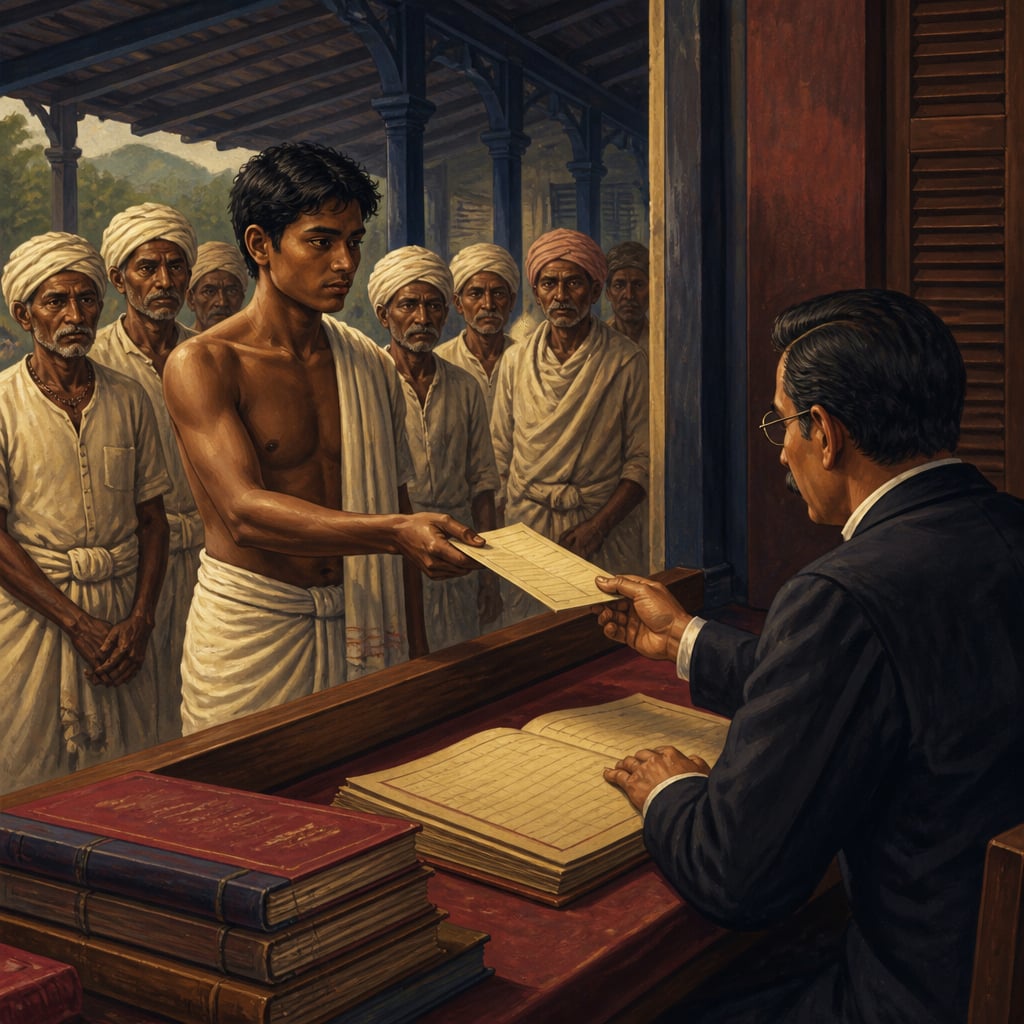
It is 1894, on the road into Chaibasa in the Singhbhum country. A young man of about nineteen is walking at the head of a small group of cultivators from a village called Sirgida. His name is Birsa. He is not yet a healer and not yet anybody's Bhagwan. He is a farmer's son carrying a piece of paper.
The paper is a petition. It asks the government to let the forest dues go. Last year the officers put the village waste lands into a new class called protected forest. Now a family pays for what it used to take. The grazing, the house post, the wood for a cooking fire. The men beside him have walked in from their fields to sign a thing most of them cannot read.
They are not the first. Men from six other villages have already made this walk to this same office with the same request. Birsa's group makes it seven.
Nothing came of it.
That sentence is the whole of chapter four. For nearly forty years the Munda country had been asking, politely and on paper, for its land back. The asking had a name. It was called the Sardari Larai, the sardars' fight, and it was fought with petitions, pleaders and courts. This lesson is about why it lost, and what a people do on the morning after the last appeal is dismissed.
What Khuntkatti Was
To understand the theft you have to understand what was there first.
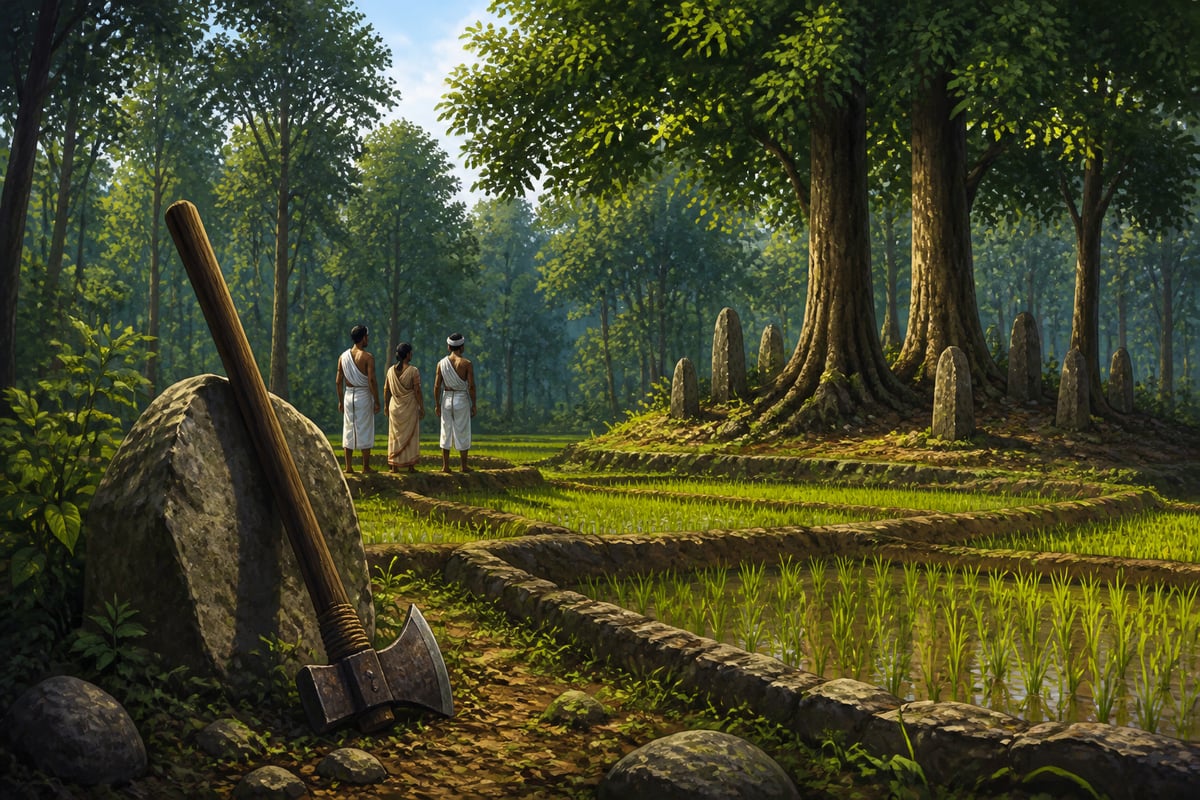
The Munda villages of Chhota Nagpur held land under a system called khuntkatti. A khunt is a stock, a lineage. The families who first cleared a patch of forest and made it grow rice held that land together as the descendants of the clearers. Nobody sold it. There was no landlord above the village to sell it to. A man's claim rested on an ancestor's axe.