Grihastha-Dharma: The Householder's Economic Duties

The Integrated Framework for Earning, Saving, Spending, and Giving

The grihastha (householder) stage is the economic engine of dharmic society - the stage when a person must earn, save, spend wisely, and give generously. The Dharmashastras prescribed surprisingly specific proportions and priorities, creating an integrated framework for building prosperity that serves self, family, and society.

The Detergent That Changed India
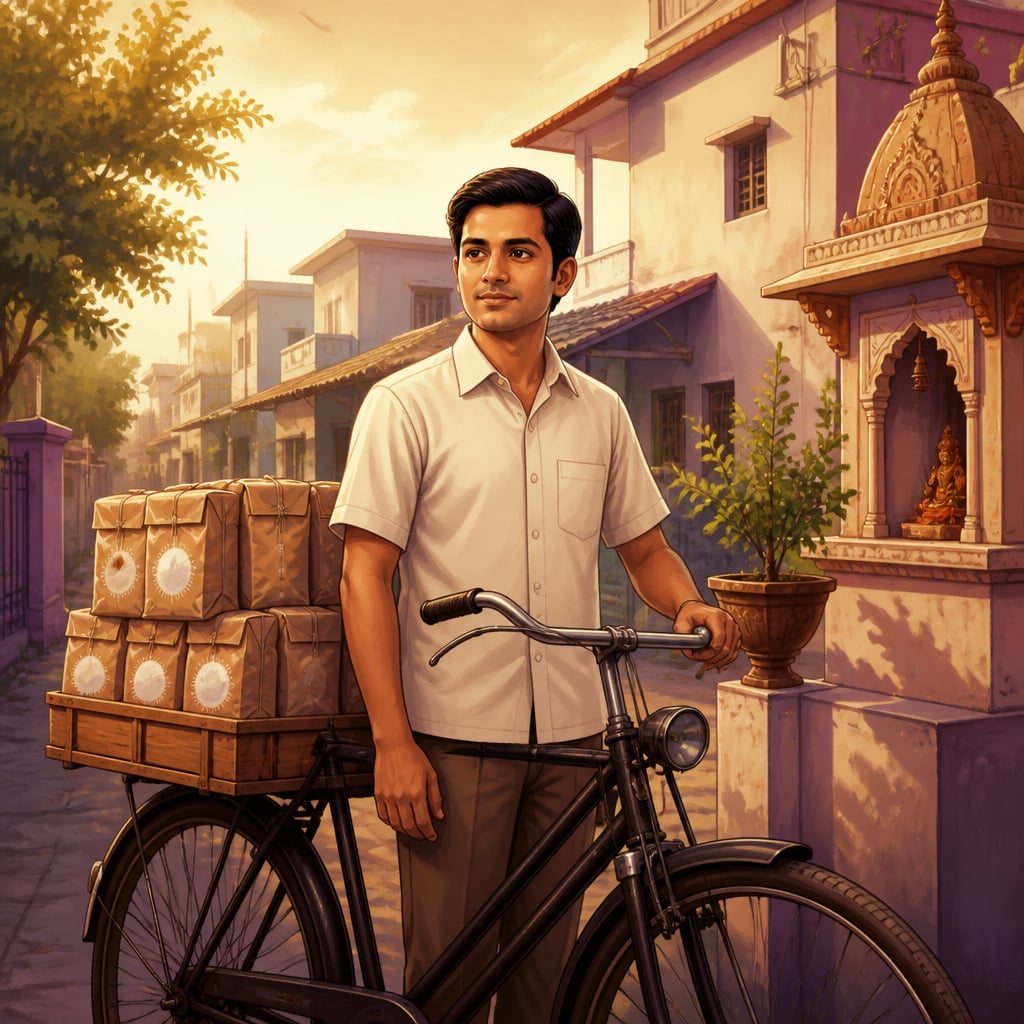
Karsanbhai Patel delivering Nirma by bicycle in Ahmedabad

In 1969, Karsanbhai Patel was a government chemist in Ahmedabad earning Rs. 300 per month. He noticed something: poor families couldn't afford the multinational detergents that dominated the market. So he began making detergent powder in his backyard, mixing it by hand, packaging it in polythene bags, and selling it door-to-door on his bicycle after work.

He called it Nirma, after his daughter Nirupama who had died in childhood. The product cost a fraction of competitors'. Within two decades, Nirma became India's largest detergent brand, making Patel a billionaire.

But here's what's remarkable: Patel continued living in the same middle-class neighborhood. He didn't acquire mansions, yachts, or a flashy lifestyle. He expanded the business, educated his children, gave substantially to charity, and maintained the simple household he had always run.

When asked why he didn't live like other billionaires, Patel reportedly said: "I have what I need. My family has what they need. The rest should work."

Patel was practicing grihastha-dharma - the integrated economic duties of the householder stage. The ancient framework didn't say "don't earn" or "don't enjoy" - it said earn fully, enjoy appropriately, save wisely, and give generously. Patel's life exemplified all four.

The Dharmashastra Framework: The Four-Part Allocation
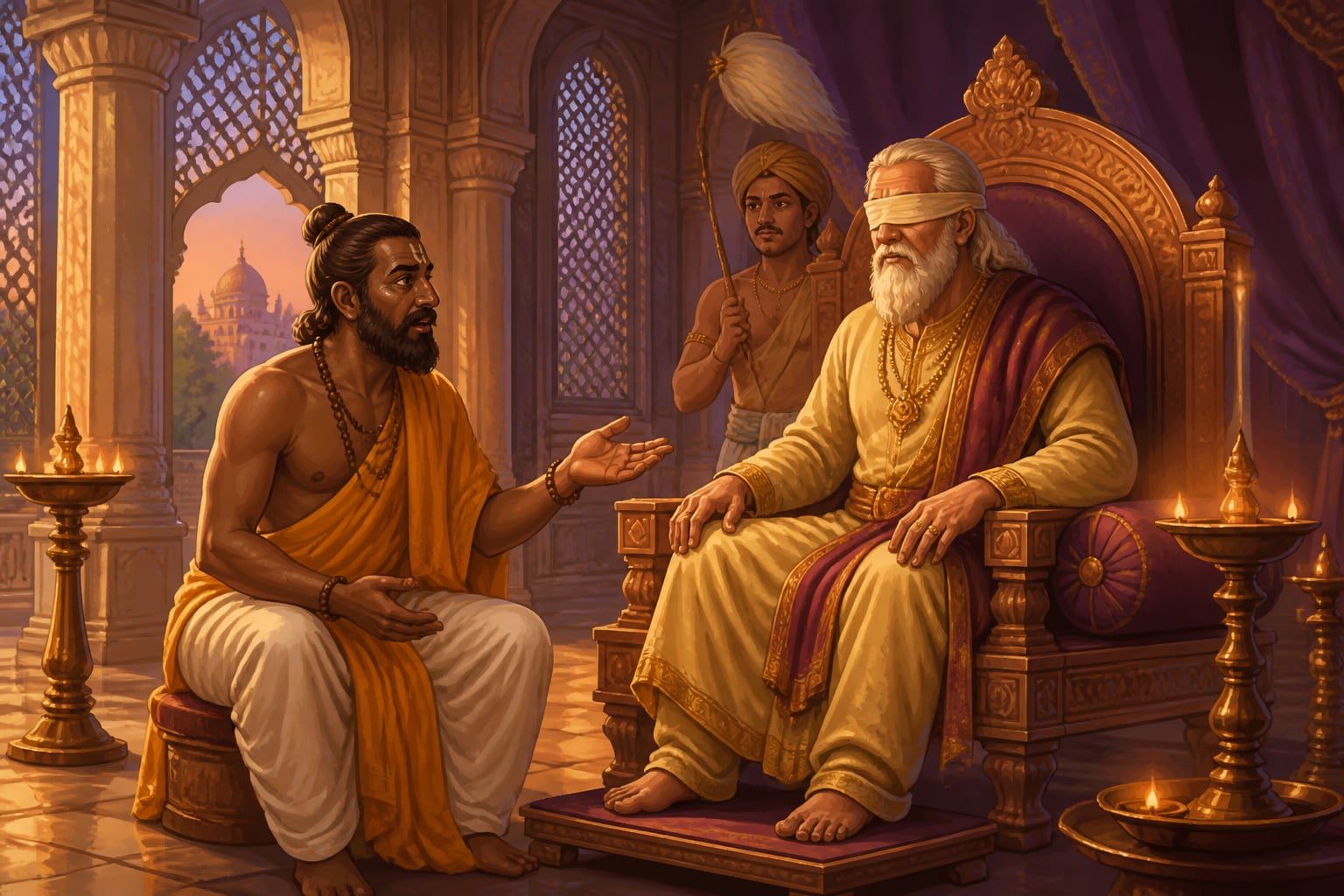
Vidura advising King Dhritarashtra on household wealth

The Vidura-niti (Vidura's counsel in the Mahabharata), Manusmriti, and other texts prescribed an integrated approach to household economics. The householder wasn't supposed to choose between earning and spiritual life - economic activity was spiritual practice when done rightly.

The Classical Allocation Formula:

The texts suggested income should be divided into four parts:

Allocation Percentage Purpose
Dharma 25% Charity, religious duties, community support
Artha 25% Savings, investment, wealth building
Kama 25% Enjoyment, lifestyle, family pleasures
Moksha 25% Spiritual pursuits, education, self-development

This wasn't rigid law but guiding principle. The key insight: all four purposes are legitimate. You're not supposed to give everything away, nor hoard everything, nor spend everything on pleasure, nor abandon worldly life entirely.

"The wise householder divides his wealth into four parts: one for dharma, one for future security, one for present enjoyment, and one for life's higher purposes." - Vidura-niti (paraphrased)

The Threefold Daily Obligation:

Beyond allocation, the texts prescribed daily practices:

1. Pancha-Mahayajna (Five Great Offerings)

Every householder should daily honor five debts:

Notice: this isn't just charity. It's a comprehensive framework acknowledging that the householder owes debts in multiple directions - upward (divine), backward (ancestors), outward (society), around (nature), and forward (knowledge).

2. Atithi-Satkara (Guest Hospitality)

The householder must feed guests before eating themselves. "Atithi devo bhava" - the guest is divine. This wasn't mere hospitality but economic redistribution through social obligation.

3. Anna-Dana (Food Giving)

No meal should be taken without first offering to others - even if it's just a portion for birds or animals. The householder's kitchen should always be ready to feed the hungry.

Global Perspectives on Household Economics

Different traditions developed frameworks for household economic life, with interesting parallels and contrasts.

John Wesley (1703-1791), founder of Methodism, developed a remarkably similar framework. His famous three rules were:

  1. "Gain all you can" - Earn industriously, using all honest means
  2. "Save all you can" - Avoid waste, don't spend on vanity or luxury
  3. "Give all you can" - After providing for necessity, give the rest away

Wesley lived this literally. As his income grew from his writings (he became quite wealthy), his lifestyle didn't change. He continued living on £28/year while giving away thousands. When he died, his estate was nearly empty - he had given it all.

The parallel to grihastha-dharma is striking: both frameworks integrate earning, saving, and giving. The difference: Wesley's framework was more ascetic ("save all you can" meant minimal lifestyle), while the Dharmic framework explicitly legitimized kama (enjoyment) as one-fourth of proper use.

Confucian Household Economics emphasized family continuity and filial duty. The household existed to continue the family line and honor ancestors. Economic activity served family perpetuation. This parallels the pitri-yajna aspect but gives less emphasis to broader social giving.

Protestant Work Ethic (per Weber) sanctified earning as spiritual calling but was less specific about allocation. The Dharmic framework's explicit proportions and the legitimacy of enjoyment alongside duty are distinctive.

Tradition Earning View Saving/Spending Giving Emphasis
Grihastha-dharma Duty of householder stage Balanced (kama legitimate) 25% to dharma/charity
John Wesley Gain all you can Extreme frugality Give all surplus
Confucian Family duty Family wealth building Primarily to family/ancestors
Protestant Divine calling Variable Tithing (10%) tradition

The Marwari Model: Grihastha-Dharma in Practice

Marwari family reviewing the bahi-khata account book

No community better exemplifies grihastha-dharma principles than the Marwari trading families of Rajasthan. For centuries, they've built and preserved wealth across generations while maintaining systematic giving.

The Key Practices:

1. Bahi-Khata (Sacred Ledger)

The family account book wasn't just financial record - it was religious document. New books were opened on Diwali with prayers. Every transaction was recorded as if the divine were watching (because, in this worldview, they were).

2. Joint Family Economics

Wealth was typically held jointly across generations. This prevented fragmentation while creating built-in accountability. No individual could spend extravagantly without family knowledge.

3. Seth-Peth Distinction

The seth (owner/patriarch) managed wealth, but the peth (household needs) were defined modestly. Business profits were not automatically converted to personal luxury.

4. Systematic Dharma-Dan

Charity wasn't spontaneous but structured. Marwari families built temples, dharamshalas (rest houses), schools, and hospitals. The Birla family alone has built over 20 major temples and funded countless educational institutions.

5. Intergenerational Perspective

Decisions were made for the family across generations, not individual lifetime. This naturally encouraged saving over consumption and systematic giving over hoarding.

The result: Marwari families control a disproportionate share of Indian business (estimates suggest 5% of population, 50%+ of business wealth) - not despite their dharmic practices but arguably because of them. The discipline of systematic saving, the trust generated by ethical dealing, and the social capital created by giving all contributed to multi-generational success.

The Modern Challenge: When Earning Outpaces the Framework

The grihastha-dharma framework assumed something the modern economy has disrupted: that earning capacity was relatively stable and proportional to effort. Today, some people earn in one year what their parents earned in a lifetime. The framework needs thoughtful adaptation.

Contemporary Questions:

The principles remain relevant even if the specific proportions need contextual application:

  1. Earn with full engagement - Economic activity is dharmic, not a distraction from dharma
  2. Save for genuine security - Not hoarding from fear, but prudent provision
  3. Spend with awareness - Enjoyment is legitimate; unconscious consumption is not
  4. Give systematically - Not when convenient or for recognition, but as integral practice

Your Turn: The Grihastha Audit

Whether you're starting your career or managing established wealth, the grihastha framework offers a self-assessment:

The Allocation Check: How does your actual spending break down?

Most people, when they actually track this, discover imbalance - usually overconsumption and undergiving.

The Five-Debt Check: Are you honoring all five debts?

The Wesley Questions:

Patel at Nirma found a balance that worked across decades: full engagement in business, modest personal lifestyle, education and opportunity for family, systematic giving. The framework doesn't require his specific choices, but it does require conscious integration of all four purposes.

The final lesson examines how these principles of dharmic earning, spending, and giving apply to the specific challenges of 2026 and beyond. Relevance isn't just about preserving ancient wisdom - it's about letting that wisdom illuminate contemporary choices.

Balanced portfolio approach to life; integrated financial planning

Modern financial planning typically focuses on saving/spending balance. The Dharmic framework adds giving as a core category (not optional charity) and spiritual development as legitimate 'expense.'

By making all four categories explicit and mandatory, the framework prevents both extreme accumulation and extreme consumption. It's inherently balanced.

Studies show that people who give systematically (10%+ of income) report higher life satisfaction than those who give sporadically, regardless of income level. The ancient prescription for systematic giving aligns with modern happiness research.

Stakeholder capitalism; comprehensive responsibility accounting

ESG (Environmental, Social, Governance) frameworks attempt something similar - measuring impact beyond financial returns. The pancha-mahayajna predates ESG by millennia and is more comprehensive.

Key terms

grihastha-dharma
The duties and ethics of the householder stage of life; the comprehensive responsibilities of one who maintains a household
pancha-mahayajna
The five great offerings/sacrifices that every householder should perform daily to discharge debts to gods, ancestors, teachers, fellow humans, and other beings
atithi-satkara
Guest hospitality; the sacred duty to welcome and feed guests, treating them as divine visitors
dana-dharma
The ethics and practice of giving; charity as spiritual discipline

Key figures

Vidura

Karsanbhai Patel

John Wesley

Case studies

The Marwari Model: Grihastha-Dharma Across Generations

The Marwari trading communities of Rajasthan have practiced a distinctive form of household economics for centuries. Families like the Birlas, Bajajs, Goenkas, and Dalmias built business empires while maintaining systematic dharmic practices. **Core practices observed across families:** **Bahi-Khata (Sacred Ledger)**: Account books were religious documents, opened annually on Diwali with prayers and closed with offerings. Every transaction was recorded transparently. The family patriarch reviewed accounts regularly - not just for profit but for dharmic compliance. **Joint Family Wealth**: Wealth was held jointly across generations. Individual family members drew modest allowances. Major expenses required family council approval. This prevented both extravagance and fragmentation. **Dharma-Dan System**: Charitable giving was systematic, not sporadic. Many families allocated fixed percentages of profit to charity before distributing to family members. The Birlas' 'one-third for charity' principle is documented. **Seth-Peth Distinction**: The *seth* (patriarch) managed business wealth, but the *peth* (household expenses) were defined independently and modestly. Business success didn't automatically inflate lifestyle.

The Marwari model operationalized grihastha-dharma principles: 1. **Fourfold allocation**: Business profits were systematically divided - reinvestment (artha), family maintenance (kama), charity (dharma), and religious/educational institutions (moksha). 2. **Pancha-mahayajna**: Temple building (deva-yajna), family continuity and ancestor rites (pitri-yajna), dharamshalas and guest feeding (manushya-yajna), gaushalas and animal care (bhuta-yajna), and school/college funding (brahma-yajna) - all were explicit family obligations. 3. **Intergenerational thinking**: The joint family structure forced long-term thinking. You weren't managing wealth for yourself but for the family across generations. 4. **Transparent accountability**: The bahi-khata tradition created built-in accountability. Hidden transactions were impossible; dharmic compliance was visible.

By 2024, Marwari business families control a disproportionate share of Indian business - estimates suggest 5-8% of population but 50%+ of traditional business wealth. Consider: - **Birla Group**: Built Hindalco, Aditya Birla Group, Century Textiles; also 20+ major temples, Birla Institutes of Technology, countless schools - **Bajaj Group**: Built Bajaj Auto, Bajaj Finserv; also Jamnalal Bajaj Foundation, extensive rural development work - **Goenka families**: RPG Group, Emami, and others; arts patronage, educational institutions The correlation isn't coincidental: the discipline of systematic saving, the trust generated by transparent dealing, and the social capital created by consistent giving all contributed to multi-generational success.

The Marwari model shows that grihastha-dharma principles scale across generations and create sustainable wealth. The practices that might seem to 'cost' money (systematic charity, joint family constraints, religious obligations) actually created conditions for wealth creation: trust, discipline, long-term thinking, community support.

Research on multi-generational family businesses consistently finds that those with documented values frameworks and systematic community engagement outlast purely profit-focused dynasties. The Marwari model's integration of religious giving, joint family governance, and conservative financial management anticipates findings that modern family business consultants now recommend.

A 2019 study of Indian business families found that those with documented multi-generational charitable traditions showed 40% higher long-term wealth retention than those without - suggesting that systematic giving correlates with (not detracts from) wealth preservation.

Karsanbhai Patel: The Bicycle Billionaire's Balance

In 1969, Karsanbhai Patel earned Rs. 300/month as a government chemist. He noticed that multinational detergents cost Rs. 13/kg while production cost was under Rs. 3. Poor families couldn't afford to wash clothes properly. He started making detergent powder at home after work hours. His wife helped package it. He sold door-to-door on his bicycle. The product was named Nirma after his daughter Nirupama who had died young. Within two years, he quit his job to focus on Nirma full-time. By 1985, Nirma was India's largest detergent brand. By 1990, Patel was among India's richest businessmen. But his lifestyle barely changed. He continued living in a modest house in Ahmedabad's middle-class area. He wore simple clothes. He drove a modest car. His children were educated but not indulged. The family ate simple Gujarati food.

Patel embodied grihastha-dharma across all four dimensions: **Artha (Wealth building)**: He pursued business with full energy and intelligence. No half-measures, no premature renunciation. He built one of India's largest consumer goods companies. **Kama (Enjoyment)**: He didn't deny family comfort - they lived well by middle-class standards. But 'well' wasn't defined by what he could afford, but by what constituted genuine need. **Dharma (Giving)**: The Nirma Foundation supports education, healthcare, and rural development in Gujarat. Nirma University provides engineering and pharmacy education to thousands. But the giving was quiet, not for PR. **Moksha (Higher purpose)**: Patel named the company after his deceased daughter, transforming personal grief into productive purpose. The business itself served a dharmic function - making cleanliness affordable for the poor. The key insight: he didn't wait to 'arrive' before balancing. Even while building the business, he maintained the balance.

By 2024: - Nirma remains among India's largest FMCG companies - Nirma University educates 20,000+ students annually - The Patel family remains respected for simplicity despite wealth - The company continues the low-price, high-volume model that serves the masses - Second generation maintains similar values Patel demonstrated that grihastha balance doesn't require waiting for retirement or 'enough' wealth. It's practiced throughout the earning years.

Grihastha-dharma isn't about how much you earn but how you hold what you earn. Patel's wealth served its purposes - business growth, family security, social benefit - without becoming identity or obsession. The 'bicycle billionaire' showed that simplicity is choice, not constraint.

In an era of conspicuous consumption among the ultra-wealthy, from superyachts to space tourism, Patel's deliberate simplicity represents an increasingly rare form of economic self-discipline. His example resonates with the growing 'stealth wealth' movement and research showing that lifestyle inflation, not insufficient income, is the primary barrier to lasting financial security.

Despite being worth thousands of crores, Patel reportedly maintained a personal expense level that would be unremarkable for an upper-middle-class professional - a 95%+ gap between what he could spend and what he chose to spend.

Historical context

Grihastha Tradition: Vedic Period through Present

The grihastha ashrama was considered the foundation of the ashrama system. The Mahabharata states: 'As all beings depend on air to live, so the other ashramas depend on the grihastha.' The householder's economic activity supported students, teachers, renouncers, and the entire dharmic ecosystem.

Medieval European economics separated religious life (monasteries) from lay life, creating a spiritual hierarchy where commerce was lower than religious vocation. The Hindu framework explicitly dignified householder economic life as equal in dharmic value to renunciation - 'grihastha-dharma' was a complete spiritual path.

The grihastha ashrama traditionally lasted approximately 25 years (from marriage around age 25 to forest retirement around age 50), representing the peak productive period. Modern life expectancy has extended this, creating new questions about when grihastha obligations evolve.

Understanding grihastha-dharma as a complete spiritual path - not just a preliminary to 'real' spirituality - validates economic activity as dharmic practice. This is crucial for modern practitioners who may spend their entire adult lives in economically active roles.

Living traditions

India's robust charitable sector - from Tata Trusts to Azim Premji Foundation - continues the grihastha-dharma tradition of systematic giving. The tradition of business families funding temples, schools, and hospitals remains strong. Corporate CSR requirements (2% of profits) institutionalize what was once voluntary dharmic obligation.

Reflection

More in Dharmashastra: Ethics of Earning & Spending

All lessons in Dharmashastra: Ethics of Earning & Spending · Dharmic Economics course