Samsraya

Seeking Shelter and Protection

Strategic humility. When to seek protection from a stronger power.

The King Who Bent
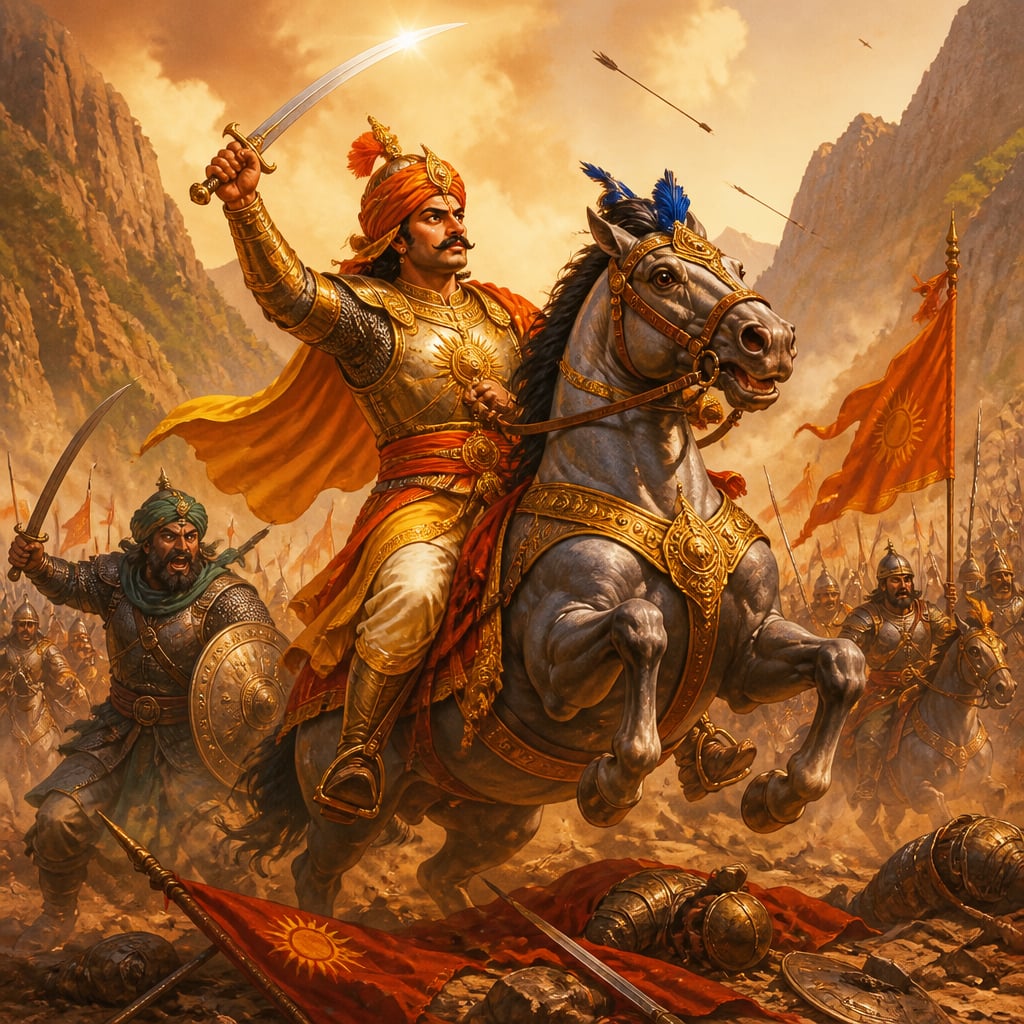
Rana Pratap Singh fighting on Chetak at the Battle of Haldighati, 1576

In 1576, Rana Pratap of Mewar stood defiant. His ancestors had never bowed to the Mughals. His warriors would rather die than submit. His honor demanded resistance.

He fought at Haldighati, and lost. For the next two decades, he lived as a fugitive in the Aravalli hills, eating wild berries, watching his kingdom shrink, leading a resistance that could annoy but never defeat the Mughal juggernaut.
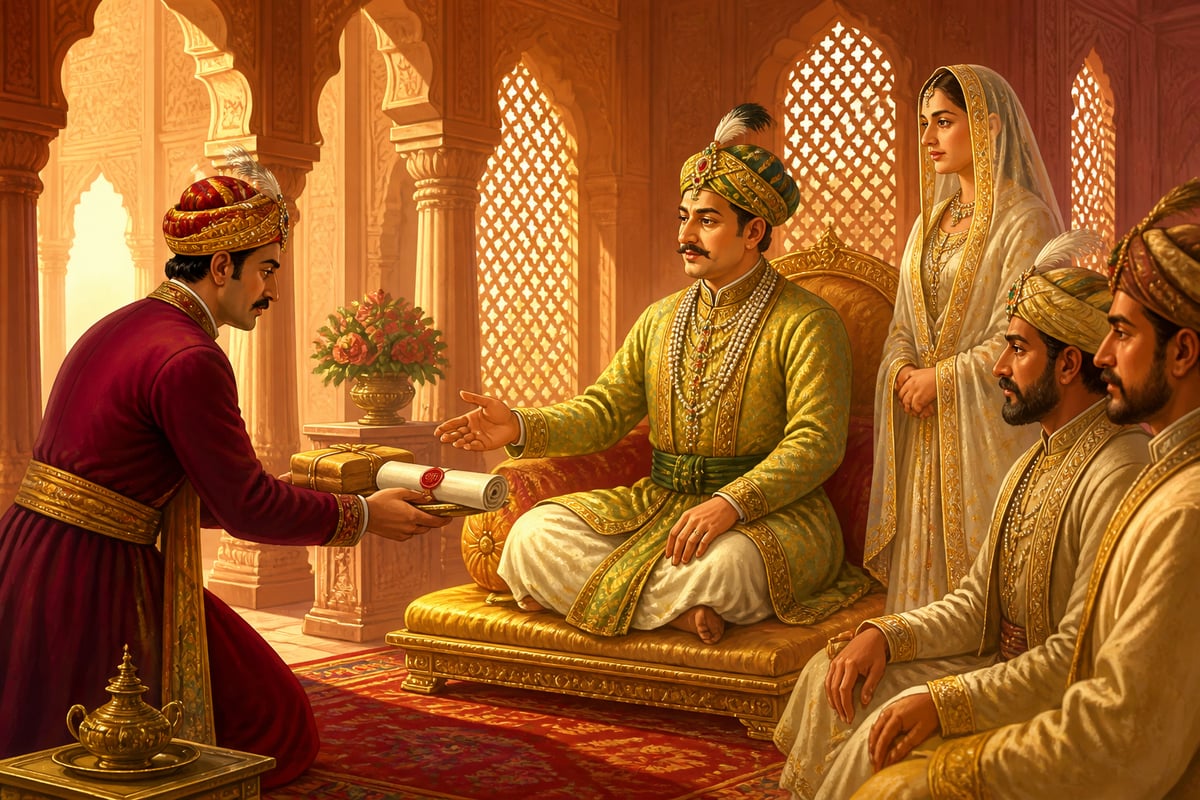
Raja Man Singh of Amber presenting alliance tribute at Akbar's Mughal darbar

Not far away, his contemporary Man Singh of Amber had made a different choice. He had accepted Samsraya, seeking shelter and alliance with the Mughals. His daughter married into Akbar's family. His armies marched under Mughal banners. His kingdom prospered while Mewar burned.

History has celebrated Pratap's defiance. But Kautilya would have asked a harder question: Which ruler better served his people?

The Hardest Measure

"अशक्तः संश्रयं गच्छेत्" "One who is powerless should seek shelter."

Samsraya, the fifth of the Shadgunya, is the most psychologically difficult policy. It requires acknowledging that you cannot survive alone. It demands subordination to a stronger power. It wounds pride that kings are raised to protect.

But Kautilya was unsentimental:

"मरणाद् दासत्वं वरम्" "Servitude is preferable to death."

This isn't cowardice. It's strategic realism. The ruler who fights an unwinnable war destroys his kingdom. The one who accepts temporary dependence preserves the possibility of future independence. A living kingdom can recover. A destroyed one cannot.

When Protection Becomes Necessary

Kautilya identified specific conditions requiring Samsraya:

Overwhelming enemy strength. When an adversary possesses such superiority that neither resistance nor neutrality can ensure survival, seeking protection becomes essential. Man Singh calculated correctly: the Mughal military machine was simply too powerful to resist.

Multiple simultaneous threats. When dangers multiply faster than defenses can form, enemies coordinating, internal rebellion coinciding with external attack, protection against the greatest threat frees resources for others.

Temporary weakness. A kingdom exhausted by war, depleted by disaster, or destabilized by succession may need protection while recovering. Samsraya buys the most precious strategic resource: time.

Geographic vulnerability. Some positions make independent survival nearly impossible. A small state between great powers may find alliance with one the only alternative to conquest by both.

Choosing a Protector

Tata Motors practiced corporate Samsraya in 2008 when acquiring Jaguar Land Rover. At first glance, Tata was the buyer. But strategically, it was seeking shelter, gaining access to technology, brand prestige, and global distribution that Indian market position alone couldn't provide. The acquisition protected Tata's long-term competitiveness against global rivals it couldn't match independently.

Kautilya would recognize the logic: choose protectors carefully.

Strong enough to actually protect. Shelter that can't withstand assault provides only the illusion of safety. Man Singh allied with Akbar, the most powerful emperor of the age, not with some minor noble who might promise much but deliver little.

Ideally distant from your territory. A protector next door may become the next threat. Geography complicates even genuine alliances. When possible, seek protectors whose interests don't directly overlap with your core territories.

Reliable and predictable. A protector who abandons allies when convenient provides no real security. Reputation matters. Seek those whose past behavior suggests they honor commitments.

Benefiting from your survival. The best protection comes from those who genuinely gain from preserving you. Man Singh was valuable to Akbar, a loyal general, a legitimizing Hindu ally, a administrator for difficult regions. Akbar had reason to protect what served him.

Preserving Agency

The strategic genius of Samsraya lies in accepting protection while maintaining the capacity for eventual independence.

Maintain internal strength. Man Singh's kingdom didn't weaken under Mughal protection, it grew. He built forts, developed trade, trained warriors (who served the emperor but remained loyal to Amber). The protected kingdom that grows stronger under protection has succeeded strategically.

Cultivate multiple options. Even while sheltering with one protector, maintain connections with alternatives. The kingdom with only one option has no leverage. Multiple potential protectors create bargaining power.

Define clear boundaries. Negotiate specific terms rather than open-ended subordination. What exactly does protection include? What exactly do you owe? Vague arrangements evolve to favor the stronger party.

Plan the exit. From the moment of seeking shelter, plan for eventual independence. What conditions would enable standing alone? What resources are needed? Protection should be a phase, not a permanent condition.

"संश्रितः पुनरुत्थानम्" "The protected one rises again."

The Psychology of Subordination

For rulers raised to command, accepting subordination wounds deeply. Kautilya addressed this directly:

Pride versus wisdom. The ruler who chooses destruction over subordination chooses ego over responsibility. What is preserved by dying nobly while your kingdom burns? The ruler who endures temporary humiliation to preserve his people acts with true courage, the harder courage of patience.

Frame the relationship carefully. How you seek protection matters. "I choose to ally with you" differs from "Please save me." Even when weak, present the relationship as mutual benefit. Man Singh didn't grovel, he offered value that made Akbar want the alliance.

Communicate clearly to your people. Subjects must understand why protection was necessary. Frame it as strategic wisdom, not cowardice. The ruler who loses his people's respect while gaining external protection has traded one vulnerability for another.

Samsraya in Modern Life

Startups practice Samsraya when acquired by larger companies. The founders who accept acquisition, gaining resources, distribution, and protection they couldn't build independently, often achieve more than those who fight to stay independent and fail.

WhatsApp founders closing the Facebook acquisition deal in 2014

WhatsApp's acquisition by Facebook exemplified this. The messaging app faced threats from well-funded competitors and the constant need for infrastructure investment. Facebook offered protection, resources, scale, global reach, in exchange for alignment. The founders gained security and billions; Facebook gained a strategic asset.

The principles apply across domains:

In careers: Sometimes you need a powerful sponsor to survive organizational politics you can't navigate alone. Accepting a mentor's guidance, aligning with a senior leader's agenda, joining a stronger team, these are career Samsraya. The key is maintaining capabilities while under protection.

In business: Small companies form alliances with larger ones, distribution deals, licensing agreements, joint ventures, that trade independence for survival. The ones that thrive use the protection period to build strength for eventual autonomy.

In personal life: There are times when you need help you cannot repay, support you cannot reciprocate, shelter you couldn't provide yourself. Accepting such help gracefully, neither groveling nor pretending equality, requires the same strategic humility Kautilya described.

The End of Samsraya

Protection should be temporary. Kautilya identified when to end it:

Changed power balance. When your strength has grown or the original threat has diminished, reassess. The conditions that justified shelter may no longer apply.

Protector's decline. If your protector weakens, their protection becomes unreliable. Begin transitioning before their decline exposes you.

Opportunity windows. External changes, wars, crises, succession struggles, may create chances for reasserting independence. The protected kingdom that waits patiently for such moments can emerge stronger than before.

When protection becomes threat. If your protector begins treating you as conquest rather than ally, extracting excessive tribute, interfering in internal affairs, threatening absorption, the relationship has changed. Seek alternatives.

The Amber Legacy

Man Singh's choice created a dynasty that lasted three centuries. His descendants ruled Amber, then Jaipur, navigating Mughal decline, Maratha rise, and British arrival with the same strategic flexibility he had demonstrated.

Rana Pratap's descendants eventually recovered Mewar, but only after accepting the same Mughal subordination Pratap had rejected, once the empire had weakened enough to make the terms acceptable.

The difference? Timing. Pratap fought when resistance was futile. His successors accepted protection when it preserved what mattered, then emerged when conditions allowed.

Kautilya would say: both approaches have their place. The wisdom lies in knowing which serves when. Pride that destroys is not courage. Subordination that preserves, and plans for recovery, is not weakness.

It's strategy.

Samsraya (seeking shelter) is the fifth measure in Shadgunya and psychologically the hardest, it requires acknowledging inability to survive alone and accepting subordination to a stronger power. But it is protection-as-strategy, not surrender. The protected kingdom maintains internal governance, builds strength during the protection period, and plans for eventual independence.

Machiavelli advised that princes should either completely crush enemies or win them over, but Kautilya adds a third option: temporarily subordinate yourself to survive overwhelming force. European vassalage systems resemble Samsraya, but lacked its explicit framework for transition back to independence. Kautilya teaches protection as a phase, not a permanent condition.

Kautilya's profound insight: मरणाद् दासत्वं वरम् (maraṇād dāsatvaṃ varam) - 'Servitude is preferable to death.' This challenges warrior pride head-on. The ruler who dies nobly leaves a conquered kingdom. The ruler who endures temporary humiliation preserves the people and the possibility of recovery. Strategic humility serves dharma better than prideful destruction.

Man Singh of Amber accepted Samsraya with the Mughals, his daughter married Akbar, his armies served Mughal campaigns, his kingdom prospered under protection. Meanwhile, Rana Pratap of Mewar chose defiant resistance, fighting heroically but watching his kingdom shrink. Man Singh's descendants ruled for three centuries; Pratap's descendants eventually accepted the same Mughal subordination he had rejected, but only after generations of suffering.

The art of Samsraya lies in selecting protectors carefully and negotiating terms that preserve agency. Man Singh allied with Akbar, the most powerful emperor of the age, whose legitimacy benefited from Hindu allies, whose campaigns needed Rajput warriors. This created mutual dependence despite power asymmetry. The protected party that makes itself valuable to the protector secures better treatment.

Small nations' Cold War alignments exemplify modern Samsraya, choosing between US and Soviet protection, balancing immediate security against long-term autonomy. However, many became permanently dependent. Kautilya's framework explicitly includes exit planning, संश्रितः पुनरुत्थानम् (saṃśritaḥ punarutthānam): 'The protected one rises again.' Protection should enable eventual independence.

Verses

अशक्तः संश्रयं गच्छेत्

aśaktaḥ saṃśrayaṃ gacchet

One who is powerless should seek shelter

This sutra establishes the fundamental principle: when you cannot protect yourself, seek protection from others. This is not cowardice but strategic wisdom. The inability to resist alone does not mean the inability to survive, it means seeking alternative means of survival.

मरणाद् दासत्वं वरम्

maraṇād dāsatvaṃ varam

Servitude is preferable to death

This provocative sutra challenges warrior pride. The ruler who dies nobly leaves behind a conquered kingdom. The ruler who accepts temporary subordination preserves the possibility of future independence. Living in dependence beats dying in freedom, because the living can change their circumstances.

संश्रितः पुनरुत्थानम्

saṃśritaḥ punarutthānam

The protected one rises again

Protection is a phase, not a permanent condition. The kingdom that uses protection wisely, building strength, biding time, watching for opportunity, emerges to independence. Samsraya is the cocoon that protects transformation, not the prison that prevents it.

Case studies

The Struggling Restaurant

A family-owned restaurant has operated independently for 15 years. Recently, a major restaurant chain opened nearby, and a pandemic has depleted savings. The owner faces a choice: continue struggling independently (possibly failing within a year), accept a franchise agreement with a regional brand (gaining marketing and supply chain support but losing menu control and paying fees), or sell to a larger restaurant group (preserving the restaurant's existence but losing family control). The owner's children work in the restaurant and expect to inherit it.

This case illustrates business Samsraya at a critical decision point. The assessment of whether protection is necessary requires honest evaluation: Can the restaurant survive independently? If not, the choice becomes which protection to seek. The franchise option preserves ownership while providing resources, a tributary relationship. The sale option provides maximum security but eliminates independence. Key factors include: the family's financial reserves, the children's commitment to the business, the specific terms of each option, and what makes the restaurant distinctive (which must be preserved). The owner should negotiate to maintain core identity elements, define clear exit conditions, and ensure any agreement includes paths to eventual independence.

Each option represents a different strategic posture. Continued independence risks total failure within a year. The franchise agreement preserves the business but sacrifices autonomy and identity. Selling preserves the restaurant but ends family ownership. Samsraya, seeking protection from a stronger entity, is the pragmatic choice when survival is at stake. The key question is which form of shelter best preserves what matters most.

Samsraya is not surrender. It is a strategic calculation that preservation under protection is better than destruction through pride. The wisest leaders know when independence has become a liability rather than an asset.

During economic downturns, independent businesses that form strategic partnerships with larger players often survive while proudly independent competitors fail. Cloud kitchens partnering with delivery platforms, independent bookstores joining Bookshop.org, and local manufacturers licensing to larger brands all demonstrate that strategic shelter is not surrender. It is a calculated trade of some autonomy for survival and eventual growth.

During the COVID-19 pandemic, independent restaurants failed at a rate of 30%, while franchise-affiliated restaurants failed at only 10%. Access to institutional support structures proved decisive for survival.

Reflection

More in Shadgunya

All lessons in Shadgunya · Arthashastra: Art of Strategy course