Legacy and Long-Term Thinking
Building for Generations, Not Reigns
The ultimate test of governance: what remains after you're gone? Kautilya's vision of multi-generational thinking shows how protecting future freedom requires present sacrifice and institutional wisdom that compounds across centuries.
The Question Every Leader Must Answer
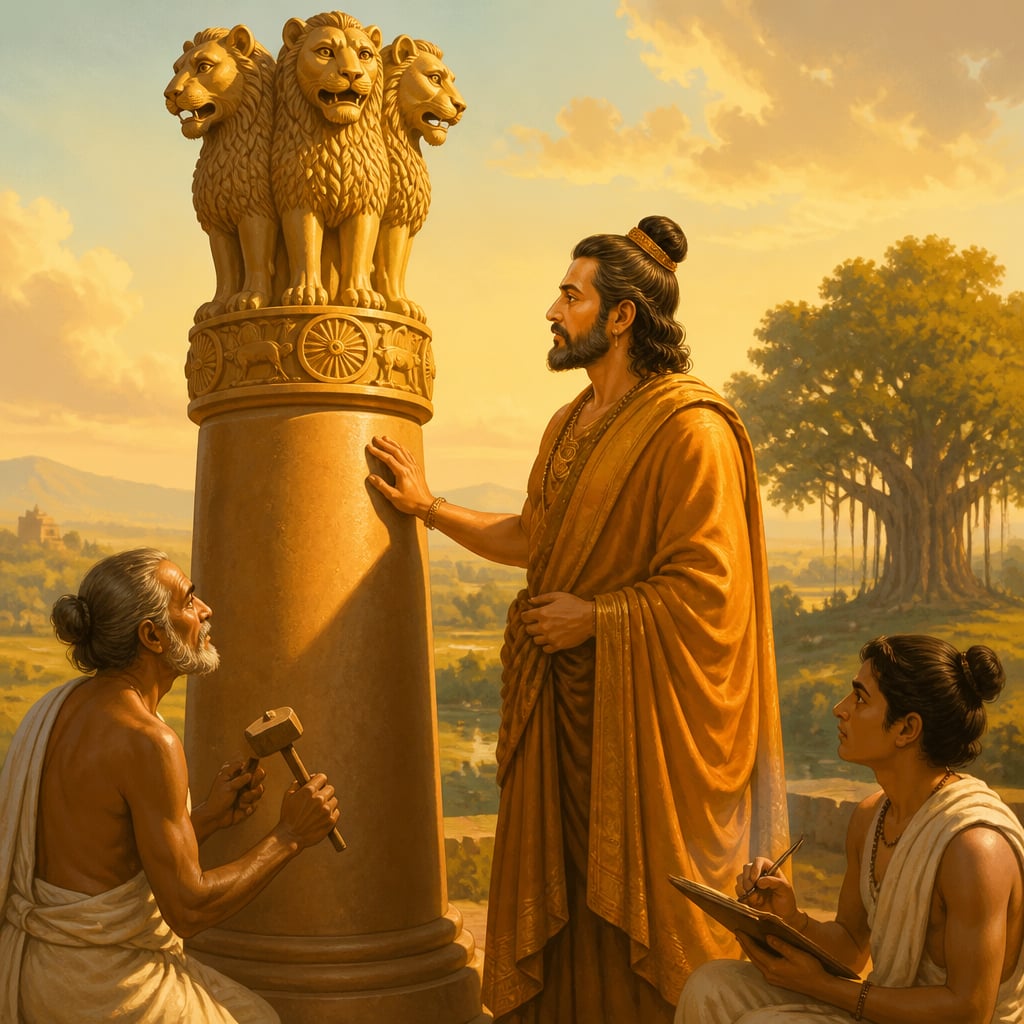
What will remain when you're gone?
Not your wealth, power, or reputation. The only thing that truly outlives you is what you build that serves others after your death.
Kautilya understood this profoundly. The Arthashastra isn't about maximizing a king's power during his reign. It's a framework for creating prosperity and freedom that compound across generations.
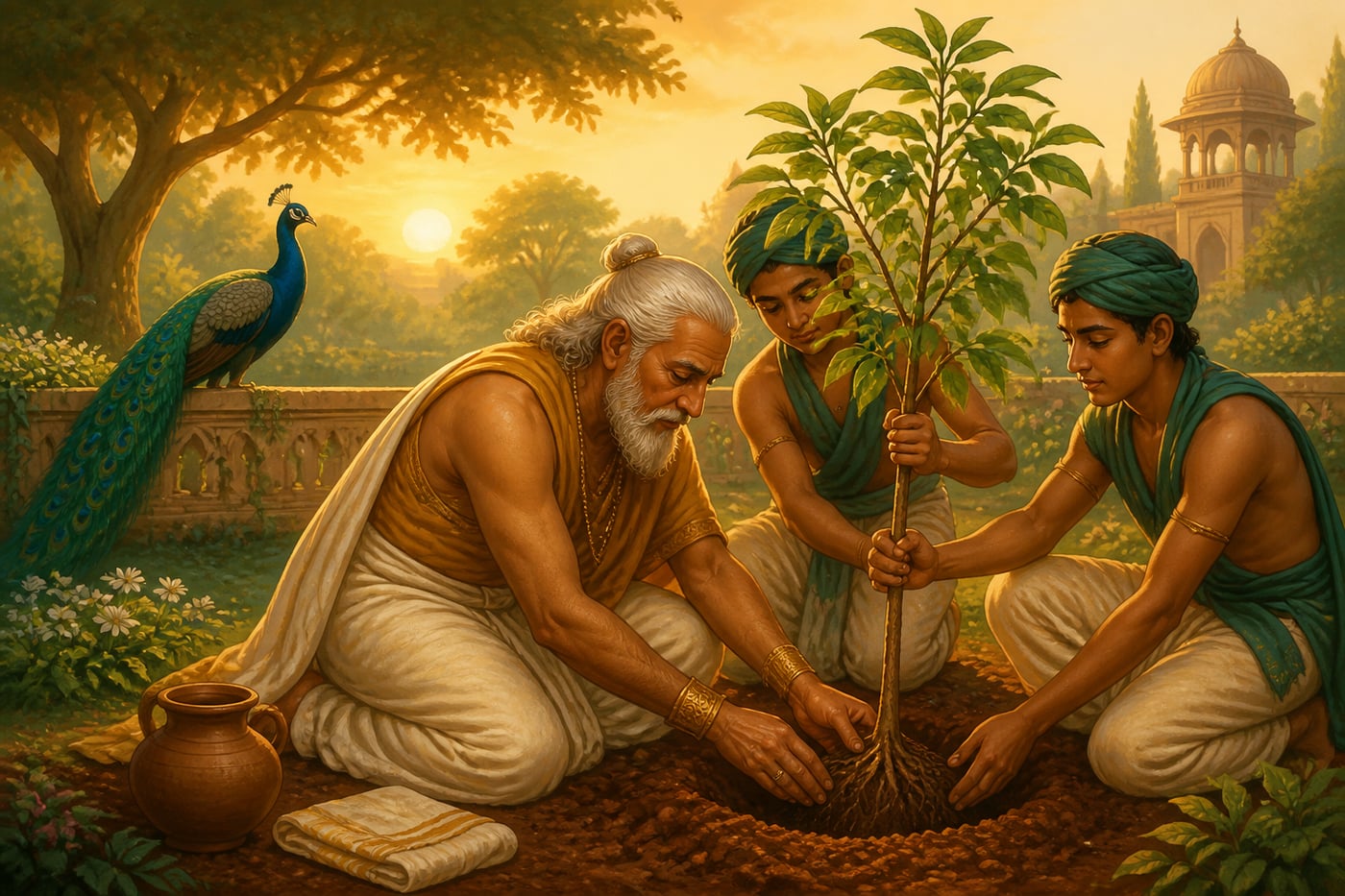
"A wise ruler plants trees under whose shade he will never sit."
This final lesson explores the ultimate dimension of succession: thinking in generations, not years.
The Tyranny of the Present
Most leaders suffer from present bias - optimizing for immediate gains, popularity now, and their own lifetime. They neglect long-term consequences, future generations, and compounding effects.
Kautilya recognized this human tendency and fought against it. Good governance requires systematic resistance to present bias. Short-term thinking feels natural, but civilization's progress depends on leaders willing to sacrifice present glory for future prosperity.
Kautilya's Multi-Generational Framework
Kautilya taught leaders to think across four time horizons:
Horizon 1: The Immediate (1-3 Years) - Current operations, crisis management, present needs. Leadership mode: executive action.
Horizon 2: The Reign (10-30 Years) - Infrastructure projects, educational systems, legal reforms. Key insight: Most won't pay off in your lifetime. You're building for your children's prosperity.
Horizon 3: The Dynasty (50-100 Years) - Institutional foundations, constitutional frameworks, accumulated wisdom. Kautilya's vision: "A great king creates systems that produce good rulers. A merely good king relies on his own virtue."
Horizon 4: Civilization (Centuries) - Values, knowledge, cultural evolution. The ultimate goal: contributing to humanity's accumulated wisdom.
The Core Principles of Generational Thinking
1. Invest in Infrastructure
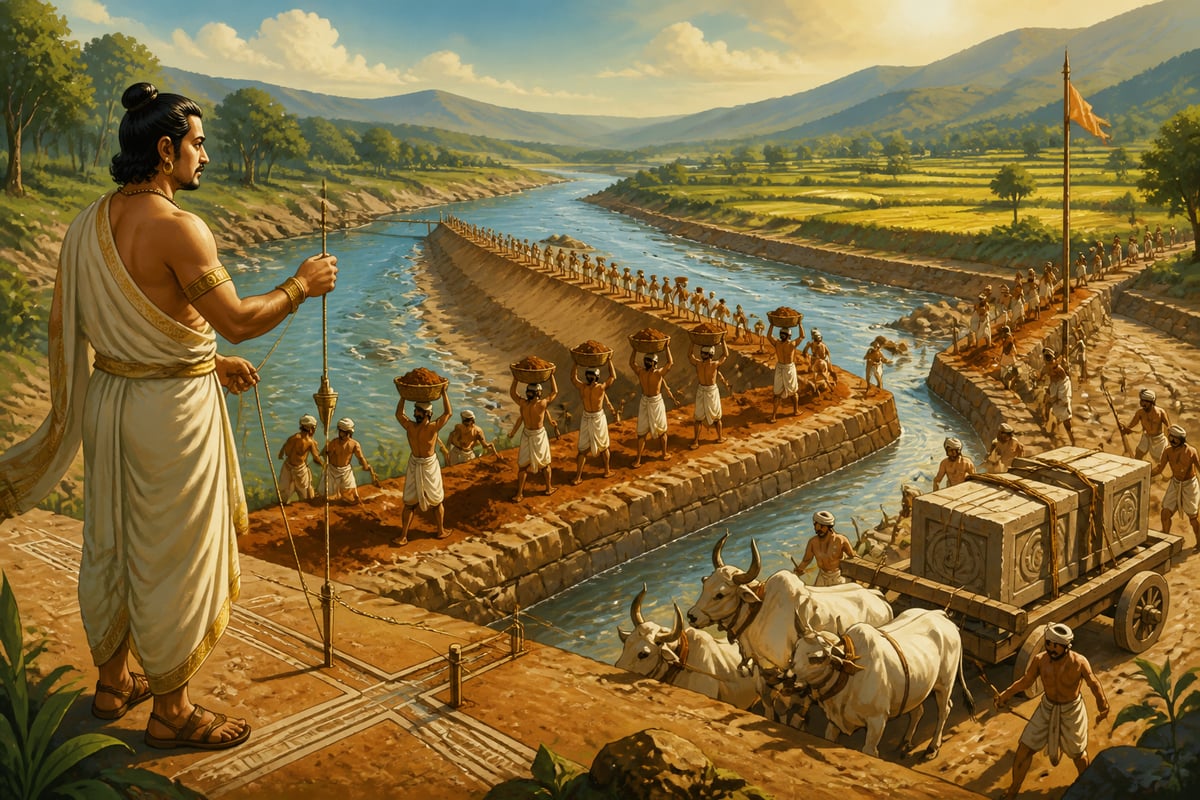
Kautilya mandated massive infrastructure spending that would primarily benefit future generations:
Roads and Highways: Enable trade and communication for centuries. The initial cost is enormous, but the benefit compounds over generations as commerce flows, cities connect, and unity strengthens.
Irrigation Systems: Transform agriculture permanently. A canal dug today can feed populations for centuries, dramatically increasing the land's carrying capacity and prosperity.
Fortifications: Protect not just the current generation but countless descendants, creating security that enables prosperity.
The principle: Initial investment costs are paid once. Benefits accrue forever.
Modern parallels include interstate highways, internet infrastructure, educational institutions, and legal frameworks - all requiring present sacrifice for future gains.
2. Preserve and Expand Knowledge
Kautilya emphasized systematic knowledge preservation through libraries, archives, educational institutions, and comprehensive documentation.
Why this matters: Knowledge compounds. A society that preserves what it learns enables each generation to stand on taller shoulders. Document successful policies and their reasoning. Record failures and lessons learned. Preserve technical knowledge so solutions don't die with individuals.
Educational institutions don't just transmit existing knowledge - they accumulate teaching wisdom, refine pedagogical methods, and create self-improving systems.
The principle: Each generation should inherit more knowledge than the previous. This accelerates civilizational progress and prevents the tragic waste of rediscovering what was already known.
3. Build Self-Improving Institutions
The best institutions don't just maintain themselves - they evolve and improve:
Legal Systems: Precedents accumulate wisdom from thousands of cases. Each decision adds to collective understanding. Law becomes more sophisticated, nuanced, and just across generations.
Bureaucratic Systems: Standard procedures refine through experience. Training improves. Institutional memory deepens. Administration becomes more capable without requiring extraordinary individuals.
Economic Systems: Property rights enable capital accumulation. Trade networks expand and deepen. Infrastructure investments compound. Prosperity builds on prosperity in virtuous cycles.
Design institutions that learn and improve, not just persist. This is the difference between stagnant tradition and evolving wisdom.
4. Sustainable Resource Management
Kautilya's approach to natural resources was explicitly multi-generational:
Forests: Protected areas for future timber, regulated harvesting rates, mandatory replanting - ensuring availability for descendants.
Fisheries: Seasonal restrictions, protected breeding areas, sustainable harvest limits - balancing present needs with future abundance.
Agricultural Land: Soil conservation, crop rotation, irrigation maintenance, fertility preservation - treating land as capital to protect, not just consume.
Use resources at rates sustainable indefinitely. Your great-grandchildren deserve a livable world.
This reveals Kautilya's profound libertarian insight: Property rights work only if they're sustainable. You can't have free markets if you destroy the capital base. Environmental stewardship isn't anti-freedom - it's the foundation of enduring prosperity.
5. Measure Success Generationally
Kautilya argued rulers should be judged not by immediate results but by what they leave behind.
A good reign:
- Successors inherit stronger institutions
- People are more prosperous
- Knowledge has advanced
- Freedom is better protected
- Infrastructure is improved
A failed reign (even if superficially prosperous):
- Institutions weakened
- Resources exhausted for present consumption
- Knowledge lost in succession
- Future options constrained
- Liberty diminished
This reframes everything. A ruler who achieves glory through conquest but weakens institutions has failed. One who builds unglamorous infrastructure and strong systems has succeeded - even if unremembered.
Legacy is measured in generations, not years.
The Libertarian Vision
Kautilya's generational thinking embodies profound libertarian wisdom that speaks directly to those who value freedom.
Individual liberty requires foundations that transcend individual lifespans:
Stable property rights maintained across generations enable capital accumulation and long-term investment. Predictable laws evolved through precedent create environments where people can plan and prosper. Limited government constrained by strong institutions prevents the concentration of power. Economic freedom enabled by infrastructure and knowledge creates opportunities that compound.
Each generation's sacred duty:
- Preserve the rights inherited from ancestors
- Enhance the institutions received as trustees
- Expand the knowledge accumulated over centuries
- Pass to successors strengthened, not depleted
The compound effect of freedom:
When each generation protects the liberty it inherited, builds institutions that constrain power, preserves and expands knowledge, and invests in sustainable infrastructure - freedom and prosperity compound across centuries.
This creates a remarkable dynamic: Each generation inherits more freedom, more prosperity, more knowledge, and more capability than the previous. Liberty doesn't just persist - it grows stronger.
This is the opposite of living off capital. It's systematically building capital - institutional, cultural, knowledge, physical - for future generations. Consumption depletes. Investment compounds. The choice determines whether civilization advances or declines.
The Personal Dimension
Generational thinking applies to everyone, not just rulers:
What Will You Leave?
Not material wealth (disperses quickly) or physical assets (depreciate), but:
- Institutions: Organizations you built or strengthened, systems you created, processes you documented
- Knowledge: Skills you taught, ideas you developed and shared, wisdom you preserved
- Culture: Values you modeled, traditions you strengthened, examples you set
The question isn't what you accumulate, but what serves others after you're gone.
At work: Document your knowledge so it doesn't die with you. Train successors so the organization doesn't depend on you. Build systems, not dependencies. Leave things better than you found them.
In family: Prioritize values over valuables. Education and capability matter more than inheritance. Cultural transmission of principles creates lasting impact. Institutional thinking - family traditions and practices - shapes generations.
In community: Contribute to institutions that will serve long after you're gone. Share knowledge freely rather than hoarding it. Mentor the next generation. Build what outlasts you.
The Ultimate Test
Kautilya proposed a thought experiment:
Imagine you suddenly died today. Your successor takes power tomorrow.
Would governance continue smoothly? Would prosperity be maintained? Would your accumulated wisdom be preserved? Would rights and freedoms survive the transition? Would institutions function independently? Would future generations benefit from your reign?
If yes to all six, you've succeeded. If no to any, your legacy is incomplete.
The same test applies to any position: If you left your job today, would work continue effectively? If you died tomorrow, would your family be prepared? If you disappeared, would your contributions persist?
This test reveals whether you've built true institutional strength or just personal indispensability.
The Compounding of Civilization
Kautilya's ultimate vision: civilization as compounding wisdom.
Each generation inherits institutions, knowledge, and infrastructure from predecessors, adds refinements based on experience, and passes an enhanced system forward.
Result: Each generation stands on taller shoulders, sees further, builds higher.
This is how science advances, technology improves, institutions mature, prosperity grows, and freedom expands.
The tragic anti-pattern: Each generation starting over, knowledge lost, institutions collapsed, civilization reset. The Dark Ages after Rome. The loss of classical knowledge.
Kautilya's genius was creating frameworks that enabled compounding rather than resetting. His Arthashastra itself exemplifies this: wisdom preserved across 2,300 years.
The Final Wisdom
Good governance isn't about you. It's about what serves people after you're gone.
The ultimate succession planning builds:
- Institutions that don't need you
- Systems that improve without you
- Knowledge preserved beyond you
- Freedom protected after you
This requires present sacrifice for future gain, ego subordinated to legacy, short-term costs for long-term benefits, personal glory foregone for institutional strength.
But the reward is immortality of the right kind - not fame, but impact compounding across generations.
As Kautilya understood: The king who plants forests under whose shade he'll never sit has built more lasting glory than the conqueror whose empire dies with him.
The libertarian lesson for our time:
If you value freedom, build institutions that protect it across generations. Don't just enjoy the liberty you inherited - strengthen it for your great-grandchildren.
Invest in constitutional constraints on power, educational systems teaching critical thought, cultural transmission of rights-consciousness, economic freedom and property rights, and knowledge accumulation.
This is how liberty compounds. This is how civilization advances. This is how we honor ancestors who bequeathed us freedom and descendants who deserve to inherit it enhanced.
The ultimate question Kautilya asks each of us:
Will the world be freer, more prosperous, and wiser because you lived?
Not during your lifetime - but a century after your death?
That's the measure of true succession, true continuity, and true legacy.
This principle recognizes that initial infrastructure investments are paid once but benefits accrue forever. By requiring rulers to think beyond their reign, Kautilya created a governance framework that compounds value across generations rather than extracting short-term gains. This counteracts the natural present bias of leaders who optimize for immediate popularity over long-term institutional health.
This fundamentally reframes success metrics from short-term to long-term, from personal achievement to intergenerational contribution. A ruler who exhausts resources for present glory leaves descendants impoverished. One who invests in sustainable systems enables compounding prosperity. This principle creates accountability beyond a leader's lifetime and incentivizes building rather than consuming institutional capital.
This principle prevents leaders from treating their position as personal property to exploit. By emphasizing intergenerational responsibility, Kautilya created accountability in both directions - gratitude to ancestors who built what you inherited, obligation to descendants who will inherit what you build. This framework transforms governance from extraction (maximizing personal benefit) to stewardship (enhancing what's passed forward).
Verses
राज्यवृद्धिः धर्मवृद्धिः अर्थवृद्धिः च पौत्रेषु
rājya-vṛddhiḥ dharma-vṛddhiḥ artha-vṛddhiḥ ca pautreṣu
The growth of the kingdom, righteousness, and wealth is measured in descendants.
True success isn't measured in your lifetime but in what you pass to future generations. A good ruler leaves institutions, prosperity, and justice stronger for their grandchildren.
Book 7, Chapter 14, Verse 19 (R.P. Kangle)
वृक्षरोपणं कूपखननं च भविष्यपुरुषार्थः
vṛkṣa-ropaṇaṃ kūpa-khananaṃ ca bhaviṣya-puruṣārthaḥ
Planting trees and digging wells are for the welfare of future people.
The best governance invests in infrastructure and resources whose benefits will primarily serve future generations. Present sacrifice for future prosperity is the mark of wise leadership.
Book 2, Chapter 1, Verse 39 (L.N. Rangarajan)
ये भूता ये च भविष्यन्ति राजानः तेषां कर्मणां फलम्
ye bhūtā ye ca bhaviṣyanti rājānaḥ teṣāṃ karmaṇāṃ phalam
The fruits of actions belong to both past and future kings.
You inherit the consequences of previous rulers' decisions and create consequences for future rulers. Governance is intergenerational - each reign connected to what came before and what comes after.
Book 1, Chapter 19, Verse 34 (R. Shamasastry)
Case studies
Ashokan Infrastructure - 2300 Year Legacy
Emperor Ashoka (c. 250 BCE) invested heavily in infrastructure with multi-generational benefits: roads, wells, hospitals, rest houses, tree planting along highways. These required enormous present resources for benefits primarily serving future generations.
Ashoka embodied Kautilya's generational thinking. His rock edicts explicitly addressed future generations. Infrastructure investments showed willingness to sacrifice present consumption for future benefit. His shift from conquest to welfare-focused rule demonstrated legacy over personal glory orientation.
Many of Ashoka's roads remained in use for centuries. His edicts survived 2,300 years, transmitting his dharma message across countless generations. His institutional legacy influenced Indian governance traditions far beyond the Mauryan Empire's political existence.
Multi-generational investments truly compound. Present sacrifice for future benefit can create legacies lasting millennia. The institutions and infrastructure you build may serve people for centuries after your empire falls.
Climate infrastructure investments today face the same calculus. Solar farms, upgraded power grids, and flood defenses require enormous present expenditure for benefits that compound over decades. The countries making these investments now are building infrastructure that will serve their populations for 50 to 100 years, while those delaying will pay far more later.
Ashoka's pillar and rock edicts, carved around 250 BCE, have survived over 2,300 years across sites from Afghanistan to southern India. His road network included hospitals every 8 miles, rest houses, wells, and shade trees, serving an empire of over 5 million square kilometers.
Norway's Sovereign Wealth Fund - Generational Investment
Norway discovered oil in 1969. Rather than spending windfall revenues immediately, they created a sovereign wealth fund investing oil profits for future generations. Current Norwegians could consume the wealth but choose to preserve it for their great-grandchildren.
Norway's approach exemplifies Kautilya's generational thinking: recognizing that natural resource wealth is finite but proper investment creates perpetual benefits. Present sacrifice (not consuming oil revenues) for future prosperity (investment returns compounding across generations).
The fund grew to over $1 trillion, becoming the world's largest sovereign wealth fund. Future Norwegian generations will benefit from resource wealth even after oil is depleted. Present sacrifice created compounding benefits for descendants.
Multi-generational thinking in practice: resist temptation to consume windfalls, invest for future generations, build systems that compound value across centuries. Kautilya's principles work in modern economics as in ancient kingdoms.
University endowments like Harvard's ($50 billion) and Stanford's ($36 billion) follow this model. Founders centuries ago sacrificed present consumption to create institutions that educate millions in perpetuity. Every sovereign wealth fund, endowment, and long-term trust is an application of this ancient principle: invest for the generations you will never meet.
Norway's Government Pension Fund Global, established in 1990, grew to over $1.7 trillion by 2025. The fund owns approximately 1.5% of all listed shares globally and generates returns that can fund 3% of Norway's GDP annually in perpetuity, benefiting future generations.
Historical context
c. 4th century BCE
Ancient Indian tradition emphasized intergenerational responsibility through concepts like rna (debt to ancestors) and duty to descendants, providing cultural foundation for Kautilya's institutional thinking.
The Mauryan Empire's institutional legacy - preserved in Ashokan edicts, administrative traditions, and the Arthashastra itself - demonstrates that multi-generational thinking actually works to preserve wisdom across centuries.
Living traditions
- Sovereign Wealth Funds: National investment funds preserving resource wealth for future generations rather than consuming it immediately
- Environmental Conservation Movements: Movements recognizing intergenerational responsibility for sustainable resource management
- University Endowments: Long-term investment funds ensuring educational institutions serve generations beyond their founders
- Long Now Foundation: Organization promoting long-term thinking and responsibility
- Future Generations Commissioners: Government positions representing interests of future generations
- Ashokan Pillar Edicts Sites: Rock and pillar edicts explicitly addressed to future generations, surviving 2,300 years as testament to multi-generational thinking
- Grand Anicut (Kallanai Dam): Ancient dam built around 100 CE still functioning today - infrastructure investment serving 2,000 years of generations
Reflection
- Kautilya measured success in what descendants inherited rather than what rulers achieved personally. How does this standard of measurement change what constitutes 'good governance' or 'successful life'?
- Do we have moral obligations to people not yet born? If so, how strong are these obligations compared to duties to people currently living? How do we balance present needs against future welfare?
- What are you building that will serve people after you're gone? What would you want your great-grandchildren to know about how you spent your time and resources?