Atmanirbhar Bharat: Strategic Economic Autonomy
Self-Reliance for Better Engagement
Atmanirbhar Bharat isn't about closing India to the world, it's about building capability that enables engagement from strength, not dependence. This lesson explores how strategic autonomy in critical sectors (pharma, chips, defense) differs from blanket protectionism, using India's pharmaceutical API crisis as the defining case study.
The Day India Realized Its Vulnerability
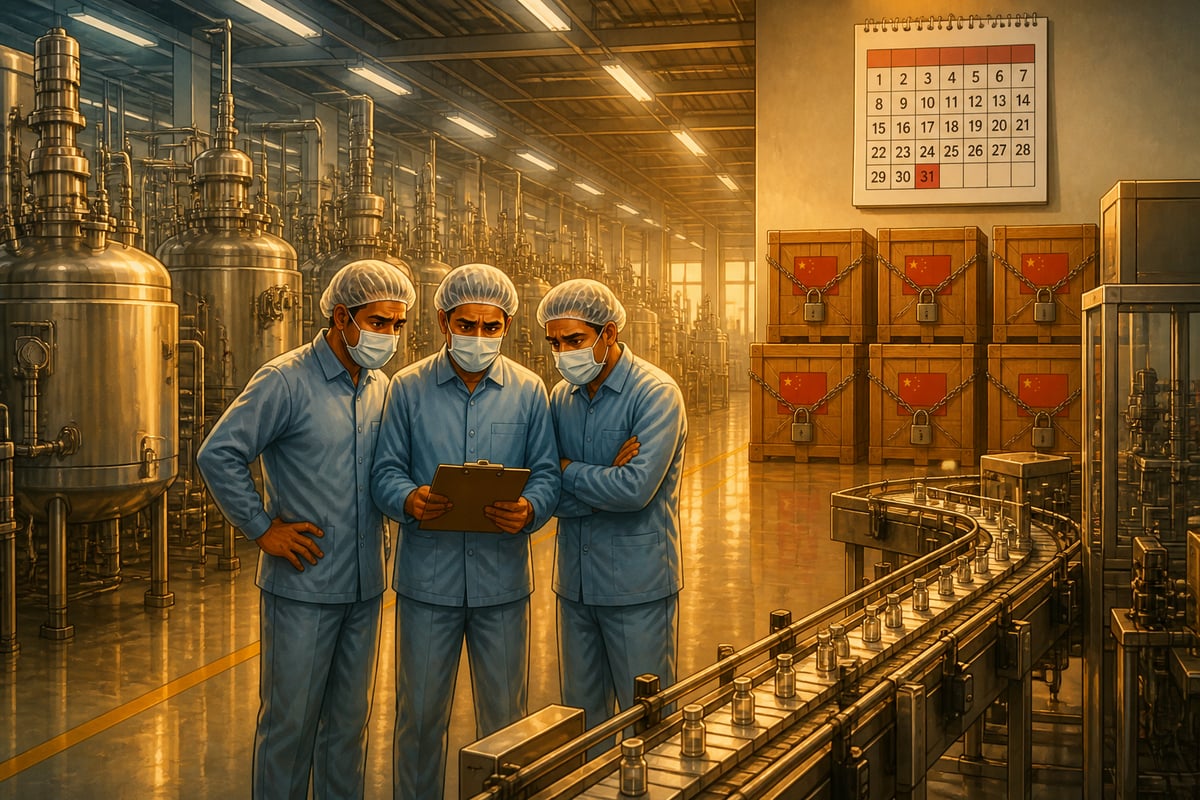
In March 2020, as COVID-19 locked down the world, India's pharmaceutical industry faced a terrifying reality. The country that called itself the "pharmacy of the world", producing 60% of global vaccines and 20% of generic medicines, discovered it couldn't make its own medicines.
Why? Because 70% of Active Pharmaceutical Ingredients (APIs), the actual chemicals that make drugs work, came from one country: China.
When China's factories shut down during the pandemic, India's medicine supply was suddenly at the mercy of a geopolitical rival. Paracetamol, azithromycin, vitamins, even basic medicines faced shortages. The "pharmacy of the world" was actually just a formulation and packaging center dependent on Chinese chemistry.
This wasn't a new problem. India had actually invented bulk drug manufacturing in the 1970s-80s. IDPL (Indian Drugs and Pharmaceuticals Limited) was a global leader. But cheaper Chinese imports and shortsighted cost-cutting had hollowed out domestic capability.
The lesson was brutal: being the world's low-cost assembler isn't the same as being self-reliant.
Shastri's Philosophy: Self-Reliance Under Fire
India has faced strategic dependency before, and overcome it.
In 1965, Lal Bahadur Shastri became Prime Minister during perhaps India's most vulnerable moment. Pakistan had invaded. India was still recovering from the 1962 war with China. And the United States, which had been supplying food aid under PL-480, suspended wheat shipments to pressure India over the war.
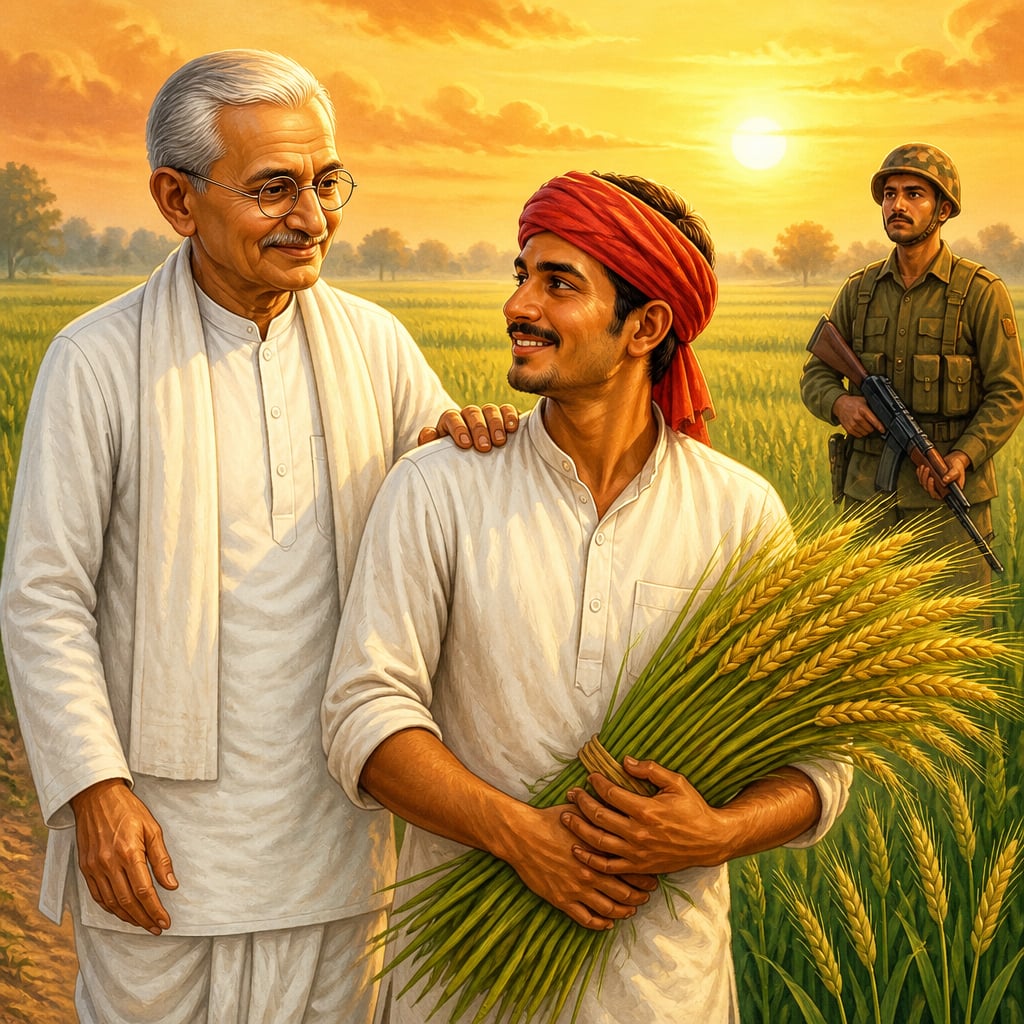
Shastri's response was "Jai Jawan, Jai Kisan", Victory to the Soldier, Victory to the Farmer. India would fight its own wars and grow its own food. No more depending on America's goodwill for survival.
He asked Indians to skip one meal a week. He accelerated the Green Revolution. He demanded that India achieve food self-sufficiency within a decade.
"स्वावलम्बनमेव सुखम्" Svavalambhanam eva sukham "Self-reliance alone is happiness."
By 1971, India was food self-sufficient. By 1980, it was a net food exporter. What seemed impossible in 1965, a country that couldn't feed itself becoming a grain exporter, happened because crisis created clarity.
Atmanirbhar Bharat is Shastri's philosophy updated for 2025: strategic self-reliance in sectors where dependence creates vulnerability.
What Atmanirbhar Actually Means
Critics, especially Western economists, often misunderstand Atmanirbhar Bharat. They confuse it with 1970s-style autarky or protectionism.
It's neither. Here's the crucial distinction:
What Atmanirbhar is NOT:
- Complete self-sufficiency in everything
- Closing India to foreign trade
- Rejecting global supply chains
- 1970s-style License Raj protectionism
What Atmanirbhar IS:
- Strategic autonomy in critical sectors (pharma, chips, defense, energy)
- Capability-building that enables global competitiveness, not avoidance
- Conditional interdependence: trade from strength, not dependence
- Negotiating leverage: alternatives that let you walk away from bad deals
The BATNA Principle:
Harvard negotiation research shows that your negotiating power depends on your BATNA, Best Alternative to Negotiated Agreement. The party with better alternatives always gets better terms.
Atmanirbhar is about building India's BATNA. When you can make your own chips, your negotiations with Intel and TSMC improve. When you can make your own APIs, Chinese pharma companies can't dictate terms.
Global Perspectives on Strategic Autonomy
Albert Hirschman (1915-2012), the economist, analyzed how trade dependency creates political vulnerability. His book "National Power and the Structure of Foreign Trade" (1945) showed how Nazi Germany used trade relationships to dominate smaller European nations before invasion. Economic dependence preceded military conquest.
Dani Rodrik (1957-present), Harvard economist, argues for "smart globalization" rather than either free trade or protectionism. Nations should integrate globally where it benefits them and maintain autonomy where vulnerability exists. One-size-fits-all globalization doesn't serve developing nations.
Robert Atkinson (1958-present), founder of Information Technology and Innovation Foundation, documents how the US itself practices strategic autonomy through CHIPS Act, Buy American provisions, and technology export controls, while preaching free trade to others.
| Thinker | Key Insight | Indian Application |
|---|---|---|
| Hirschman | Trade dependency creates political vulnerability | 70% API dependence on China = geopolitical risk |
| Dani Rodrik | Smart globalization: integrate selectively | Strategic autonomy in critical sectors only |
| Robert Atkinson | All major powers practice strategic autonomy | India following proven playbook |
Kautilya anticipated all this. The Arthashastra emphasizes that a king must never depend on a single supplier for strategic goods (rajya-yoga). Diversification of sources and domestic capability in essentials isn't paranoia, it's prudent statecraft.
The Pharma API Crisis and Response
India's pharmaceutical industry illustrates both the problem and the solution.
The vulnerability (pre-2020):
- API imports from China: 70% of total
- Key antibiotics: 90%+ imported
- Vitamins and fermentation products: 80%+ imported
- Zero domestic capacity in several critical APIs
How did this happen?
In the 1990s, India's bulk drug industry was world-class. IDPL, HAL, and private companies made APIs domestically. But:
- Chinese companies offered APIs at 30-40% lower cost
- Indian companies found importing cheaper than manufacturing
- Government policy didn't distinguish strategic from non-strategic imports
- Short-term cost savings trumped long-term capability
Over two decades, India's API manufacturing capability atrophied. The factories closed. The skills were lost. By 2020, India was a formulation superpower built on a Chinese foundation.
The response (2020-2025):
- PLI for Pharmaceuticals: Rs 15,000 crore scheme for domestic API manufacturing
- Three Bulk Drug Parks: Gujarat, Himachal Pradesh, Andhra Pradesh, with shared infrastructure reducing costs
- Import restrictions: Certain APIs now on "negative list", must be sourced domestically
- Research incentives: Support for fermentation technology and complex chemistry where China leads
Early results:
- Paracetamol API: India now produces 100% domestically (from 30%)
- Critical antibiotics: 50%+ local (from 20%)
- New API plants: 60+ approved under PLI
- Target: 50% API self-sufficiency by 2027, 80% by 2030
Strategic vs. General Self-Reliance
Atmanirbhar isn't about making everything in India. That would be inefficient and impossible.
The principle is strategic selectivity: identify sectors where dependence creates unacceptable risk, then build capability in those areas.
Strategic sectors requiring autonomy:
| Sector | Risk of Dependence | Atmanirbhar Response |
|---|---|---|
| Semiconductors | China/Taiwan chokepoint | $10B Semiconductor Mission |
| Pharma APIs | Health security at risk | PLI + Bulk Drug Parks |
| Defense | Cannot fight wars with imported weapons | 75% indigenization target |
| Energy | Oil dependence creates foreign policy constraints | Ethanol blending, solar manufacturing |
| Critical minerals | EV battery supply chains | Mining agreements, recycling |
Non-strategic sectors where imports are fine:
- Consumer electronics (non-strategic, comparative advantage elsewhere)
- Textiles and apparel (global value chains efficient)
- Software (already globally competitive)
- Agricultural commodities (trade benefits both parties)
The Shastri principle applies: be self-reliant where survival is at stake; trade freely everywhere else.
Modern Resonance: From Dependence to Leverage
Atmanirbhar is producing results across strategic sectors:
Defense:
- Indigenous content: 60% in 2024 (from 30% in 2014)
- Defense exports: Rs 21,000 crore (from Rs 700 crore)
- First aircraft carrier, first fighter jet exports, first cruise missile exports
Digital Infrastructure:
- UPI: Built entirely in India, now exported to 10+ countries
- Aadhaar: World's largest biometric ID, no foreign technology
- CoWIN: Managed world's largest vaccination drive on Indian software

Space:
- ISRO: 100% indigenous capability, now launching foreign satellites commercially
- Chandrayaan-3: When Russia's Luna-25 failed, India succeeded, on Indian technology
Pharma API (in progress):
- 60+ new API plants approved
- Paracetamol fully localized
- Target: 80% self-sufficiency by 2030
The pattern: Build capability first, then engage globally from strength. ISRO doesn't refuse international collaboration, it collaborates as an equal. Indian pharma won't stop exporting, it will export medicines made entirely on Indian APIs.
Your Turn: Personal Atmanirbhar
The Atmanirbhar principle applies at every scale, including personal.
Ask yourself:
- What are your strategic vulnerabilities? Skills you depend on others for that could be withdrawn?
- Where is your BATNA weak? Negotiations where you have no alternatives?
- What capabilities would give you leverage in career, relationships, life?
Shastri's insight applies personally: don't depend on anyone's goodwill for your essentials. Build capability that lets you engage from strength, not need.
The employee who has skills multiple companies want negotiates better than one with no alternatives. The entrepreneur who can walk away from a bad deal gets better deals. The nation that can make its own medicines can't be blackmailed.
Atmanirbhar isn't about isolation. It's about the freedom that comes from capability.
In the final lesson, we'll synthesize everything into PM Modi's comprehensive 2047 vision, how all these threads (development definition, growth pathway, manufacturing, demographics, self-reliance) weave together into a coherent plan for Viksit Bharat.
Harvard negotiation research shows that the party with better alternatives (BATNA) always negotiates better. Atmanirbhar is about building India's BATNA, the capability to walk away that improves every deal.
India's svavalamban tradition adds a moral dimension to BATNA: self-reliance isn't just tactical but dharmic. Building capability is duty; dependence is weakness to be overcome, not accepted.
When India had zero fighter jet manufacturing capability, defense procurement deals were one-sided. Now, with Tejas operational, India negotiates with Lockheed, Boeing, Dassault from strength, and often chooses 'Make in India' over import.
Modern supply chain theory distinguishes between 'commodities' (fungible, multiple sources) and 'strategic goods' (concentrated supply, essential for security). The US CHIPS Act applies this logic to semiconductors.
Kautilya's framework is more sophisticated than modern 'friend-shoring', he advocated both diversification (multiple sources) AND domestic capability (internal alternative). India's API strategy combines both.
The Atmanirbhar framework identifies 5 strategic sectors requiring autonomy (defense, pharma, chips, energy, critical minerals) while explicitly welcoming foreign investment in non-strategic sectors. Strategic selectivity, not blanket protectionism.
Key terms
- Atmanirbhar
- Self-reliant; capable of depending on oneself while still engaging interdependently with the world. Not isolation but capability-based engagement.
- Svavalamban
- Self-support, self-reliance, the capacity to stand on one's own feet without depending on others' assistance or goodwill for survival.
- Rananaitik Svayattata
- Strategic autonomy, the freedom to make independent decisions in critical areas without being constrained by external dependencies or pressures.
- Vaikalpik Srota
- Alternative sources, the diversification of supply chains to ensure no single foreign party can hold leverage over essential goods.
Key figures
Lal Bahadur Shastri
Second Prime Minister of India, architect of food and defense self-reliance
Narendra Modi
Prime Minister of India, architect of Atmanirbhar Bharat vision
Albert Hirschman
Economist, theorist of trade and political dependency
Case studies
India's Pharma API Crisis: From 'Pharmacy of the World' to Strategic Vulnerability
India proudly called itself the 'Pharmacy of the World', producing 60% of global vaccines and 20% of generic medicines. Indian pharma companies supplied affordable medicines to Africa, helped the US manage drug costs, and earned valuable foreign exchange. But COVID-19 revealed a devastating truth: India was a pharmacy without its own ingredients. **The hidden dependence (2020):** - 70% of Active Pharmaceutical Ingredients (APIs) imported from China - Key antibiotics: 90%+ Chinese APIs - Paracetamol (India's most-used medicine): 70% imported API - Vitamins: 80%+ from China - Fermentation-based APIs: near-total dependence **How did this happen?** In the 1970s-80s, India had world-class bulk drug manufacturing. IDPL (Indian Drugs and Pharmaceuticals Limited) was globally competitive. Indian scientists pioneered process chemistry. But in the 1990s-2000s: - Chinese companies offered APIs at 30-40% lower prices - Indian manufacturers found importing cheaper than producing - Short-term cost savings drove strategic decisions - Government didn't distinguish strategic from non-strategic imports - Environmental regulations made Indian API production expensive while China ignored pollution Over two decades, India's API capability atrophied. Factories closed, skills were lost, supply chains consolidated in China. By 2020, India's 'Pharmacy of the World' was actually a formulation and packaging operation dependent on Chinese chemistry.
**Applying Svavalamban:** India violated the core principle: never depend on a rival for survival essentials. Medicine is as strategic as food or defense. Shastri's 'Jai Kisan' ensured food security; the equivalent 'Jai Pharmaceutical' was missing. **Applying Kautilyan Diversification:** Kautilya warned: 'Ekaishvaryam naiva bhajet', never single-source essentials. India's 70% dependence on Chinese APIs violated this 2,300-year-old wisdom. Multiple sources and domestic capability were both neglected. **Applying Strategic Selectivity:** The failure was treating APIs as 'just another import' rather than strategic input. Cheap smartphones from China are fine, cheap APIs that control your medicine supply are not. The dharmic principle is selective: identify what's essential, protect that. **The Cost of Violating Principles:** When China's factories shut during COVID, India faced medicine shortages. The 'pharmacy of the world' couldn't ensure its own citizens had basic medicines. This was the fruit of two decades of ignoring svavalamban.
**The Atmanirbhar Response (2020-2025):** 1. **PLI for Pharmaceuticals:** Rs 15,000 crore scheme for domestic API manufacturing with outcome-linked incentives. 2. **Three Bulk Drug Parks:** Gujarat, Himachal Pradesh, Andhra Pradesh, shared infrastructure reducing capital costs by 30-40%. 3. **Import Restrictions:** Certain critical APIs on 'negative list', must be sourced domestically or from approved allies. 4. **Fermentation Technology Push:** Support for fermentation-based APIs (vitamins, antibiotics) where China currently dominates. 5. **R&D Incentives:** Tax benefits for API process research to rebuild innovation capability. **Results by 2024:** - Paracetamol API: 100% domestic (from 30%) - Critical antibiotics: 50%+ local (from 20%) - 60+ new API manufacturing units approved - Rs 30,000+ crore private investment committed **Target:** 50% API self-sufficiency by 2027, 80% by 2030. **The model:** Crisis creates clarity. COVID exposed the vulnerability; Atmanirbhar provided the response. Within 5 years, India is rebuilding a capability that took 20 years to lose.
Strategic dependencies can accumulate gradually while seeming like 'just cost optimization.' COVID revealed that India's pharma leadership was built on a Chinese foundation. Atmanirbhar's selective approach, building capability in strategic sectors while trading freely in others, is the dharmic middle path between autarky and naive globalization.
COVID-19 exposed identical vulnerabilities in Western nations: Europe discovered 80% of its antibiotics came from China and India. The US CHIPS Act, EU Critical Raw Materials Act, and India's PLI for APIs all respond to the same realization: strategic supply chains concentrated in a single country are a national security risk, not just a cost optimization.
The cost of dependence: When China restricted API exports in early 2020, paracetamol prices in India rose 40% within weeks. India's 'Pharmacy of the World' couldn't control the price of its most basic medicine. This vulnerability is what Atmanirbhar addresses.
Historical context
Post-Independence Self-Reliance Movements (1947-2025)
India's self-reliance journey has been uneven. Food: success (Green Revolution). Defense: progress (75% indigenization). Pharma APIs: rebuilding (from near-total dependence). Electronics: beginning (semiconductor mission). The Atmanirbhar framework provides coherent strategy across all strategic sectors.
Every major power practices strategic autonomy while preaching free trade. US: CHIPS Act, Buy American, technology export controls. China: Made in China 2025, military-civil fusion. EU: Digital sovereignty, vaccine production. India's Atmanirbhar is following a proven playbook, not inventing protectionism.
US CHIPS and Science Act: $280 billion to build semiconductor capability in America. This is the US version of Atmanirbhar, strategic autonomy in critical sectors while championing free trade elsewhere.
Strategic dependencies compound during peace and explode during crisis. India's API dependence seemed fine until COVID; semiconductor dependence seems fine until Taiwan conflict. Atmanirbhar is about building capability before crisis forces it.
Reflection
- Shastri's response to American food aid suspension was to achieve food self-sufficiency rather than find a different donor. How does this differ from simply 'diversifying suppliers'? What's the distinction between reducing dependence on Country A (by shifting to Country B) versus building genuine self-reliance (capability to produce yourself)? When is each approach appropriate?
- Apply strategic selectivity to your personal life. What are your 'strategic sectors', capabilities so essential that dependence creates vulnerability? What are 'non-strategic' areas where outsourcing or depending on others is fine? Identify one strategic capability you should build and one dependency you can comfortably accept.