Hindu Avibhakta Parivar: HUF as Business Structure
The Ancient Corporation That Predates the West
How the Hindu Undivided Family (HUF) created history's first perpetual business entity, offering tax efficiency, asset protection, and multi-generational continuity that Western corporations only achieved centuries later.
The Will That Changed Everything
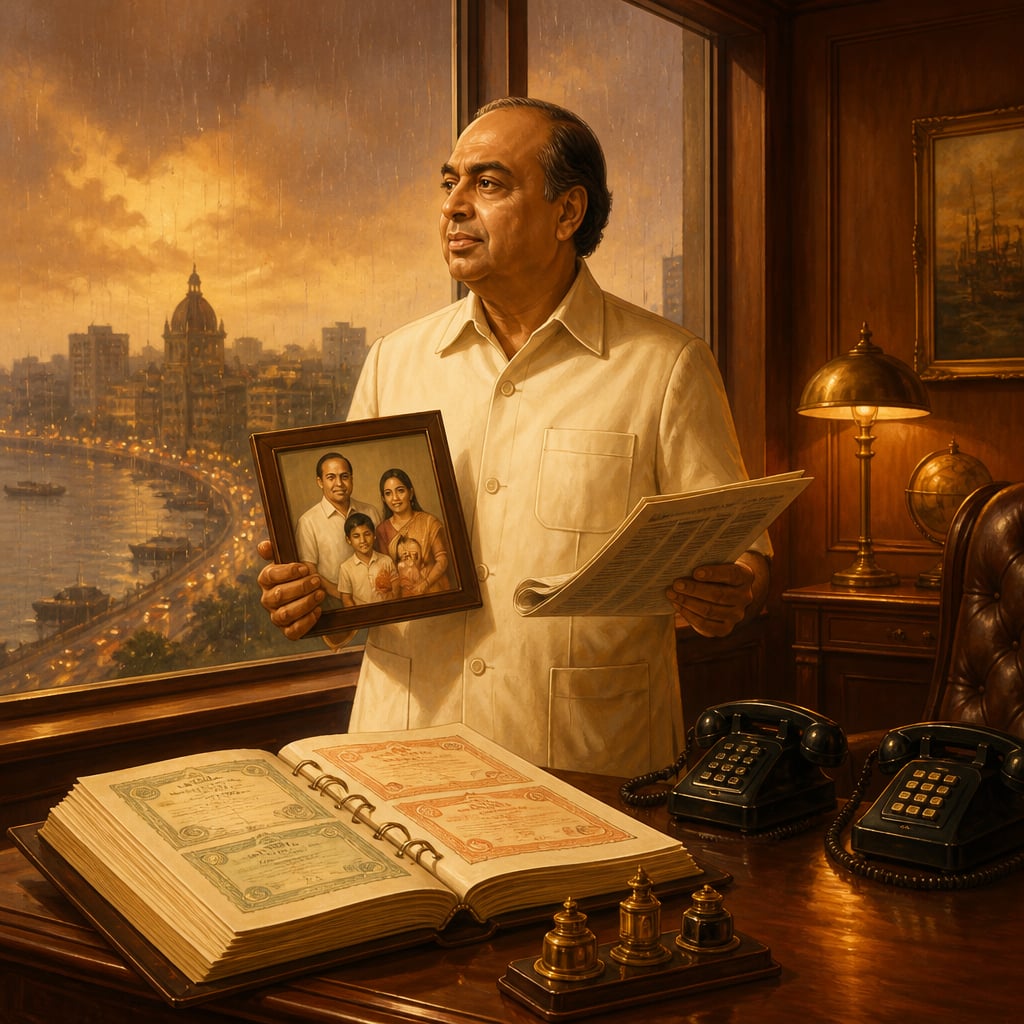
In 1984, Dhirubhai Ambani faced a dilemma that had stumped Indian patriarchs for millennia. His two sons, Mukesh and Anil, were both capable, both ambitious, and both convinced they should lead Reliance Industries. Dhirubhai made a choice that surprised everyone: he wrote no will. Instead, he trusted an ancient structure called the Hindu Undivided Family (HUF) to keep his empire intact.
When Dhirubhai died in 2002 without a will, legal experts predicted disaster. Western succession law would have triggered immediate inheritance battles. But the Ambani family was governed by something older than British law, the Avibhakta Parivar, the undivided Hindu family, a legal entity that had protected Indian business wealth since the Vedic age.
What is this mysterious structure? Why does India's Income Tax Act, written by British colonizers, still recognize it as a separate taxable entity? And how can a concept from the Dharmashastras still be relevant in 2025?
The Birth of History's First Corporation
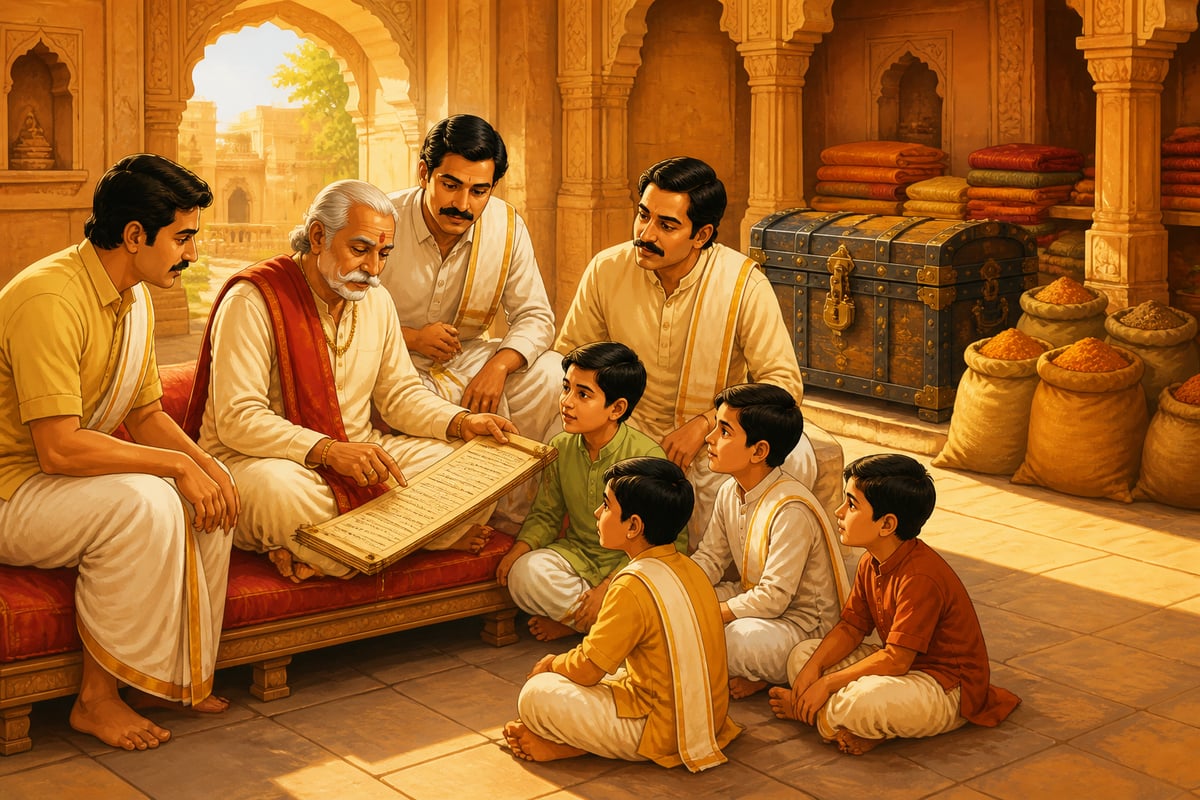
Long before the British East India Company (1600 CE) or the Dutch VOC (1602 CE), India had created perpetual business entities. The Avibhakta Hindu Parivar was a legal fiction with remarkable properties:
- It could own property separate from any individual member
- It continued across generations without dissolution
- It could sue and be sued as an entity
- Members had defined rights without full ownership
The Yajnavalkya Smriti (c. 200-500 CE) codified this:
"Pitṛ-paitāmahopāttaṁ dravyaṁ vibhajyate samam" "Property acquired from father and grandfather is divided equally among heirs."
But here's the crucial insight: until division (vibhaga) occurred, the property belonged to no individual, it belonged to the family as an entity. This is remarkably similar to how modern corporations work, where shareholders have claims but don't individually own corporate assets.
Vijnaneswara, the 11th-century jurist who wrote the Mitakshara commentary, made this explicit: a son acquires interest in ancestral property by birth (janma), not by the father's death. The family, not the patriarch, is the ultimate owner.
Global Perspectives on Family Business Structures
The HUF's sophistication becomes clear when compared to Western alternatives.
John Ward (1945-present), Professor Emeritus at Northwestern's Kellogg School and the world's foremost authority on family business, has spent 40 years studying why family businesses fail. His research shows that only 30% survive to the second generation, 12% to the third, and 3% to the fourth. The primary killer? Unclear ownership structures leading to succession conflicts.
Ward's prescribed solution, family constitutions, shareholder agreements, trusts, are exactly what the Mitakshara system provided automatically through coparcenary rights. Indian jurists solved in the 5th century what Harvard Business School teaches in the 21st.
Sam Walton (1918-1992) of Walmart fame used a different approach. He created the Walton Family Holdings trust, which owns 48% of Walmart stock worth approximately $267 billion (2024). But this required expensive lawyers, complex trust structures, and constant legal maintenance. The HUF achieves similar results through dharmic law alone.
Peter Drucker (1909-2005), the father of modern management, observed: "The family business is the oldest form of business organization, yet business schools treat it as an anomaly." In India, it was never anomalous, it was foundational.
| Structure | Origin | Key Feature | Limitation |
|---|---|---|---|
| HUF (India) | c. 200 CE | Birth-right ownership, automatic perpetuity | Limited to Hindu law |
| Family Trust (UK/US) | c. 1500 CE | Flexible beneficiary rules | Expensive setup, legal fees |
| Corporation | c. 1600 CE | Limited liability | No family-specific governance |
| LLC/LLP | c. 1977 CE | Tax pass-through | No multi-generational continuity |
The Modern Tax Advantage

In 2024, India's Income Tax Act recognizes HUF as a separate taxable entity, distinct from its members. This creates legitimate tax planning opportunities:
- An individual earning ₹15 lakh pays approximately ₹2.5 lakh in tax
- If the same person creates an HUF and splits income, effective tax can reduce by 30-40%
- HUF can own property, run businesses, and make investments, all taxed separately
Finance Minister Nirmala Sitharaman's 2023 budget maintained HUF provisions despite tax simplification efforts. Why? Because the structure serves genuine economic purposes, keeping family businesses intact across generations rather than forcing asset sales for inheritance taxes.
Consider the Bajaj family. When Rahul Bajaj (1938-2022) structured the family holdings, he used HUF frameworks to ensure his sons Rajiv and Sanjiv could manage different business verticals without fragmenting ownership. Today, Bajaj Auto and Bajaj Finserv operate as separate companies, but the family wealth remains substantially unified through HUF structures.
When Unity Becomes Burden
The Dharmashastras recognized that not all families should remain undivided. The Narada Smriti (c. 100-400 CE) explicitly permits partition (vibhaga):
"Vibhāgaḥ pitari jīvati anyonyasyānumate bhavet" "Partition may occur even while the father lives, with mutual consent."
This wisdom acknowledges that forced unity can become toxic. The Ambani brothers eventually partitioned in 2005, Mukesh taking petrochemicals and telecom, Anil taking finance and infrastructure. The division, mediated by mother Kokilaben, followed dharmic principles: mutual consent (anyonyasyānumate) rather than court-imposed solutions.
Crucially, partition doesn't destroy the HUF, it creates two new HUFs. Each brother's family became a separate Avibhakta Parivar, continuing the structure for another generation. The entity evolved rather than terminated.
Your Turn: Is HUF Right for You?
The HUF structure isn't for everyone. You can only create one if you're Hindu (including Sikhs, Jains, and Buddhists under current law), married, and have a "family", even a spouse alone qualifies.
Ask yourself:
- Do you have ancestral property or plan to build assets for future generations?
- Are family members involved in your business or investments?
- Would tax efficiency across generations benefit your wealth-building?
- Is there family consensus to manage assets jointly?
If you answered yes, the Avibhakta Parivar isn't ancient history, it's a competitive advantage. The Marwaris, Chettiars, and Gujaratis who built India's business empires didn't just have business acumen; they had structural advantages baked into their legal frameworks.
In the next lesson, we'll dive deeper into the Mitakshara system, the specific rules governing who owns what, and how coparcenary rights work in practice.
Principal-Agent Alignment and Long-term Incentive Design
Modern corporate governance struggles with the 'agency problem', managers may not act in owners' interests. Stock options, profit-sharing, and equity grants attempt to create alignment. Family offices and dynasty trusts try to involve heirs early.
Birth-right ownership solves this automatically. A son who is already an owner at birth has no incentive to deplete assets before inheritance, the assets are already partly his. This creates natural long-term thinking without complex incentive structures.
India has over 9 million registered HUFs (2023 estimates), managing combined assets worth several trillion rupees. Average HUF survival across generations exceeds the global family business average of 30% second-generation survival.
Corporate law provides exit through share sales; partnership law through dissolution. But these often destroy value through forced liquidation or discounted sales. Family trusts can lock in beneficiaries for decades.
HUF partition doesn't destroy, it multiplies. When an HUF partitions, it creates multiple new HUFs, each continuing the structure. The Ambani partition created two family empires, not one destroyed legacy. Exit preserves the framework.
Key terms
- Avibhakta Parivar
- An undivided or joint Hindu family; a legal entity comprising all persons lineally descended from a common ancestor, along with their wives and unmarried daughters
- Sahādāyika / Coparcener
- A member of a Hindu Undivided Family who has a birthright share in ancestral property; originally limited to male descendants within four generations, now includes daughters since 2005
- Vibhāga
- Partition or division of joint family property; the legal process by which an HUF is dissolved and property distributed among coparceners
- Kartā
- The manager or head of a Hindu Undivided Family; typically the senior-most male member, responsible for managing joint family affairs and representing the HUF legally
Verses
पितृपैतामहोपात्तं द्रव्यं विभज्यते समम्
pitṛ-paitāmahopāttaṁ dravyaṁ vibhajyate samam
What father and forefather earned, the heirs divide in equal shares.
This creates automatic wealth preservation. Unlike Western inheritance where assets transfer at death (often triggering sales for taxes), Hindu joint family property remains intact until conscious partition. The family, not any individual, is the perpetual owner, anticipating the corporate concept by millennia.
Yajnavalkya Smriti, 2.121 (Based on Ganganath Jha translation)
विभागः पितरि जीवति अन्योन्यस्यानुमते भवेत्
vibhāgaḥ pitari jīvati anyonyasyānumate bhavet
Even while the father lives, the sons may part, but only when all hearts agree.
This is sophisticated governance design. Rather than mandating eternal unity (which creates resentment) or easy exit (which fragments wealth), the shastras require consensus, ensuring partition happens only when genuinely necessary. The Ambani partition of 2005 followed exactly this principle.
Narada Smriti, 13.1-2 (Based on Julius Jolly translation)
जन्मना एव स्वत्वम्
janmanā eva svatvam
By birth alone does ownership arise.
Birth-right ownership creates automatic stakeholder alignment. Each generation is invested from day one, reducing the 'spend it all before death' incentive that plagues individual ownership. It's a built-in long-term thinking mechanism that family business consultants spend years trying to create artificially.
Mitakshara (Vijnaneswara), Commentary on Yajnavalkya Smriti 2.120 (Based on J.R. Gharpure translation)
Key figures
Vijnaneswara
11th-12th century CE (c. 1050-1120 CE)
Dhirubhai Ambani
1932-2002
John L. Ward
1945-present
Case studies
The Ambani Inheritance: How Ancient Law Saved a Modern Empire
When Dhirubhai Ambani died intestate (without a will) in July 2002, he left behind Reliance Industries, India's largest private company with revenues exceeding ₹75,000 crore. His two sons, Mukesh (45) and Anil (43), had worked together for decades but harbored deep differences in business philosophy. Mukesh favored capital-intensive petrochemicals and infrastructure; Anil preferred financial services and telecommunications. Western legal experts predicted a devastating court battle that would destroy shareholder value. Instead, something remarkable happened: the family invoked Hindu Undivided Family principles to navigate the crisis.
Dhirubhai's decision to die without a will wasn't carelessness, it was a deliberate choice to let dharmic law govern succession rather than individual preference. Under HUF principles, both sons were already coparceners (sahādāyika) with equal birth-rights. No will could override this. The question wasn't 'who inherits?' but 'how do we partition (vibhāga)?' Following Narada Smriti's requirement of 'anyonyasyānumate' (mutual consent), mother Kokilaben mediated for three years. She didn't impose a solution, she facilitated agreement. The partition finally occurred in June 2005, with each son receiving businesses suited to his temperament. Crucially, each branch continued as a separate HUF, preserving the structure for future generations.
The partition was announced on June 18, 2005. Mukesh retained Reliance Industries (petrochemicals, refining); Anil received Reliance Communications, Reliance Energy, and Reliance Capital. At partition, combined value was approximately ₹1.5 lakh crore. By 2024, Mukesh's Reliance alone exceeded ₹20 lakh crore, the partition enabled focus and growth. While Anil's ventures struggled (a separate lesson in business decisions), the family avoided the litigation that typically destroys 30-50% of family business value in succession disputes. No courts, no prolonged uncertainty, no public acrimony during the critical transition period.
The Ambani case demonstrates that HUF structures don't prevent conflict, they channel it constructively. The ancient framework forced the family toward mediated partition rather than litigation, preserving wealth through the transition. Dhirubhai's 'missing' will was actually his final strategic decision.
India's startup ecosystem is producing its first generation of billion-dollar founders who will face succession questions within the next decade. Most have no wills, no family governance structures, and complex holding patterns across multiple entities. The Ambani intestate crisis is a warning that applies directly to founders of companies like Flipkart, Ola, and Paytm.
Had the Ambanis litigated, studies suggest 30-50% of company value could have been destroyed through management distraction, investor uncertainty, and legal costs. The mediated partition preserved an estimated ₹50,000+ crore in value.
Historical context
Classical Hindu Law Period (c. 200 CE - 1200 CE)
India's economy during this period was the world's largest, with sophisticated commercial networks. Family businesses operating under joint family principles controlled trade from Rome to Southeast Asia. The Dharmashastras weren't abstract philosophy, they governed actual commercial practice.
Europe during this period had no equivalent perpetual family business structure. Inheritance typically fragmented estates. The corporation wouldn't emerge until the 1600s. Indian family businesses had a 1,400-year head start on perpetual organization.
According to Angus Maddison's economic history data, India's GDP share was 32% in 1 CE and remained above 20% until 1700 CE, this sustained prosperity was built on family business structures governed by joint family principles.
Understanding HUF's historical depth corrects the misconception that Indian family business practices are 'traditional' (implying outdated). They're actually sophisticated legal technology that predates and often surpasses Western equivalents.
Living traditions
Major Indian family offices, Tata Trusts, Birla family office, Ambani family holdings, incorporate HUF principles even when using modern trust structures. The Income Tax Act's continued recognition of HUF as separate entity (despite periodic review) reflects the structure's ongoing utility. Startups founded by Hindu families increasingly use HUF alongside LLPs and private limited companies for tax-efficient family wealth building.
- HUF Tax Filing: Each HUF has its own PAN card and files separate income tax returns, allowing legitimate tax planning across family members
- Kartā Appointments: Traditional appointment of family head (Kartā) continues, with modern families sometimes rotating this role or appointing professional family offices to assist
- Partition Deeds: Formal partition (vibhāga) is still executed through registered deeds, following principles from the Dharmashastras adapted to modern law
- Shekhawati Havelis, Rajasthan: The ancestral homes of Marwari business families, many still held as HUF properties, featuring art depicting family business traditions across generations
- Chettinad Mansions, Tamil Nadu: The palatial homes of Nattukotai Chettiar families, built with trading wealth and maintained through joint family structures for over a century
- Mahalakshmi Temple: One of India's most sacred Shakti Peethas, this temple has blessed family wealth and HUF structures for centuries. Business families seek Lakshmi's guidance for harmonious family wealth management.
- Kubera Shrine at Brihadeeswara Temple: This ancient Chola-era temple includes a shrine to Kubera, the deity of wealth and treasurer of the gods. Families seek his blessing for righteous wealth preservation across generations.
Reflection
- The Mitakshara principle 'janmanā eva svatvam' (ownership by birth) differs fundamentally from Western inheritance where children become owners only upon parents' death. How might this difference in timing affect long-term business thinking and inter-generational relationships?
- If you were to create an HUF today, what assets would you include, and what governance rules would you establish to prevent future conflicts while maintaining the flexibility for partition if needed?