From Faultline to Foundation
Social Reform Without Weaponization
India's reform tradition, from Basaveshwara to Narayana Guru, shows caste reform succeeds from within. This lesson provides a five-pillar reconciliation strategy that addresses genuine grievances without feeding civilizational fragmentation.
See It Today: The Lingayat Separation Gambit
In March 2018, the Karnataka state government made a recommendation that would have delighted every Breaking India strategist on the planet. The Siddaramaiah-led Congress government forwarded a proposal to the central government requesting that Lingayats and Veerashaivas be classified as a separate non-Hindu religion.
The timing was not subtle. Karnataka state elections were weeks away. Lingayats constitute roughly 17% of the state's population and had historically been a BJP vote bank. Classifying them as non-Hindu would make them eligible for minority benefits. More importantly, it would fracture the Hindu electoral consolidation that the BJP depended on.
The irony was staggering. Basaveshwara, the 12th-century founder of the Lingayat movement, was one of Indian civilization's greatest internal reformers. His Anubhava Mantapa in Kalyana was a revolutionary assembly where people of all castes debated philosophy as equals. His Vachana literature attacked caste hierarchy not by rejecting dharma but by demanding that dharma live up to its own principles. He didn't say "leave Hinduism." He said "this is not what dharma means."
Eight centuries later, that same reform legacy was being repackaged as evidence that Lingayats were never Hindu at all. The logic was remarkable in its circularity: because Basaveshwara criticized social hierarchy within the Hindu tradition, he must have been rejecting the tradition entirely.
The move largely failed. Many Lingayat leaders, including heads of major mathas, rejected the separate religion classification. The BJP swept the 2018 Karnataka elections. But the template remained operational: take any internal reform tradition and reframe it as proof of civilizational departure. If this technique succeeds, every Bhakti saint who ever challenged caste hierarchy becomes evidence that Hinduism was always fragmenting rather than self-correcting.
This is the core challenge of Chapter 5's counter-strategy: how do you pursue genuine social reform without handing ammunition to those who want to break the civilization apart?
The Mechanism: Building Bridges Without Burning the House
The Reform Paradox
This lesson operates at the intersection of two truths that many people refuse to hold simultaneously.
Truth one: caste-based discrimination is real, documented, and ongoing. Untouchability practices persist in parts of rural India. Economic exclusion based on birth identity continues. Temple access, while legally guaranteed, remains contested in some communities. These are genuine grievances that demand genuine reform.
Truth two: external actors systematically weaponize these grievances to fragment Indian civilization. The caste-as-race framework promoted at the UN, the Afro-Dalit project linking Dalit identity to global racial politics, the academic industry that frames every caste discussion as evidence of Hindu civilizational failure: these are documented operations explored in Lessons 05_02 and 05_03.
The reform paradox is this: acknowledging the second truth does not diminish the first. And addressing the first truth does not require surrendering to the second. The challenge is doing both simultaneously.
How Reform Gets Captured
The weaponization of reform follows a predictable pattern.
First, a legitimate demand emerges: temple access for all communities, economic opportunities beyond traditional occupations, dignity in social interactions. These demands arise organically from within the civilizational framework.
Second, external actors adopt the demand and reframe it. Temple access becomes "proof that Hinduism excluded people." Economic justice demands become "evidence that the caste system is India's apartheid." Sectarian identity preservation becomes "these were never Hindus."
Third, the reframing becomes the dominant narrative internationally. The original demand for reform within the civilization gets replaced by a demand to dismantle the civilization itself.
Fourth, internal reformers face an impossible choice: either abandon their reform demands (which feeds stagnation) or accept the external framing (which feeds civilizational fragmentation). This false binary is the weapon.
The Sect Division Vulnerability
The Lingayat episode reveals a broader vulnerability that Breaking India forces exploit: intra-Hindu sectarian differences.
Hinduism's philosophical diversity is its greatest strength. Shaiva and Vaishnava traditions maintained distinct theological positions for over a millennium. Smartha, Lingayat, Shakta, and countless regional traditions developed their own philosophical frameworks. They debated fiercely through the Shastrartha tradition. They competed for followers. They disagreed on metaphysics, ritual, and social organization.
But they never treated each other as civilizational enemies. A Shaiva king could patronize a Vaishnava temple. A Smartha philosopher could debate a Lingayat poet without either questioning the other's place within the larger civilizational framework. Theological diversity existed within civilizational unity.
Colonial scholarship began reframing this diversity as division. Western Indologists, trained in the Christian model where theological differences produce permanent schisms (Catholic vs Protestant, for instance), interpreted Shaiva-Vaishnava differences as evidence of fundamental disunity. This framing persists in modern academia and has been weaponized politically.
The 2018 Lingayat gambit was one example. Similar attempts have been made to classify Lingayats in census categories, to frame Virashaiva traditions as anti-Brahmin (and therefore anti-Hindu), and to use Sikh identity, which historically navigated between distinct identity and civilizational kinship with Hindu traditions, as a permanent civilizational severance.
The defense is not to deny genuine sectarian identities or theological differences. It is to maintain the civilizational framework within which these differences are enriching rather than fragmenting.
The Framework: Reform Without Weaponization
Successful internal reform follows four principles.
Economic empowerment first. Caste hierarchy survives primarily through economic exclusion. When communities gain economic independence through cooperative ownership, entrepreneurship, and skill development, caste-based dependency dissolves. The cooperative movement in Gujarat, microfinance networks in Tamil Nadu, and self-help group models across rural India demonstrate that economic solidarity across caste lines is achievable without identity politics.
Temple as institution, not just shrine. Historically, temples were educational centers, banks, employers, and social welfare hubs. Restoring this institutional function automatically creates cross-caste engagement because the services benefit everyone. When a temple runs a school that educates children from all communities, or a medical facility that treats patients regardless of background, caste walls erode through daily interaction rather than political decree.
Shared identity markers. Festivals, pilgrimage, philosophical heritage, and civilizational pride create identity bonds that transcend caste. When a Telugu Brahmin and a Telugu Dalit both celebrate Ugadi, both visit Tirupati, both take pride in Telugu literary heritage, they share an identity layer deeper than caste classification. Strengthening these shared markers is civilizational reconstruction.
Acknowledge, reform, move forward. The worst response to caste discrimination is denial. The second worst is permanent guilt. The path forward requires honest acknowledgment of historical and ongoing injustices, concrete reform measures, and a forward-looking civilizational identity that does not remain trapped in grievance cycles. This is what distinguishes reform from weaponization: reform seeks resolution, weaponization seeks permanent conflict.
The Pattern: Basaveshwara and the Tradition of Internal Fire
In 12th-century Kalyana (modern Karnataka), a treasury officer named Basava initiated something that had no parallel in the medieval world. He established the Anubhava Mantapa, an assembly hall where people of all castes, all occupations, and both genders gathered to compose and debate spiritual poetry.
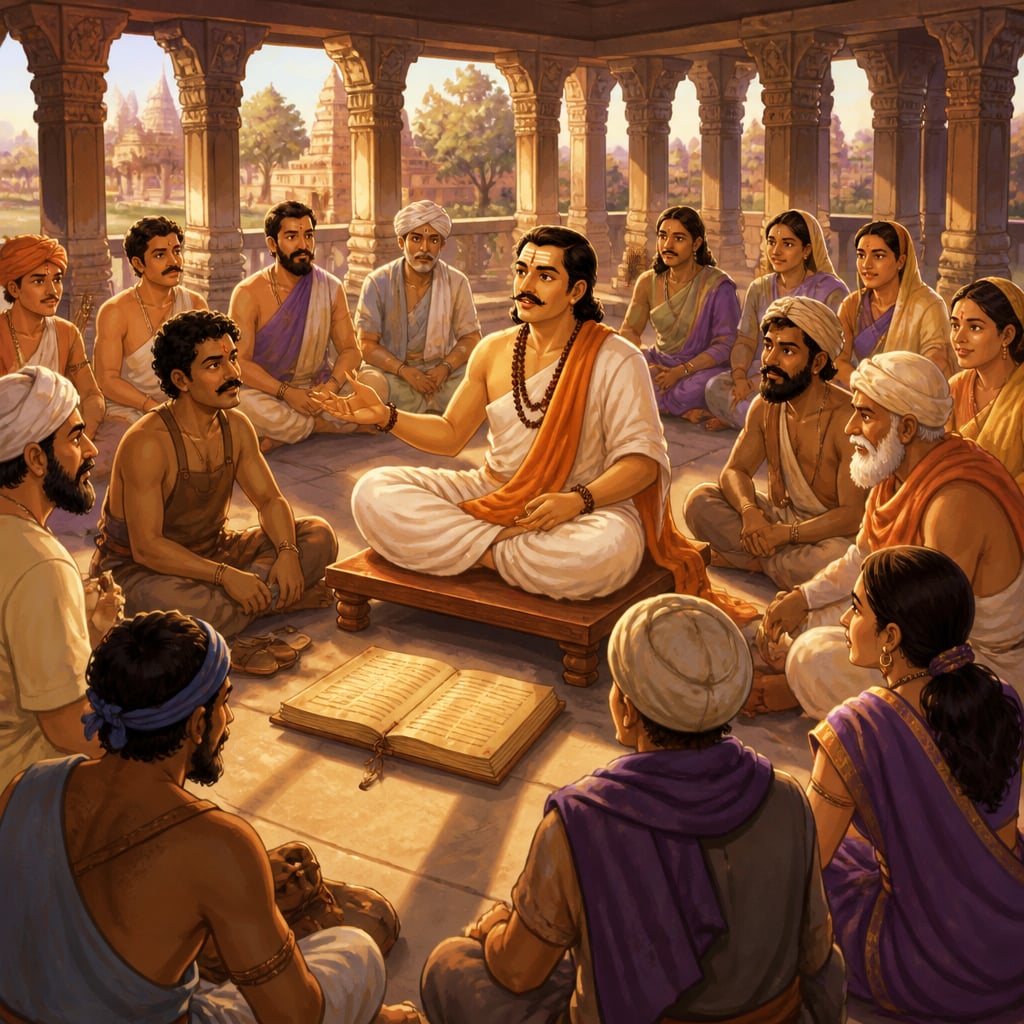
The Vachanakaras, as these poet-saints were called, included Madara Chennaiah (a cobbler), Dohara Kakkayya (a tanner), Ambigara Chowdayya (a ferryman), and Akka Mahadevi (a woman who renounced social convention entirely). In an era when European serfs could not address their lords, Basaveshwara's assembly seated the leather-worker next to the minister for philosophical debate.
What made this revolutionary was not the rejection of dharma but its radical fulfillment. Basaveshwara did not argue that the spiritual framework was wrong. He argued that caste hierarchy was a corruption of that framework. His Vachanas attacked not the concept of divine order but the human distortion of it. "The rich will make temples for Shiva. What shall I, a poor man, do? My legs are pillars, the body the shrine, the head a cupola of gold." He relocated the sacred from institutional gatekeeping to individual spiritual experience.
This is the pattern that distinguishes internal reform from external attack. Ramanuja, the great Vaishnava philosopher of the 11th-12th century, initiated people from so-called "untouchable" communities into his order, calling them "Tirukulattar" (people of the sacred family). He did not say Vedantic philosophy was oppressive. He said its promise of spiritual equality must be practiced, not just theorized.
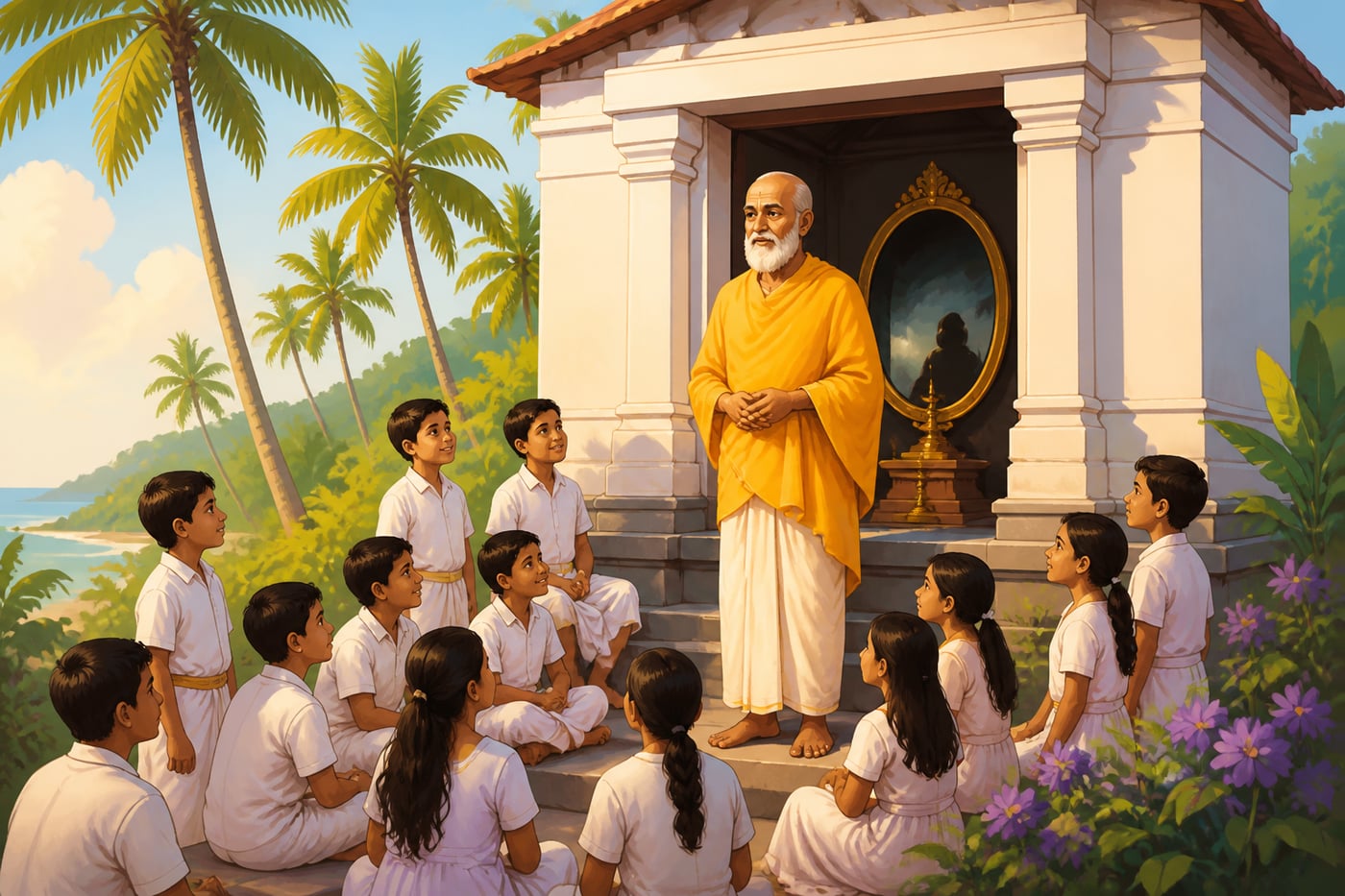
Narayana Guru in 19th-century Kerala followed the same template. An Ezhava by birth, a community classified as "backward," he installed Shiva lingas in temples he built, open to all. His famous declaration, "One caste, one religion, one God for mankind," was not a rejection of the Hindu philosophical framework but an assertion of its deepest principle: the atman in every being is the same Brahman.
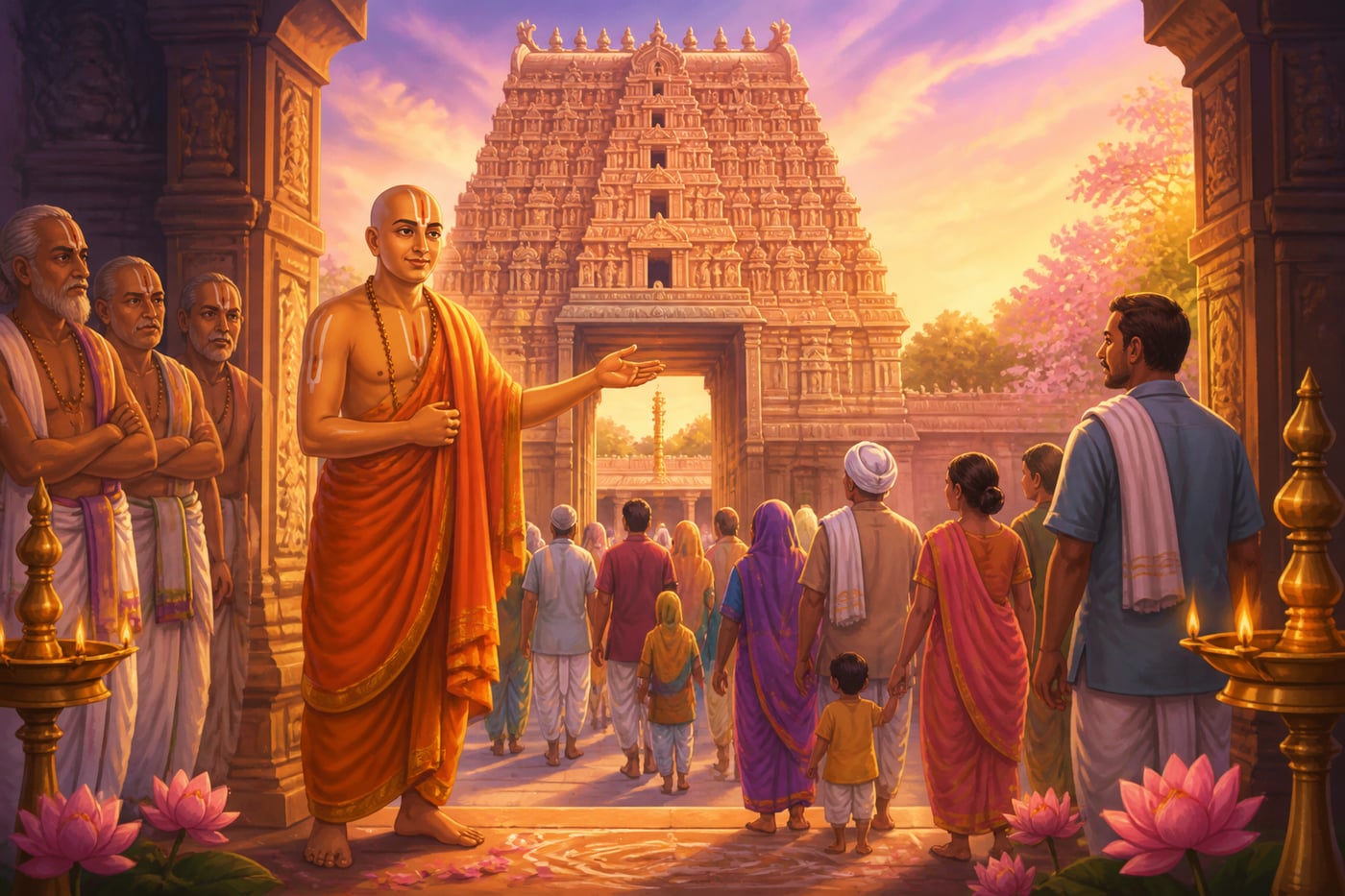
The Bhakti tradition across centuries, from Ravidas to Kabir to Chokhamela to Kanakadasa, follows this consistent pattern. The reformers criticized social practice while affirming spiritual principle. They attacked hierarchy while deepening devotion. They demanded that the civilization live up to its own stated ideals.
Contrast this with the conversion model that arrived with colonial missionaries and continues through foreign-funded evangelical organizations today. The conversion pitch is: your civilization is the problem, leave it. The Bhakti model is: the corruption is the problem, fix it.
The results speak for themselves. Communities that underwent Bhakti reform maintained their civilizational identity while achieving social transformation. Communities targeted by conversion campaigns were offered escape from caste only to discover that caste hierarchies reproduced themselves within Indian Christianity and Indian Islam. Separate churches for Dalit converts, discriminatory seating arrangements, marriage restrictions between convert communities of different caste origins. The external solution failed because caste is a social practice, not a theological one. Changing theology does not change social behavior.
Dharmic Wisdom: Samarasata and the Architecture of Unity
The Arthashastra does not merely theorize about division. It provides a counter-framework for social cohesion. Kautilya's concept of Yogakshema (welfare and security for all subjects) is not charitable benevolence. It is strategic necessity. A kingdom where significant portions of the population feel excluded is a kingdom with pre-existing faultlines waiting to be exploited. Social welfare, in the Arthashastra framework, is the first line of civilizational defense.
The Mahabharata confronts the caste question directly through the character of Vidura. Born to a servant woman, Vidura becomes the wisest counselor in the Kuru court. When the Yaksha asks Yudhishthira what makes a Brahmana, the answer is unambiguous: it is truthfulness, generosity, forbearance, good conduct, compassion, and austerity. Not birth. Not lineage. Not ritual status. Character and conduct alone.
The Sanskrit concept of Samarasata captures this lesson's core principle. It means harmonious integration. Not uniformity. Not erasure of difference. Not the pretense that historical wrongs did not occur. Rather, a state where different communities flow together like rivers into the ocean, each maintaining its character while contributing to a shared whole.
The concept of Ekatmata (organic oneness) adds a crucial dimension. It suggests that the unity India needs is not imposed uniformity but recognized interconnection. When a civilization's members understand that their fates are linked, that the suffering of one community weakens all, reform becomes a civilizational imperative rather than a political bargaining chip.
This is fundamentally different from the Western liberal framework of "tolerance" or the Marxist framework of "class solidarity." Samarasata does not ask communities to merely tolerate each other or to dissolve their identities into a class struggle. It asks them to recognize that their diverse traditions are expressions of a single civilizational impulse and that strengthening any part strengthens the whole.
The Defense: Five Pillars of Civilizational Reconciliation
The counter-strategy for the caste faultline requires action at five levels. This is not a theoretical framework. Each pillar has working models that can be studied, replicated, and scaled.
Pillar 1: Economic commons. Build institutions where caste is irrelevant because economic interest is shared. Cooperative dairies, producer companies, self-help group federations, and joint-liability microfinance groups create daily interaction across caste lines driven by mutual economic benefit. When a Yadav dairy farmer and a Jatav leather worker are both shareholders in the same cooperative, their shared interest in milk prices transcends their caste identities. Replicate the cooperative model in every district with deliberate cross-caste membership design.
Pillar 2: Temple as civic institution. Campaign for temple liberation from government control (Lesson 08_04 will address this structural issue in depth). Simultaneously, support temples that function as social institutions: running schools, hospitals, community kitchens, and skill development centers open to all. Every temple that feeds children regardless of caste is dissolving caste walls through daily practice. Support organizations like Akshaya Patra, temple-based education trusts, and community health initiatives run from temple ecosystems.
Pillar 3: Narrative sovereignty over reform. India's internal reform tradition, from Basaveshwara to Narayana Guru to Ambedkar, is one of the world's richest traditions of social transformation. Take ownership of this narrative. Do not allow external actors to claim that reform required civilizational rejection. Create and share content that tells the story of India's internal reform tradition as evidence of civilizational strength, not weakness. Documentaries, books, social media: a civilization that produces its own reformers is a living civilization.
Pillar 4: Sect bridges. Build organizational connections between Shaiva, Vaishnava, Shakta, and regional traditions. Joint festivals, inter-matha dialogues, shared educational programs, and collaborative social service projects create institutional bonds that make sect-based fragmentation attempts (like the Lingayat gambit) harder to execute. When Lingayat, Veerashaiva, Smartha, and Vaishnava institutions have ongoing collaborative relationships, political attempts to sever one group become visibly absurd.
Pillar 5: Honest accounting. Acknowledge caste discrimination without civilizational self-destruction. Create community-level reconciliation processes where historical wrongs are acknowledged, restitution (economic, educational, social) is offered, and forward-looking relationships are built. This is not "victimhood politics." It is the mature civilizational response to a real wound. Refusing to acknowledge the wound does not heal it. But making the wound the permanent center of identity prevents it from ever healing. The goal is acknowledgment, reform, and integration, not permanent grievance.
Individual action: Support cross-caste institutions financially and socially. Share the narrative of India's internal reform tradition. When you encounter caste-based discrimination, oppose it on dharmic grounds, not on Western liberal grounds. When you encounter caste being weaponized for civilizational attack, name the weaponization without denying the underlying issue. Hold both truths simultaneously. This is the Viveka that this chapter demands.
The caste faultline is perhaps the most emotionally charged of all the faultlines examined in this course. It touches personal identity, family history, social relationships, and daily lived experience. Precisely because it is so personal, it is the most dangerous weapon in the Breaking India arsenal and the most important one to defuse. The path forward is neither denial nor self-destruction. It is the path Basaveshwara walked: fierce internal reform rooted in civilizational love.
Case studies
The Lingayat Separate Religion Demand (2018)
In March 2018, weeks before Karnataka state elections, the Congress-led state government forwarded a recommendation to classify Lingayats and Veerashaivas as a separate non-Hindu religion. Lingayats constitute roughly 17% of Karnataka's population and had been a significant BJP vote bank. The classification would make them eligible for minority benefits while fracturing Hindu electoral consolidation. The move reframed Basaveshwara's 12th-century reform movement, which criticized caste from within a Hindu philosophical framework, as evidence that Lingayats were never Hindu at all.
The Arthashastra identifies Bheda (sowing dissension) as the most cost-effective weapon in statecraft. The Lingayat gambit was a textbook application: identify an existing difference (Lingayat theological distinctiveness), amplify it (reframe reform as rejection), rigidify it (seek official non-Hindu classification), and fund it (political patronage and minority benefit eligibility). Basaveshwara himself, whose Vachanas demanded that dharma live up to its own principles, would have recognized this as the weaponization of his legacy.
Major Lingayat mathas and religious leaders rejected the separate religion classification. The BJP won the 2018 Karnataka elections with 104 seats to Congress's 78. The gambit may have consolidated rather than fractured Hindu voting patterns. However, the template remains available for future exploitation of any internal reform tradition.
Internal reform traditions are a civilization's immune system. Reframing them as evidence of civilizational rejection weaponizes the immune system itself. Every Bhakti saint who challenged caste hierarchy was demanding better Hinduism, not non-Hinduism.
Similar attempts to classify Jains, Sikhs, and other Hindu-origin traditions as 'non-Hindu' continue in Indian politics and international advocacy. The same template applies: take any tradition that challenged orthodoxy and reframe it as proof of civilizational departure.
Karnataka's 2018 assembly elections saw BJP win 104 seats versus Congress's 78, a swing of 82 seats from the 2013 election where Congress had won 122. The Lingayat gambit, intended to fragment Hindu votes, is widely analyzed as having backfired electorally.
Basaveshwara's Anubhava Mantapa: The World's First Democratic Assembly
In 12th-century Kalyana, Karnataka, the Shaiva reformer Basaveshwara established the Anubhava Mantapa (Hall of Experience), a revolutionary assembly where people of all castes and both genders gathered for philosophical debate and spiritual poetry composition. The Vachanakaras included Madara Chennaiah (cobbler), Dohara Kakkayya (tanner), Ambigara Chowdayya (ferryman), and Akka Mahadevi (a woman who renounced social convention). Over 200 poet-saints from diverse backgrounds produced more than 21,000 Vachanas (prose poems) in Kannada, creating one of the largest bodies of protest literature in any medieval language.
Basaveshwara's reform exemplified the dharmic principle that spiritual realization transcends social categories. His Vachana literature did not reject the civilizational framework but demanded it live up to its own ideals. He attacked caste hierarchy as a corruption of Shiva's teaching, not as evidence that Shaiva dharma was flawed. This is the critical distinction between internal reform (which strengthens) and external attack (which fragments).
The Vachana movement transformed Shaiva practice and social relations across Karnataka. Basaveshwara's image stands in the Indian Parliament. His Anubhava Mantapa has been recognized as a precursor to democratic deliberative institutions. The Lingayat community he inspired became one of Karnataka's most influential and economically successful communities through internal social transformation.
The most durable social reform comes from within a civilizational tradition, demanding that it honor its own highest principles. A civilization that produces its own reformers is a living, self-correcting civilization.
Basaveshwara's model of reform from within provides the template for addressing modern caste issues without surrendering to the Breaking India framing. His approach shows that fierce criticism of social hierarchy is fully compatible with deep civilizational commitment.
The Anubhava Mantapa (approximately 1160s CE) predated the Magna Carta (1215) by about 50 years and the first English Parliament (1265) by about a century. It is arguably the earliest documented democratic deliberative assembly that included members across all social strata.
The Dalit Christians Paradox: When Conversion Fails to End Caste
Millions of Dalits converted to Christianity over the colonial and post-colonial periods, often motivated by the promise of escaping caste discrimination. However, caste hierarchies have persistently reproduced within Indian Christian communities. Studies by the National Commission for Minorities and academic researchers document separate churches for Dalit converts, segregated burial grounds, discriminatory seating arrangements, and marriage restrictions between convert communities of different caste origins. In Tamil Nadu, Catholic parishes in many villages maintain separate facilities for Dalit and non-Dalit Christians. The demand for Scheduled Caste status for Dalit Christians, pending before Indian courts, implicitly acknowledges that conversion did not end caste.
The Bhagavad Gita's teaching on the difference between superficial change and genuine transformation applies directly. Conversion changes theological affiliation but does not alter the social structures within which people live. Caste is embedded in community behavior patterns, economic relationships, and social networks. These persist regardless of which deity is worshipped. The dharmic insight is that true transformation (Parivartan) must address root causes (the social practice) rather than symptoms (the religious label).
Caste discrimination persists within Indian Christian and Indian Muslim communities, documented across multiple states and denominations. A 2007 National Commission for Minorities study found that over 70% of Dalit Christians in Tamil Nadu reported experiencing caste-based discrimination within their church communities. The legal battle for SC reservation status for Dalit Christians continues, itself an admission that conversion did not deliver the promised social equality.
Caste is a social practice embedded in community behavior, not a theological doctrine. External solutions (leaving the civilizational framework) cannot solve what is fundamentally an internal social challenge. This validates the Bhakti model of reform from within over the conversion model of escape.
The Dalit Christians paradox undermines the core Breaking India argument that Hindu civilization is the source of caste and that departure from it is the cure. If caste persists even after civilizational departure, then the solution must lie in reforming social behavior within whatever framework communities inhabit.
A 2007 study by the National Commission for Minorities found over 70% of Dalit Christians in Tamil Nadu experienced caste discrimination within their churches. In 2021, the Catholic Bishops' Conference of India acknowledged the problem, calling caste among Indian Christians 'a counter-witness to the Gospel.'
Reflection
- Think about your own social interactions. Do you engage regularly with people from different caste backgrounds in non-transactional settings (not just as service providers or colleagues, but as friends, intellectual companions, or community partners)? What would it take to genuinely expand your social circle across caste lines?
- Basaveshwara criticized caste hierarchy from within the Hindu tradition and is celebrated as a reformer. If the same criticism were made by an external actor (a Western academic, a missionary organization), it would be analyzed as civilizational attack. What makes the same criticism reform in one context and weaponization in another? Is it the content, the intent, the source, or something else?
- The lesson argues that caste is a social practice, not a theological doctrine, which is why conversion fails to end it. If this is true, does it mean that caste reform requires changing social behavior rather than religious belief? What kind of institutions and incentives actually change deeply embedded social behavior?