Caste as Global Weapon & Tribal Identity as Separatism
The Afro-Dalit Project, Caste-as-Race, and Tribal Identity Politics
The caste-as-race framing and the tribal identity separation project are two faces of the same civilizational strategy: repackaging Indian social categories through Western analytical frameworks for international weaponization. This lesson examines how caste went global through the Afro-Dalit project, why genuine grievances made communities receptive, and how tribal identity is being severed from civilizational roots in India's forest belts.
See It Today: When Seattle Legislated India's Social Categories
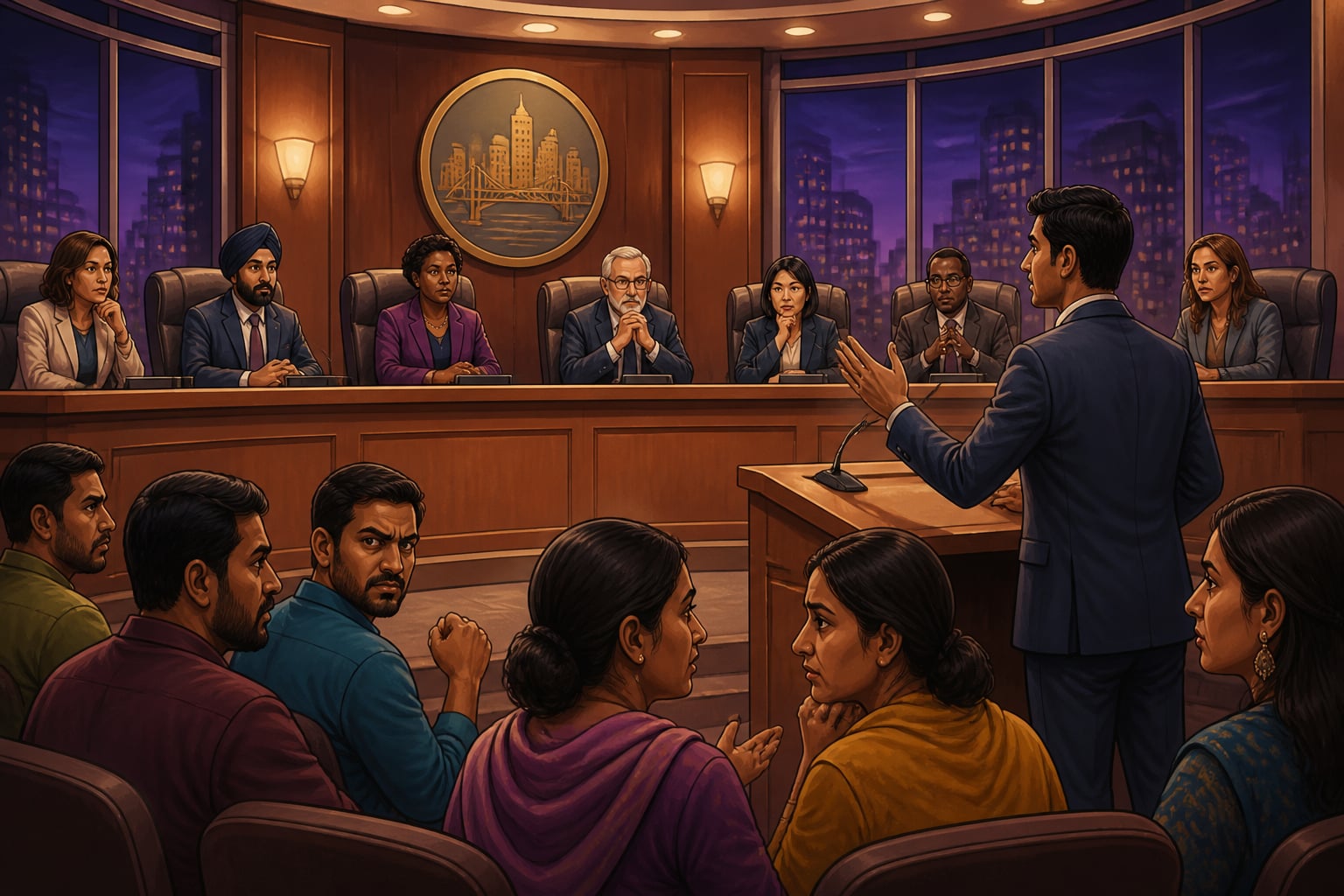
In January 2023, the Seattle City Council voted 6-1 to add "caste" to its anti-discrimination ordinance. Seattle became the first city outside South Asia to formally legislate against caste discrimination. The ordinance was championed by Equality Labs, a US-based organization whose 2016 survey claimed that 67% of Dalits in the United States had experienced workplace discrimination based on caste.
The survey was contested. Researchers at the University of Pennsylvania and Carnegie Mellon identified severe methodological problems: the survey was distributed through Equality Labs' own activist networks, producing extreme sampling bias. Respondents were self-selected supporters of an anti-caste advocacy organization. The equivalent would be surveying NRA members about gun violence and presenting the results as representative of all Americans.
But the methodological critique barely registered. The 67% figure entered media coverage, policy documents, and legislative testimony without qualification. It was cited by the Seattle City Council, by universities drafting caste policies, and by journalists covering "caste in America."
What made this moment significant was not the local ordinance itself. It was what it revealed: an internal Indian social category, rooted in a specific civilizational context, had been successfully repackaged as a global human rights violation equivalent to racial discrimination. The framework used to understand chattel slavery and Jim Crow in America was now being applied to jati dynamics among Indian immigrants in the Pacific Northwest.
How did a social category that Lessons 05_01 and 05_02 showed was fluid and context-dependent get frozen into a global discrimination framework? The answer involves a deliberate intellectual project spanning three decades.
The Mechanism: The Caste-as-Race Pipeline and the Tribal Separation Machine
The globalization of caste as a weapon operates through two parallel mechanisms. The first is the international "caste-as-race" framing that targets India's social structure on the world stage. The second is the tribal identity separation project that targets India's forest and hill communities domestically. Both share the same logic: take an internal Indian social category, reframe it through Western analytical frameworks, and use the reframed version to fragment Indian civilizational unity.
The Afro-Dalit Project
The intellectual foundation was laid in the 1980s and 1990s by V.T. Rajshekar, editor of "Dalit Voice" magazine based in Bangalore. Rajshekar explicitly modeled his project on the African American civil rights movement, arguing that Dalits were India's equivalent of Black Americans: a racially distinct oppressed population whose liberation required international solidarity and intervention.
The key conceptual move was reframing caste as race. In the Indian context, jati is a complex social institution shaped by occupation, region, kinship, and ritual status. It has never been purely or even primarily racial. Individuals and communities have moved between jatis over centuries. But the Afro-Dalit project required caste to be racial, because only racial oppression activated the international human rights machinery built around the legacy of slavery and apartheid.
The World Council of Churches provided crucial institutional support, funding conferences and publications that connected Dalit activists with African American civil rights organizations and European anti-racism groups. The academic infrastructure examined in Chapter 4 provided the intellectual scaffolding: Western Indology departments produced scholarship reframing caste as racial, which advocacy organizations cited, which UN bodies then referenced. By the time of the 2001 UN World Conference Against Racism in Durban, South Africa, a coalition of NGOs was lobbying to include caste discrimination under the conference's mandate on racial discrimination.
India's government pushed back at Durban, arguing that caste was an internal social issue fundamentally different from race. But the framing had already entered the international ecosystem. The International Dalit Solidarity Network (IDSN), headquartered in Copenhagen and funded by European governments including Denmark and the Netherlands, continued lobbying UN bodies throughout the 2000s and 2010s.
Why the Framework Found Receptive Ground
To understand this mechanism honestly, you must engage with why it attracted support. Caste discrimination is real. Manual scavenging persists in parts of India. Caste-based violence occurs. Economic disparities between caste groups are documented in government commission reports. The Scheduled Caste and Scheduled Tribe (Prevention of Atrocities) Act exists because atrocities happen.
Dalit intellectuals who embraced the international framework did so because they felt domestic institutions had failed them. When Indian courts delayed justice for decades, when police registered complaints reluctantly, when political parties used Dalit votes without delivering structural change, the appeal of an international framework with enforcement mechanisms was understandable.
The failure is not in Dalit aspirations for justice. The failure is in the reframing of a complex social institution as a racial category, which distorts the reality and prescribes solutions designed for entirely different problems. Fighting caste discrimination within India's constitutional framework is social reform. Reframing caste as race for international consumption is civilizational warfare, because it positions India's social structure as equivalent to apartheid and makes India a legitimate target for the same international interventions applied to South Africa.
The Tribal Separation Machine
The second mechanism targets India's tribal communities. Approximately 104 million Indians (8.6% of the population per Census 2011) are classified as Scheduled Tribes. These communities have deep historical connections to Hindu civilizational practices: worship of local deities associated with Shiva and Shakti, participation in regional festivals, and knowledge systems rooted in Ayurvedic and folk traditions.
The tribal separation mechanism works through three steps.
Step 1: Rename. Replace "Vanvasi" (forest dweller, implying belonging to the broader civilizational landscape) with "Adivasi" (original inhabitant, implying everyone else is a later arrival and therefore a colonizer). This terminological shift, promoted by colonial-era anthropologists and adopted by left-leaning academics, positions tribals as indigenous peoples in the UN sense: populations with prior claim to land who were displaced by a settler majority.
Step 2: Reframe. Classify tribal religious practices as "animism" or "Sarna" distinct from Hinduism, rather than as local expressions of the broader Hindu ecosystem. This ignores the historical reality that Hindu practice has always included nature worship, sacred groves, and local deity traditions. The reframing creates an artificial boundary between "tribal religion" and "Hindu religion."
Step 3: Convert. Once tribal identity has been separated from Hindu civilizational identity, conversion becomes a journey from one independent identity to another, rather than a severance from civilizational roots. Missionary organizations operating in Jharkhand, Chhattisgarh, and Odisha have deployed this three-step process systematically over decades, as FCRA funding data reveals.
The Pattern: Classification as Colonial Continuity
The externalization of India's social categories follows a pattern as old as colonial Indology itself.
The British were the first to apply European racial categories to Indian social structures. When Herbert Hope Risley measured nasal indices to classify Indians into racial groups in the 1901 Census (covered in Lesson 05_02), he was doing precisely what the Afro-Dalit project does today: applying a foreign analytical framework (race) to an Indian social institution (jati) and using the reframed version for political purposes.
The Durban Conference of 2001 marked a new phase. For the first time, Indian social categories entered the formal machinery of international human rights law. Though India's delegation successfully prevented caste from being classified as racial discrimination at Durban, the attempt created institutional pathways. NGOs that lobbied at Durban continued operating through UN Special Rapporteurs, European Parliament resolutions, and US state legislatures for the next two decades.
The pattern in tribal areas is older still. Colonial ethnographers like Verrier Elwin argued that tribals were a distinct population that should be protected from Hindu influence. This was contested by Jaipal Singh Munda, the tribal leader and India's first Olympic hockey captain (1928 Amsterdam), who argued that tribals were organically part of Indian civilization and that isolation would trap them in poverty. After independence, Nehru initially backed Elwin's isolationist approach before shifting toward integration.
The colonial classification of tribals as "animists" separate from Hinduism was itself an act of faultline engineering. In precolonial India, there was no hard boundary between "tribal" and "non-tribal" religious practice. Village and forest traditions flowed into each other. The classification created a boundary that missionary organizations could then exploit: if tribal religion is "not Hindu," then converting tribals is not a civilizational rupture but simply a change of personal faith.
This is the five-step weaponization process from Lesson 01_01 in action: identify (tribal religious distinctiveness), amplify (classify as separate from Hinduism), rigidify (create institutional categories like "animist" in the census), fund (foreign-funded missionary organizations), and provide ideology (the "indigenous peoples" framework from the UN).
Dharmic Wisdom: Samadarshana and Yogakshema
The Bhagavad Gita articulates the principle of Samadarshana, equal vision toward all beings. Krishna tells Arjuna that the truly wise see with equal vision a learned Brahmin, a cow, an elephant, a dog, and an outcaste. This verse does not deny differences. It does not claim that all social functions are identical. What it establishes is that wisdom requires seeing the same essential nature in all beings regardless of social position. This is not equality of condition but equality of essential nature.
The Rig Vedic Samjnanam Suktam calls upon humanity to "come together, speak together, let your minds be in harmony." This is not mere sentimental unity. It is a prescription for civilizational cohesion: shared knowledge, shared discourse, shared purpose. When external actors fragment these shared spaces by insisting that Dalits, tribals, and caste Hindus have nothing in common, they attack the very principle the Rig Veda considers foundational to civilized society.
The Arthashastra's concept of Yogakshema (welfare and security of all subjects) provides the strategic framework. Kautilya argued that a ruler's happiness lies in the happiness of the people, and a ruler's welfare in the welfare of the people. This is not charity or moral sentiment. It is civilizational defense. When genuine grievances of Dalit and tribal communities remain unaddressed, external actors find ready-made entry points for civilizational warfare. Every unaddressed atrocity is an invitation for external intervention. Yogakshema closes those entry points not through suppression but through genuine welfare.
The Defense: Five Levels of Civilizational Response
The defense against the caste-as-global-weapon strategy operates at five levels.
First, address genuine grievances. The single most effective defense against external weaponization of caste is eliminating the grievances that make external frameworks attractive. When manual scavenging ends, when caste-based violence is prosecuted swiftly, when economic opportunities reach Dalit and tribal communities substantively, the appeal of external frameworks diminishes naturally. This is Yogakshema as civilizational defense. Every unaddressed atrocity is an entry point for external actors. Close the entry points.
Second, contest the caste-as-race framing with evidence. The equation of caste with race does not survive genetic evidence. Studies published in the American Journal of Human Genetics and Nature show that Indian caste groups share the same ancestral genetic mixture (Ancestral North Indian and Ancestral South Indian components), making them genetically more similar to each other than to any external population. Jati is a social institution, not a racial category. This is a factual argument, not a political one. Make the data accessible and visible.
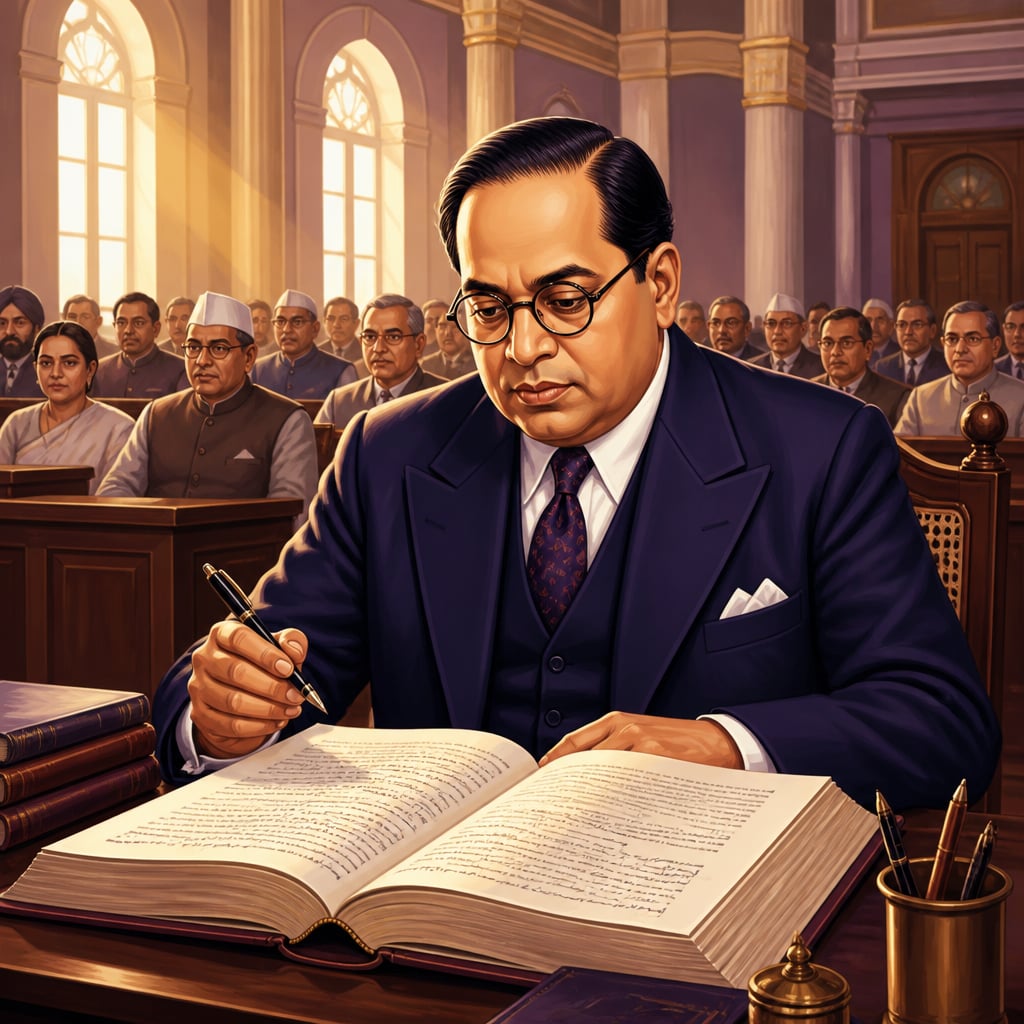
Third, reclaim Ambedkar's complete legacy. Ambedkar was not the one-dimensional figure that international appropriation suggests. He was a constitutional architect who designed reservations as time-bound affirmative action, not permanent identity politics. He chose Buddhism as his path of liberation, an explicitly Indic tradition, rejecting both Christianity and Islam despite receiving offers from both. He critiqued caste hierarchy AND critiqued Islamic practices AND critiqued British colonialism with equal intellectual force. His complexity is itself a weapon against simplistic appropriation. Study the real Ambedkar, not the curated version.
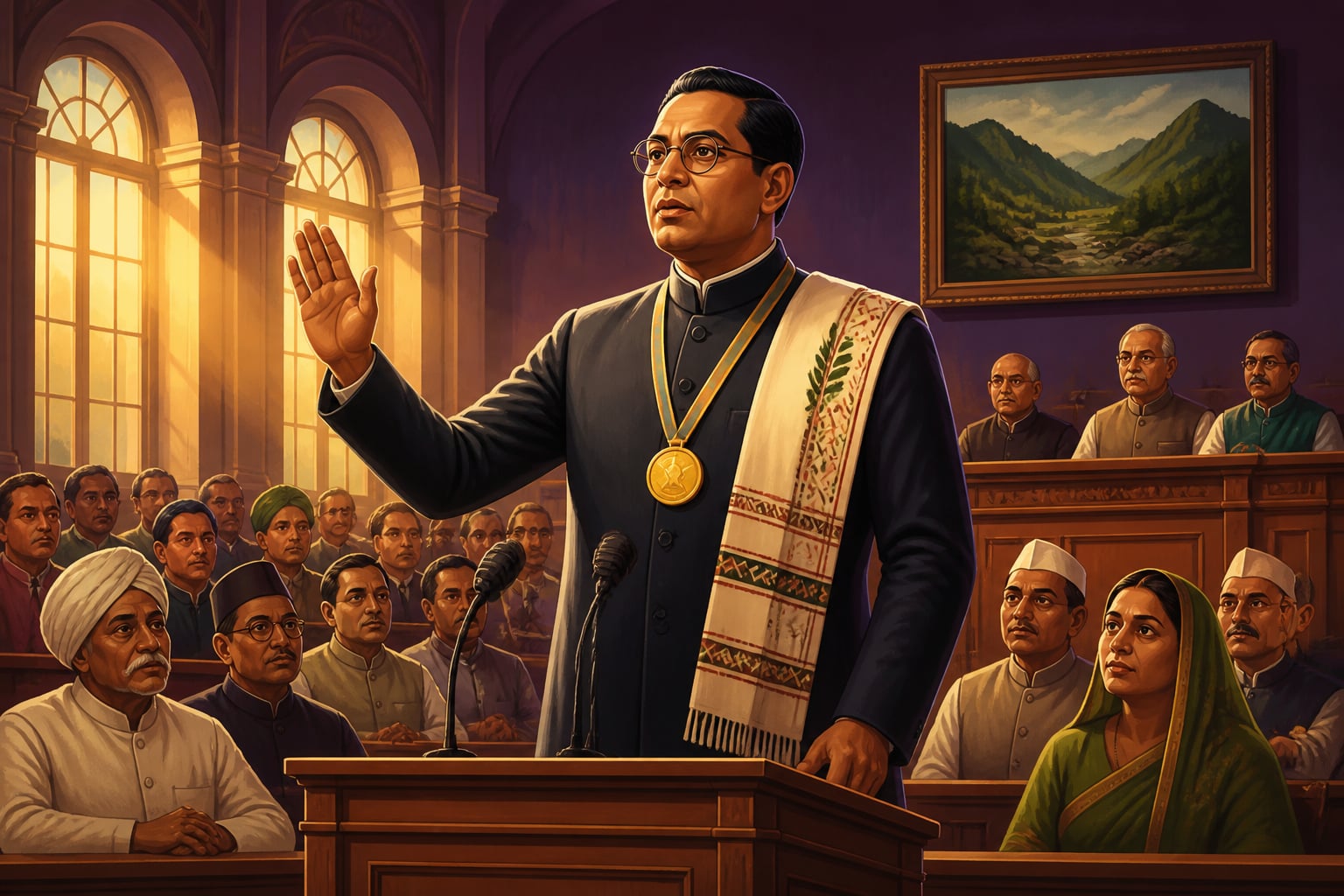
Fourth, support tribal integration with dignity. The answer to tribal separation is not forced assimilation but what Jaipal Singh Munda advocated: integration that respects tribal cultural distinctiveness while maintaining civilizational belonging. Support tribal language preservation, sacred grove protection, and economic development within a civilizational framework. The Sarna religion code debate in Jharkhand is a live example: whether Sarna should be classified as a separate religion (enabling tribal separation) or recognized as a tradition within the Hindu civilizational ecosystem (maintaining unity while respecting distinctiveness).
Fifth, follow the money and make it visible. FCRA data reveals the funding networks behind both the caste-as-race industry and tribal conversion operations. Track which organizations receive foreign funding, what their stated objectives are, and how funding flows from Western foundations and churches to Indian advocacy groups to international lobbying. When the funding chain from a European government to the Copenhagen-based IDSN to Indian advocacy groups to UN lobbying becomes visible, the "organic grassroots movement" narrative becomes harder to sustain.
The goal is not to suppress Dalit or tribal advocacy. Genuine advocacy serves Indian communities and works through Indian constitutional mechanisms. The goal is to ensure that advocacy is not captured as raw material for civilizational warfare conducted by external actors. When Dalit movements are funded by Indian communities and directed toward Indian constitutional remedies, they are social reform. When they are funded by foreign governments and directed toward international bodies using racial frameworks designed for entirely different contexts, they become strategic instruments in a larger civilizational contest.
Case studies
The Selective Ambedkar: How International Organizations Curate a Civilizational Thinker
B.R. Ambedkar is India's most cited figure in international caste discourse. Organizations like the International Dalit Solidarity Network, Equality Labs, and various UN Special Rapporteurs reference Ambedkar extensively to justify framing caste as racial oppression. However, the Ambedkar cited internationally is radically selective. His 'Annihilation of Caste' (1936) is quoted to critique Hindu social structure. His 'Pakistan or the Partition of India' (1940), which contains extensive critique of Islamic practices and the two-nation theory, is systematically ignored. His choice to convert to Buddhism in 1956, explicitly selecting an Indic tradition over Christianity and Islam (both of which courted him), is downplayed or stripped of its civilizational significance. His design of constitutional reservations as time-bound affirmative action, not permanent identity politics, goes unmentioned.
The Arthashastra's concept of Pratyaksha (direct observation) warns against relying on secondhand accounts. When an intermediary selects which portions of a thinker's work to present, they are not transmitting knowledge but constructing a weapon. The selective Ambedkar serves external agendas precisely because the complete Ambedkar does not. His embrace of Buddhism as an Indic civilizational alternative, his critique of Islamist separatism, and his vision of time-bound reform all contradict the narrative of India as an irredeemably oppressive civilization requiring external intervention.
The selective appropriation has been remarkably effective in international forums. Ambedkar is now globally associated exclusively with anti-caste activism, divorced from his role as India's constitutional architect, his Indic civilizational commitment, and his critiques of non-Hindu systems. This one-dimensional version serves as the intellectual foundation for the caste-as-race framework in Western academia and international institutions.
Appropriation works by selection. When a complex thinker's work is curated to serve an agenda, the antidote is returning to primary sources. The complete Ambedkar is a far more formidable intellectual figure than the curated version.
In 2024-2025, Ambedkar's image and quotes are routinely used in international advocacy materials, academic conferences, and UN reports on caste. The gap between what Ambedkar actually wrote and how he is cited internationally continues to widen, making primary source literacy an urgent civilizational priority.
Ambedkar considered and rejected conversion offers from both Christian missionaries and Islamic organizations before choosing Buddhism in 1956. His conversion ceremony at Deekshabhoomi, Nagpur, was attended by approximately 600,000 followers, making it one of the largest mass religious conversions in recorded history. He specifically chose an Indic path, describing it as a homecoming rather than a departure.
Jharkhand: The Three-Step Tribal Identity Separation
Jharkhand, carved out as a separate state in 2000, has a tribal population of approximately 26% (Census 2011). The state's tribal belt, spanning Ranchi, Gumla, Simdega, and West Singhbhum districts, has been the site of sustained missionary activity for over a century. In the modern phase, foreign-funded organizations operating through FCRA channels have systematically implemented the three-step separation: rename (promoting 'Adivasi' identity over 'Vanvasi'), reframe (classifying Sarna worship as non-Hindu), and convert (offering educational and medical services tied to Christian institutional networks). FCRA data from the Ministry of Home Affairs shows that foreign contributions to registered organizations in India totaled approximately Rs 16,000 crore in 2020-21, with Jharkhand among the significant recipient states due to its concentration of tribal populations.
The Arthashastra describes Kutayuddha (covert warfare) as operations that appear benign on the surface while achieving strategic objectives underneath. Educational institutions and medical missions in Jharkhand's tribal belt provide genuine services. But they also serve as institutional infrastructure for identity transformation. The Arthashastra would classify this as Dana (inducements) combined with epistemological warfare: changing what people know about their own identity through the institutions they depend on for basic services.
The Sarna Code demand, which seeks a separate religious code for tribal religion distinct from Hinduism, gained significant political traction in Jharkhand by the 2020s. If implemented, it would officially classify tribal religious practice as non-Hindu, completing the separation of tribal identity from Hindu civilizational identity and making conversion a shift between two officially 'different religions' rather than a severance from civilizational roots.
Identity separation precedes conversion, and institutional infrastructure precedes identity separation. By the time conversion happens, the conceptual groundwork has been laid so thoroughly that it appears to be a natural choice rather than the end result of a decades-long institutional project.
The Sarna Code debate continues as a live political issue. The underlying question, whether tribal practices are part of the Hindu civilizational ecosystem or a separate religious tradition, determines whether 104 million Scheduled Tribe members are counted within or outside Hindu civilization.
India has approximately 104 million Scheduled Tribe members (Census 2011), constituting 8.6% of the total population. The demographic and identity classification of this population has significant implications for the civilizational balance of the country, making the tribal separation project a strategic, not merely social, issue.
Reflection
- Consider your own understanding of caste. Has your view been shaped more by family experience, Indian constitutional categories, or Western frameworks (race, oppression hierarchies, intersectionality)? When you encounter caste-related news, which framework do you instinctively reach for, and who designed that framework?
- The lesson argues that genuine Dalit grievances and their external weaponization can coexist. How do you hold both truths simultaneously? When does international solidarity with an oppressed group cross the line into external interference in a civilization's internal dynamics?
- Jaipal Singh Munda argued for tribal integration. Colonial ethnographers argued for tribal isolation. Missionaries argued for tribal conversion. All three claimed to serve tribal interests. How do you evaluate competing claims to act in a community's interest when the community itself is divided?