Kshaya-Karan: Understanding the Mechanisms of Decline
A Framework for Recognizing Extraction Systems
Colonial extraction wasn't random, it followed systematic patterns. This lesson synthesizes the chapter into the 'Kshaya Framework': a five-step model for understanding how extraction systems work, so we can recognize and resist them today.
The Pattern Beneath the History
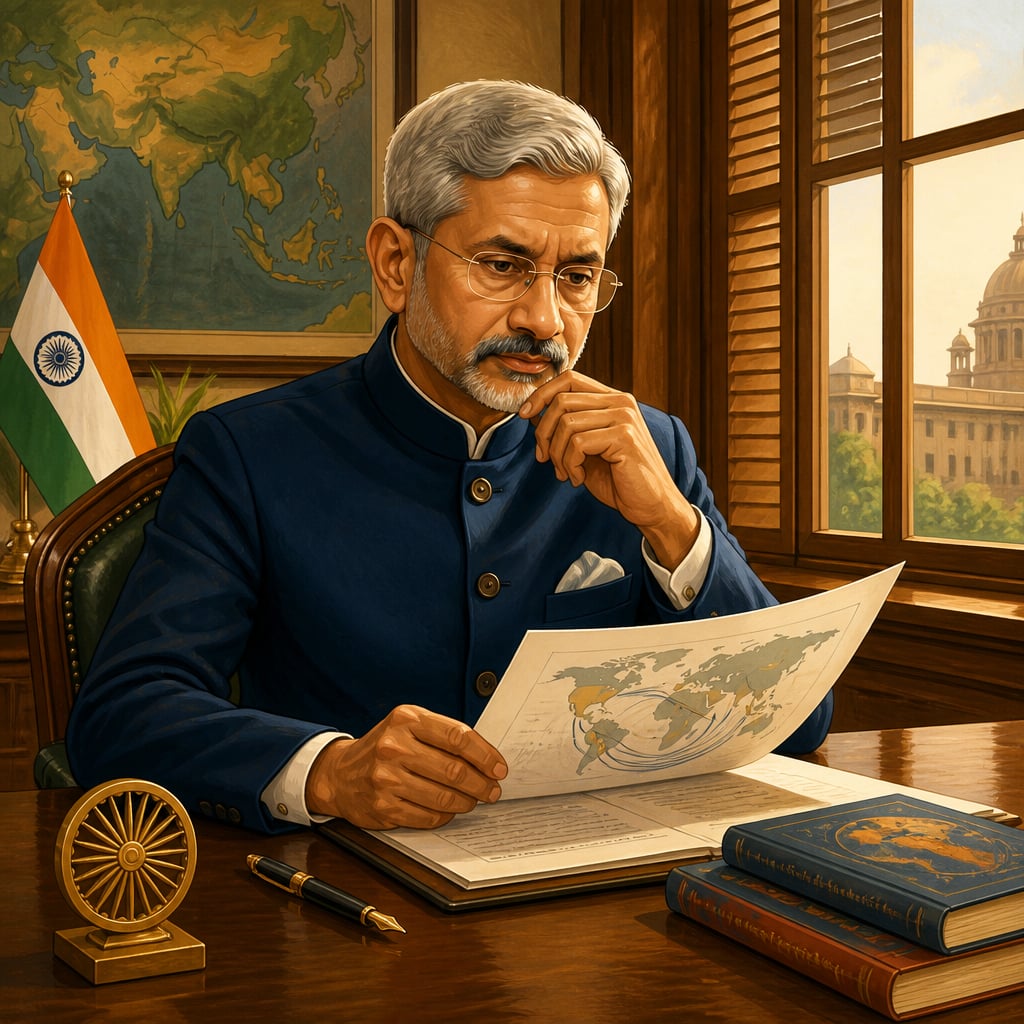
Across five lessons, we've seen textiles destroyed, industry dismantled, wealth drained, maritime power collapsed, and millions killed by famine. These weren't random events, they followed a systematic pattern.
Understanding this pattern matters because extraction systems didn't end with colonialism. The same mechanisms operate today, in debt-trap diplomacy, platform economics, and climate exploitation. India's experience provides a framework for recognizing these patterns wherever they appear.
This lesson synthesizes colonial decline into the Kshaya Framework, five interconnected mechanisms that, together, explain how extraction systems work.
The Kshaya Framework: Five Mechanisms of Extraction
Mechanism 1: Control the Rules (Niyantrana)
Extraction begins with controlling the rules that govern economic activity.
Colonial Example: Britain didn't just trade with India, they wrote the trade rules. The Navigation Acts barred Indian ships from British routes. Tariffs of 70-80% blocked Indian textiles while British goods entered duty-free. The cartaz system required Portuguese permission for Asian ships to sail.
The key insight: extraction systems don't compete within existing rules; they control the rules themselves.
Pattern Recognition: Who controls the rules in any economic relationship? In modern trade agreements, who writes the intellectual property provisions? In digital platforms, who sets the terms of service? In global finance, who determines reserve currency status?
Mechanism 2: Capture the Supply Chain (Grihana)
Once rules are controlled, extraction systems capture critical points in supply chains.
Colonial Example: The gomasta system forced weavers to sell exclusively to Company agents at below-market prices. Malabar teak was reserved for British Navy use. Railways connected raw material sources to export ports, not to Indian manufacturing centers.
The insight: controlling chokepoints in supply chains enables extraction from everyone else.
Pattern Recognition: Apple captures value from its supply chain, manufacturing happens in China, components come from Korea, but profit flows to Cupertino. Amazon controls the marketplace; sellers compete, Amazon extracts. In global commodities, trading houses like Glencore capture value between producer and consumer.
Mechanism 3: Destroy Productive Capacity (Vidhvansa)
Extraction isn't sustainable if the target can produce alternatives. So extraction systems destroy productive capacity.
Colonial Example: Indian textile manufacturing capacity was systematically destroyed, not through competition but through policy. Shipbuilding in Surat was destroyed through regulation. Wootz steel production was extinguished. The artisan skills that took centuries to develop were erased in decades.
The insight: extraction systems don't just take wealth, they destroy the ability to create wealth.
Pattern Recognition: When manufacturing shifts entirely to China, what happens to manufacturing capacity elsewhere? When local retail dies to e-commerce, can it return? When traditional agriculture yields to monocultures, is the knowledge of diverse farming preserved?
Mechanism 4: Restructure the Economy (Punar-Rachna)
After destruction, extraction systems restructure economies to serve extractors' needs.
Colonial Example: India was transformed from manufacturer to raw material supplier. Railways were built for extraction, not development. Education systems produced clerks for colonial administration, not entrepreneurs or engineers. The economy was restructured to complement Britain's, not compete with it.
The insight: extraction systems don't just take, they reshape to ensure continued taking.
Pattern Recognition: When developing nations are told to specialize in 'comparative advantage,' who benefits from that specialization? When economies become dependent on single commodities (oil, tourism, remittances), who gains from that dependency?
Mechanism 5: Capture the Narrative (Katha-Graha)
The most powerful extraction systems convince the extracted that extraction is beneficial.
Colonial Example: Britain didn't just rule India, they convinced many Indians that British rule brought 'civilization,' 'progress,' and 'development.' Colonial education taught Indian children to see their own history as backward. The economic exploitation was reframed as 'free trade' and 'modernization.'
The insight: when the extracted believe extraction is good, resistance becomes unthinkable.
Pattern Recognition: Is 'free trade' always free for both parties? Is 'development' always developing the target country's capacity? Is 'disruption' always beneficial for those disrupted? Whose narrative frames the economic relationship?
How the Mechanisms Interconnect
The Kshaya Framework isn't five separate mechanisms, it's an integrated system. Each mechanism enables the others:
1. Control Rules → 2. Capture Supply Chain → 3. Destroy Capacity
↑ ↓
5. Capture Narrative ←←←←←←←←←← 4. Restructure Economy
Example: Indian Textiles
- Control Rules: Tariffs blocked Indian cloth from Britain
- Capture Supply Chain: Gomastas controlled weaver output
- Destroy Capacity: Weaving communities collapsed
- Restructure: India became cotton exporter, cloth importer
- Capture Narrative: Framed as 'free trade' benefiting India
The same pattern repeats across every sector we've studied, steel, shipping, agriculture, finance.
Global Perspectives: The Framework Applied
Jason Hickel (born 1982), in The Divide: A Brief Guide to Global Inequality (2017), applies similar analysis to contemporary global economics. Hickel calculates that developing nations lose $2 trillion annually to trade mispricing, illicit capital flows, and debt servicing, a modern drain that dwarfs foreign aid inflows. His framework parallels the Kshaya analysis: rules are set in Washington and Brussels; supply chains are controlled by multinationals; productive capacity is constrained by structural adjustment; economies are restructured for extraction; and the narrative frames this as 'development.'
S. Jaishankar (born 1955), India's External Affairs Minister, articulates the policy response in Why Bharat Matters (2024). Jaishankar argues that India must refuse to accept rules made elsewhere, must build strategic autonomy across supply chains, must develop indigenous productive capacity, must restructure toward Atmanirbharta (self-reliance), and must project its own narrative in global discourse. This is the Kshaya Framework applied to national strategy, understanding the mechanisms of decline enables strategies for resurgence.
| Thinker | Key Insight | Kshaya Parallel |
|---|---|---|
| Hickel | Modern extraction exceeds aid | Drain continues in new forms |
| Jaishankar | Strategic autonomy across domains | Resist each extraction mechanism |
Modern Resonance: Recognizing Extraction Today
The Kshaya Framework helps identify extraction patterns in contemporary economics.

Debt-Trap Diplomacy: China's Belt and Road Initiative has been criticized for creating debt dependencies. Sri Lanka's Hambantota port, built with Chinese loans the country couldn't repay, was leased to China for 99 years. Pakistan's CPEC creates similar dependencies. The pattern: Control rules (loan terms favor lender), capture supply chain (Chinese contractors), restructure (export-oriented infrastructure), capture narrative ('development partnership'). India's response, offering alternatives like IMEC, reflects pattern recognition.
Platform Economics: Big Tech platforms, Google, Amazon, Meta, Apple, extract value from developing economies through multiple mechanisms. Data flows out without compensation (drain). Local businesses must use platforms whose rules they can't influence (control rules). Local digital capacity is crowded out (destroy capacity). Economies are restructured around platform dependency (restructure). And this is framed as 'digital transformation' (capture narrative). India's Digital Personal Data Protection Act and platform regulations reflect resistance to this pattern.

Climate Economics: Historical carbon emissions represent an unacknowledged drain, developed nations used the atmosphere as a free waste dump while industrializing. Now developing nations are asked to 'share' the burden of climate action while the historical beneficiaries retain their wealth. The narrative frames this as 'global responsibility' rather than colonial-era carbon debt. India's insistence on 'common but differentiated responsibilities' reflects understanding that climate economics, too, can perpetuate extraction.
Your Turn
The Kshaya Framework isn't just historical analysis, it's a tool for contemporary decision-making.
When evaluating any economic relationship, trade deal, technology partnership, investment agreement, ask:
- Who controls the rules? Are they negotiable, or imposed?
- Who captures the supply chain? Where do profits actually flow?
- Does it build or destroy capacity? Will you be stronger or weaker afterward?
- How does it restructure? Toward independence or dependence?
- Whose narrative frames it? Is the framing honest about who benefits?
These five questions, derived from 200 years of colonial extraction, provide a framework for recognizing extraction wherever it occurs.
As S. Jaishankar writes: 'A nation that does not control its own narrative will have its narrative controlled by others. A nation that accepts others' rules will be bound by others' interests. The lesson of colonial history is that strategic autonomy is not optional, it is essential.'
In the final lesson, we'll bring this framework to 2026 and beyond, exploring how India's resurgence represents a systematic reversal of colonial extraction mechanisms.
Douglass North's institutional economics shows how 'rules of the game' shape economic outcomes. The Kshaya Framework applies this to extraction, showing how rule control, supply chain capture, and other mechanisms form an integrated system.
India's post-independence development strategy reflected partial systems understanding, building industrial capacity (addressing Mechanism 3) but sometimes accepting rules made elsewhere (neglecting Mechanism 1). Current strategy, PLI, digital sovereignty, narrative projection, addresses all five mechanisms.
India's semiconductor mission, Sagarmala, and Digital India together represent ₹15+ lakh crore investment across supply chains, systematic response to systematic extraction
Antonio Gramsci's concept of 'cultural hegemony' describes how dominant groups maintain power through controlling ideas, not just force. Robert Shiller's 'narrative economics' shows how stories drive economic behavior. Both parallel katha-graha.
India is increasingly projecting its own narrative, through WION news, academic initiatives, and diplomatic communication. Jaishankar's books themselves represent narrative contestation, offering Indian frameworks for understanding international relations.
Tharoor's Oxford speech has 10 million views; Jaishankar's books are bestsellers; Indian perspectives on colonialism are reaching global audiences for the first time at scale
Key terms
- Kshaya-Karan
- The causes of decline, the systematic mechanisms by which extraction systems impoverish their targets
- Niyantrana
- Control of rules, the first mechanism of extraction, where the extractor determines the framework within which economic activity occurs
- Katha-Graha
- Narrative capture, the mechanism by which extraction systems convince the extracted that extraction is beneficial
- Svayattata (Strategic Autonomy)
- Self-rule, strategic independence, the ability to make choices free from external constraint
Key figures
Jason Hickel (born 1982)
Anthropologist and Analyst of Global Inequality
Dr. S. Jaishankar (born 1955)
India's External Affairs Minister and Strategic Thinker
The Kshaya Framework: A Synthesis
Analytical Tool for Recognizing Extraction Patterns
Case studies
The Kshaya Framework Applied: Three Contemporary Extractions
The Kshaya Framework reveals extraction patterns across three contemporary domains: **1. Belt and Road: Debt-Trap Diplomacy** China's Belt and Road Initiative has been criticized for creating debt dependencies. Pattern recognition: - **Control Rules**: Loan terms favor lender (non-transparent, high interest, Chinese courts for disputes) - **Capture Supply Chain**: Chinese contractors, Chinese workers, Chinese materials - **Destroy/Limit Capacity**: Projects don't build local skills or industries - **Restructure**: Recipient economies oriented toward China - **Capture Narrative**: Framed as 'development partnership,' 'South-South cooperation' Sri Lanka's Hambantota port, built with Chinese loans, now leased 99 years, is the iconic example. **2. Platform Economics: Digital Extraction** Big Tech platforms extract value from developing economies: - **Control Rules**: Terms of service written in California, not negotiable - **Capture Supply Chain**: Data flows out, algorithms are opaque, decisions made elsewhere - **Destroy Capacity**: Local digital ecosystems crowded out - **Restructure**: Economies become platform-dependent - **Capture Narrative**: 'Digital transformation,' 'democratizing access' India's response, data localization, platform regulations, UPI as alternative, reflects pattern recognition. **3. Climate Economics: Carbon Colonialism** - **Control Rules**: Climate frameworks written by historical polluters - **Capture Supply Chain**: Green technology patents held by developed nations - **Destroy Capacity**: Carbon taxes could constrain developing nation industrialization - **Restructure**: Developing nations asked to specialize in 'green' exports - **Capture Narrative**: 'Shared responsibility' obscures historical carbon debt India's insistence on 'common but differentiated responsibilities' and climate finance reflects understanding that climate economics, too, can perpetuate extraction.
Applying the Kshaya Framework isn't cynicism, it's viveka (discernment). The dharmic response to extraction isn't isolation but balanced engagement: participating in global systems while maintaining svayattata (strategic autonomy). This means: - Negotiating rules rather than accepting them - Building indigenous capacity alongside global engagement - Diversifying dependencies so no single relationship creates vulnerability - Projecting India's own narrative rather than accepting others' The goal isn't to extract from others (which would be adharmic) but to ensure India isn't extracted from, a defensive application of the Kshaya Framework.
India's contemporary strategy reflects systematic application of colonial learning: - IMEC as alternative to BRI (controlling routes rather than using others') - UPI as alternative to Western payment systems (controlling digital infrastructure) - ISA (International Solar Alliance) as India-led climate initiative (shaping rules rather than accepting them) The pattern: in each domain where extraction risk exists, build alternatives that provide svayattata.
The Kshaya Framework is diagnostic, not deterministic. Recognizing extraction patterns doesn't mean all international engagement is extraction. But it enables asking the right questions: does this relationship build our capacity or diminish it? Who controls the rules? Whose narrative frames the engagement?
The Kshaya Framework's pattern recognition applies directly to contemporary debt-trap concerns around Chinese infrastructure lending in Africa and South Asia. Sri Lanka's Hambantota port handover in 2017 matched every element of the extraction pattern: asymmetric rules, debt dependency, narrative control, and capability erosion.
India has explicitly declined Belt and Road participation (the only major regional economy to do so), while launching IMEC, Chabahar, and bilateral connectivity projects that India influences. This is pattern recognition informing strategy.
Historical context
1757-2025 (Colonial to Contemporary)
India's post-independence trajectory can be read as progressive address of Kshaya mechanisms. The early focus on industrial capacity (Mechanism 3) was necessary but insufficient. Current strategy, addressing all five mechanisms simultaneously, reflects mature understanding of how extraction systems work.
Countries that addressed only some mechanisms remained vulnerable. Latin America built industrial capacity but remained dependent on foreign capital (rule vulnerability). Southeast Asian tigers controlled supply chains but not narratives. India's current approach, comprehensive attention to all five mechanisms, reflects learning from both colonial history and post-colonial experiences elsewhere.
India's strategic investments across mechanisms total over ₹20 lakh crore: Sagarmala (ports), semiconductor mission (capacity), GIFT City (financial autonomy), digital infrastructure (supply chains), and diplomatic outreach (narrative).
Understanding the Kshaya Framework enables evaluation of any economic relationship, national, corporate, or personal. The question isn't 'is this good or bad?' but 'how does this affect my capacity for independent action?' Colonial history teaches what happens when that question isn't asked.
Living traditions
India's current strategic framework explicitly draws on colonial learning. Jaishankar's books, NITI Aayog's policy papers, and MEA's diplomatic positions all reference historical extraction as context for contemporary strategy. The Kshaya Framework represents systematic articulation of this learning.
- Colonial history integration in strategic studies
- Government training on extraction pattern recognition
- Think tank historical framework analysis
- Diplomatic invocation of historical experience
- Arthashastra Study Centers: Kautilya's Arthashastra, written 2,300 years ago, contains sophisticated analysis of economic statecraft, extraction, and resistance. University departments of Arthashastra studies (at Mysore, Tirupati, and elsewhere) continue applying this ancient framework to contemporary issues.
- National Institute of Advanced Studies: NIAS conducts interdisciplinary research on strategy, economics, and international relations. Their work explicitly connects India's strategic traditions to contemporary policy, applying historical learning to modern challenges.
- Ministry of External Affairs Archives: MEA archives document India's diplomatic history since independence, including how understanding of colonial extraction informed trade negotiations, alignment choices, and strategic positioning.
- Angkor Wat: World's largest Hindu temple demonstrates extent of pre-colonial Indian cultural influence. Understanding how this influence was built (trade, not conquest) informs current soft power strategy.
- Prambanan Temple: 9th-century Hindu temple complex shows Indian cultural influence achieved through trade networks, not military force, exemplifying dharmic expansion principles.
Reflection
- Apply the Kshaya Framework to a relationship in your own life, educational, professional, or commercial. Who controls the rules? Who captures value? What capacity is being built or destroyed? How is the relationship structured? Whose narrative frames it?
- Identify one area where you or your organization have accepted 'rules' made by others. What would it take to negotiate those rules, create alternatives, or simply become aware that they're choices rather than givens?