Vrata: Designing Personal Rituals
Creating Meaningful Practice for Your Life: The Art of Sacred Commitment
Applying the dharmic principles of ritual to design personal practices that work, learning from the ancient concept of vrata (sacred vow) and modern habit science.
You now understand why ritual matters, how it works, and how it can be renewed. The final question is practical: How do you design rituals that actually work for your life?
This isn't about copying ancient forms. It's about understanding the principles deeply enough to create practices that serve you, that fit your circumstances, address your needs, and produce real transformation.
The Sanskrit word for this is vrata, a sacred vow, a committed practice. Vrata isn't just any habit; it's a conscious commitment to a practice you've designed with intention. It's how you take ownership of your own transformation.
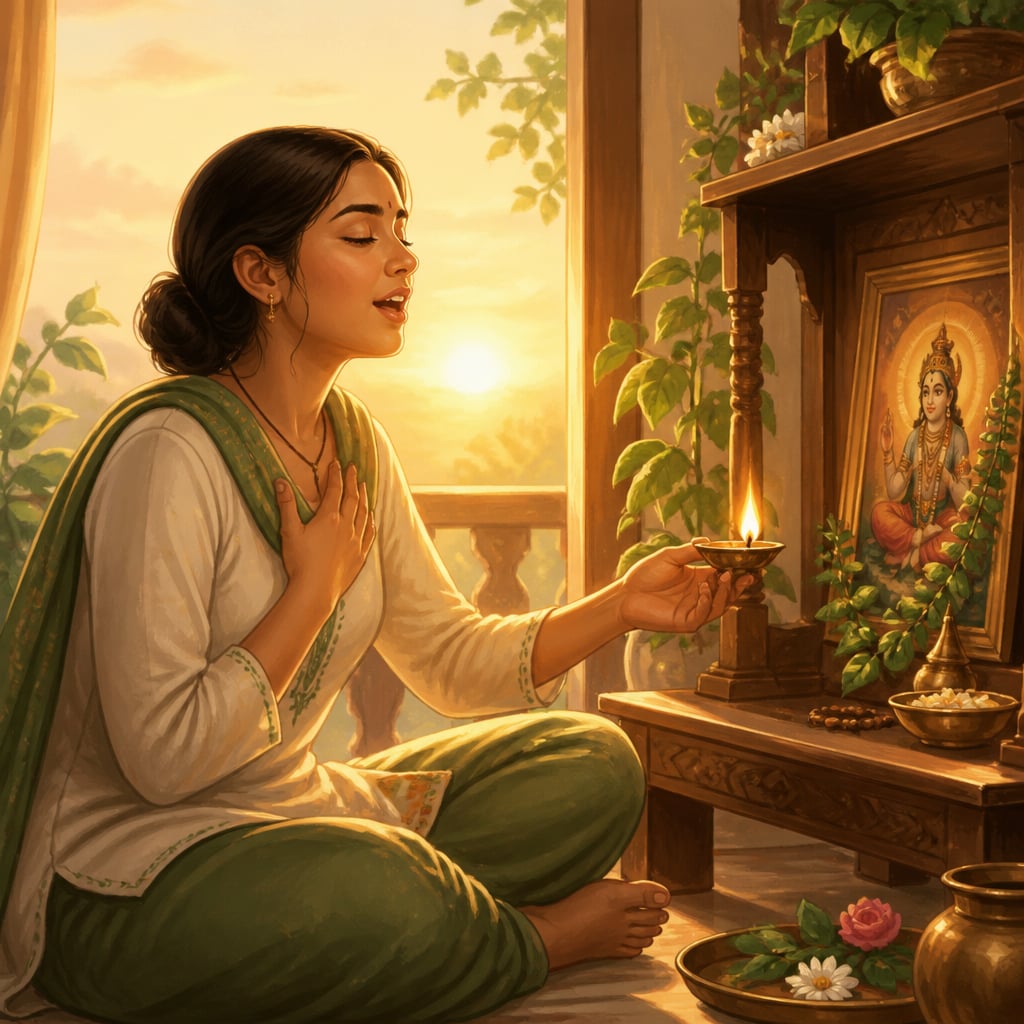
The Vrata Principle
A vrata is different from a casual intention in three ways:
| Casual Intention | Vrata |
|---|---|
| "I'd like to meditate" | "I commit to 10 minutes of meditation each morning" |
| Vague and flexible | Specific and bounded |
| Private thought | Declared commitment |
| Easily abandoned | Honored despite difficulty |
The tradition teaches that vrata has three essential elements:
1. Saṅkalpa (Intention Declaration) You state clearly what you're committing to. This isn't internal thought, it's spoken or written. The declaration creates accountability.
2. Niyama (Specific Rules) The vrata has clear parameters: what exactly you'll do, when, for how long. Vagueness is the enemy of practice.
3. Samāpti (Defined Completion) The vrata has an end point, after which you can renew, modify, or release it. Open-ended commitments exhaust rather than energize.
"Vrataṃ caritavān dharmaḥ" "Dharma is practiced through vrata." , Traditional saying
Dharma isn't just believed, it's practiced. Vrata is the vehicle for turning aspiration into action.
The Four-Part Framework
To design a personal ritual that works, apply this framework drawn from the principles we've explored:
1. Purpose (Artha): Why Are You Doing This?
Every effective ritual serves a function. Before designing form, be clear on purpose:
- Transition: Marking a passage (morning to activity, work to rest, one life stage to another)
- Connection: Linking to something larger (family, community, tradition, cosmos)
- Transformation: Creating inner change (calming anxiety, building focus, cultivating gratitude)
- Offering: Giving something (time, attention, ego) as contribution
Write down your purpose. If you can't articulate why you're doing something, you probably won't sustain it.
2. Anchor (Nītya): When and Where?
Rituals need triggers, specific times, places, or preceding actions that cue the practice:
- Time anchors: Upon waking, at sunset, before meals, before sleep
- Location anchors: A specific corner, chair, or room reserved for practice
- Action anchors: After brushing teeth, before opening laptop, when closing day's work
The modern habit researcher BJ Fogg calls this "anchoring" to existing behaviors. The Vedic tradition called it ṛtu, the right time. Same principle: attach new practices to existing rhythms.
3. Form (Rūpa): What Exactly Do You Do?
Now design the actual practice. Keep it small enough to sustain, significant enough to matter:
- Physical element: Specific posture, gesture, or action
- Verbal element: Words spoken (mantra, affirmation, intention)
- Mental element: Quality of attention, what you focus on
- Duration: Specific length, bounded so completion is possible
Start smaller than you think. Thiruvalluvar, the great Tamil sage, taught that steady small practice surpasses sporadic grand effort:
"What is hard becomes easy when done daily." , Thirukkural
A 5-minute practice done daily for a year creates more transformation than an hour-long practice done occasionally.
4. Commitment (Vrata): How Do You Hold Yourself?
The final element is how you commit:
- Bounded duration: Commit for 30 days, not forever. You can renew, but bounded commitment is sustainable.
- Declared intention: Tell someone. Write it down. Make it concrete.
- Graceful failure: Know in advance how you'll handle missing a day. Not "I'm a failure" but "I'll resume tomorrow."
- Review point: When will you evaluate whether the practice is working?
Thiruvalluvar's Wisdom: Practical Dharma
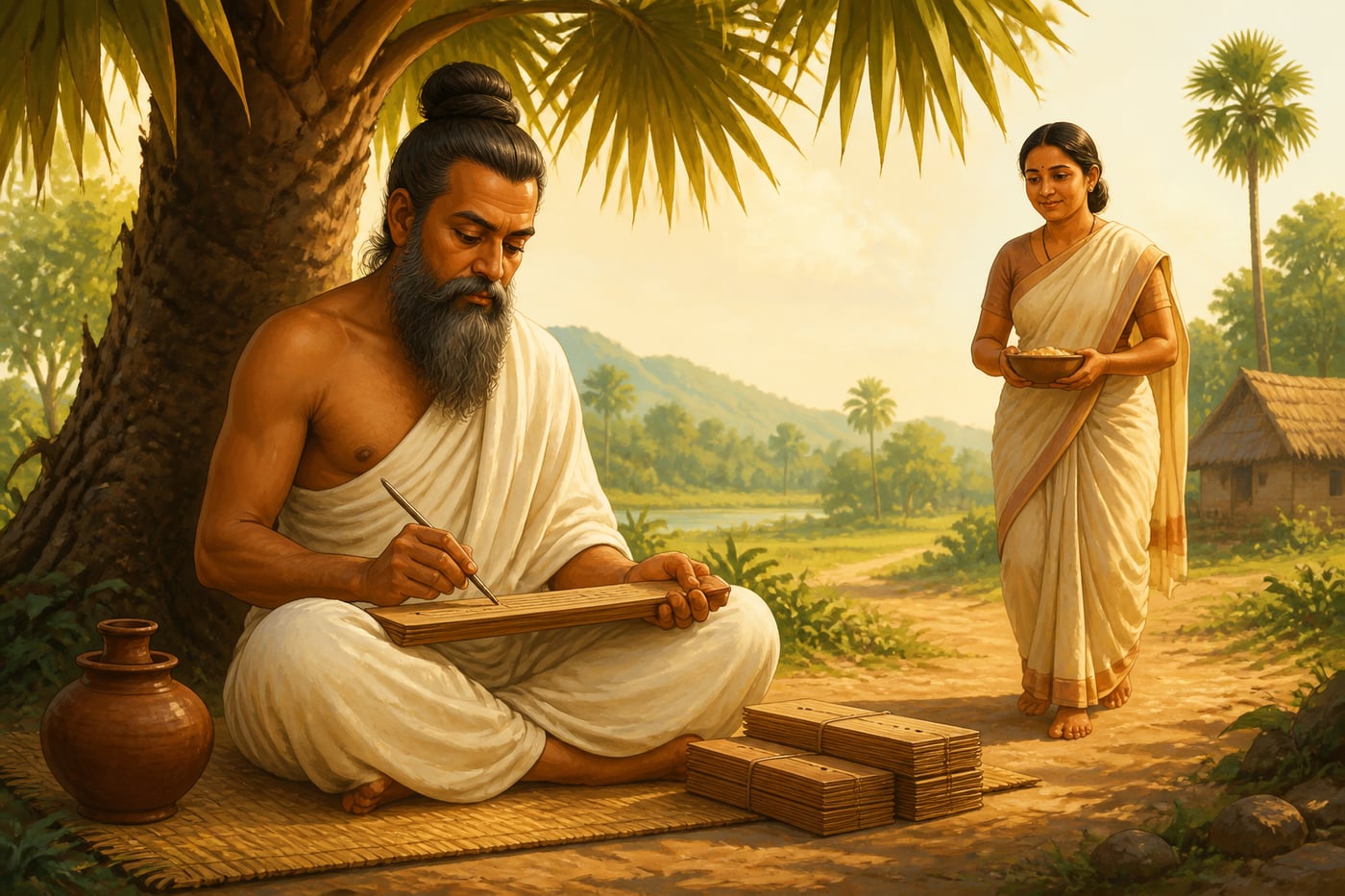
Thiruvalluvar (circa 1st-3rd century CE) composed the Thirukkural, 1,330 couplets of practical wisdom in Tamil. Unlike the Vedas' cosmic scope, the Kural focuses on daily life: how to act, how to govern, how to love, how to live ethically.
His approach exemplifies designing practice from principles:
"Aram ceyal virumbu" "Desire to do what is right." , Kural 33
This is the starting point: clarify what you value. Then:
"Ozhukam vizhupam tharalaan; ozhukam Uyirinum ōmbal thudaittu" "Conduct brings distinction; conduct is worth guarding more than life." , Kural 131
"Conduct" (ozhukam), consistent behavior, is what matters. Not grand gestures, but daily practice.
The Kural provides principles, then trusts readers to design their own applications. This is the vrata approach: understand deeply, then create practices that fit your life.
Modern Habit Science Meets Ancient Wisdom
Contemporary researchers have converged on principles the Vedic tradition understood millennia ago:
BJ Fogg's Tiny Habits teaches:
- Start ridiculously small (2 pushups, not 50)
- Attach new behaviors to existing anchors ("After I pour my coffee, I will...")
- Celebrate small wins immediately
James Clear's Atomic Habits adds:
- Make the practice obvious (visual cues)
- Make it attractive (link to values)
- Make it easy (reduce friction)
- Make it satisfying (immediate reward)
These map onto Vedic principles:
| Modern Insight | Vedic Equivalent |
|---|---|
| Anchor to existing behavior | Ṛtu (right timing) |
| Start small | Krama (graduated progression) |
| Declare intention | Saṅkalpa |
| Celebrate completion | Phala-darśana (seeing the fruit) |
| Stack habits | Nītya-karma (regular duties) |
| Identity-based change | Dharma-avatāra (embodying dharma) |
The tradition knew that transformation happens through small, regular practice. Modern science confirms the mechanism.
Designing Your Own Vrata: A Step-by-Step Guide
Here's how to create a personal ritual that actually works:
Step 1: Choose One Purpose
Don't try to create a complete spiritual practice at once. Pick one thing:
- Starting mornings with clarity
- Transitioning from work to home
- Cultivating gratitude
- Managing stress
- Connecting to something larger
Write it down: "The purpose of this practice is to _______."
Step 2: Select Your Anchor
When will you practice? Pick a specific, reliable trigger:
- "Immediately upon waking, before checking phone"
- "Right after lunch, before returning to work"
- "When I close my laptop at end of day"
Step 3: Design Minimal Form
What's the smallest version of this practice that still serves its purpose?
- Not "30 minutes of meditation" but "5 conscious breaths"
- Not "full journaling practice" but "write three things I'm grateful for"
- Not "elaborate puja" but "light a lamp and offer one moment of attention"
You can always expand later. Start with what you'll actually do.
Step 4: Add Dharmic Elements
Enhance the practice with ritual elements:
- Physical: A specific posture or gesture that signals "this is different"
- Verbal: A word or phrase that sets intention (can be as simple as "I offer this moment")
- Closure: A specific signal that practice is complete (bow, word, gesture)
Step 5: Make the Vrata
Commit formally:
- Write the complete practice description
- Set duration (30 days is good for starting)
- Tell someone or record it somewhere visible
- Decide what you'll do if you miss a day (resume, not restart)
Step 6: Review and Renew
After your committed period:
- Evaluate: Did this serve its purpose?
- Adapt: What would make it work better?
- Renew or release: Continue, modify, or consciously end
Examples of Modern Vratas
Morning Clarity Vrata
- Purpose: Start day with intention, not reactivity
- Anchor: Immediately upon waking
- Form: Before touching phone, sit up, take 3 slow breaths, speak intention for the day
- Duration: 30 days
- Time: 2-3 minutes
Transition Vrata
- Purpose: Mark passage from work to home life
- Anchor: When closing laptop/leaving office
- Form: Close eyes, exhale completely, say "Work is complete; now I'm present here," take three breaths
- Duration: 30 days
- Time: 1 minute
Gratitude Vrata
- Purpose: Cultivate awareness of blessings
- Anchor: Before evening meal
- Form: Pause before eating, silently or aloud name three specific things from the day you're grateful for, then begin eating
- Duration: 30 days
- Time: 1-2 minutes
Evening Review Vrata
- Purpose: Process day, prepare for rest
- Anchor: When getting into bed
- Form: Light a small lamp or candle, review day in mind, note one thing learned and one thing to release, blow out lamp
- Duration: 30 days
- Time: 5 minutes
Living This Now
You don't need to wait. You can design and begin a vrata today:
- Choose one small purpose
- Pick one reliable anchor
- Design the smallest meaningful form
- Commit for 30 days
- Begin tomorrow morning
The tradition you've been studying was created by people designing practices for their lives. The Rishis weren't just transmitting forms, they were experimenting, refining, discovering what works. That's your inheritance too: not just the forms but the method. The method is: understand the principles, design the practice, make the commitment, learn from experience.
This is vrata. This is how you take ownership of your own transformation. This is how you become not just a student of tradition but a practitioner who continues it.
In the final lesson, we'll explore how these ancient principles apply to life in 2026 and beyond, how the wisdom of yajña meets the challenges and opportunities of our time.
BJ Fogg's research at Stanford shows that habits form more reliably when they're tiny. A 30-second practice done daily builds neural pathways more effectively than occasional longer efforts. Size matters less than consistency.
Toyota's kaizen philosophy applies this: continuous small improvements compound into massive change. Amazon's 'Day 1' mentality is similar, treat each day as opportunity for small, specific improvements.
Complex systems change through small repeated interventions, not large single events. The krama principle, gradual progression, aligns with how systems actually transform.
James Clear's Atomic Habits describes 'habit stacking', attaching new behaviors to existing ones. 'After I [current habit], I will [new practice].' This uses existing neural pathways to build new ones.
Effective organizational rituals attach to existing meetings and rhythms, not create separate structures. Amazon's 'written briefs' attach to meeting culture; they don't require a parallel system.
Change is more likely when it uses existing leverage points rather than creating new ones. Attaching practice to existing rhythms minimizes friction and maximizes sustainability.
A word of caution as we explore these teachings: this is the practical culmination of everything in this chapter: you now have the understanding to create meaningful personal ritual. The principles are clear: purpose-driven, anchored in existing rhythms, minimal in form, committed in practice. What remains is application, taking the first step, making the saṅkalpa, beginning the vrata. The tradition continues through people like you, designing practices that carry ancient principles into new lives.
Case studies
BJ Fogg's Tiny Habits: Modern Vrata Design
In 2007, Stanford professor BJ Fogg began experimenting with how habits form. His key insight: most habit advice fails because it relies on motivation, which fluctuates. Instead, he developed 'Tiny Habits', practices so small they require almost no motivation. The formula: 'After I [existing behavior], I will [tiny new behavior], then I [celebrate].' He taught people to do just 2 pushups after using the bathroom, or floss just one tooth after brushing. The results surprised even him: people who had failed at habits for years succeeded immediately.
Fogg's method is essentially modern vrata design. His 'anchor moment' is ṛtu, timing practice to existing rhythms. His 'tiny behavior' is krama, graduated progression starting minimally. His 'celebration' is phala-darśana, seeing the fruit of action immediately. His formula 'After I..., I will...' parallels the saṅkalpa, clear declaration of specific intention. The 30,000 people who've taken his course are, in Vedic terms, taking vratas, bounded commitments to specific practices attached to specific triggers.
Fogg's research and book ('Tiny Habits', 2020) have influenced millions. The method has been adopted by companies (for employee behavior change), healthcare (for patient compliance), and individuals (for personal transformation). Success rates are dramatically higher than traditional habit approaches that rely on motivation.
Modern habit science has independently discovered what the Vedic tradition knew: transformation comes through small, anchored, declared commitments (vrata), not through motivation-dependent grand efforts. The ancient and modern converge on the same truth.
Atomic Habits by James Clear, which sold over 15 million copies, is built on the same framework: make it obvious (anchor), make it easy (small), make it satisfying (celebrate). The convergence of modern behavioral science with ancient vrata design confirms that humans form commitments through the same psychological mechanisms regardless of era or culture.
In Fogg's research, tiny habits have approximately 80% adherence rates compared to traditional resolutions' 10-20%. The key factors, small size, specific anchors, and celebration, mirror traditional vrata elements.
Thiruvalluvar's Kural: Designing an Ethical Life
Around the 1st-3rd century CE, a Tamil poet named Thiruvalluvar composed 1,330 couplets covering dharma, artha (material wellbeing), and kama (love). Unlike the cosmic scope of the Vedas, the Kural focuses on practical daily life: how to conduct yourself, manage relationships, govern wisely, and love well. Each kural (couplet) contains a principle that readers apply to their own circumstances. Thiruvalluvar didn't prescribe specific practices but provided principles for designing them. The work has been translated more than the Bible and remains foundational to Tamil culture.
The Kural exemplifies a principle-based approach to vrata design. Rather than prescribing exact forms, Thiruvalluvar offers principles (be truthful, maintain conduct, act righteously) that readers translate into their own practices. This is precisely the approach we've taken: understand principles deeply enough to design practices that fit your life. The Kural's emphasis on 'ozhukam' (consistent conduct) mirrors the nītya principle, what matters is regular practice, not occasional grand gestures.
The Thirukkural has guided Tamil civilization for nearly two millennia. Its practical wisdom, neither too abstract nor too specific, has allowed it to remain relevant across vastly different eras and contexts. People have designed their own vratas from its principles for generations.
The best teaching gives you principles, not just forms. Thiruvalluvar trusted his readers to design their own practices from the principles he offered. This chapter has done the same: now you have the understanding to create vratas that serve your specific life, circumstances, and purposes.
The global self-help industry, valued at over $40 billion, largely sells what Thiruvalluvar offered for free: principles for designing an ethical, effective life through small daily choices. The enduring appeal of compact wisdom literature, from Marcus Aurelius to modern tweet-length aphorisms, confirms that practical principles outlast elaborate prescriptions.
The Tirukkural contains exactly 1,330 couplets organized into 133 chapters of 10 couplets each, covering dharma, artha, and kama. It has been translated into over 100 languages and has been studied continuously for nearly 2,000 years.
Reflection
- What is one area of your life where you feel a need for more structure, meaning, or intentionality? What simple vrata might address this need?
- Why do you think declared commitment (saṅkalpa) matters? What is the difference between thinking about practice and speaking or writing commitment to it?
- The tension between tradition (paramparā) and personal adaptation (navyatā) appears again here. When designing personal practice, how do you balance honoring tradition with creating what works for you?