Viveka: Respect Without Romanticizing Nature
Discernment in the Face of Nature's Complexity
The Vedic vision honors nature without sentimentalizing it. The Rishis knew that the same forests that sheltered them harbored predators; the same rivers that nourished crops also flooded villages; the same plants that healed could also kill. This lesson explores Viveka, discernment, as the key to a mature relationship with Prakṛti: neither exploitation nor naïve worship.
The boy's leg was turning purple where the snake had bitten him. His family had carried him through the night to the Rishi who lived at the edge of the forest, the one known for healing. The Rishi examined the wound, smelled the child's breath, felt his pulse.

'It was a kraita,' the Rishi said. 'The common krait. The venom is powerful, it paralyzes. But look.' He showed the family a small plant growing in a pot by his door. 'This is also the forest. Venom and antidote grow side by side. The snake did not bite out of malice; it bit because it was threatened. Nature does not choose good or evil, it simply is.'
He prepared the medicine, chanting softly as he worked. By dawn, the boy's color was returning. His father, weeping with relief, asked the Rishi: 'How can I hate the snake that nearly killed my son? How can I love the forest that harbors such danger?'
The Rishi smiled. 'You misunderstand. I do not love the forest as a child loves a toy. I do not hate the snake as an enemy. I see them clearly, both the danger and the gift. This is Viveka, discernment. Without it, you will either exploit nature until it kills you, or worship it so blindly that the first flood or famine shatters your faith. With Viveka, you walk the middle path.'
What Is Viveka?
The Sanskrit word Viveka means 'discernment' or 'discrimination', the capacity to distinguish between what is and what appears to be, between the real and the illusory, between what serves life and what destroys it.
In the context of nature, Viveka prevents two dangerous extremes:
The Exploiter's Error: Treating nature as mere raw material, ignoring its complexity, extracting without limit. This leads to the Aral Sea, the Easter Island collapse, the climate crisis, the hubris of humans who forgot they were part of the system.
The Romantic's Error: Sentimentalizing nature as purely benevolent, ignoring its dangers, refusing to intervene even when intervention is necessary. This leads to paralysis in the face of disease, disaster, and predation, the naïvety of those who project human values onto an indifferent cosmos.
The Vedic Rishis avoided both errors. They revered rivers but built levees. They honored forests but carried weapons. They praised the sun but sought shade. They recognized that nature includes both the medicine and the poison, the nurturer and the destroyer, and that wisdom lies in seeing both clearly.
What the Mantras Reveal
The Rig Veda does not shy away from nature's dangerous aspects. The hymns to Rudra, the 'howler,' the wild god of storms and destruction, ask for protection precisely because he is fearsome:
"नमो रुद्राय... मा नस्तोके तनये मा न आयुषि" "Homage to Rudra... do not harm our offspring, our children, our life."

Word by word:
- namaḥ, homage, surrender
- rudrāya, to Rudra (the howler, the terrible one)
- mā, do not
- naḥ, our
- toke, offspring
- tanaye, children
- āyuṣi, life, lifespan
This is not the prayer of someone who romanticizes nature. It is the prayer of someone who knows that storms destroy, that disease kills, that wild forces have no regard for human wishes. The Vedic response is not denial but acknowledgment: 'You are terrible; I honor you; please do not destroy me.'
The Prithvi Sukta itself, while celebrating Earth as mother, also acknowledges her capacity for destruction:
"या बहुधा विषवीरुध... ओषधे तासु नो धेहि" "She who has many poisonous plants... among them, O Herb, place us safely."
The Earth produces both healing herbs and deadly poisons. The Rishi does not deny the poison; he asks for protection from it. This is Viveka in action: clear-eyed acknowledgment of what is.
Traditional Interpretations: Sayana and Aurobindo
Sayanacharya reads the hymns to Rudra and other fearsome Devas as ritual protections. The Vedic sacrificer acknowledged dangerous forces precisely because they were dangerous. Ignoring Rudra would not make storms less deadly; propitiation was a technology for right relationship with unpredictable powers.
Sri Aurobindo offers a psychological reading. Rudra represents not only outer storms but inner fury, the destructive forces within the psyche. Viveka is the capacity to integrate these forces rather than deny them. Just as the outer world contains predators and poisons, so the inner world contains rage, fear, and aggression. The mature being acknowledges both.
Both readings converge on realism. The Vedic relationship with nature was never sentimental. It was based on careful observation, pragmatic caution, and clear-eyed acceptance of nature's dual character.
Correcting a Misconception
Modern environmentalism sometimes lapses into what critics call 'eco-romanticism', the belief that nature is inherently benevolent and that humans are the sole source of harm. This view is understandable as a reaction to exploitation, but it creates its own problems:
- It ignores that nature includes parasites, pathogens, and predators, entities that harm humans not out of malice but because that is their nature.
- It paralyzes action in the face of necessary intervention (flood control, disease management, pest control).
- It sets up a fragile faith that collapses when nature acts 'cruelly' (earthquakes, droughts, pandemics).
The Vedic view is more robust. Nature is neither good nor evil, it is what is. Prakṛti includes creation and destruction, birth and death, medicine and poison. The wise response is not to moralize but to discern: What serves life here? What threatens it? What is within my power to address? What must I simply accept?
This is not coldness; it is maturity. The Rishi who treats the snakebite does not hate the snake. But neither does he invite the snake into his home. He sees clearly.
A word of caution as we explore these teachings: the Viveka approach offers an alternative to both exploitation (using nature without respect) and romanticism (respecting nature without intelligence). In an era of climate change, biodiversity loss, and environmental crisis, this middle path, clear-eyed, pragmatic, and reverential, may be what we most need.
Modern Resonance: Complexity in Conservation
The Rewilding Debate: In India and globally, rewilding initiatives aim to restore ecosystems by reintroducing apex predators. This is often ecologically beneficial, as the Yellowstone wolves showed. But it also creates real conflicts:
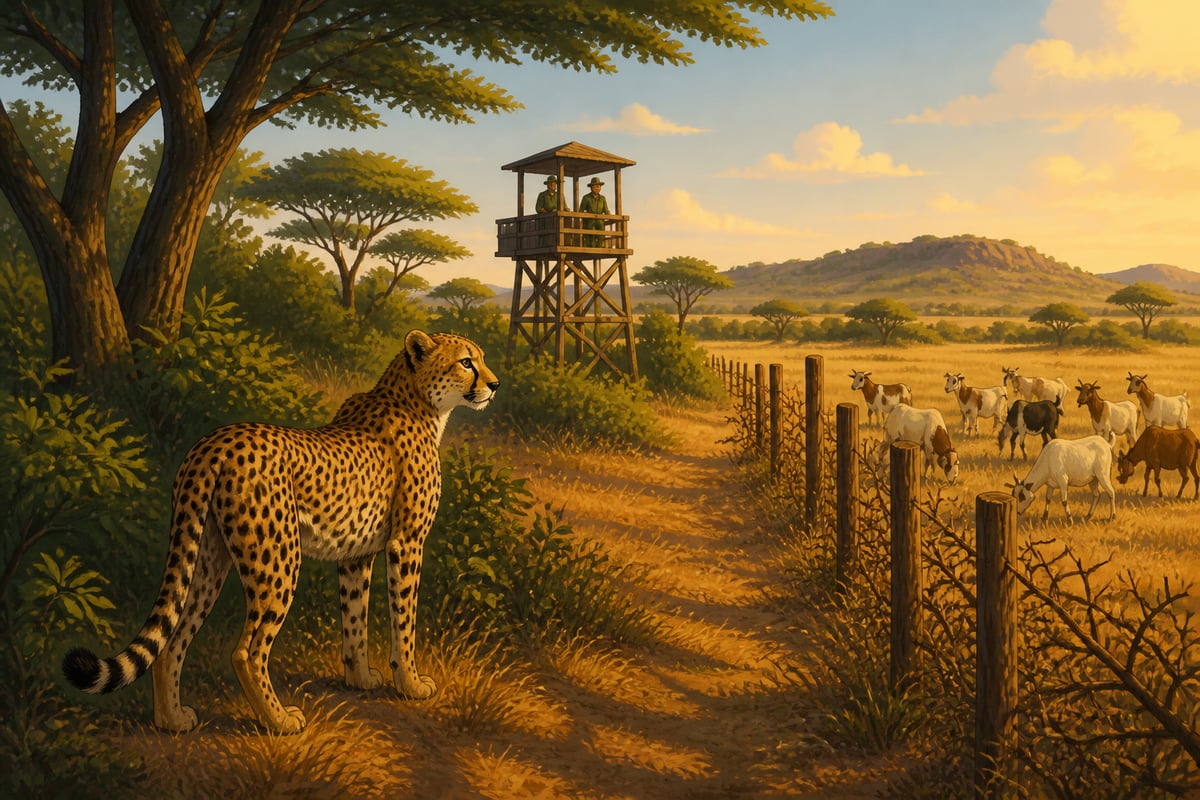
- When Asiatic lions were proposed for relocation from Gir to Kuno, local communities raised concerns about livestock predation and human safety.
- Wolf reintroduction in Europe faces opposition from farmers whose sheep are killed.
- Elephant corridors in Karnataka require villages to accept occasional crop raiding.
The Vedic Viveka approach neither dismisses these concerns ('the locals just don't understand ecology') nor abandons conservation ('it's too complicated, let's not try'). It holds both truths: apex predators are ecologically essential and they pose real risks to human communities. Solutions must address both.
Organic vs. Industrial Farming: The debate over agricultural methods often becomes polarized:
- Industrial advocates dismiss organic farming as nostalgic and incapable of feeding billions.
- Organic advocates demonize all industrial methods as inherently destructive.
The Viveka view recognizes that both approaches have value and limits. Traditional knowledge (crop rotation, polyculture, natural pest control) contains genuine wisdom. Modern science (improved seeds, targeted inputs, mechanization) has enabled unprecedented yields. Neither approach is purely good or evil. Discernment asks: What combination best serves life in this context?
The Navdanya model integrates traditional seed diversity with scientific documentation. The System of Rice Intensification (SRI) combines ancient water management with modern spacing techniques. These hybrids embody Viveka, taking the best of each approach without romantic attachment to either.
Dialectical Behavior Therapy (DBT) teaches 'both-and' thinking: 'I can love myself and want to change.' This mirrors the Vedic Rudra-Shiva insight: nature is terrible and auspicious. Neither denial nor despair, integration.
Effective leaders hold complexity: the market is opportunity and risk; change is growth and disruption; employees have strengths and weaknesses. The leader who sees only one side makes poor decisions.
Systems exhibit positive and negative feedback loops. Simplistic models that see only one type fail. Climate models must account for warming effects (positive) and cooling effects (negative) to be accurate.
Healthy boundaries require both respect for others and protection of self. Saying 'no' is not disrespect, it is discernment. The person who cannot set limits is not loving but confused.
Risk management combines respect for uncertainty (we cannot control everything) with pragmatic protection (insurance, hedging, contingency plans). The leader who only worries or only trusts is unprepared.
Resilience engineering (Hollnagel, Woods) emphasizes both adaptation (working with variability) and protection (building margins, buffers, backups). Systems that only adapt without protection are fragile.
Your Path Forward
The Rishi who healed the snakebite offered his most profound teaching not about medicine but about discernment. He did not hate the snake or love the forest in the way a child loves a fantasy. He saw both clearly, the danger and the gift, the poison and the cure, and acted accordingly.
This week, try this practice: Notice an aspect of nature you tend to idealize or fear. If you idealize it, ask: What is dangerous here that I'm ignoring? If you fear it, ask: What is valuable here that I'm missing? Let your view become more complex, more accurate, more mature.
Viveka is not cynicism. It is the clarity that allows for genuine respect, not the respect of ignorance, which worships what it doesn't understand, but the respect of knowledge, which honors what it sees fully.
In the final lesson of this chapter, we will explore how these Vedic principles apply to the challenges of 2026 and beyond, climate change, biodiversity loss, and the question of whether humanity will remember its place in Prakṛti before it is too late.
Case studies
The Rewilding Debate: Lions in Kuno
For decades, conservationists have argued that Asiatic lions, currently found only in Gujarat's Gir Forest, need a second population for genetic diversity and disaster insurance. Kuno National Park in Madhya Pradesh was selected. But the Gujarat government resisted, and local communities raised concerns about livestock predation and human safety.
The Viveka approach neither dismisses local concerns ('they just don't understand ecology') nor abandons conservation ('it's too risky'). It holds both truths: apex predators are ecologically essential (the wolves-and-rivers principle), and they pose real risks to human communities. Solutions must address both, compensation schemes, livestock protection, community involvement, not just top-down imposition.
The debate continues, but the Cheetah reintroduction to Kuno (2022) has provided lessons. Some cheetahs died; others adapted. Local communities initially skeptical became engaged stakeholders. The pattern suggests that rewilding works best when both ecological imperatives and human concerns are acknowledged, when Viveka guides the process.
Conservation without community is colonialism by another name. The Vedic approach, pragmatic reverence, suggests that wildlife protection must include human protection. Holding both truths is harder than choosing one side, but it's the only approach that lasts.
This tension repeats in every conservation debate worldwide, from tiger corridors in India to wolf reintroduction in the American West. Projects that fail to include affected communities in decision-making face backlash and sabotage. The most successful conservation programs, like Namibia's community conservancies, give local people both voice and economic stake.
India has approximately 700 Asiatic lions, all in one forest (Gir). A single disease outbreak or disaster could devastate the population. But the 2020 Kuno impact assessment showed that roughly 60 villages with 25,000+ people would be affected by lion reintroduction.
SRI: The Middle Path in Agriculture
The System of Rice Intensification (SRI), developed in Madagascar and now practiced across Asia, dramatically increases rice yields with less water and fewer inputs. It combines traditional practices (wider spacing, organic matter, careful water management) with scientific validation and modification. Neither purely traditional nor purely industrial, SRI represents a synthesis.
The Viveka approach to agriculture neither romanticizes traditional methods ('our ancestors knew best') nor dismisses them ('only modern science can feed billions'). SRI embodies Viveka: it takes traditional observations seriously, subjects them to testing, modifies what doesn't work, and integrates modern understanding where it helps. The result is neither old nor new but true.
SRI has been adopted by millions of farmers in India, China, Indonesia, and beyond. Average yield increases of 20-100% are reported, with 25-50% less water and fewer external inputs. The method is labor-intensive during transplanting but reduces overall costs. It's not a silver bullet, it requires skill and attention, but it demonstrates that hybrid approaches work.
The 'organic vs. industrial' debate is a false dichotomy. The best agriculture combines traditional wisdom (polyculture, soil health, local adaptation) with modern science (improved varieties, targeted inputs, mechanization where appropriate). Viveka sifts the wheat from the chaff in both traditions.
Precision agriculture and regenerative farming movements are converging on the same insight: combining traditional knowledge with modern technology produces better results than either alone. Companies like Indigo Agriculture and Pivot Bio are building billion-dollar businesses on the principle that soil biology matters more than synthetic inputs.
A meta-analysis of 286 SRI studies found average yield increases of 32% with 35% less water compared to conventional flooded rice cultivation. In Tamil Nadu, some farmers report yields exceeding 10 tons/hectare, three times the national average.
Vedic Flood Management: Reverence and Levees
The Vedic civilization flourished on the floodplains of the Saraswati and Indus, lands fertile precisely because the rivers flooded. But floods also destroyed crops, homes, and lives. The Vedic response was not to hate the rivers or to worship them passively but to manage them pragmatically while maintaining reverence.
The Vedic hymns to rivers (Nadi Sukta) praise them as mothers and goddesses. Yet archaeological evidence shows that Harappan-Saraswati settlements included sophisticated drainage, elevated platforms, and water management systems. This is Viveka in action: the river is divine and dangerous; we honor her and build levees.
The Harappan-Saraswati civilization sustained dense urban populations for centuries on flood-prone land. This required both spiritual relationship (maintaining ecological awareness) and practical engineering (managing water flow). When the Saraswati began shifting course around 1900 BCE, the civilization adapted by migrating eastward rather than fighting the river. Pragmatic reverence guided both settlement and departure.
The Vedic model shows that reverence and engineering are not opposites. The Rishis who composed hymns to the Saraswati also designed drainage systems. The modern dichotomy between 'respecting nature' and 'controlling nature' is false. Viveka integrates both.
The Netherlands' Room for the River program, launched after devastating floods, embodies this same approach: instead of building higher walls against floods, engineers redesigned landscapes to give rivers space to expand naturally, combining modern hydrology with the ancient principle of working with water rather than against it.
Harappan cities like Dholavira featured reservoir systems capable of storing 250,000 cubic meters of water, with engineered cascading channels that reduced flood velocity by 60% before reaching settlement areas.
Reflection
- Is there an aspect of nature you tend to romanticize (ignoring its dangers) or demonize (ignoring its gifts)? What would a more balanced, discerning view look like?
- The Vedic Rishis prayed to Rudra, the terrible one, and asked for his auspicious (śiva) form. What does it mean to relate to danger with reverence? Can fear and respect coexist?
- Is nature 'good,' 'evil,' or neither? Does the question itself make sense, or are we projecting human categories onto something that doesn't have morality?