Kṛtajñatā: Gratitude, Praise & Acknowledgment
Remembering the Sources of Success
Success naturally pulls attention toward the self: 'I did this.' The Vedic practice of kṛtajñatā, remembering what has been done for you, is the antidote to this distortion. This lesson explores how gratitude protects against mada, why acknowledging sources of success is both truthful and strategic, and the practice of deliberately remembering what success wants you to forget.
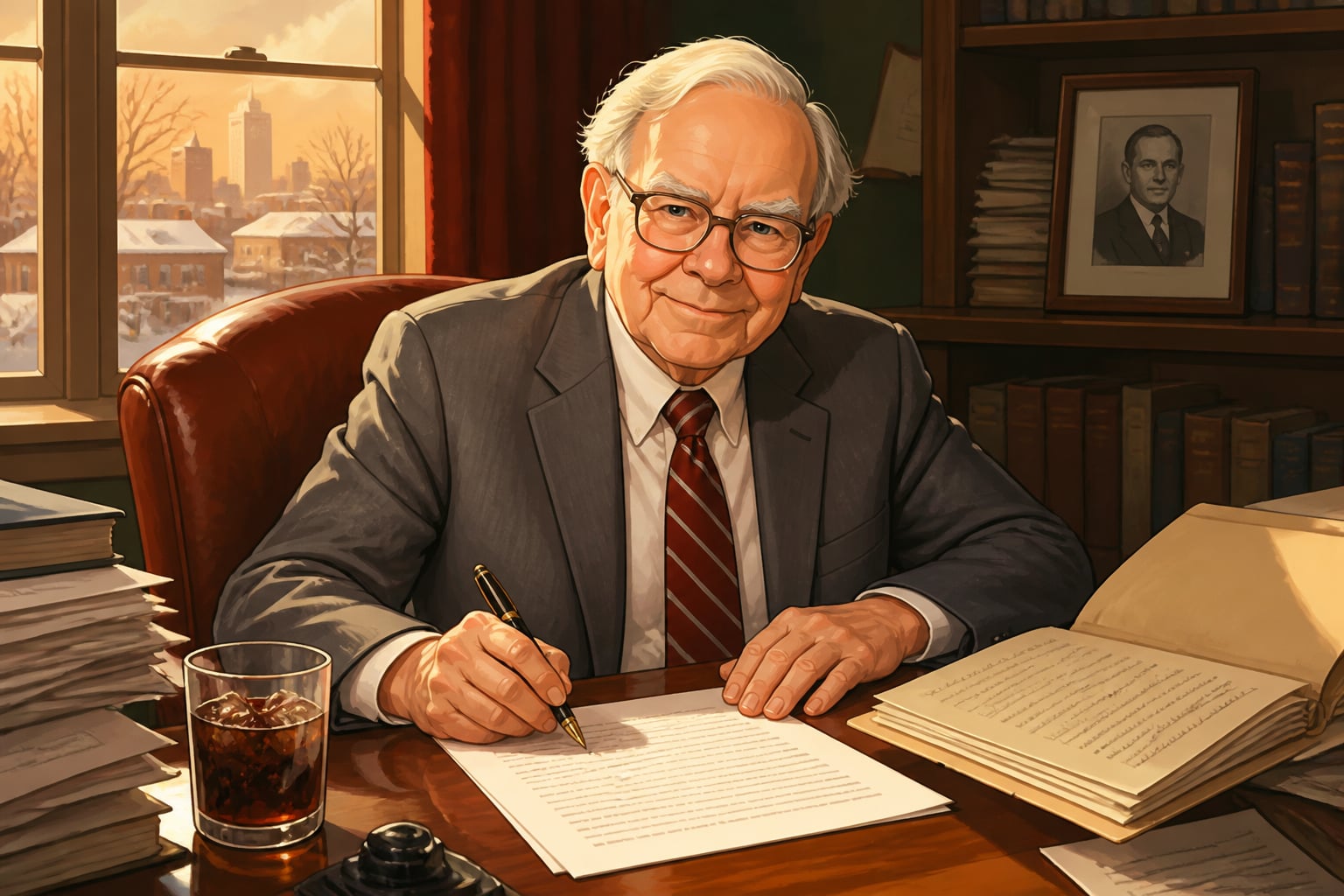
Every year, Warren Buffett writes a letter to Berkshire Hathaway shareholders. These letters have become legendary, studied by investors, quoted by business schools, parsed for wisdom.
But notice something consistent across decades of these letters: Buffett credits others. His partner Charlie Munger. His managers. His predecessors. His teachers, Benjamin Graham appears again and again. The companies he acquires. Even his mistakes are framed as his own, while successes are distributed.
This is not false modesty. It is accurate attribution practiced at the highest level. And it is precisely what the Vedic tradition calls kṛtajñatā, remembering what has been done for you.
To appreciate this wisdom fully: In an age of personal branding and self-promotion, the practice of acknowledging sources is increasingly rare and increasingly valuable. The leader who credits others builds trust, maintains relationships, and creates sustainable culture. The practice of kṛtajñatā is ancient wisdom directly applicable to modern leadership.
The Pull Toward Self-Credit
Success has a natural gravitational pull: it draws attention toward the self.
You work hard, you make good decisions, you succeed, and the narrative that forms is: "I did this." The teachers who trained you, the colleagues who supported you, the circumstances that favored you, the predecessors whose work you built on, these fade into background while "I" moves to foreground.
This is not deliberate distortion. It is how memory works. The Vedic tradition calls this the natural operation of ahaṅkāra, the ego-making faculty. Ahaṅkāra is not evil; it is how we construct a functional sense of self. But left unchecked, it produces a picture of reality that is systematically skewed toward self-credit.
The correction is kṛtajñatā: the deliberate practice of remembering the sources.
Kṛtajñatā: The Practice of Remembering
The Sanskrit word kṛtajñatā literally means "knowing what has been done", specifically, knowing what has been done for you. It is composed of:
- kṛta (done, made, accomplished)
- jña (knowing, from the root 'jñā', to know)
- -tā (the state of being)
Kṛtajñatā is not merely feeling grateful, it is knowing accurately the contributions that made your success possible. It is epistemological before it is emotional: first you see clearly who helped, then gratitude follows naturally.
The opposite is kṛtaghna, one who "kills" or destroys (ghna) what has been done (kṛta). The kṛtaghna forgets the contributions of others, takes sole credit, and in doing so both distorts truth and damages the relationships that produced success.
The Vedic Framework: No Success Is Self-Made
The Rig Veda is clear: no accomplishment is purely individual. Even Indra's greatest victory, the slaying of Vritra, is described as enabled by Soma, the Maruts, the hymns of the Rishis. The king of gods needed help.
"indraṃ vardhanto apturaḥ", "Strengthening Indra, the active ones..." , RV 9.63.5
Indra's power comes from those who invoke him. The verse reminds us that power is relational, not autonomous. Cut off from its sources, even divine strength withers.
This is not merely mythological. It is structural: every success depends on infrastructure, education, predecessors, collaborators, circumstances, and chance. The person who believes "I did it myself" has simply forgotten, or never noticed, the network of support that made "I" possible.
The Strategic Value of Acknowledgment
Kṛtajñatā is not only truthful but strategic. The leader who acknowledges contributions:
1. Preserves relationships: The allies who helped you to success will help you again, if they feel recognized. The team that feels invisible will not be there next time.
2. Builds trust: Those observing you evaluate not just your success but how you handle success. The leader who credits others is trusted; the one who claims sole credit is suspected.
3. Models culture: Acknowledgment flows downward. The leader who credits sources creates an organization where credit flows; the one who hoards credit creates an organization of hoarders.
4. Protects against mada: Actively remembering contributions prevents the intoxication of success. It is harder to be drunk on victory when you are naming all the people who made it possible.
| Self-Credit Habit | Kṛtajñatā Practice |
|---|---|
| "I built this" | "We built this" |
| Success inflates ego | Success expands gratitude |
| Allies fade from memory | Allies are named and honored |
| Creates resentment in team | Creates loyalty in team |
| Isolates in victory | Connects in victory |
The Lineage of Acknowledgment in Dharmic Tradition
The practice of kṛtajñatā runs through Indian history like a golden thread:
Adi Shankaracharya (8th century), the great philosopher who established Advaita Vedanta across India, consistently acknowledged his guru Govinda Bhagavatpada and the paramparā (lineage) that preceded him. His works open with salutations to teachers. He never claimed to originate teachings, only to transmit what he had received.
Chatrapati Shivaji (17th century) credited his mother Jijabai for his moral formation and vision. His letters and court records show consistent acknowledgment of his commanders, his ministers, and his people. The great king who built an empire from nothing never forgot to name those who built it with him.
Swami Vivekananda (19th century) spent his life crediting his guru Sri Ramakrishna. "I am only the voice of my Master," he said repeatedly. Every teaching he gave in the West, every institution he built, was explicitly attributed to Ramakrishna's grace and instruction.
The pattern is consistent: the greatest figures in Dharmic history are distinguished not only by their achievements but by their practice of acknowledging sources.
Modern Resonance: Warren Buffett's Acknowledgment Practice
Warren Buffett has been one of the most successful investors in history, and one of the most consistent practitioners of acknowledgment.
His annual letters to shareholders are masterclasses in kṛtajñatā:
Benjamin Graham: Buffett credits his teacher Graham with the fundamental framework of value investing. Decades after Graham's death, Buffett still references him as the source.
Charlie Munger: Buffett's partner is credited again and again. "Charlie made me a better investor," Buffett says. Their partnership is presented as mutual rather than hierarchical.
Operating managers: Buffett famously takes a hands-off approach to the companies Berkshire acquires. But in his letters, he names the managers, praises their work, and credits them with results.
Predecessors: The Buffett family businesses, the culture that preceded him, these are acknowledged as foundations.
Notably, when things go wrong, Buffett takes personal responsibility. When things go right, he distributes credit. This inversion is the opposite of ahaṅkāra's natural pull, which claims success and externalizes failure.
The result: Buffett has built an organization where talented people want to stay, where trust is high, and where the culture of acknowledgment perpetuates itself. His practice of kṛtajñatā is not just morally admirable, it has produced tangible strategic advantage.
Traditional Wisdom: Vivekananda's Lifelong Gratitude
Swami Vivekananda (1863-1902) was arguably the most important figure in bringing Vedantic thought to the West. His speeches at the 1893 Parliament of World's Religions in Chicago electrified audiences. His books, institutions, and teachings shaped the modern Hindu renaissance.
But throughout his life, Vivekananda insisted he was not the source:
"I am the voice of my Master. Whatever good you see in me comes from him."

Sri Ramakrishna had died in 1886, when Vivekananda was 23. For the remaining 16 years of his life, Vivekananda never claimed independent authority. Every teaching was attributed to Ramakrishna. Every institution was dedicated to Ramakrishna's memory.
This was not false humility. Vivekananda was not a passive vessel, he was brilliant, charismatic, original in his presentations. But he understood something crucial: he had received more than he could ever give. His acknowledgment of Ramakrishna was accurate assessment, not self-deprecation.
When Vivekananda established the Ramakrishna Mission, he named it after his guru, not himself. The institutions he built were designed to perpetuate Ramakrishna's teachings, not Vivekananda's fame. This is kṛtajñatā expressed structurally: the organization itself embodies gratitude.
The Vinaya Response: Practicing Acknowledgment
Kṛtajñatā is a practice, not a trait. It requires deliberate cultivation, especially in success when ahaṅkāra's pull is strongest.
1. Name names: When discussing success, specifically identify who contributed. Not "the team" but the people on the team. Not "my teachers" but the actual teachers. Specificity makes acknowledgment real.
2. Trace the lineage: Every capability you have was developed by someone. Every opportunity you seized was created by circumstances. Trace backward: who taught you? Who taught them? Who created the conditions?
3. Make it public: Private gratitude is good; public acknowledgment is better. When others see you credit sources, the culture shifts. The team learns that acknowledgment is valued.
4. Credit generously, blame sparingly: When success comes, distribute credit. When failure comes, take responsibility. This inversion of ahaṅkāra's natural pull is the mark of the mature leader.
Research on gratitude practices (Emmons & McCullough) shows that specific, named gratitude produces more psychological benefit than vague thankfulness. 'I'm grateful for Maria's help with the presentation' is more effective than 'I'm grateful for my team.' Specificity matters.
Buffett's letters name specific managers, specific decisions, specific contributions. This specificity makes the acknowledgment real rather than formulaic. Generic 'thanks to the team' is less effective than naming the team members and their contributions.
Taking credit for others' work is not just strategically foolish, it is untruthful. Kṛtajñatā is first a matter of accurate seeing, then of honest speaking. The leader who claims sole credit is distorting reality.
Self-serving bias (attributing success to self, failure to others) is well-documented and universal. It is the psychological mechanism that kṛtajñatā counters. The practice of credit inversion, success to others, failure to self, directly opposes the automatic bias.
Jim Collins' research on 'Level 5 Leaders' (Good to Great) found that the best leaders looked 'out the window' to attribute success to others and 'in the mirror' to take responsibility for failure. This is empirically validated credit inversion.
The leader who claims others' credit is engaging in a form of theft, taking what belongs to others. The leader who externalizes blame is engaging in a form of dishonesty, misattributing causation. Credit inversion is ethically cleaner.
Your Path Forward
Think of your most significant success. Now trace backward: Who taught you the skills you used? Who gave you the opportunity? Who supported you when you struggled? Who created the conditions in which your success was possible?
The list will be longer than you expect. Ahaṅkāra has been editing it down for years, foregrounding "I" while backgrounding the network of contribution.
Now: Have you acknowledged these people? Do they know you remember? Is your gratitude public or only private?
Kṛtajñatā protects both truth and relationship. The leader who remembers sources stays connected to reality and to the people who made success possible. The leader who forgets becomes isolated, distorted, and eventually resented.
Buffett at 90+ still credits Benjamin Graham. Vivekananda in his final years still spoke of Ramakrishna. Shivaji's letters still named his commanders. The practice of acknowledgment is not weakness, it is the wisdom that keeps success sustainable.
The Rishis understood: what you remember, you remain connected to. What you forget, you lose. Kṛtajñatā is the practice of keeping your connections alive.
Case studies
Warren Buffett: Acknowledgment as Core Practice
Warren Buffett's annual letters to Berkshire Hathaway shareholders have become legendary documents in the business world. Across decades of letters, certain patterns emerge: - **Benjamin Graham:** Buffett consistently credits his teacher Graham, who died in 1976, with the foundational framework of value investing. 'I'm 15% Philip Fisher and 85% Benjamin Graham,' he wrote, attributing his entire approach to sources. - **Charlie Munger:** Buffett's partner is credited with transforming his investment philosophy. 'Charlie shoved me in the direction of not just buying bargains,' Buffett says. The partnership is presented as mutual enhancement, not hierarchy. - **Operating Managers:** Buffett names specific managers, Ajit Jain, the Blumkins, Tony Nicely, crediting them with the performance of their businesses. These are not anonymous 'team' references but specific acknowledgments. - **His Own Failures:** When investments fail, Buffett takes personal responsibility. 'This was my mistake,' he writes, without blaming market conditions or employees. The asymmetry is deliberate: success to others, failure to self.
Buffett's practice is a modern expression of kṛtajñatā. It has specific characteristics: **Specificity:** He names names, not abstract categories. Benjamin Graham, not 'my teachers.' Ajit Jain, not 'our insurance team.' This specificity makes the acknowledgment real. **Persistence:** Graham died decades ago; Buffett still credits him. The acknowledgment isn't temporary gratitude that fades, it is permanent recognition that persists across time. **Credit Inversion:** Success is attributed to others; failure is claimed personally. This inverts ahaṅkāra's natural pull and maintains both truthfulness and relationship. **Public Nature:** These acknowledgments are not private notes but public letters read by millions. The public nature creates culture, it models how success should be discussed. The Vedic reading: Buffett has maintained kṛtajñatā at a level of success that typically destroys it. The more successful he became, the more consistently he credited sources. This is vinaya operating across decades.
Berkshire Hathaway has built an unusual culture for a large corporation: - **Manager retention:** Operating managers stay for decades, partly because they feel recognized and trusted rather than micromanaged and uncredited. - **Trust:** Buffett's reputation for fairness and acknowledgment allows him to make deals that others cannot, sellers trust his word and his character. - **Culture perpetuation:** The culture of acknowledgment flows throughout the organization. Managers model what they see modeled. Buffett's practice of kṛtajñatā is not just virtuous, it has produced measurable organizational advantage.
Acknowledgment at scale, over time, creates culture and competitive advantage. Buffett's consistent practice of crediting sources, across decades, through massive success, demonstrates that kṛtajñatā is sustainable and strategically valuable. The opposite practice, claiming sole credit, may produce short-term ego satisfaction but long-term organizational damage.
Crediting sources builds compounding returns in relationships. Leaders and organizations that publicly acknowledge mentors, collaborators, and contributors build loyalty networks that far exceed what pure compensation can achieve. This is visible in open-source communities, where maintainers who credit contributors build the most active ecosystems.
Berkshire Hathaway's managerial tenure far exceeds industry averages. Operating managers often stay for 20+ years. This retention is partly attributed to Buffett's consistent public acknowledgment of their contributions, they feel seen, credited, and trusted.
Swami Vivekananda: A Life of Guru-Dakṣiṇā
Swami Vivekananda (1863-1902) was the most significant figure in bringing Hindu thought to the West. His 1893 speeches at the Parliament of World's Religions in Chicago made him famous overnight. He founded institutions, wrote books, gave hundreds of lectures, and inspired countless followers. But throughout his public life, through all the fame, all the success, all the influence, Vivekananda consistently deflected credit to his guru, Sri Ramakrishna. 'I am only the voice of my Master.' 'Whatever good you see in me comes from him.' 'I am like a spark from the blazing fire of Ramakrishna.' When he established the organization that would carry his work forward, he named it the Ramakrishna Mission, not the Vivekananda Mission. When he built the monastery that would train future monks, he called it Belur Math, dedicated to Ramakrishna's memory.
Vivekananda's practice represents the complete expression of kṛtajñatā: **Total Attribution:** He didn't merely acknowledge Ramakrishna among other sources, he attributed everything to Ramakrishna. The teacher was not one influence among many but the source of the entire stream. **Structural Expression:** His acknowledgment wasn't just verbal but structural. Institutions, buildings, organizations, all named for and dedicated to the guru. The gratitude was built into the very form of what he created. **Persistent through Success:** The more famous Vivekananda became, the more consistently he deflected to Ramakrishna. Success didn't erode his kṛtajñatā, it intensified it. **Beyond Death:** Ramakrishna died in 1886; Vivekananda lived until 1902. For sixteen years after his guru's death, Vivekananda maintained and deepened his acknowledgment. The debt was not erased by death. This is guru-dakṣiṇā extended to its logical conclusion: the entire life becomes an offering of gratitude, a repayment (though never complete) of what was received.
The Ramakrishna Mission and Math that Vivekananda founded continue to operate today, more than a century after his death. They run hospitals, schools, relief operations, and spiritual centers across India and the world. The structure of acknowledgment that Vivekananda built into the institution has perpetuated itself. The organization is about Ramakrishna's teaching, not any individual leader's fame. This structural humility has allowed leadership transitions across generations without the personality cults that often destroy spiritual organizations. Vivekananda's kṛtajñatā, expressed structurally, created an organization capable of outliving any individual.
Acknowledgment can be built into structure, not just expressed in words. By naming institutions after his guru rather than himself, Vivekananda created organizations that would perpetuate humility structurally. The modern leader can learn: how you name things, how you structure credit, how you build acknowledgment into the architecture of what you create, these shape culture long after you are gone.
The most enduring modern institutions embed their values in their names, structures, and rituals rather than in the personality of any single leader. The Nobel Prize, the Rhodes Scholarship, and the MacArthur Fellowship all channel recognition toward recipients rather than founders, creating self-perpetuating systems of acknowledgment.
Vivekananda's Chicago speech on September 11, 1893 lasted under 5 minutes, yet generated a 2-minute standing ovation from 7,000 attendees. He went on to establish 13 Ramakrishna Math centers in India and the West before his death at age 39.
Reflection
- Think of your most significant professional success. Now list everyone who contributed: teachers, mentors, colleagues, supporters, predecessors. How many of these have you acknowledged publicly? How many have you acknowledged privately? How many have you forgotten until just now?
- Why might acknowledging sources be difficult for many leaders? What does the resistance to giving credit reveal about the nature of ahaṅkāra and its operation in success?
- If no success is truly self-made, what does this imply about the nature of the 'self' that claims the success? Is there a 'doer' separate from the web of causes and conditions that produced the result?