Mitrapratyaya: Trusting the Wrong People
Misplaced trust loses all
The Foolish Friend and Trusting without verification. Choose whom to trust; bad advisors destroy you.
Mitrapratyaya: Trusting the Wrong People
Chirakarin's voice grew solemn. "We have spoken of hasty action, of trusting appearances, of acting without thought. But perhaps the most painful form of aviveka is trusting the wrong people, not strangers who deceive, but friends who fail us. Sometimes they mean well but harm us anyway. Other times, they use the mask of friendship to pursue their own ends."
The Monkey King and the Carpenter
In the city of Varanasi, a wealthy merchant was building a great temple. Among his workers was a carpenter named Vyaghra, skilled in his craft but cruel in his nature. Each day, he split enormous logs for the temple's pillars.
Near the construction site lived a troop of monkeys led by a young king named Raktamukha. (Chirakarin paused. "Yes, the same Raktamukha whose story we heard in the tales of greed. Before his fall, he was curious and bold, qualities that would serve him ill.")
One afternoon, the carpenter left for his midday meal, leaving a great log half-split with a wedge holding it open. Raktamukha, watching from the trees, grew curious about this strange arrangement of wood and iron.
"Don't go near the humans' work," warned an elder monkey. "Their tools are not for us."
"What harm can a piece of wood do?" laughed Raktamukha. "I have seen them work. They put the iron piece in, they take it out. A simple thing."
He swung down and examined the wedge. Without thinking, for thinking was not yet his strength, he grasped the wedge and pulled. The log snapped shut, crushing his tail.
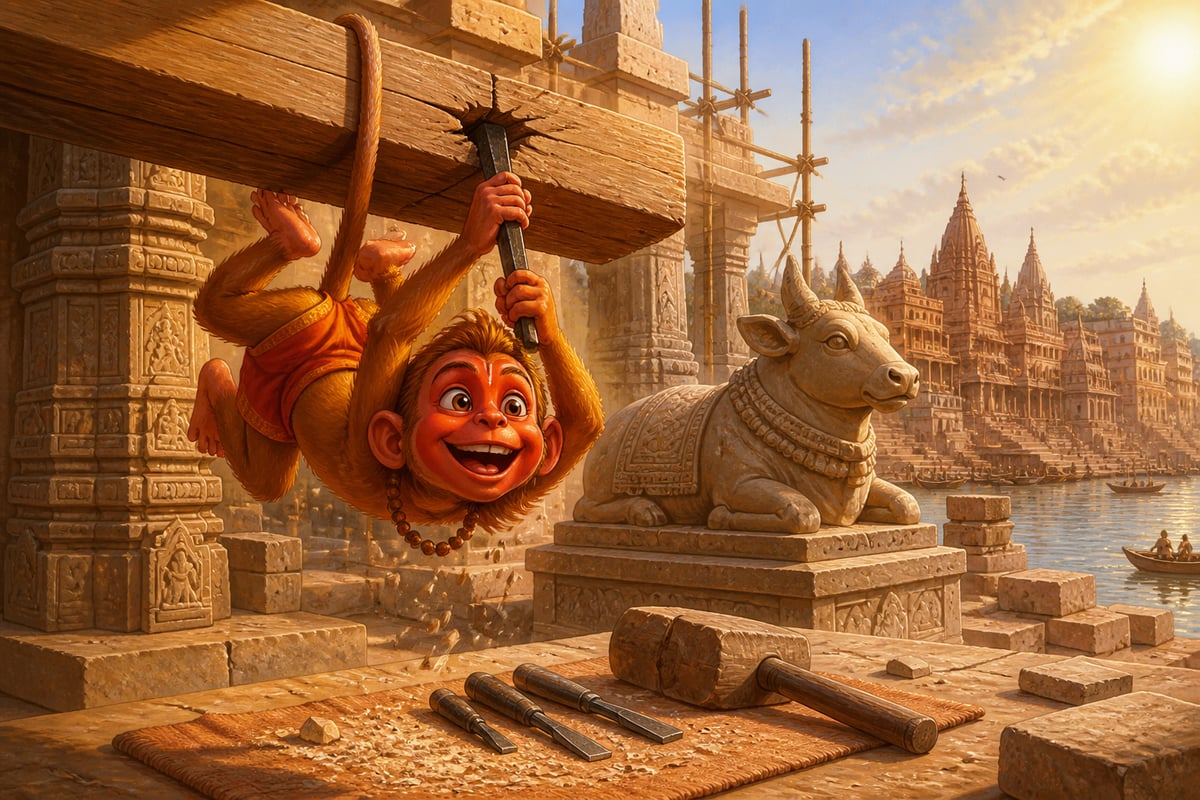
His screams brought the workers running. The carpenter, furious at finding a monkey meddling with his work, beat Raktamukha severely before casting him out. The monkey limped back to his troop, humiliated and in pain.
But his suffering had just begun. The incident gave his rivals the opening they needed. "He brought human wrath upon us," they whispered. "He is reckless. He will lead us to ruin."
Within days, Raktamukha was deposed. Exiled from his troop, nursing his wounds, he wandered alone, and in his loneliness, he would soon meet Subhadanta and begin the journey toward greed that we have already witnessed.
"This tale," said Chirakarin, "shows how Raktamukha's curiosity without wisdom made him vulnerable. But the next tale shows something worse, a friend whose very help brings destruction."
The Bear and the Foolish Friend
A king named Surabhi once went hunting in the forest. Separated from his retinue, exhausted from the chase, he fell asleep beneath a great tree. It happened that a venomous snake emerged from a hole nearby, drawn toward the king's warmth.
In the same tree lived a bear named Ghritaksha, 'butter-eyed,' so called for his gentle, limpid gaze. He had watched the king arrive and felt protective of this sleeping human.
Seeing the snake approach, Ghritaksha descended and killed it with one powerful blow. "The king must not be harmed," he thought. "He sleeps under my tree; he is my guest."
But now Ghritaksha faced a problem: he too was tired and wished to sleep, but what if other dangers approached the king? He decided to find help.
Nearby lived a monkey named Chanchalapani, 'restless-hands.' He was known for his eagerness to help, though not for his wisdom.
"Friend monkey," said the bear, "I must rest. Will you watch over this sleeping king? Do not let any creature harm him."
"Of course!" said Chanchalapani, delighted to be trusted with such an important task. "Sleep well. I will guard him with my life!"
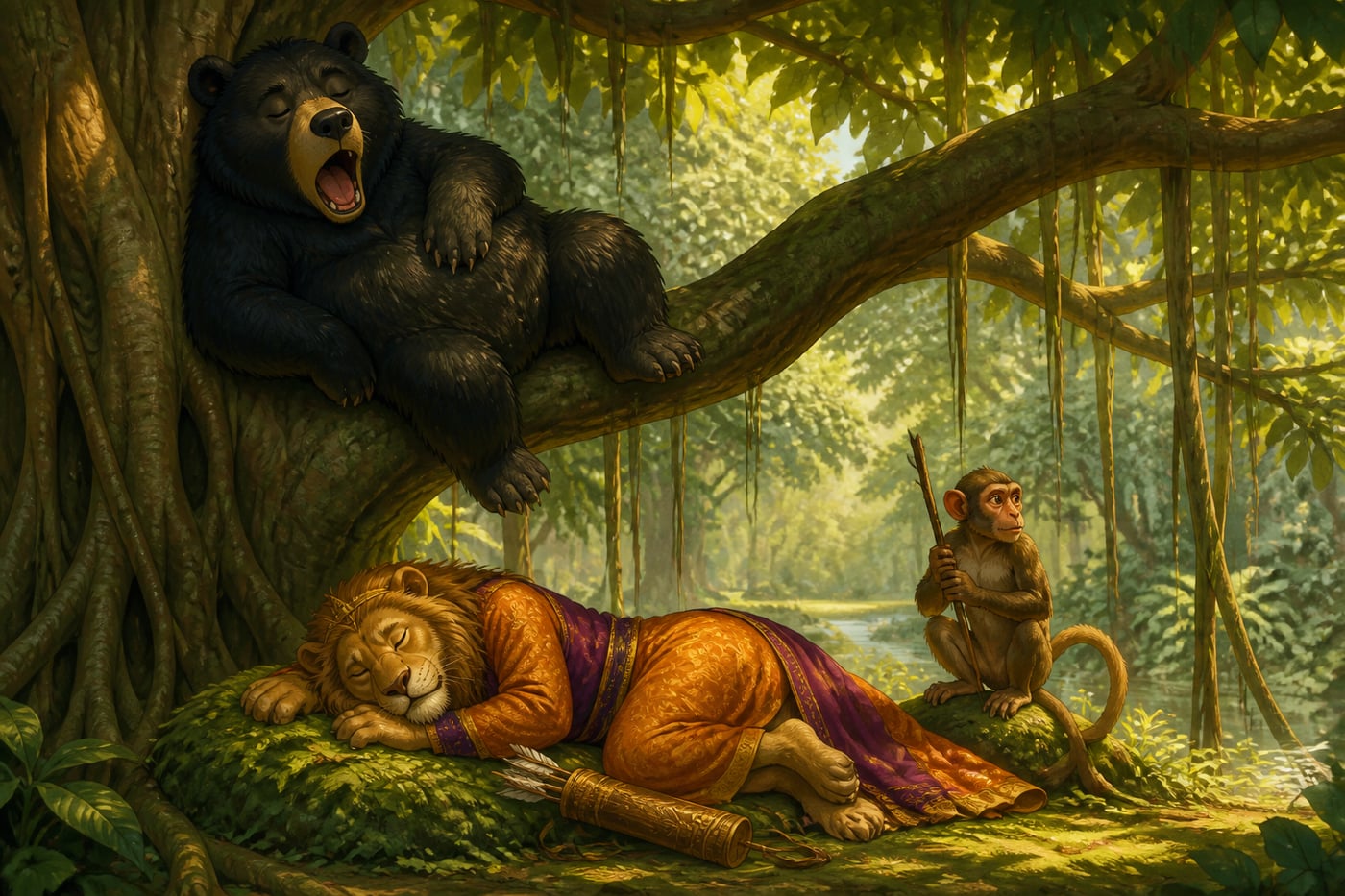
The bear climbed into the tree and fell asleep. The monkey watched the king with intense concentration. An hour passed. Two hours. The king slept on.
Chanchalapani grew bored. He shifted from foot to foot. He scratched himself. He counted the leaves on nearby branches. Time crawled.
Then a fly landed on the king's face.
"Away, villain!" hissed the monkey, waving at it. The fly flew off, then returned, landing on the king's nose. Chanchalapani waved again. The fly departed, circled, and landed once more on the king's forehead.
"This fly insults the king I have sworn to protect!" thought Chanchalapani, growing agitated. "I must deal with it decisively!"
He looked around for a weapon. Near the king's hand lay a large, flat stone. "Perfect," thought the monkey. "One blow will end this fly's career."
He picked up the stone. The fly was now on the king's cheek, rubbing its legs together insolently. Chanchalapani raised the stone high and brought it down with tremendous force.
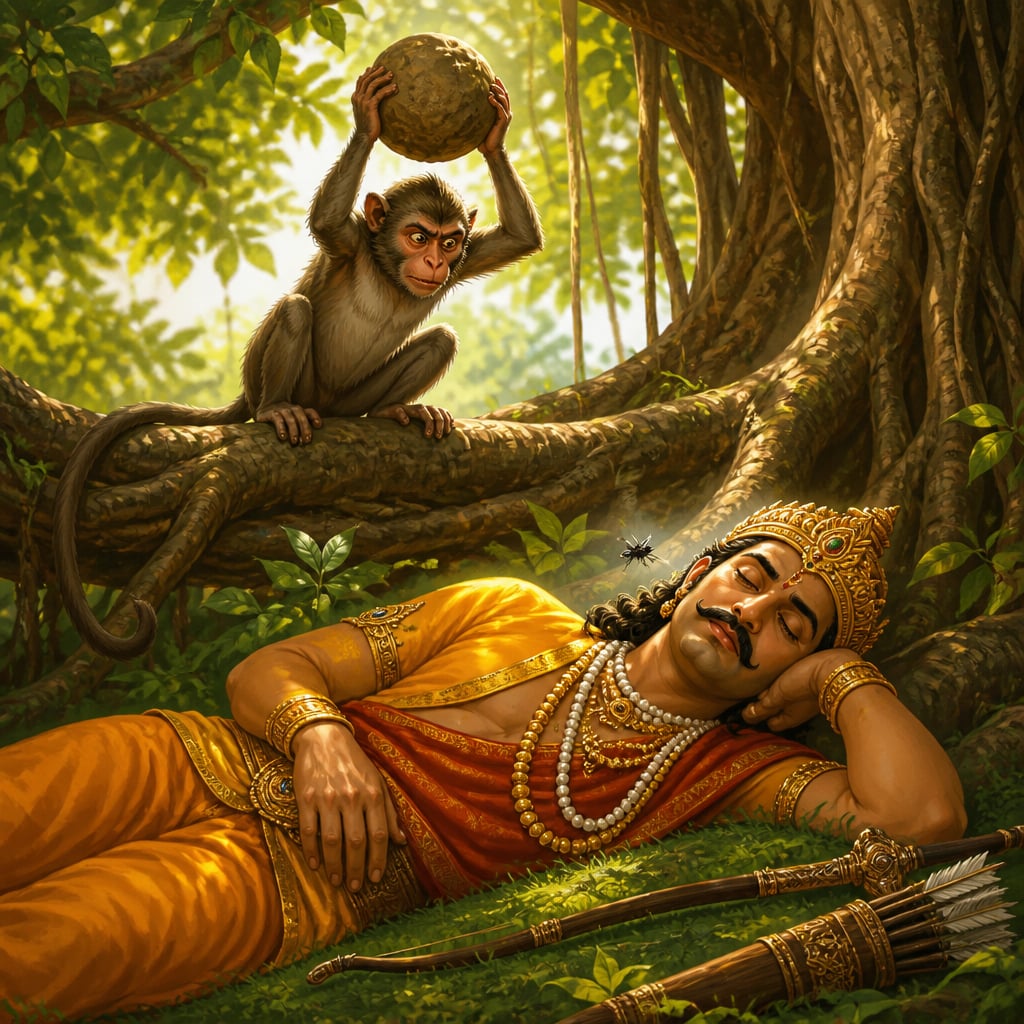
The fly escaped unharmed. The king did not.
When Ghritaksha awoke to screams and chaos, servants had found their master, he discovered what his foolish friend had done. The monkey was nowhere to be found. The bear, as the only creature at the scene, was blamed and hunted.
As he fled into the deep forest, Ghritaksha thought bitterly: "I chose a guardian for his willingness, not his wisdom. The snake I killed might have been less dangerous than the friend I trusted."
The Wisdom of Choosing Allies
Chirakarin allowed the weight of the tale to settle before continuing.
"The bear's mistake was not in seeking help, we all need allies. His mistake was in choosing an ally based on enthusiasm rather than capacity. Chanchalapani meant well. His intention was pure. He genuinely wanted to protect the king. But good intentions married to poor judgment create disaster."
Tarunika asked, "How then should we choose whom to trust?"
"Consider three things," Chirakarin replied. "First, their past actions. Has this person demonstrated wisdom in difficult situations, or only in easy ones? Anyone can be prudent when nothing is at stake. Second, consider their nature. A monkey is restless by nature; asking him to sit still for hours is asking him to be something other than what he is. Third, match the task to the person. The bear could have asked the monkey to fetch help from the king's retinue, a task suited to his energy. Instead, he asked for stillness and patience, qualities the monkey simply did not possess."
Sthiramati nodded slowly. "So the bear's error was not in trusting, but in trusting for the wrong task."
"Precisely. And this is why aviveka in friendship is so dangerous. We often choose friends for their warmth, their loyalty, their enthusiasm, all good qualities. But we must also ask: in what situations can this friend be trusted, and in what situations must I look elsewhere? Even the best friend may be the wrong ally for certain challenges."
Reflection
- Think of a time when someone tried to help you but made things worse. What was their intention? What was missing from their execution? How did you handle it?
- The bear was blamed for the monkey's action because he chose the guardian. When are we responsible for the failures of those we select or delegate to? Where does accountability lie in chains of trust?
- Chirakarin says we often choose friends for warmth and loyalty rather than wisdom. Is this wrong? Should we be more calculating in friendship? Or is there value in accepting friends as whole people, limitations and all?