Abuddhipurva: Acting Without Thinking
Lack of thought brings loss
The Hasty Wife and Acting without understanding. Use your mind; thoughtlessness ruins everything.
Abuddhipurva: Acting Without Thinking
Chirakarin addressed the assembly with increasing gravity. "We have spoken of hasty action, of trusting appearances. But there is a deeper failure still, acting without engaging the mind at all. Let me share tales of those who moved before thought could form, and paid the price."
The Monkey and the Wedge
In a forest clearing, a merchant was having a great log split for timber. His workers had inserted an iron wedge into a half-split log to hold the gap open while they took their midday meal. The log sat there, wedge protruding, the workers departed.
A troop of monkeys descended from the trees, as monkeys do, curious about everything and respectful of nothing. Most played among the wood shavings and scattered tools. But one monkey, young and restless, was drawn to the half-split log.
"What is this?" he wondered, swinging down to examine it. The wedge caught his attention. It looked so unnecessary, so out of place. Without a moment's reflection on why it might be there, he grasped it and yanked.
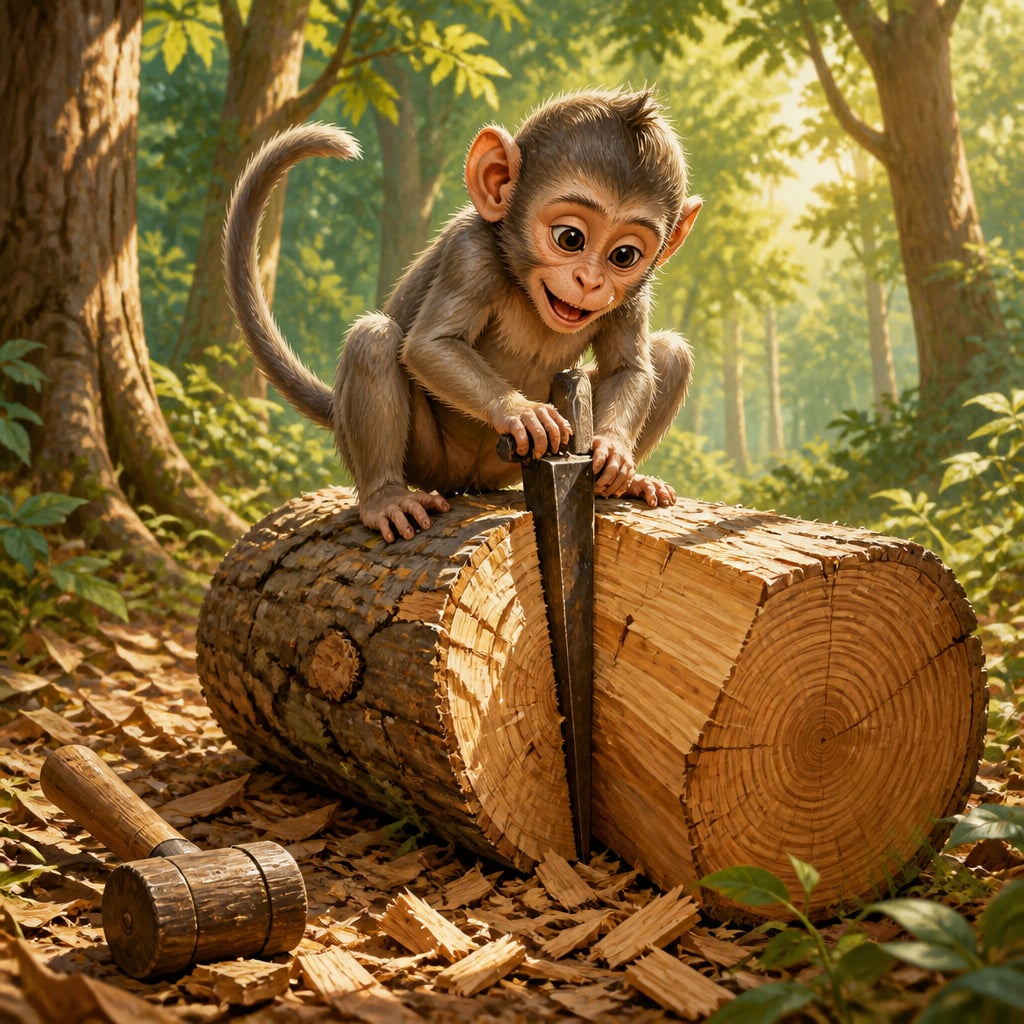
The wedge flew out. The log snapped shut with tremendous force. The monkey's tail, which had been dangling carelessly in the gap, was caught and crushed. His screams brought the workers running, but they arrived to find only his broken body beneath the reunited log.
He had seen something he didn't understand, and instead of observing or asking, he had simply acted.
The Singing Donkey
In a village lived a washerman with a donkey named Uddhataka. By day, the donkey carried heavy loads of laundry. By night, the washerman, being poor, turned him loose to find his own food in the fields.
One night, Uddhataka met a jackal named Suchimukha while foraging. An unlikely friendship formed. The jackal, being clever, knew how to find the best cucumber patches, the ripest melons, the fields with the least vigilant guards. Together, they feasted nightly.
One night, belly full of cucumbers, Uddhataka felt his heart swell with contentment. "Friend jackal, on such a beautiful moonlit night, I feel I must sing!"
Suchimukha's eyes widened in alarm. "Friend, please don't. We are in a farmer's field. Your voice, forgive me, is not melodious. It is the bray of a donkey. The farmer will hear, and then, "
"You are jealous of my musical gifts!" Uddhataka declared, deeply offended. "What do jackals know of gandharva-vidya, the art of music? I studied under great masters in my previous life!"
"I know enough to know that farmers beat donkeys they catch eating their crops," Suchimukha replied urgently. "Whatever your past-life training, your present-life voice sounds like tearing cloth. Please, think before you, "
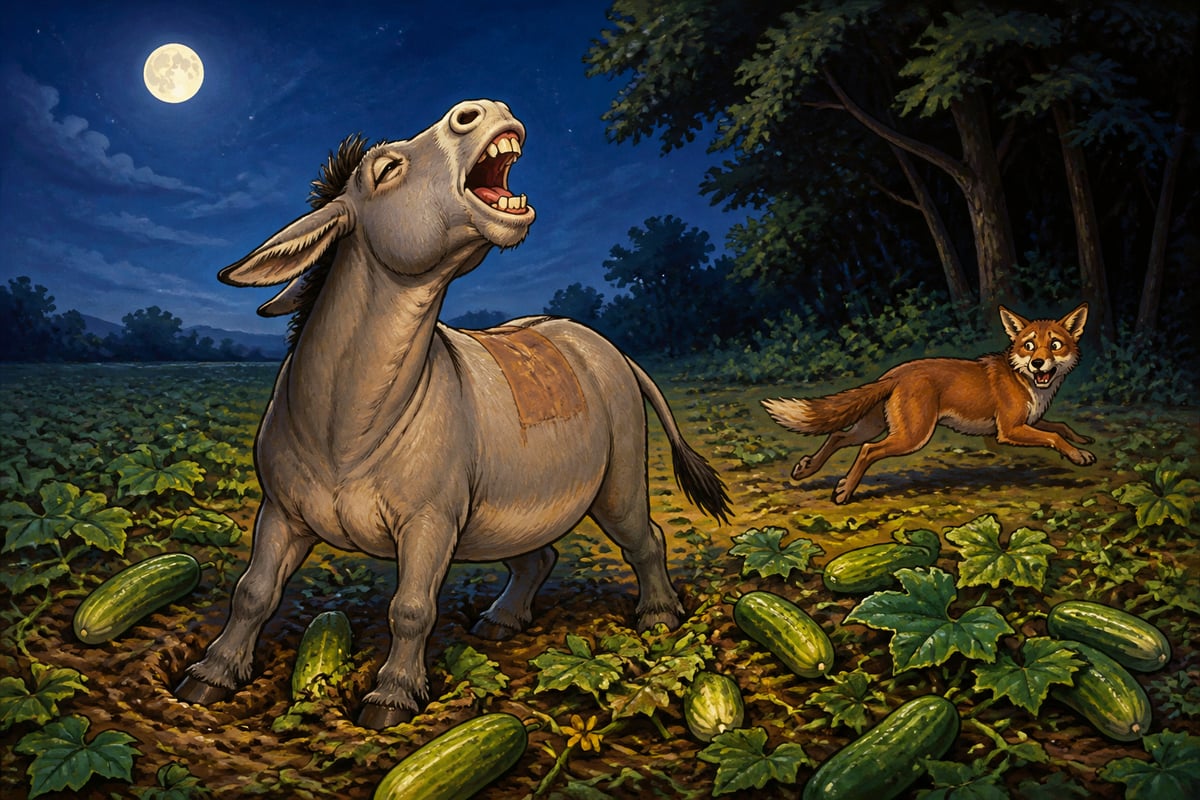
But Uddhataka threw back his head and began to bray with tremendous enthusiasm. The sound carried across the quiet fields like a midnight alarm.
Suchimukha fled instantly, disappearing into the darkness with practiced speed. The farmer came running with his sons, armed with thick sticks. They found a donkey bellowing in their cucumber patch.
The beating that followed was thorough and methodical. By dawn, Uddhataka limped home, bruised in body and humiliated in spirit. His 'song' had lasted perhaps ten seconds. His recovery took weeks.
He never sang again. But he also never forgave the jackal for being right.
The Hasty Wife
A Brahmin woman was preparing for an important guest, her husband's guru was coming for a meal. She worked frantically: cleaning, cooking, arranging everything perfectly. The sacred thread ceremony for her son was approaching, and she hoped the guru's blessing would ensure an auspicious occasion.
As she stirred a pot of payasam (rice pudding), she suddenly remembered, the guest room's water pot was empty! She must fill it before the guru arrived!
Leaving her pot on the fire, she rushed to the well. But on the way, she noticed the courtyard hadn't been swept. She began sweeping. Halfway through, she remembered the payasam and dropped the broom to rush back. But passing the altar room, she saw the lamps weren't lit. She stopped to light them. The match reminded her, the guest room still had no water!
Back and forth she ran, starting many tasks, completing none, her mind leaping from worry to worry without ever settling on a single action.
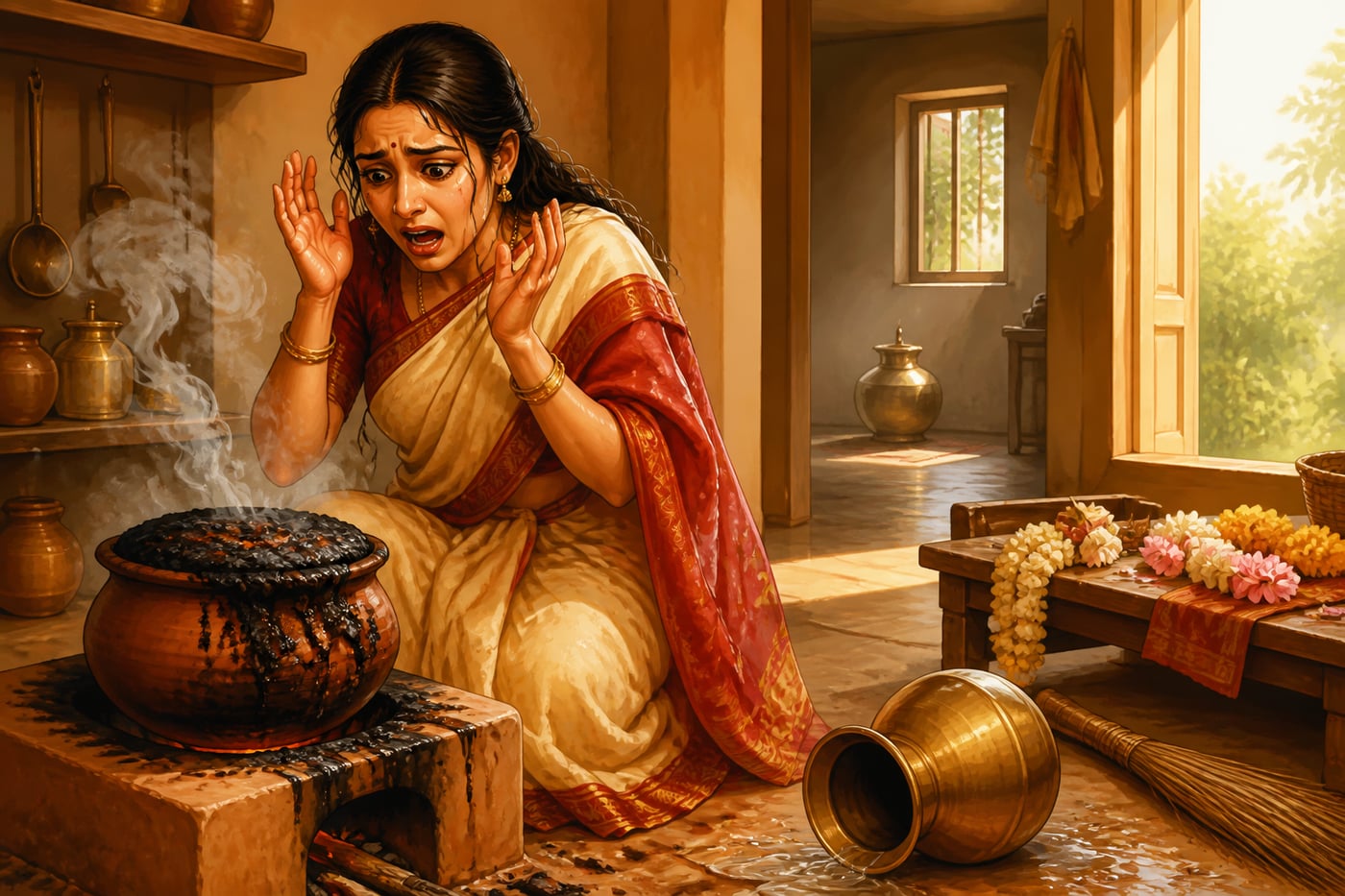
When she finally returned to her cooking, the payasam had burned to black. The water pot remained empty. The courtyard was half-swept. The altar lamps had blown out because she'd left the door open in her rushing.
The guru arrived to chaos: burnt food, an unkempt home, and a woman weeping with exhaustion and shame.
"Child," he said gently, "you have worked hard all morning, yet nothing is done. This is the fruit of scattered thinking. Better to do one thing with full attention than ten things with a distracted mind. Begin again, slowly. I am in no hurry."
The Thread of Abuddhipurva
Chirakarin concluded: "The monkey acted without thought, pure impulse. The donkey thought himself wise but refused counsel, pride overriding sense. The woman thought constantly but never completed a thought, anxiety scattering her mind. Three forms of abuddhipurva, one result: loss."
Sthiramati asked, "What then is the remedy?"
"Pause," Chirakarin replied. "Before any action, ask three questions: What am I about to do? Why am I doing it? What might happen if I am wrong? The monkey asked none. The donkey heard good answers and rejected them. The woman was too hurried to form questions at all.
"Viveka is not brilliance, it is simply the discipline of pause. Even a child can learn it. Even a sage can forget it. It must be practiced until it becomes as natural as breathing."
Vegavati nodded thoughtfully. "But sometimes we must act quickly. In emergencies, "
"True," Chirakarin agreed. "And that is why we practice pause in calm moments, so that in crisis, our trained instincts serve us better than our panicked impulses. The warrior who has drilled a thousand sword strokes acts without thinking in battle, but his action flows from trained wisdom, not untrained impulse. There is a great difference."
Reflection
- Think of a time when you acted on pure impulse, pulling the 'wedge' without thinking. What happened? What would a moment's pause have changed?
- The donkey rejected good advice because it came with an unflattering truth. When has your pride prevented you from hearing wisdom? What made you finally recognize the counsel's value?
- Chirakarin distinguishes between 'trained instinct' and 'untrained impulse.' A warrior's practiced reflexes serve him; a monkey's curiosity destroys him. How do we develop trained instincts that serve us?