Pratikara: The Art of Retaliation
How the weak defeat the strong
The final lesson of Kakolukiyam synthesizes all that came before: the danger of careless words, the power of strategic thinking, the importance of choosing advisors wisely, and the terrible price of victory. The crow-owl war ends, but its lessons echo through time.
The Final Gathering
The embedded stories of Kakolukiyam have taught us much about enemies, trust, fear, gratitude, and the power of the small against the great. But now we return to the main tale, to Sthirajivin in the owl caves, to King Megavarna waiting in the great banyan, to the moment when all plans converge.
The new moon had arrived. The message had been sent. And the crows prepared to end a war that had lasted generations.
The Wisdom of Kakolukiyam Summarized
Before we witness the final act, let us gather the threads of wisdom that run through this third tantra of the Panchatantra.
From the Frame Story:
The war began with a single insult, a crow mocking an owl at the great assembly. That thoughtless moment created enmity that lasted for generations and killed thousands. Lesson: Words have consequences far beyond their moment of speaking. Choose them with care.
When the crows were losing, King Megavarna did not simply fight harder with failing tactics. He gathered advisors of diverse viewpoints and listened to unconventional wisdom. Lesson: When strength fails, seek intelligence. When conventional approaches fail, consider unconventional ones.
Sthirajivin volunteered for a mission that required sacrificing his reputation, his comfort, and potentially his life. He succeeded because he was willing to pay costs others would not. Lesson: Great victories require great sacrifices. Those unwilling to pay the price cannot claim the prize.
Raktaksha the owl minister correctly identified Sthirajivin as a spy but was ignored by his king. Lesson: Being right is not enough; you must also be believed. And kings who dismiss wise counsel pay for their arrogance.
From the Embedded Tales:
Lomasa the cat and Ratnadatta the goldsmith taught us that enemies don't change nature merely because they speak kindly. Lesson: Trust actions over words, patterns over promises.
Gomaya the jackal and Mitra Sharma the brahmin taught us about fear, the jackal overcame his by investigating, while the brahmin succumbed to his by believing lies. Lesson: Investigate before fearing. Trust your verified perception over confident voices.
Dushta the wolf and the grateful beasts taught us about gratitude, some possess it by nature, others never will. Lesson: Character determines response more than circumstance. Help without expecting return.
Kapinjala the sparrow and Anila the mosquito taught us about size, or rather, its irrelevance. Lesson: No enemy is too small to threaten. No victory is too complete to require continued vigilance.
The Art of Strategic Retaliation
What makes Kakolukiyam unique among the Panchatantra's five tantras is its focus on warfare, specifically, on how the weak can defeat the strong through superior strategy.
The crows could not match the owls in direct combat. The owls owned the night, and night attacks devastated the crow population. Any conventional military response was doomed to fail.
So the crows did not respond conventionally.
They identified the owls' weakness: overconfidence born of repeated victories. The owls had won so often that they stopped questioning their assumptions. A crow traitor? Of course, crows were weak, dishonorable, natural betrayers. Accept his information, use his guidance, never suspect that the 'traitor' might be the most loyal crow of all.
They attacked where the owls were truly weak: in their blindness. Not the night-vision that gave them advantage, but their blindness to possibility, to danger, to the small enemy in their midst. The owls were blind to Sthirajivin's true nature just as they were blind in daylight.
They chose the battlefield: not the night sky where owls ruled, but midday when owls were helpless. Not open combat where numbers mattered, but fire in enclosed spaces where the owls' own strengths, their cave fortress, their darkness, became traps.
And they paid the price: Sthirajivin's reputation among his own people, the months of dangerous infiltration, the moral cost of planning to burn thousands alive. Victory required sacrifice, and the crows were willing to sacrifice.
The Meaning of Victory
When the fire consumed Gridhrakuta and the owl nation died in flames, the crows achieved complete victory. Their ancient enemy was destroyed. The night attacks would never come again. Their children could sleep safely.
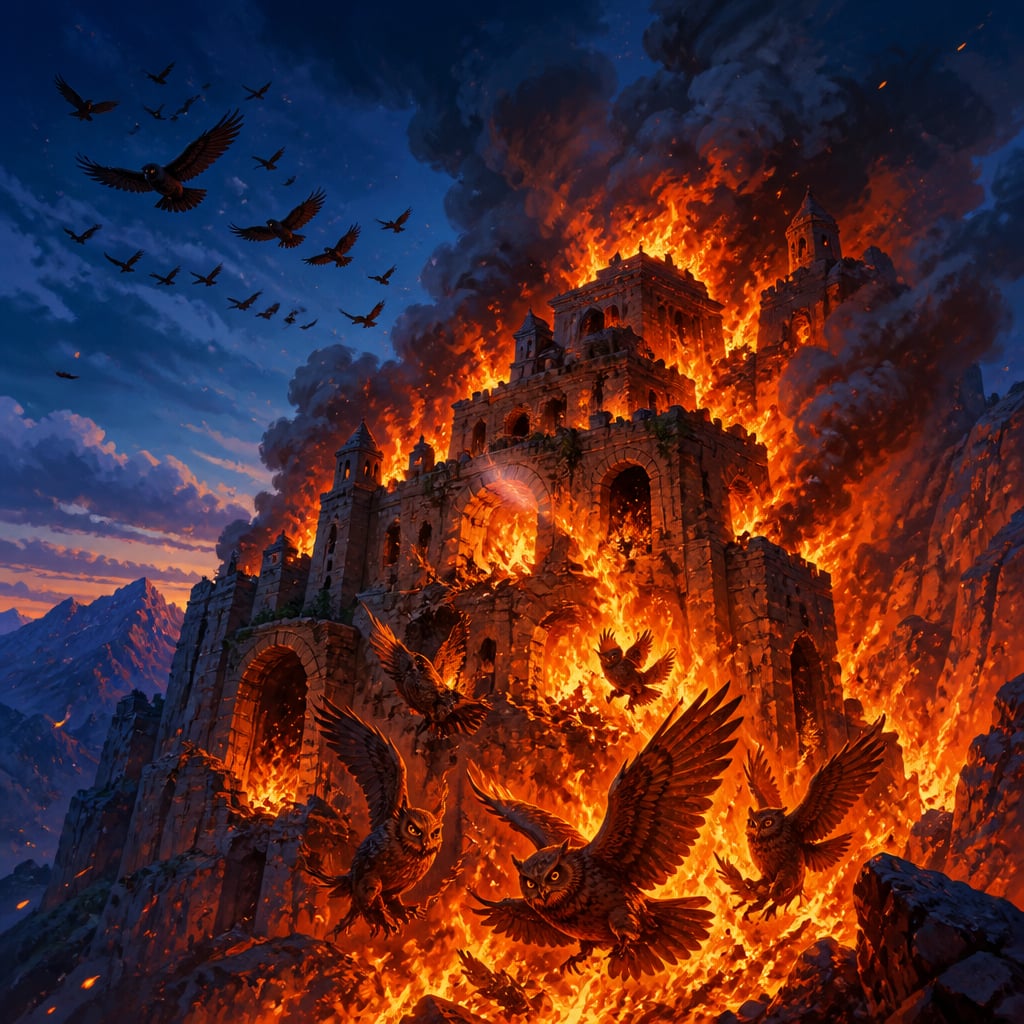
But King Megavarna's speech at the end reminds us that victory is not simple.
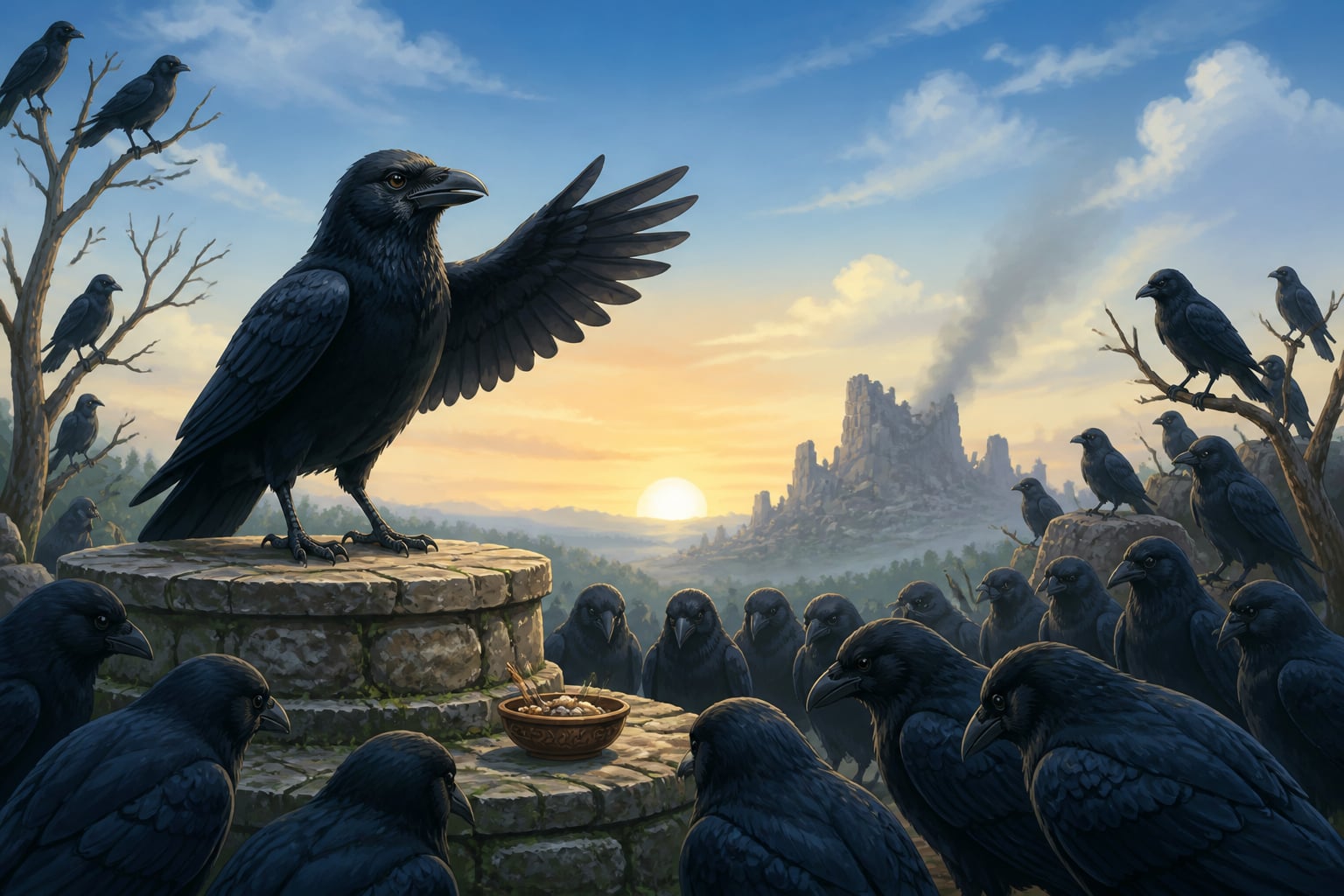
"This war began with an insult," he told his people. "From those words came generations of hatred, countless deaths, and finally this terrible day of fire. We have won, but the owls are not the only losers. We have all lost something."
The Panchatantra does not celebrate the owl deaths. It presents them as the terrible but necessary consequence of a conflict that should never have started. The true villain of Kakolukiyam is not any individual crow or owl, it is the carelessness that created enmity, the pride that prevented peace, and the cycle of violence that made annihilation seem like the only option.
Kakolukiyam teaches us how to win wars. But it teaches us, even more urgently, why we should prevent them.
The Final Lesson: Pratikara Itself
Pratikara, retaliation, is the central concept of Kakolukiyam. But what does proper retaliation look like?
Improper retaliation is impulsive, emotional, and self-defeating. The crow who mocked the owl at the assembly was retaliating for some perceived slight, and created generations of war. Improper retaliation makes things worse.
Proper retaliation is strategic, patient, and proportionate to actual threat. The crows did not attack blindly; they planned. They did not strike immediately; they waited until they could win. They did not seek revenge for its own sake; they sought security for their people.
The difference between improper and proper retaliation is the difference between reaction and response. Reaction is automatic, thoughtless, driven by emotion. Response is considered, planned, driven by wisdom.
Sthirajivin embodied proper response. He felt rage at the owls who had killed his people, but he channeled that rage into careful action. He endured mockery, danger, and loneliness not because he lacked feelings but because he controlled them. His retaliation was devastating precisely because it was patient.
The Legacy of Kakolukiyam
Why do we still tell this story, two thousand years after it was first written?
Because the lessons remain true:
- Careless words create lasting enemies.
- The weak can defeat the strong through intelligence.
- Trust must be verified, not assumed.
- Enemies rarely change their fundamental nature.
- Fear should be investigated, not obeyed.
- Gratitude depends on character, not circumstance.
- No enemy is too small to matter.
- Victory has costs that must be weighed.
- The best war is the one that never starts.
These truths applied to crows and owls in ancient India. They apply to nations and corporations today. They will apply to conflicts we cannot yet imagine.
The Panchatantra endures because human nature endures. We still mock those we should respect. We still trust those we should suspect. We still fear shadows and ignore real dangers. We still start conflicts that could have been prevented.
Kakolukiyam holds up a mirror to our nature, not to condemn us, but to help us choose more wisely.
Conclusion: The War That Began With Words
The crow-owl war is over. The owls are ash. The crows are safe, for now.
But somewhere, even as the smoke clears from Gridhrakuta, some young crow is speaking carelessly. Some insult is being offered. Some enmity is being born.
Will the next generation remember what happened when a crow mocked an owl at the great assembly? Will they choose their words more carefully? Will they see the first sparks of conflict and extinguish them before they become infernos?
That is the question Kakolukiyam leaves with us. Not how to win the next war, but how to prevent it.
For in the end, the greatest victory is not the war won through blood and fire. It is the war that never needed to be fought at all.
Thus ends Kakolukiyam, the third tantra of the Panchatantra, which teaches the arts of war, peace, and strategy. May its wisdom guide those who read it toward strength in conflict and prudence in peace.
Reflection
- Think back over the entire Kakolukiyam. Which lesson resonated most strongly with you? Why? How might you apply that specific teaching in your own life?
- Megavarna won the war but did not celebrate it. He warned his people against the careless words that started it. What does his response teach us about the relationship between victory and wisdom? Can someone truly win a war?
- The Panchatantra was written for princes, future rulers who would face war and peace, enemies and allies. But its wisdom applies to everyone. In what ways are we all 'rulers' of our own domains? What enemies do we face? What alliances do we need? How does Kakolukiyam help us navigate our own kingdoms?