Bhasma Aarti: Death as Worship
The sacred ritual using funeral pyre ashes
Witness the unique Bhasma Aarti performed at 4 AM using ashes from fresh funeral pyres. Understand why this ritual symbolizes the cycle of life and death, Shiva's role as transformer, and the connection to Kaal Bhairava.
Before Dawn, Before Death
At 4 AM, while most of India sleeps, something extraordinary happens at Mahakaleshwar. In the underground sanctum lit by oil lamps, priests begin the most unusual ritual in all of Hinduism, the Bhasma Aarti. They will anoint the Lord of Time with ashes collected from the cremation ground, transforming death's residue into worship's offering.
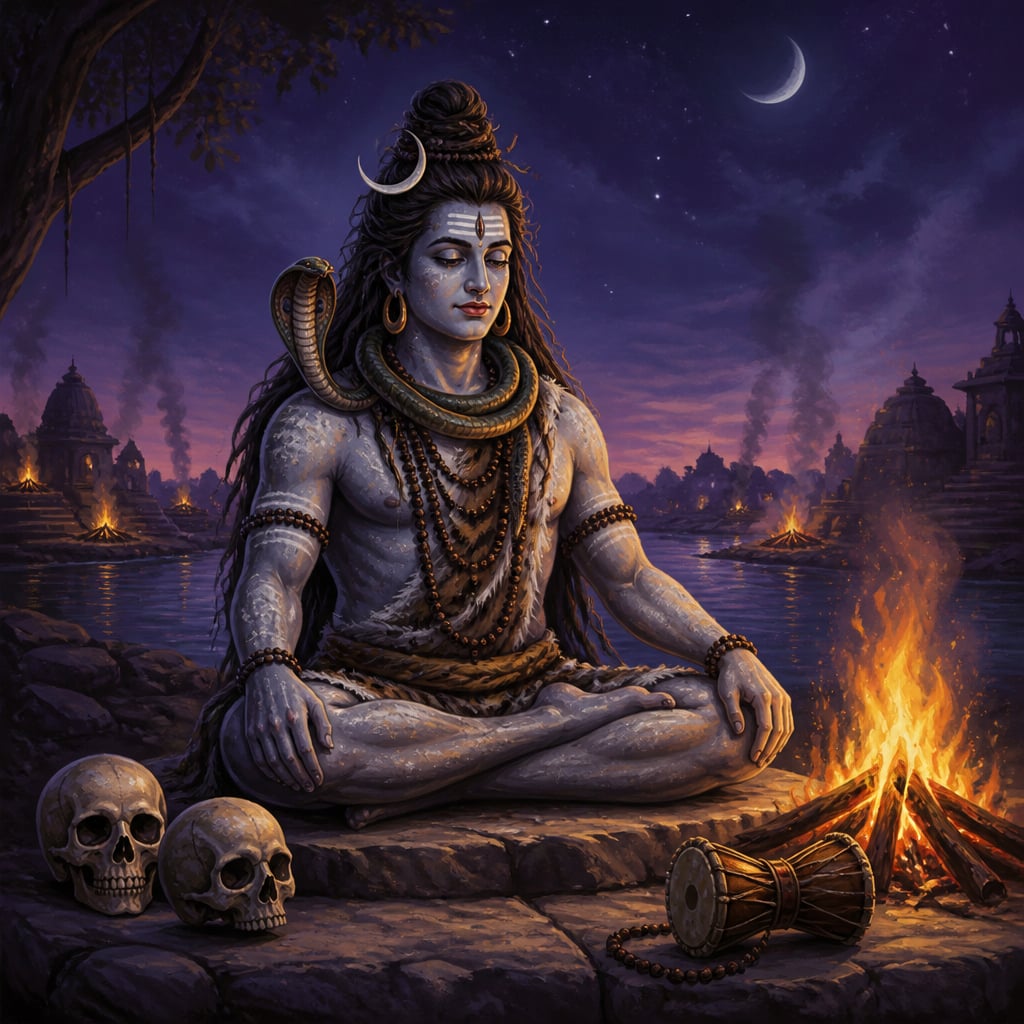
This is not morbid. This is not strange superstition. This is the Mahakaal teaching made tangible: what remains after everything burns away is what Shiva truly is. The body burns; consciousness remains. Time consumes all forms; the witness of time is untouched. The Bhasma Aarti enacts this truth every morning before the sun rises.
The Ritual Revealed
Preparation: The Night Before
The ritual begins long before 4 AM. On the previous evening, temple attendants visit the Chakratirth cremation ground on the banks of the Kshipra River. They collect ashes from funeral pyres where bodies were cremated that day, fresh bhasma that still holds the heat of transformation.
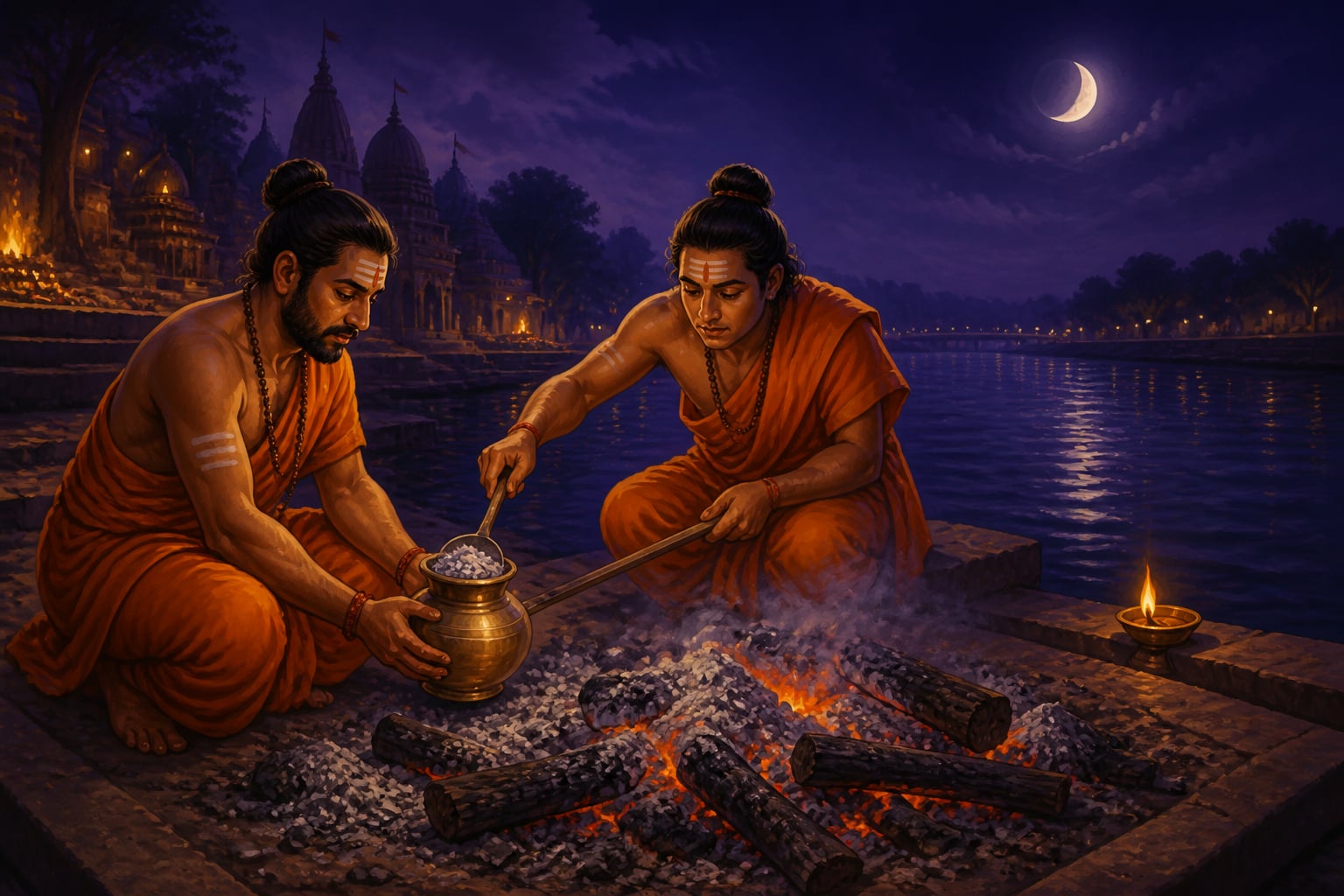
These ashes are carefully prepared: mixed with water, sandalwood paste, and sacred substances, then formed into a paste suitable for application. The cremation ground ash, vibhuti, is considered supremely sacred in Shaiva tradition. What seems like death's remnant is actually liberation's evidence.
The Ceremony Unfolds
At approximately 4 AM, the inner doors of the sanctum open. Devotees who have secured tickets (available only through advance booking) gather in the small underground chamber. The jyotirlinga, which has been bathed and prepared, awaits the ancient ritual.
The priests chant mantras from the Shiva Agamas, texts that prescribe the precise methods of worship. They apply the bhasma to the linga in three horizontal lines (tripundra), the signature mark of Shiva worship. Simultaneously, aarti lamps are waved, bells ring, and the conch sounds, the standard elements of Hindu worship now charged with the extraordinary presence of death's ashes.
The entire ceremony lasts approximately 45 minutes. Devotees witness the linga's transformation, from dark stone to ash-covered white, symbolizing the dissolution of form into formlessness.
Why Ashes? The Tantric Logic
In tantric philosophy, ash represents the ultimate state of matter. Fire transforms everything, wood, flesh, cloth, into the same grey powder. No matter what the original form, ash is ash. This equality in dissolution mirrors Shiva's teaching: all forms are temporary; only consciousness persists.
Moreover, ash cannot burn further. It is the end-state of transformation, beyond change. By covering himself in cremation ash, Shiva demonstrates his nature: he is that which remains when everything else has been consumed. He is the witness of all burning, untouched by the flames.
Kaal Bhairava: The Fierce Guardian
Who Is Kaal Bhairava?
No understanding of Mahakaleshwar is complete without Kaal Bhairava, Shiva's fierce guardian form who protects Ujjain and its sacred precincts. According to tradition, pilgrims should visit the Kaal Bhairav temple before Mahakaleshwar, seeking permission from the guardian to enter the master's presence.
Kaal Bhairava's origin story connects to time: when Brahma once grew arrogant about his creative powers, Shiva manifested as Bhairava, 'the Terrifying One', and severed one of Brahma's five heads. The skull stuck to Bhairava's hand as penance for killing a Brahmin (even a divine one). He wandered as a beggar until reaching Varanasi, where the skull finally fell. But in Ujjain, Kaal Bhairava remained as guardian.
The Liquor Offering

Uniquely among Hindu temples, Kaal Bhairav accepts alcohol as an offering. Devotees purchase small bottles of liquor outside the temple and present them to the deity. Priests pour the alcohol into a bowl near the idol's mouth, and mysteriously, the liquid disappears.
This is not mere magic; it's profound symbolism. Kaal Bhairava transcends ordinary categories of pure and impure. In tantric logic, what matters is not the substance but the consciousness with which it's offered. The deity who guards the Lord of Time accepts what society normally rejects, just as time accepts all things, transforming everything without discrimination.
The Philosophy of Bhasma
Three Lines of Understanding
The tripundra, three horizontal ash lines applied during Bhasma Aarti, represents multiple triads:
- The three gunas: Sattva (purity), Rajas (activity), Tamas (inertia), all dissolved
- The three states: Waking, dreaming, deep sleep, transcended
- The three times: Past, present, future, unified in the eternal present
- The three malas: Anava (ego), Karma (action residue), Maya (illusion), burned away
Wearing ash is thus a constant reminder: you are not your body, your roles, your history. You are that which witnesses all these come and go.
Brahma Muhurta: The Hour of Brahman
The 4 AM timing is not arbitrary. This pre-dawn period is called Brahma Muhurta, 'the hour of Brahman', considered ideal for spiritual practice. The mind is fresh, the world is quiet, and the boundary between sleep (unconsciousness) and waking (consciousness) is thin.
Performing the Bhasma Aarti at this hour multiplies its power. Devotees who attend report altered states of awareness, the combination of early hour, confined space, ancient chanting, and death's physical presence creates conditions conducive to insight.
The Deeper Teaching
Memento Mori Made Sacred
Every spiritual tradition has its reminder of death. The Stoics called it memento mori. Buddhists contemplate corpses in charnel grounds. Christian monks kept skulls on their desks. The Bhasma Aarti takes this further, not just remembering death but worshipping WITH death's remains.
The message is radical: death is not the enemy. Death is the doorway. What dies is only what was never truly you. The Bhasma Aarti's use of fresh cremation ashes forces this recognition: someone's body became this powder yesterday. Your body will become this powder someday. What remains?
From Fear to Freedom
Most humans spend enormous energy avoiding thoughts of death. The Bhasma Aarti does the opposite, it front-loads mortality, beginning each day by facing death directly. Paradoxically, this daily confrontation reduces death's power.
Devotees who attend regularly report decreased anxiety, increased gratitude, and clearer priorities. When you start each day acknowledging that this body will return to ash, trivial concerns fall away. What remains are the essentials: presence, love, purpose.
Attending the Bhasma Aarti
Practical Information
The Bhasma Aarti is by far the most sought-after experience at Mahakaleshwar. Booking is essential:
- Booking: Online at mahakaleshwar.nic.in, opening 3 days in advance
- Cost: Free (general), ₹250+ (VIP viewing areas)
- Timing: Arrive by 3 AM; ceremony begins approximately 4 AM
- Duration: 45-60 minutes
- Dress code: Conservative attire; no shorts or sleeveless tops
What to Expect
The underground sanctum is small and gets crowded. The air is thick with incense, the sound with bells and chanting. In the dim light, the transformation of the dark linga to ash-white is dramatic. Many devotees weep; others enter deep meditative states.
After the ceremony, devotees receive prasad, sanctified ash (bhasma) to take home. This ash, which touched the jyotirlinga during the Bhasma Aarti, is considered extremely powerful. Devotees apply it to their foreheads as tripundra, carrying Mahakaal's blessing into their daily lives.
The Transformation
Witnessing the Bhasma Aarti changes people. It's not just watching a ritual, it's participating in a philosophy made physical. When you see death's residue become worship's offering, something shifts. The intellectual understanding that 'death is not the end' becomes visceral knowledge.
This is why millions seek the Bhasma Aarti despite its inconvenient timing and limited availability. It offers what few experiences can: direct confrontation with mortality in a context of absolute sacredness. Death, witnessed here, loses its terror and reveals its teaching.
Key figures
Shiva Who Loves Ash
Shiva in his ash-adorned form; the deity specifically invoked during Bhasma Aarti
Kaal Bhairava
The fierce guardian of Ujjain and Mahakaleshwar; Shiva's protective aspect who controls time
The Cremation Ground Dweller
Shiva as the lord who dwells in cremation grounds; the aspect invoked through Bhasma Aarti
Historical context
Ancient tantric origins; continuous practice through present day
Living traditions
The Bhasma Aarti has become one of India's most sought-after spiritual experiences, with online booking systems struggling to meet demand. The ritual has been documented extensively and features in numerous spiritual documentaries. Despite modernization of booking, the 4 AM ritual itself remains unchanged, cremation ashes still collected fresh, mantras still chanted as they were centuries ago.
- Applying Tripundra (Three Lines of Ash): After receiving bhasma prasad from the Bhasma Aarti, devotees apply three horizontal lines across their forehead using ring and middle fingers. The three lines represent transcendence of the three gunas, three states, and three times.
- Vibhuti Abhishekam: Beyond the Bhasma Aarti, devotees can arrange for private abhishekam (ritual bathing) of the linga with sacred ash. This elaborate ceremony involves continuous chanting while ash mixed with various substances is poured over the jyotirlinga.
- Kaal Bhairav Darshan and Madira Offering: Before visiting Mahakaleshwar, pilgrims traditionally offer liquor to Kaal Bhairav. Small bottles are purchased outside the temple, offered to priests who pour them before the deity, and prasad (sanctified liquor) is sometimes returned to devotees.
- Chakratirth Cremation Ground: The cremation ground from which ash for the Bhasma Aarti is collected. Advanced practitioners sometimes visit for meditation, following Shiva's example of dwelling in cremation grounds. Not recommended for casual tourists.
- Kaal Bhairav Temple: The ancient temple of Kaal Bhairava, Ujjain's fierce guardian. Features the famous liquor-accepting deity. Tradition dictates visiting here before Mahakaleshwar to seek the guardian's permission.
- Kashi Vishwanath Temple: The other great temple where Shiva's cremation ground associations are honored. At Kashi, Shiva whispers the taraka mantra to dying souls at Manikarnika ghat. Both temples connect Shiva to death, Mahakaleshwar through ash worship, Kashi through liberation at death.
Reflection
- The Bhasma Aarti uses cremation ashes, what most people consider repulsive, as sacred offering. What in your own life might you be rejecting that could actually be spiritually valuable if approached differently?
- Kaal Bhairava accepts liquor, something normally forbidden in temples. What does this teach about the relationship between conventional morality and spiritual transcendence?
- The Bhasma Aarti transforms death's residue into worship's offering. What would it mean to transform your own inevitable death from something feared into something that enhances how you live?