Matanga: The Outcast Sage
A Chandala sage who endured discrimination
Matanga, born into the Chandala caste, attains spiritual nobility despite a lifetime of social rejection. He never retaliates with anger. His patience and inner dignity earn recognition even from the gods, proving that spiritual nobility transcends the accidents of birth.
Born an Outcast
In the rigid social practice that had hardened around birth-based occupation, the son of a king typically became a king. The son of a priest typically became a priest. And the son of a Chandala, a person from a community placed outside the four-varna order whose work involved handling the dead, was often denied any path to learning or status.
Matanga was born a Chandala.
From his first breath, he was considered impure. People of the orthodox communities wouldn't touch him. They wouldn't eat with him. They wouldn't let his shadow fall on their food. They believed that just being near him could pollute them.
But something burned in Matanga that no one could extinguish: a longing for truth.
"Why do they treat us as outcasts?" he asked his mother as a child. "What did we do wrong?"
"Nothing, my son," she said sadly. "It is the world that has chosen this for us."
The Seeker
As Matanga grew, his hunger for wisdom grew too. He would hide near temples, listening to the Brahmin priests chant sacred verses. He memorized their words, practiced their meditations, studied their philosophies - all from the shadows, because he wasn't allowed inside.
One day, he gathered his courage and approached a famous teacher.
"Master, I wish to learn."
The teacher looked at him with disgust.
"Learn? You are a Chandala. Your kind cannot learn. Your minds are as polluted as your bodies. Go away before you contaminate my students."
Matanga bowed and left.
Another might have raged. Another might have despaired. Matanga simply found another teacher - and was turned away again. And again. And again.
The Years of Patience
Matanga didn't give up. He taught himself. He practiced alone in the forest. He discovered through his own effort what the teachers wouldn't share.
Years passed. Decades passed.
Matanga became a sage - not through any school's approval, but through genuine realization. His mind had grown clear and his realization deepened year by year. His wisdom ran deeper than most priests who had studied their whole lives.
But the world still saw only a Chandala.
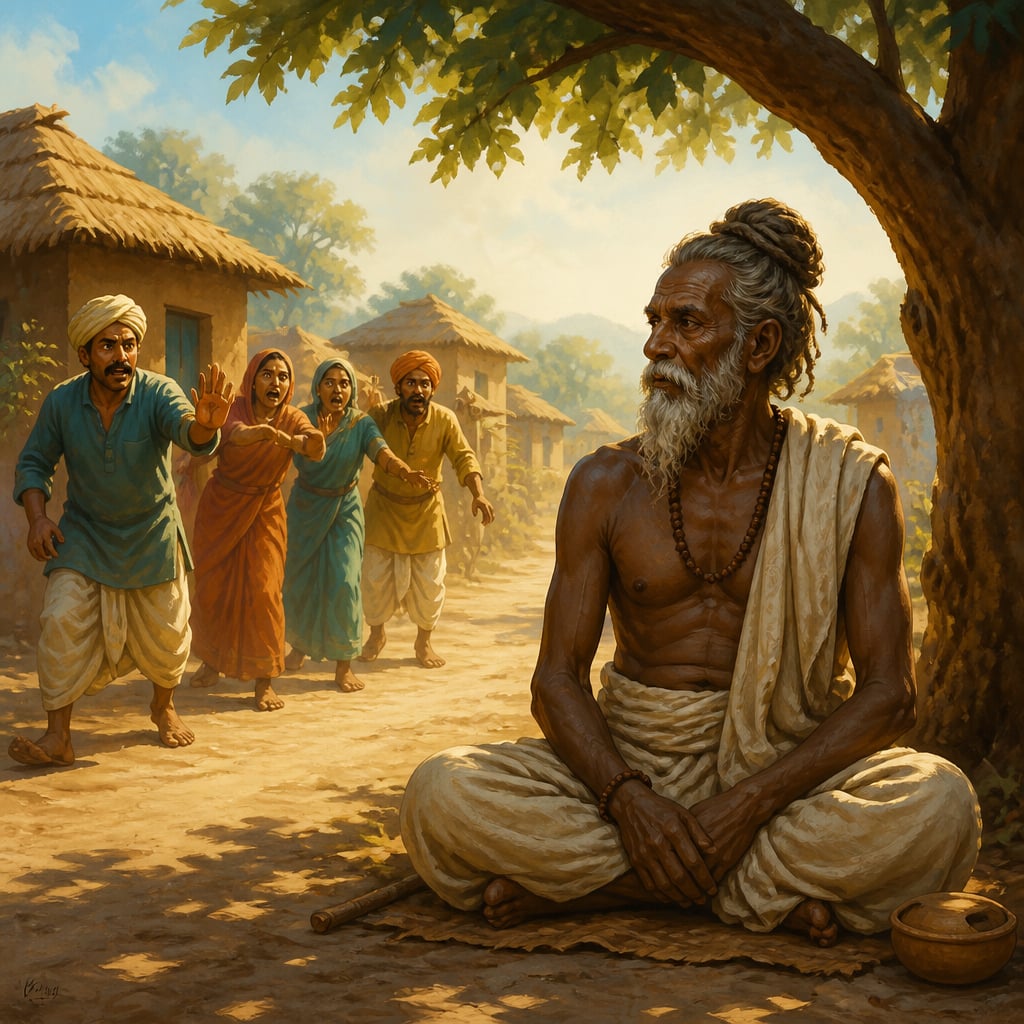
When he entered a village seeking alms, people shouted warnings: "Chandala! Chandala! Hide your food! Cover your wells!"
When he asked for shelter during monsoon rains, doors slammed in his face.
When he tried to share his wisdom, people laughed. "What could an outcast teach us about purity?"
Through it all, Matanga never responded with anger. He never cursed those who cursed him. He simply continued walking, continued practicing, continued being who he was.
The Princess and the Sage
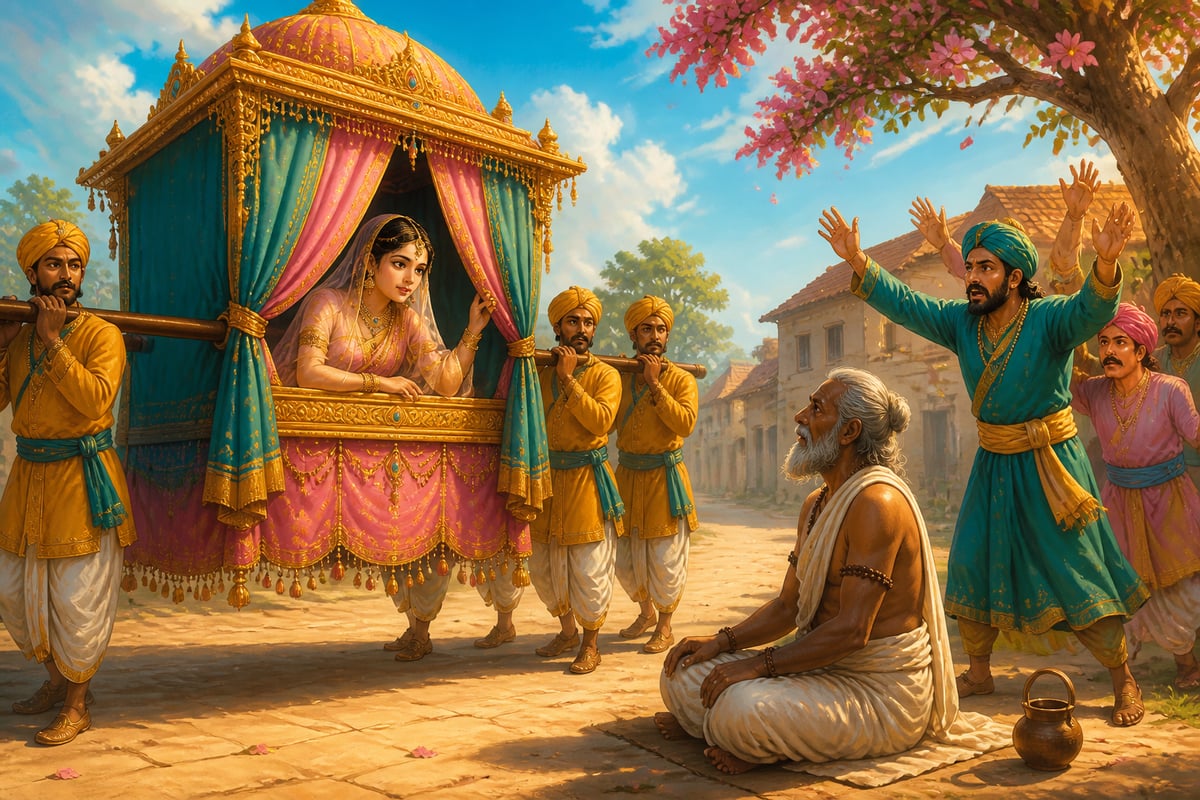
One day, a beautiful princess was being carried through the streets in a royal palanquin. Suddenly, her bearers stopped.
"Chandala in the road!" they cried. "We must wait until he passes, or the princess will be polluted!"
The princess peeked out.
She saw an old man sitting calmly in the middle of the road. His clothes were rough, his body thin - but his eyes held such peace that she caught her breath.
"Who are you?" she called out.
"I am Matanga, a seeker of truth."
"You block my way."
"The road belongs to all, princess. I was here first."
Her attendants were outraged. "How dare you speak to royalty! Move, you filth!"
Matanga looked at them with gentle eyes.
"I will move. But first, tell me: what makes you high and me low? Is it something we did, or simply the family we were born into? Did you earn your high birth? Did I deserve my low one?"
The princess was silent. She had never thought about it.
"If rank comes from birth," Matanga continued, "then it is merely luck. And if luck determines worth, then worth means nothing at all."
He stood and walked away.
The princess watched him go, something shifting in her heart.
The Gods Take Notice
The story says that Matanga's patience and wisdom eventually reached even the heavens. Lord Indra himself, king of the gods, came to test this extraordinary outcast.
Disguised as an old Brahmin, Indra approached Matanga.
"I hear you claim to be wise, Chandala. Wisdom belongs to the high-born. What can a sweeper of corpses know about the sacred?"
Matanga smiled.
"True wisdom doesn't check your family name before entering your heart. It comes to whoever prepares space for it. The lotus doesn't ask what caste of mud it grows from."
"But surely," Indra pressed, "you must be angry. You have been rejected, humiliated, spat upon. Does that not fill you with rage?"
"Anger would only add to my suffering," Matanga replied. "Those who reject me do so from ignorance. Shall I add my own ignorance to theirs? They hurt me once with their words. If I hold onto anger, I hurt myself a thousand times more."
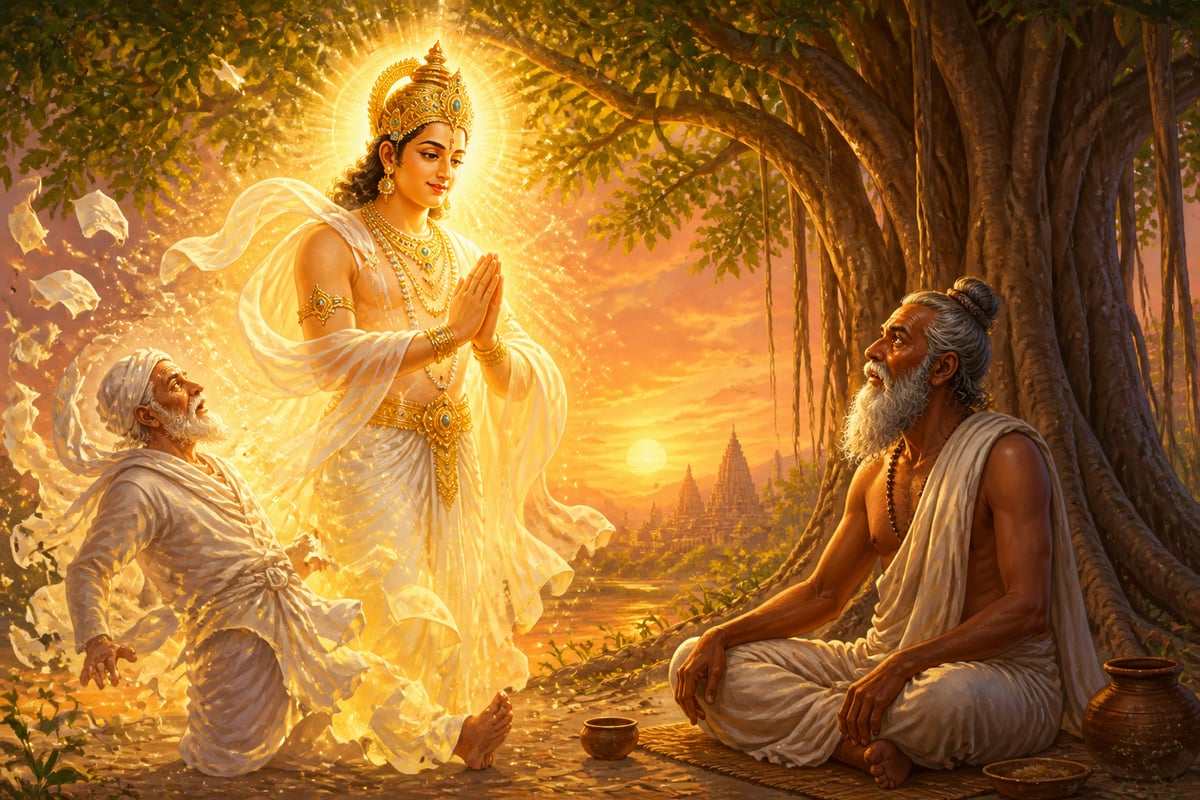
Indra was moved. He revealed his true form.
"Matanga, you have achieved what many sages never achieve. Your patience has purified you more than any birth ever could. The heavens recognize you as a true sage."
And so the outcast was honored where princes were refused.
The Wisdom
Matanga's story challenges one of the deepest social injustices people endured - the idea that birth determines worth. He proved through his life that nobility comes from character, not ancestry.
But his story also teaches about patience in the face of discrimination. For decades, he endured treatment no one should have to endure. He never let that treatment define him. He never let it make him bitter. He continued becoming who he was capable of being, regardless of what others thought he should be.
Patience, for Matanga, wasn't passive acceptance of injustice. It was refusing to let injustice corrupt his own heart. He couldn't control how others treated him, but he could control who he became.
In Your Life
You may never face caste discrimination, but you will face judgment based on things you can't control. Maybe where you live. Maybe how much money your family has. Maybe your appearance, your accent, or your background.
When someone looks down on you for something you didn't choose, you have a choice. You can internalize their judgment - start believing you really are less valuable. You can respond with anger - let their prejudice turn you bitter. Or you can do what Matanga did: quietly continue becoming the person you're capable of being, proving through your life that their judgments were wrong.
The people who judged Matanga revealed only their own ignorance. The people who judge you based on superficial things reveal theirs. Your worth isn't determined by their opinions. It's determined by who you actually are.
Matanga couldn't change his birth. He couldn't force people to accept him. But he could develop his mind, cultivate his character, and become wise. In the end, the gods came to honor him as a true sage.
Your circumstances are not your identity. What you do with your circumstances is.
Reflection
- Have you ever been judged or excluded because of something you couldn't control - like where you're from, how your family is, or how you look? How did it make you feel?
- Matanga asked the princess: 'Did you earn your high birth? Did I deserve my low one?' If worth comes from things we don't control, does 'worth' mean anything at all?
- Matanga never fought back against discrimination - he just kept developing himself. Is patient self-improvement the best response to injustice, or should we also actively fight against unfair systems?