Culla-Dhammapala: The Patient Prince
A child who endured his father's cruelty
Little Prince Dhammapala is the beloved child of Queen Chanda, and this makes King Mahapatu intensely jealous. When the queen fails to put down her son fast enough to serve the king, his rage explodes. He orders the child's hands and feet cut off, then his head. Through this unimaginable ordeal, the young prince maintains perfect equanimity, harboring no hatred even for the father who destroys him.
A Father's Jealousy
In the kingdom of Pupphavatī, King Mahapatu ruled with an iron hand. He was feared by his subjects and adored by no one - except his beautiful queen, Chanda, whose love he craved more than gold or power.
Then Prince Dhammapala was born.
From the moment she first held him, Queen Chanda's heart belonged to her son. She sang to him, played with him, held him close. And King Mahapatu watched with growing darkness in his heart.
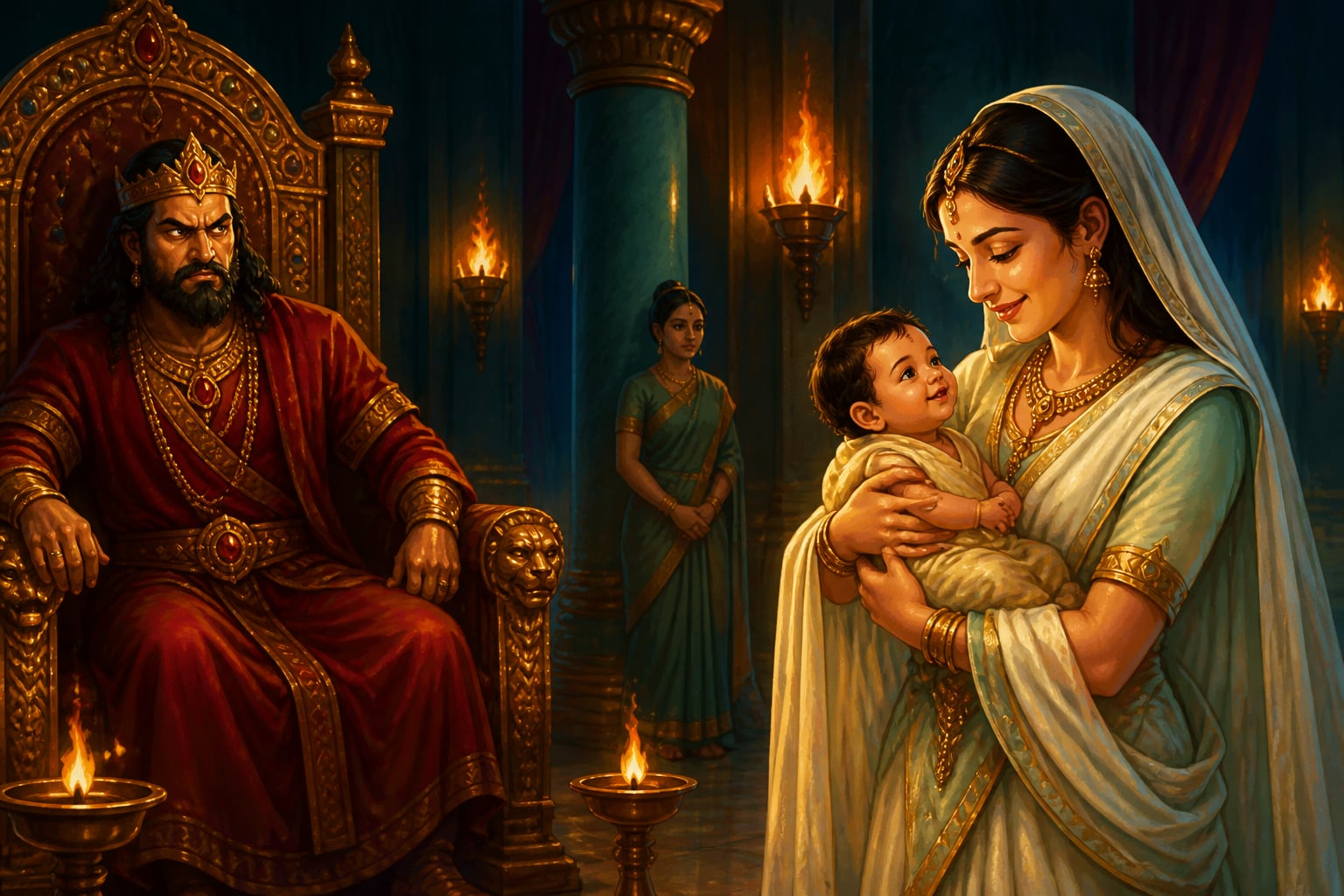
"She used to look at me that way," he muttered. "Now all her smiles are for the boy."
Jealousy is a strange poison. Most fathers would rejoice to see their wife love their child. But Mahapatu's heart was twisted. He saw his own son not as a blessing, but as a rival.
The Terrible Day
One evening, the king returned from hunting, tired and hungry. He strode into the queen's chambers and demanded his dinner.
"Bring me food and water at once!"
Queen Chanda was holding little Dhammapala, who was just learning to smile. She looked up at her husband.
"Of course, my lord. Just let me put the prince in his cradle."
"Now!" the king roared. "I said NOW!"
The queen hurried to settle her baby, but Dhammapala, startled by his father's shouting, began to cry. Chanda couldn't just drop him.
"One moment, my lord, he's frightened-"
King Mahapatu's jealousy, long simmering, finally boiled over. He stormed toward the executioner's quarters.
"You love that child more than me!" he screamed. "Fine! Let's see how much you love him when he's in pieces!"
Queen Chanda fell to her knees, clutching her baby.
"My lord, please! He's your son! Your own flesh and blood!"
"He is the thief who stole your love. Executioner!"
The grim-faced executioner appeared.
"Cut off the prince's hands."
A Child's Impossible Calm
What happened next is almost impossible to believe.
The executioner hesitated. Even this hardened man could not easily harm a baby.
"Do it," the king commanded, "or lose your own hands."
Queen Chanda screamed and wept, trying to shield her child. Servants looked away, unable to watch.
But little Dhammapala - the baby who had been crying moments before - fell completely still. His face became peaceful. He looked up at his father without fear, without hatred, without anything but calm acceptance.
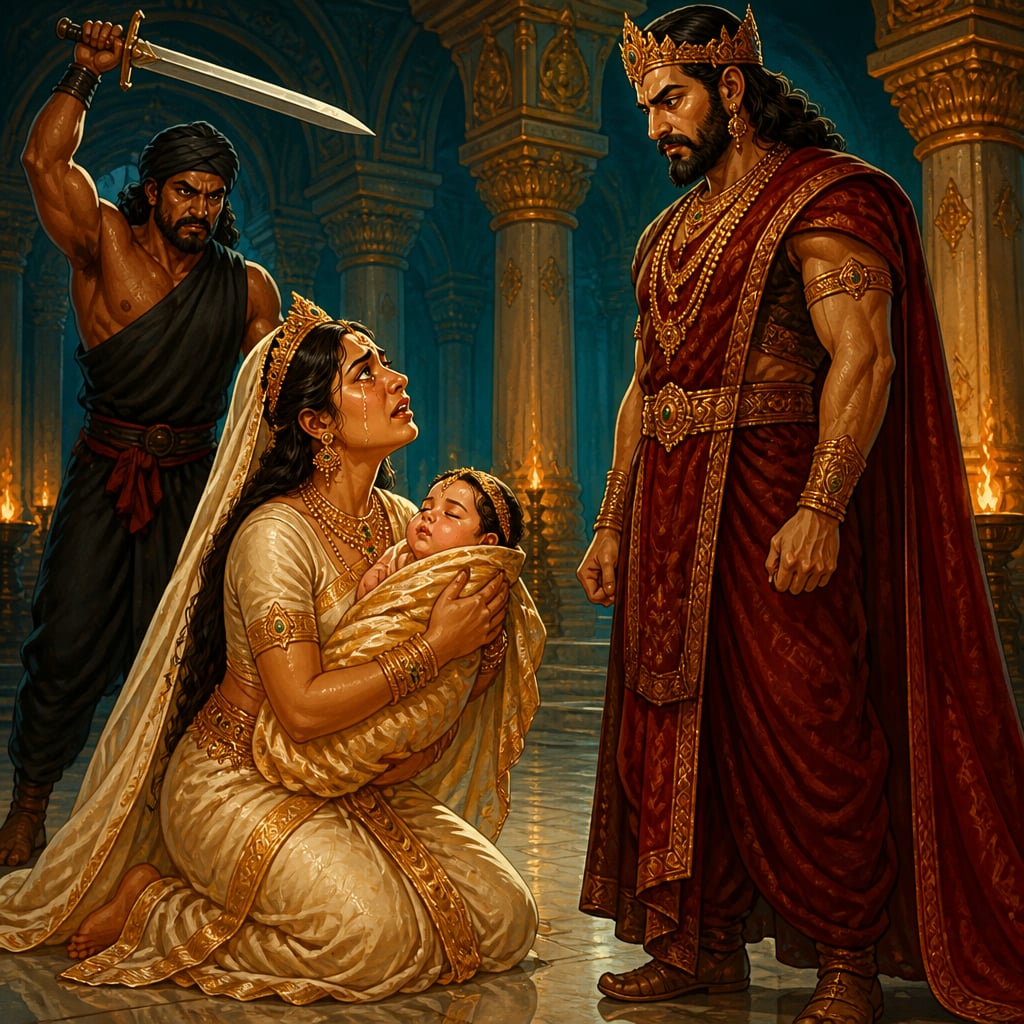
The dreadful deed was done.
"His feet too," the king ordered, watching for any sign of anger in his son's eyes.
There was none.
Even as a baby, Dhammapala had been born with the accumulated wisdom of many lifetimes. In some deep place beyond words, he understood what was happening. And he chose not to hate.
The Final Command
King Mahapatu stared at his son, expecting screams, expecting the satisfaction of seeing his rival suffer. Instead, he saw only peace.
This infuriated him even more.
"His head," the king said, his voice cold. "Take his head."
Queen Chanda collapsed, her cries filling the palace. Even the executioner's hands trembled.
But Dhammapala's face remained serene. If he could have spoken, perhaps he would have said what the Buddha later taught: that hatred never ends hatred - only love can do that. That causing harm to others ultimately harms yourself. That the truest freedom is freedom from anger, even in the worst circumstances.
The little prince passed from the world as he had lived in it - without malice, without revenge, without a single thought of hatred toward anyone.
What Followed
The story says that the moment Dhammapala died, Queen Chanda's heart broke and she died too. And King Mahapatu, seeing what he had done, finally understood the horror of his jealousy.
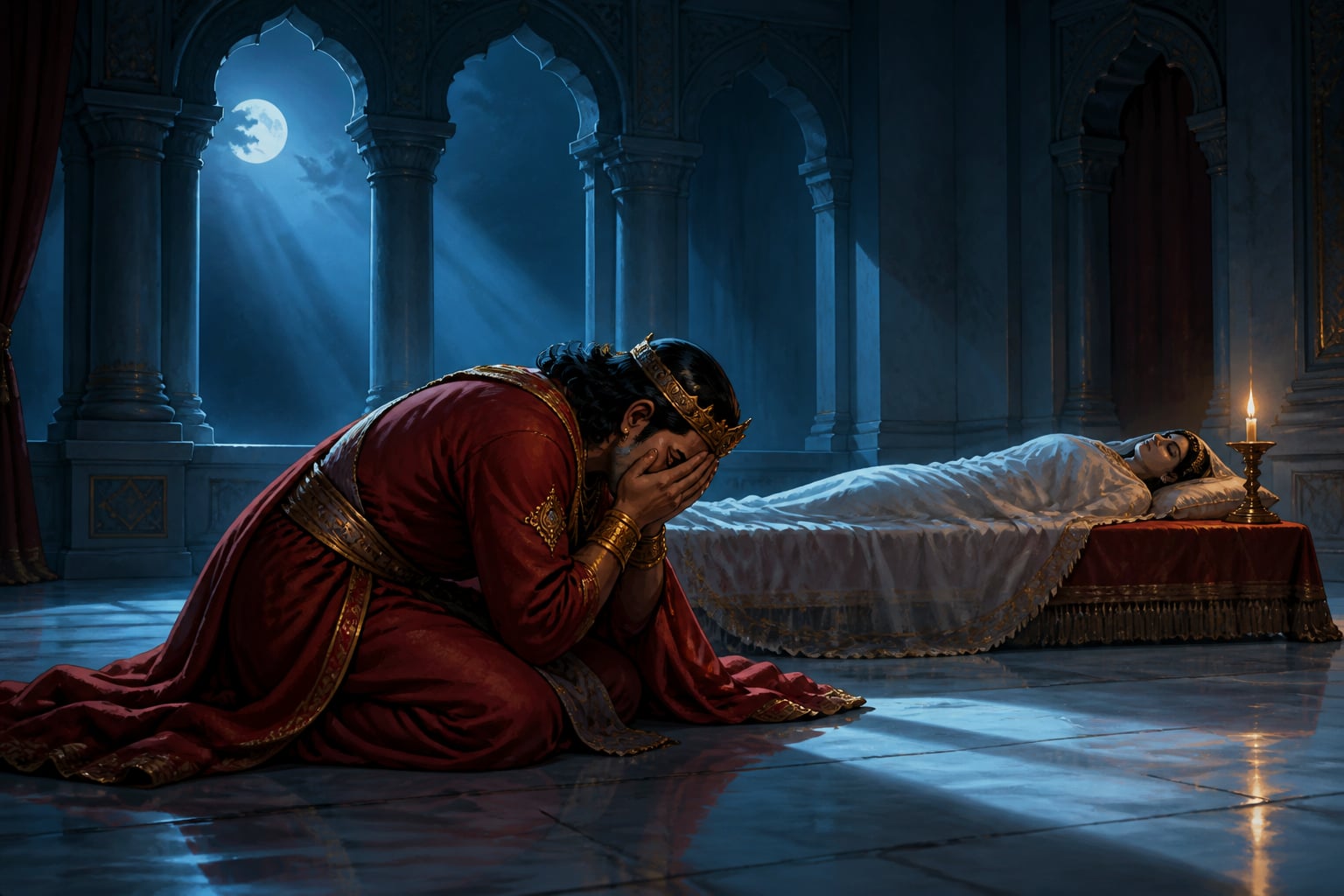
"What have I done?" he whispered.
But it was too late. The legends say the earth opened beneath him - not as punishment from outside, but as the natural result of such terrible karma. He descended into suffering, while somewhere far above, the pure soul of little Dhammapala rose to higher realms.
The Wisdom
This is perhaps the hardest story in all the Jataka tales. How can we understand a child who shows no anger, even toward a father who destroys him?
The story teaches that our circumstances don't determine our character - our responses do. Dhammapala was completely powerless. He couldn't fight back, couldn't run, couldn't even speak. The only thing he could control was whether to fill his heart with hatred or with peace.
He chose peace.
The story also shows where jealousy leads. King Mahapatu had everything - wealth, power, a beautiful queen, a healthy son. But jealousy blinded him to his blessings and drove him to destroy the very things he should have treasured.
In Your Life
You will never face what Dhammapala faced. But you will face unfairness.
Maybe a parent punishes you for something your sibling did. Maybe a teacher gives you a bad grade you don't deserve. Maybe someone with more power than you treats you badly, and there's nothing you can do about it.
In those moments, you have the same choice Dhammapala had. You can fill your heart with bitterness and plans for revenge. Or you can refuse to let unfairness make you into an unfair person.
This doesn't mean you should accept abuse or never stand up for yourself. It means that even when you can't change your circumstances, you can always choose what kind of person you want to be. Your inner response belongs to you alone. No one - not even a cruel king - can take that away.
Reflection
- Have you ever felt jealous of someone - maybe a sibling who seemed to get more attention, or a friend who had something you wanted? How did that jealousy feel inside you?
- The story says Dhammapala felt no hatred even though terrible things were done to him. Do you think this is possible? Should we admire it, or is there something troubling about not getting angry at injustice?
- Queen Chanda's love for her baby was natural and innocent, but it triggered terrible jealousy in the king. Was there anything she could have done differently, or was the fault entirely with the king?