Khantivadi: The Patience Teacher
A sage tortured by a king who still forgives
The sage Khantivadi lives in the forest, teaching the supreme virtue of patience. When the drunken King Kalabu discovers his wives listening to the sage, jealousy consumes him. 'You teach patience?' the king sneers. 'Let us see if you can practice it.' What follows is a brutal test as the king orders his hands, then feet, then ears and nose cut off. Through it all, Khantivadi harbors no anger, embodying the very teaching he proclaims.
A Teacher in the Forest
In the royal gardens of Kasi, where flowering trees scented the air and streams sang over smooth stones, a sage had made his home. His name was Khantivadi - "The One Who Teaches Patience."
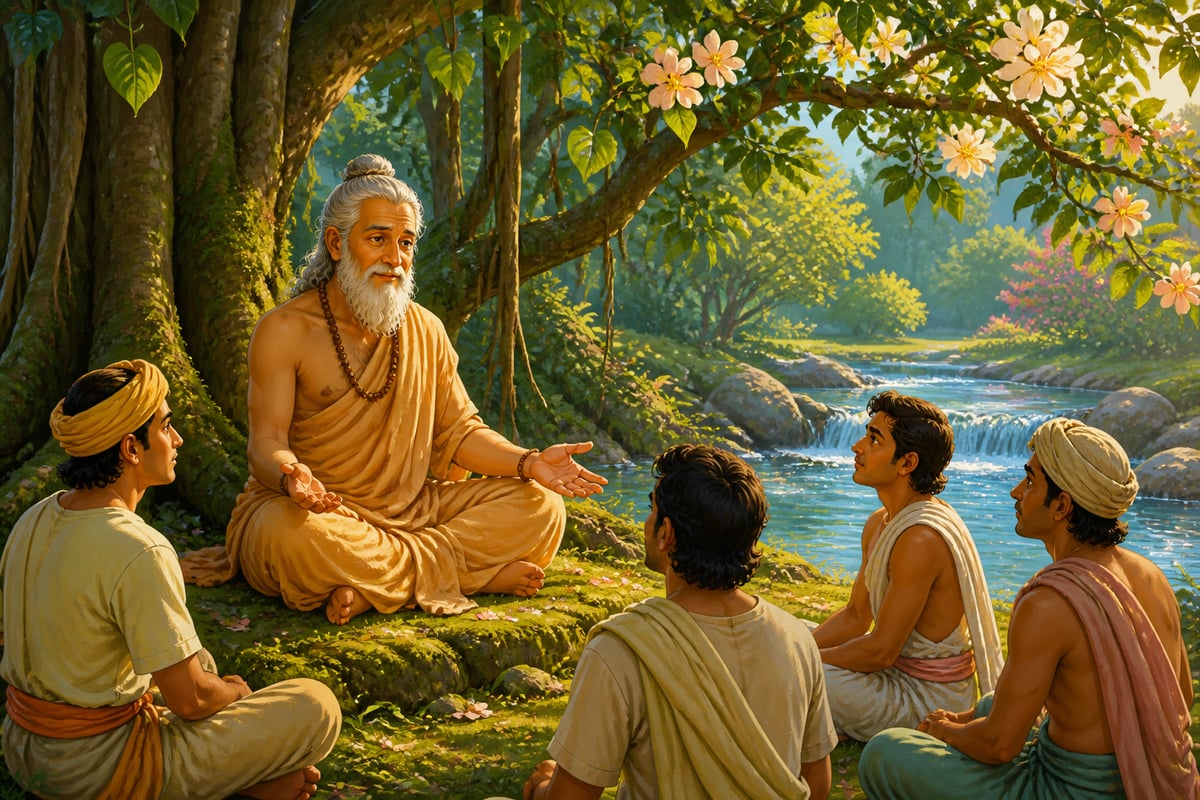
Every day, people came to hear him speak. Rich and poor, young and old, they sat beneath the spreading banyan tree and listened.
"What do you teach, wise one?" a merchant once asked.
"Only one thing," Khantivadi replied, his eyes gentle. "Patience. Khanti. The ability to remain calm when life is difficult. The strength to not strike back when struck."
"That sounds like weakness," the merchant said.
The sage smiled. "Does it take more strength to lash out in anger, or to hold yourself still when every part of you wants to fight? Patience is not weakness. It is the mightiest strength of all."
The King's Jealousy
King Kalabu ruled the kingdom of Kasi. He was powerful, proud, and quick to anger. One spring afternoon, he drank too much wine and fell asleep in the royal gardens while his queens danced for him.
When the queens saw their king snoring, they whispered among themselves.
"Let's go listen to the sage," one suggested. "His words are like cool water on a hot day."
They found Khantivadi beneath his banyan tree and sat around him like students. The sage spoke of patience, of how anger burns the one who holds it more than the one it's aimed at.
The queens were enchanted.
But King Kalabu woke. He looked around, bleary-eyed.
"Where are my queens?"
A servant pointed toward the forest. The king stumbled through the trees, his head pounding with wine and his heart already darkening with suspicion. When he found his wives sitting at the feet of this unknown man, listening with rapt attention, jealousy exploded inside him.
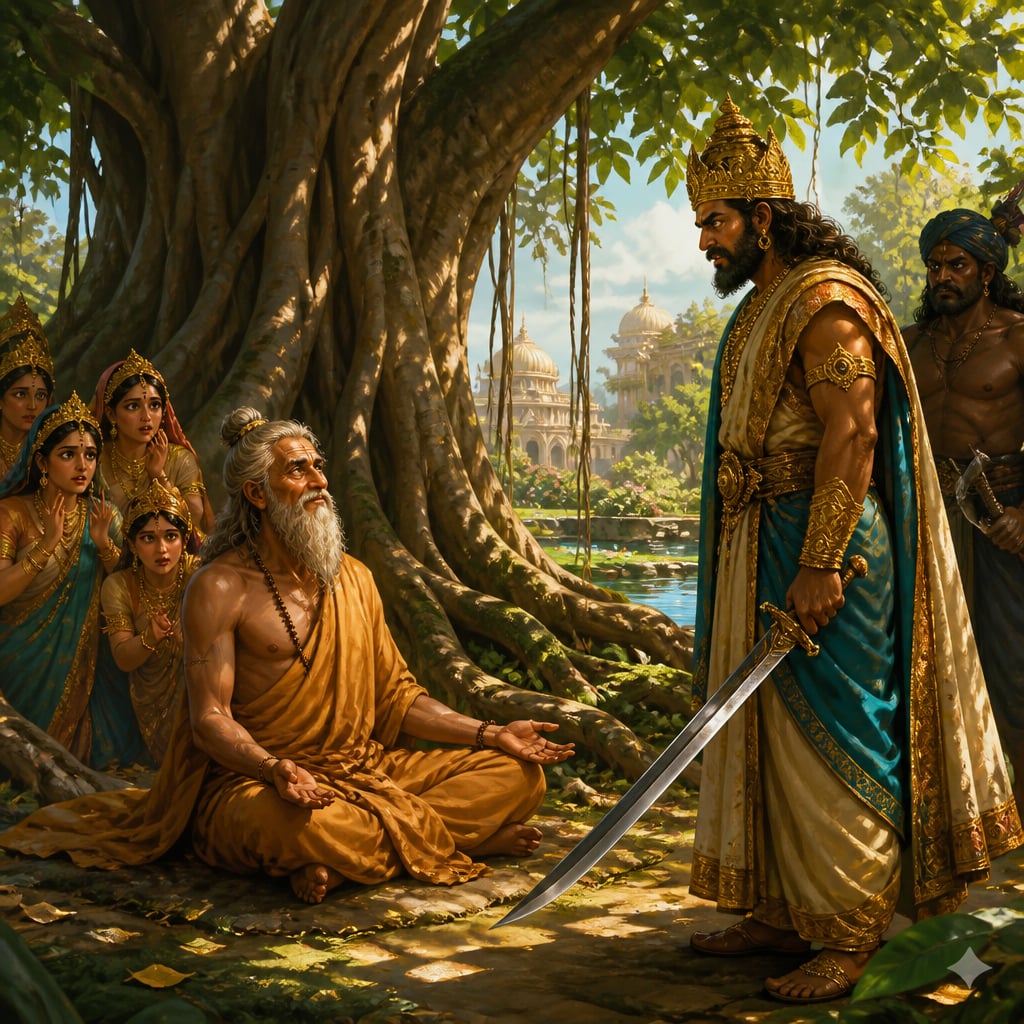
"Who are you?" the king demanded, pushing through the crowd.
Khantivadi looked up calmly. "I am a teacher, great king."
"What do you teach?"
"Patience."
The king's lip curled. "Patience? And what exactly is that?"
"Patience means not becoming angry when people insult you, hurt you, or treat you unfairly. It means remaining at peace even when the world is not peaceful."
The Terrible Test
King Kalabu laughed - an ugly, mocking sound.
"You sit here with my wives, filling their heads with nonsense, and you speak of patience? Let us see how patient you truly are!"
He called for his executioner.
"Give this teacher of patience a lesson he won't forget. Cut off his hands."
The crowd gasped. The queens screamed and begged for mercy. But the executioner obeyed.
Khantivadi made no sound. His face remained serene.
"Do you feel anger now, teacher?" the king taunted.
"No, great king," Khantivadi said quietly. "Patience does not live in my hands. It lives in my heart."
The king's face twisted with rage.
"Cut off his feet!"
Again, the sage did not cry out. His expression remained as calm as a still pond.
"Now?" the king demanded. "Do you hate me now?"
"No, great king. My patience is not in my feet either."
Maddened beyond reason, Kalabu ordered the sage's ears cut off, then his nose. Blood soaked the ground beneath the banyan tree. The queens wept. The crowd stood frozen in horror.
Through it all, Khantivadi neither cursed nor cried. His eyes held only compassion - even for the man destroying him.
"Great king," he whispered, "I wish you no harm. My patience toward you is unchanged. And I pray that one day, you will find the peace that patience brings."
The Earth's Answer
King Kalabu stared at the broken sage, waiting for hatred, expecting curses. He found only forgiveness.
This enraged him most of all.
"Throw him out!" he screamed. "Let him die in the forest!"
As the king stormed away, the earth itself seemed to tremble with outrage at what had been done. According to the ancient tales, the ground opened and swallowed Kalabu whole, sending him to the lowest realms of suffering - not as punishment from outside, but as the natural consequence of such cruelty.
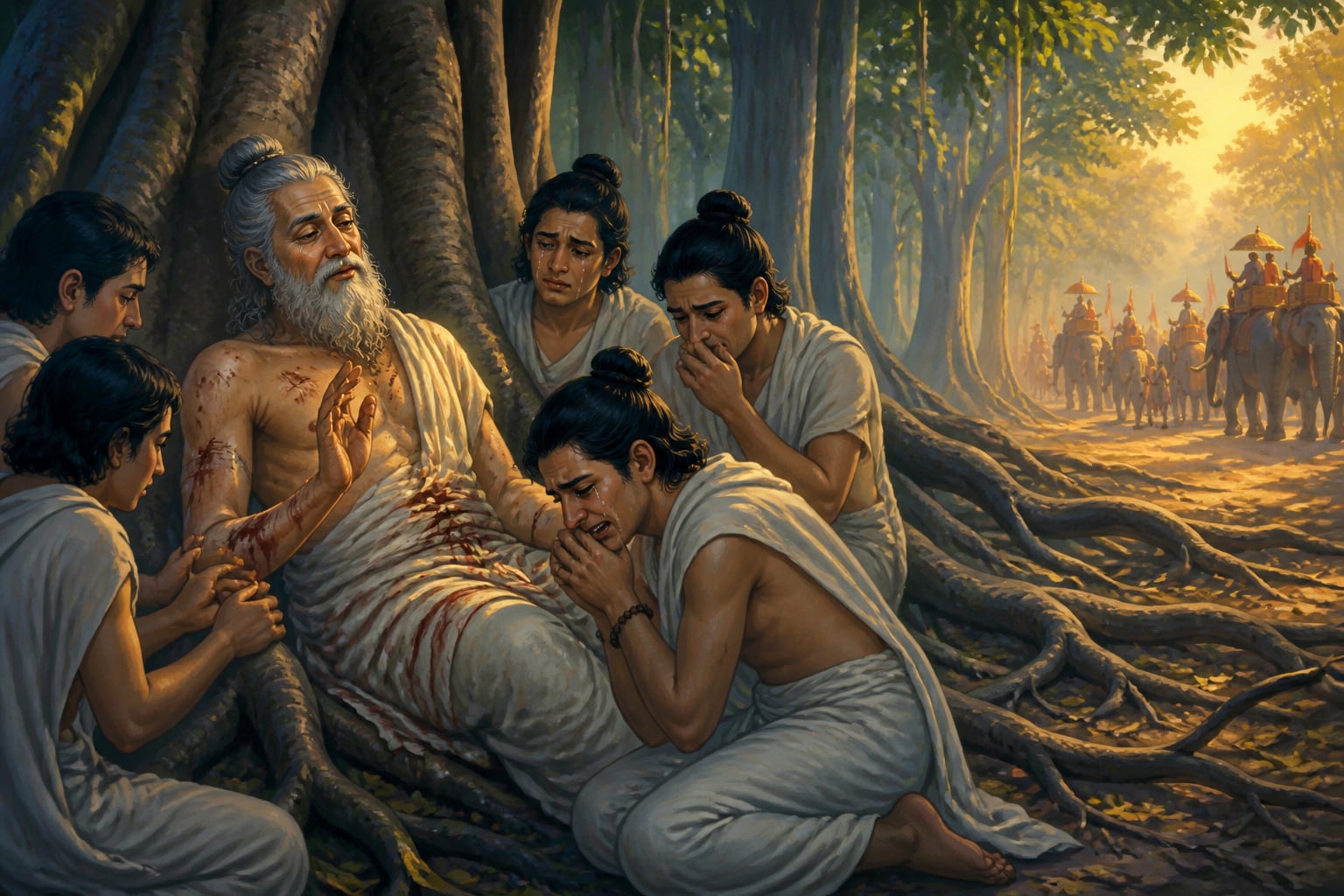
Khantivadi's followers gathered around their teacher.
"Master," one disciple wept, "how can you not hate him? After what he did to you?"
The sage looked at his ruined body, then at his disciples.
"If I hated him, he would have won. My body is destroyed, but my patience is intact. I have lost my hands and feet - but I have not lost myself. This is what I taught. And today, I proved it true."
The Wisdom
Khantivadi's story shows us the deepest meaning of patience. It's not just waiting calmly in a long line. It's not just tolerating a boring class. True patience - khanti - means keeping your inner peace even when someone is actively trying to destroy it.
The sage proved that our character is not determined by what happens to us, but by how we respond. King Kalabu had all the power, but he was a slave to his anger. Khantivadi had no power, yet he remained completely free.
When we let anger control us, we give away our power. When we choose patience, we keep it.
In Your Life
You probably won't face anything as extreme as Khantivadi did. But you will face tests of patience.
Maybe a classmate says something cruel about you. Maybe a sibling breaks something you treasure. Maybe someone blames you for something you didn't do.
In those moments, remember the sage under the banyan tree. You can't control what others do - but you can control whether you let their actions steal your peace. You can choose to respond with patience instead of fury.
This doesn't mean you can't feel hurt or stand up for yourself. It means you don't have to let anger poison you from the inside. That's the secret Khantivadi knew: patience isn't about what you endure. It's about what you refuse to become.
Reflection
- Have you ever had to be patient when someone was being unfair or mean to you? How did you handle it, and how did you feel afterward?
- Khantivadi said patience is the 'mightiest strength.' Do you agree, or do you think it takes more strength to stand up and fight back? Why?
- The sage forgave King Kalabu even as the king was torturing him. Is there ever something that shouldn't be forgiven? Are there limits to patience?