Pañcakarma: Five Sacred Actions, Endless Spa Menus
How Āyurveda's comprehensive purification system became luxury wellness packages
Explore the five classical purification therapies of Pañcakarma, Vamana, Virechana, Basti, Nasya, and Raktamokṣaṇa. Examines how authentic Pañcakarma (weeks-long supervised therapeutic process) became 'Panchakarma Day Spa' (60-minute massage). Economics of wellness tourism to Kerala vs. Western spa adaptations.
The 21-Day Journey No One Wants to Take
In Kottakkal, a small town in Kerala's Malappuram district, patients arrive at the Arya Vaidya Sala with chronic conditions that Western medicine has failed to resolve. They come for Pañcakarma, and they come knowing they'll be here for three weeks. Minimum.
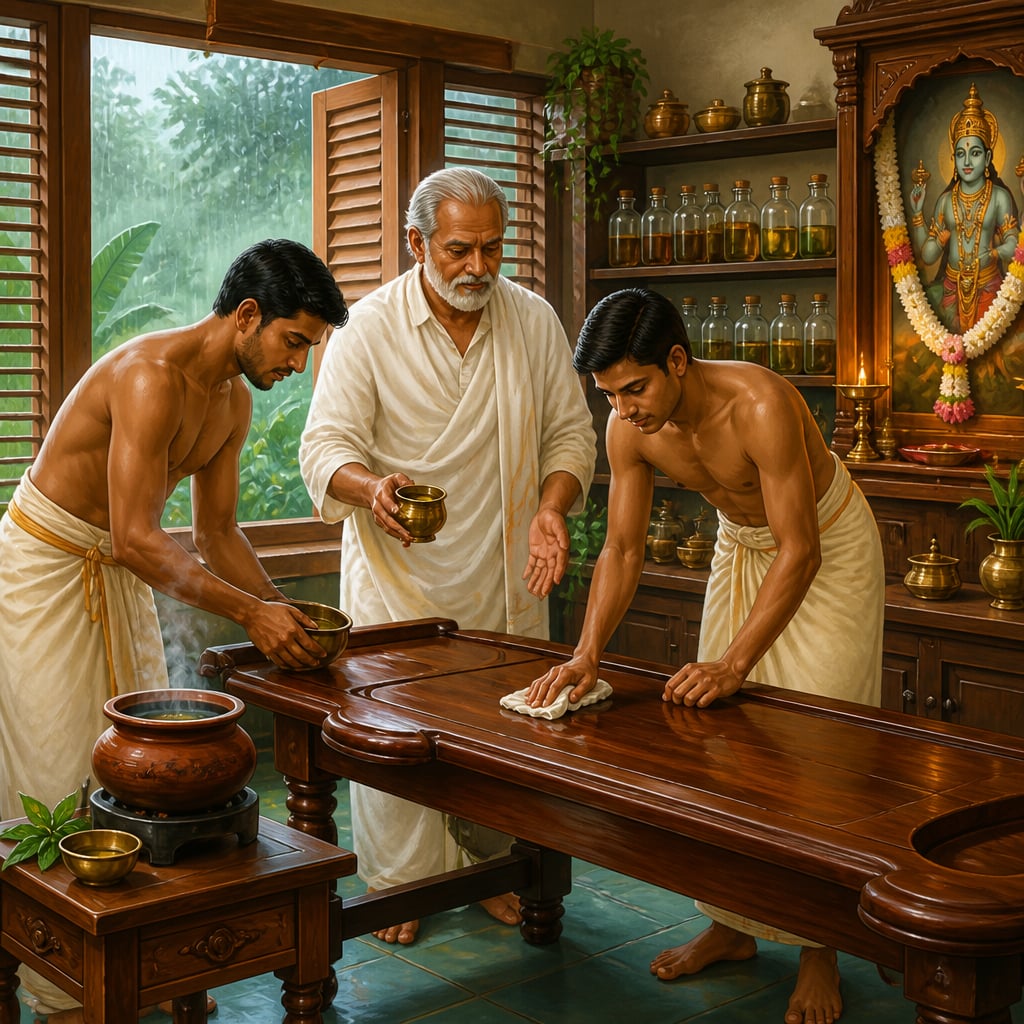
The first week involves no treatment at all. Instead, they undergo pūrvakarma, preparatory procedures that include daily oil massage (snehana) and sweating therapies (svedana). They drink medicated ghee in increasing doses, sometimes gagging, sometimes questioning why they came. Their bodies are being prepared, the texts say, like a cloth must be prepared before it can take dye.
The second week brings the actual karmas, the purification procedures themselves. Depending on their condition and constitution, patients undergo therapeutic vomiting, purgation, or medicated enemas. These are not pleasant. They are supervised by physicians who have trained for years under masters who trained for years before them. Nothing is casual. Nothing is optional.
The third week is recovery, pascātkarma, a carefully graduated return to normal diet and activity. Rush this phase, the texts warn, and you lose everything gained.
Total cost: approximately ₹1,50,000 to ₹2,50,000 ($1,800-$3,000). Total time: 21 days. Total comfort level: minimal.
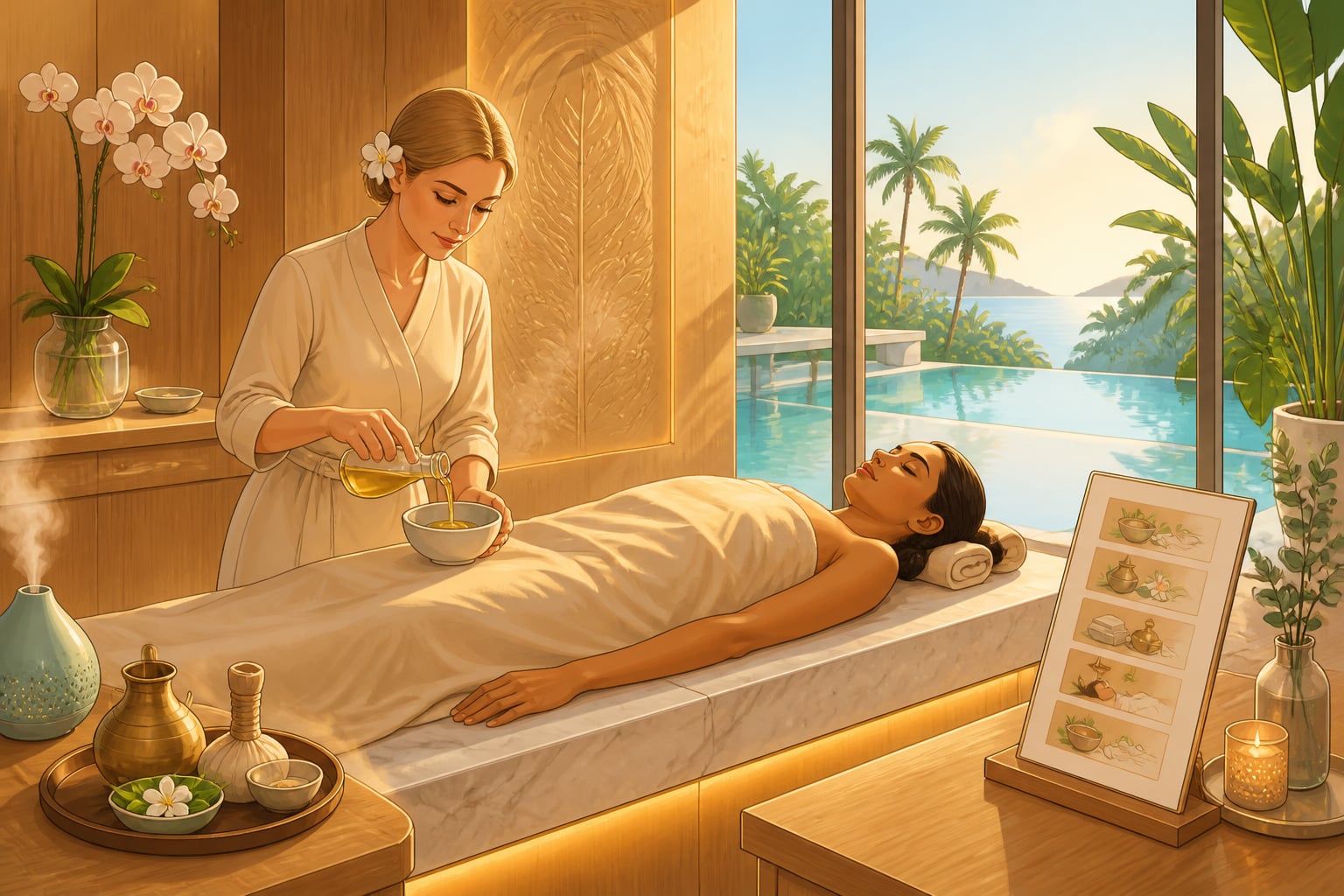
Now consider this: in Santa Monica, California, you can book a 'Panchakarma Experience' for $350. It takes 90 minutes. You'll receive an oil massage, perhaps some steam, maybe a warm oil drip on your forehead. You'll leave feeling relaxed, maybe enlightened. You'll have experienced abhyaṅga and śirodhārā, lovely therapies that have genuine benefits.
But you will not have experienced Pañcakarma. Not even close.
The word itself tells you why. Pañca means five. Karma means action. Pañcakarma is the Five Actions, five specific, intensive purification procedures designed to remove deep-seated toxins (āma) and reset the body's constitution. An oil massage is not one of them.
This isn't a story of appropriation or theft, spa owners aren't villains. It's a story of how profound therapeutic knowledge, developed over millennia for serious healing, was compressed and sweetened for a market that wants transformation without discomfort. And in that compression, the five actions became zero actions, and the word Pañcakarma became a marketing term that means whatever you want it to mean.
The Five Sacred Actions
So what are the actual five karmas? The classical texts, Caraka Saṃhitā, Suśruta Saṃhitā, and Aṣṭāṅga Hṛdaya, describe them with clinical precision:
Vamana (वमन), Therapeutic Emesis
Controlled vomiting to expel excess Kapha from the upper body. Used primarily for respiratory conditions, skin diseases, and certain digestive disorders. The patient drinks specific preparations that induce vomiting, expelling accumulated mucus and toxins. It sounds brutal because it is. It's also remarkably effective for conditions that don't respond to gentler treatments.
Virechana (विरेचन), Therapeutic Purgation
Medicated purgation to eliminate excess Pitta from the liver, gallbladder, and small intestine. Used for skin conditions, digestive disorders, liver problems, and inflammatory conditions. The patient takes specific herbal preparations that induce thorough cleansing of the lower digestive tract.
Basti (बस्ति), Medicated Enema
Often called the 'king of Pañcakarma,' Basti involves administering medicated substances through the rectum to address Vāta disorders. There are dozens of Basti variations for different conditions. It's considered the most powerful single therapy in Āyurveda, and also the most complex to administer correctly.
Nasya (नस्य), Nasal Administration
Medicated oils, powders, or herbs administered through the nose to treat conditions above the shoulders, sinusitis, migraines, neurological conditions, and disorders of the sense organs. The head is considered the gateway to the body's control center.
Raktamokṣaṇa (रक्तमोक्षण), Bloodletting
Therapeutic removal of small quantities of blood to treat blood-borne toxins and certain Pitta disorders. Traditionally done through leeches, cupping, or venipuncture. While controversial to modern sensibilities, it remains practiced for specific conditions in traditional settings.
Notice what's missing from this list: massage. Oil treatment. Forehead dripping. The therapies commonly sold as 'Panchakarma' in Western spas, Abhyaṅga (oil massage), Śirodhārā (oil stream on forehead), Pizhichil (oil bath), are wonderful. They have genuine benefits. They are part of the Pañcakarma process, specifically the preparatory phase. But calling them Pañcakarma is like calling the pre-flight safety demonstration 'flying.'
Why Preparation Matters: The Cloth and the Dye

The classical texts use a powerful metaphor: you cannot dye cloth that hasn't been prepared. Raw cloth resists dye, the color won't take, won't last, won't penetrate. First the cloth must be cleaned, softened, made receptive. Only then can it receive color that reaches deep into its fibers.
Similarly, a body that hasn't been prepared will resist purification. The toxins (āma) that Pañcakarma aims to remove are lodged deep in the tissues (dhātus). They don't simply flush out on command. They must first be loosened from their locations, liquefied, and moved to the digestive tract, where they can be eliminated through the appropriate karma.
This is what pūrvakarma accomplishes:
Snehana (oleation) involves internal and external application of oils and ghee. Medicated ghee is drunk in increasing doses over several days, sometimes up to a cup per day. This 'internal oleation' saturates the tissues, loosening toxins like oil loosens rust. External oleation (massage) works from outside in.
Svedana (sweating) follows oleation. Through steam boxes, warm herbal poultices, or other methods, the body is heated. This liquefies the loosened toxins and opens the channels (srotas) through which they'll be eliminated.
Only after adequate preparation, typically 5-7 days, is the body ready for the actual purification. Skip this phase, and the karmas won't work properly. The cloth won't take the dye.
This is why authentic Pañcakarma takes weeks. This is why you can't do it in an afternoon. And this is why the '90-minute Panchakarma Experience' is, therapeutically speaking, a contradiction in terms.
The Journey to Western Spas
How did Pañcakarma become a spa treatment? The journey involves several stages:
The Kerala Model (1950s-1980s): Kerala became Āyurveda's stronghold partly by accident, when Independence-era policies marginalized traditional medicine elsewhere, Kerala's unique political landscape allowed it to flourish. Institutions like Arya Vaidya Sala (founded 1902) and Kottakkal Arya Vaidya Sala became centers of authentic practice. Foreign patients began arriving, creating India's first wellness tourism.
The Maharishi Effect (1980s-1990s): Maharishi Mahesh Yogi, known primarily for Transcendental Meditation, also promoted 'Maharishi Ayur-Veda', a standardized, packaged approach designed for Western delivery. While this introduced millions to Āyurvedic concepts, it also began the compression process. Treatments were shortened, simplified, and made more palatable.
The Spa Boom (1990s-2000s): As the global spa industry exploded (now worth $130+ billion), Āyurvedic treatments became premium offerings. The word 'Pañcakarma' had exotic appeal. Resorts and spas began using it freely, applying it to whatever Indian-inspired treatments they offered.
The Digital Age (2010s-present): Online courses now sell 'DIY Panchakarma', home protocols promising the benefits of traditional purification through self-administered procedures. Some of these are harmless adaptations; others involve potentially dangerous procedures without supervision. The texts explicitly warn that certain karmas, improperly administered, can cause serious harm.
What's Preserved and What's Lost
Fairness requires acknowledging what's preserved:
Genuine benefits of spa treatments: Abhyaṅga (oil massage) reduces stress, improves circulation, and nourishes the skin. Śirodhārā (oil on forehead) can be profoundly calming for the nervous system. These aren't fake benefits, they're real, and millions of people receive them.
Accessibility: Most people cannot take three weeks for intensive treatment. Abbreviated versions, honestly described, make elements of Āyurvedic wellness available to those who couldn't otherwise access them.
Introduction to deeper traditions: Some people who experience spa treatments become curious about authentic Āyurveda. The diluted version serves as a doorway.
But what's lost is significant:
Therapeutic power: The conditions that traditional Pañcakarma treats, chronic autoimmune disorders, deep-seated digestive issues, neurological conditions, intractable skin diseases, don't respond to 90-minute sessions. The depth of purification requires time.
The preparation principle: The insight that the body must be prepared before purification, that you cannot rush deep cleaning, applies far beyond Āyurveda. It's a fundamental principle of transformation that spa culture, with its emphasis on instant results, systematically ignores.
Safety protocols: Traditional Pañcakarma includes detailed contraindications, supervision requirements, and emergency procedures. DIY protocols strip these away. Vamana (therapeutic vomiting) improperly administered can cause aspiration. Basti (enema) done wrong can cause perforation. These aren't theoretical risks.
The meaning of śodhana: The word śodhana means purification, but in the Āyurvedic context, it's more than physical detox. It's resetting the body's intelligence, clearing accumulated impressions (saṃskāras), and creating space for healing at every level. This dimension disappears when Pañcakarma becomes synonymous with 'spa day.'
Practicing with Awareness
Knowing this history, how might you engage more authentically?
Name things correctly: If you receive an oil massage, you received Abhyaṅga, a valuable therapy. You didn't receive Pañcakarma. Using accurate terms honors both the tradition and your own experience.
Understand the preparation principle: Even if you never undergo traditional Pañcakarma, the pūrvakarma concept has universal application. Before any cleanse, diet change, or detox program, ask: Am I prepared? Have I loosened what needs to release? Jumping into aggressive protocols without preparation is like dyeing unprepared cloth.
Respect seasonal timing: Traditional texts specify that Pañcakarma should be done at seasonal junctions, particularly at the transitions between seasons when doṣas naturally accumulate and release. The modern 'January detox' (driven by guilt, not wisdom) often happens in deep winter, when Vāta is high and the body needs nourishment, not purging.
Consider Kerala: If you're serious about experiencing authentic Pañcakarma, plan a trip. Institutions like Arya Vaidya Sala Kottakkal, AVP Coimbatore, and the Ayurvedic Trust in Coimbatore offer genuine protocols. Three weeks is ideal; even 14 days provides substantial benefit. Yes, it's uncomfortable. Yes, it works.
Be skeptical of shortcuts: If someone offers Pañcakarma in less than a week, or promises all five karmas in a weekend, or sells DIY home protocols for procedures that texts say require supervision, be skeptical. The tradition developed these time requirements through millennia of experience.
The Deeper Teaching
Pañcakarma's journey from sacred therapy to spa menu reveals something about our relationship with transformation. We want results without process, cleansing without discomfort, rebirth without death.
The traditional texts are unromantic about this. Pañcakarma is uncomfortable. You will vomit. You will have diarrhea. You will drink ghee until you can't stand the sight of it. You will spend three weeks away from your normal life. And at the end, if the process is done correctly and you are an appropriate candidate, you may experience healing that nothing else provides.
The spa version offers something different: relaxation, pleasure, a brief escape. These have value. But they're not Pañcakarma. And conflating them denies people knowledge of what's actually available, the deeper healing that requires the deeper commitment.
In a culture that sells '7-Minute Abs' and 'Instant Enlightenment,' the stubborn insistence of traditional Āyurveda that some things simply take time might be its most countercultural teaching.
The five sacred actions are waiting. But they won't be rushed.
Before any cleanse, detox, or intensive health protocol, ask: 'Am I prepared?' A three-day juice cleanse without prior dietary transition is like jumping into ice water. The 'January detox' after holiday excess often fails because bodies are depleted, not just toxic. Preparation might mean: gradually reducing heavy foods, increasing hydration, ensuring adequate rest, and creating space in your schedule for the process.
The modern 'January detox' happens in deep winter, precisely when Vāta is highest and the body needs nourishment and warmth, not aggressive cleansing. A spring cleanse (as many traditional cultures practice) aligns with the body's natural rhythms. Similarly, autumn is appropriate for releasing summer's heat (Pitta). Consider timing any cleansing or detox program to these natural transition points rather than arbitrary calendar dates or guilt-driven New Year's resolutions.
Key figures
Caraka
Compiler or author of the Caraka Saṃhitā, the foundational text of Āyurvedic internal medicine. His work provides the most comprehensive classical description of Pañcakarma principles and procedures.
The Caraka Saṃhitā contains the cloth-and-dye metaphor for pūrvakarma, detailed descriptions of all five karmas, contraindications, and the philosophical framework for understanding purification as more than physical cleansing.
Vāgbhaṭa
Author of the Aṣṭāṅga Hṛdaya and Aṣṭāṅga Saṅgraha, texts that synthesized earlier Caraka and Suśruta teachings into more accessible forms. His work systematized Pañcakarma for practical application.
His clear distinction between śodhana (purification) and śamana (pacification) helps practitioners understand why spa treatments (śamana at best) cannot substitute for actual Pañcakarma.
Dr. Vasant Lad
Founder of The Ayurvedic Institute in Albuquerque, New Mexico (1984). One of the most influential figures in bringing authentic Āyurveda, including Pañcakarma, to the Western world.
His textbooks, including The Complete Book of Ayurvedic Home Remedies and Textbook of Ayurveda, have educated a generation of Western practitioners. Crucially, he has maintained the integrity of traditional protocols rather than diluting them for commercial appeal.
Case studies
Two Panchakarmas: Kerala vs. Santa Monica
Consider two people seeking 'Panchakarma': **The Kerala Journey**: Priya, 45, arrives at Arya Vaidya Sala Kottakkal with rheumatoid arthritis that hasn't responded to conventional treatment. She's assigned a vaidya (physician) who examines her constitution, current imbalance, and overall vitality. Her treatment plan: 21 days, beginning with internal oleation (drinking medicated ghee for 7 days), external oleation (daily abhyaṅga), and sweating therapies. Only after proper preparation does she undergo Virechana (purgation) - two days of intense elimination that leaves her weak but somehow lighter. The final week involves gradual dietary progression and rejuvenation therapies. She returns home with dietary recommendations specific to her condition. Total cost: ₹1,80,000 ($2,200). Total time: 24 days away from normal life. Three months later, her inflammatory markers have improved and she's reduced her medications. **The Santa Monica Experience**: Michael, 45, books a 'Panchakarma Retreat' at a luxury wellness center. He arrives Friday afternoon and receives a 90-minute abhyaṅga (massage) with warm sesame oil. Saturday includes śirodhārā (oil on forehead), a steam treatment, and a 'cleansing' lunch of kitcharī. Sunday morning offers a final massage and a 'departure ceremony.' He leaves feeling relaxed and pampered. Total cost: $1,500. Total time: 2.5 days. He returns to work Monday feeling refreshed. His underlying stress and digestive issues remain unchanged.
Charaka Samhita's Siddhi Sthana describes Panchakarma as a five-fold purification: Vamana (emesis), Virechana (purgation), Basti (enema), Nasya (nasal therapy), and Raktamokshana (bloodletting). Each procedure requires specific purvakarma (preparation) and paschatkarma (post-treatment care), a systematic approach that modern wellness retreats often compress or omit.
The $130 billion global spa industry benefits from Āyurvedic terminology. But patients with chronic conditions who might benefit from authentic Pañcakarma may never learn it exists because they assume they've already tried it. The naming confusion has real consequences for people's health options.
Neither experience is 'wrong' - they're simply different things. Michael received genuine spa treatments that have real benefits. But he didn't receive Pañcakarma. Using the same word for both obscures the existence of the deeper option and prevents people from knowing what's actually available.
Luxury Panchakarma retreats in California charge $5,000 to $15,000 for abbreviated protocols that traditional practitioners consider incomplete. The growing demand signals genuine interest in deep purification, but consumers lack the framework to distinguish authentic clinical Panchakarma from spa-grade adaptations.
A 2022 study in the Journal of Ayurveda and Integrative Medicine found that traditional Panchakarma protocols over 21 days reduced inflammatory biomarkers (CRP, IL-6) by 35-50% in participants with chronic conditions, compared to 10-15% with standard anti-inflammatory medication.
Historical context
Classical Āyurveda to Modern Wellness Industry (c. 200 BCE - Present)
Living traditions
Kerala's wellness tourism industry generates approximately ₹20,000 crore annually, with Pañcakarma being a major draw. However, even in Kerala, the pressure to accommodate tourists' limited timeframes has led to abbreviated versions. The most authentic experiences remain at established institutions with medical credentialing. Simultaneously, 'Panchakarma' has become a global spa marketing term applied to virtually any Āyurvedic-adjacent treatment, creating confusion about what authentic purification actually involves.
- Arya Vaidya Sala (AVS) Kottakkal: Founded in 1902 by Vaidyaratnam P.S. Varier, AVS Kottakkal is one of the oldest and most respected Āyurvedic institutions in the world. They offer authentic Pañcakarma programs of 14-28 days, with all treatments supervised by traditionally trained vaidyas. Their approach maintains classical protocols while incorporating modern diagnostic support.
- Kottakkal Arya Vaidya Shala Hospital: The hospital wing of AVS offers intensive Pañcakarma treatment for complex conditions. Patients undergo full diagnostic workup before treatment, and all five karmas are available based on individual need. This represents Pañcakarma as therapeutic intervention, not wellness luxury.
- The Ayurvedic Institute: Founded by Dr. Vasant Lad in 1984, this remains one of the few Western institutions offering authentic Pañcakarma training and treatment. Their programs maintain traditional protocols adapted for Western contexts without diluting core principles. A bridge between Kerala and the West.
Reflection
- Have you ever tried a 'detox' or cleansing program? How much preparation was involved, did you gradually transition, or did you jump in suddenly? How might your experience have differed with adequate preparation?
- The lesson suggests that we want 'transformation without discomfort, cleansing without process.' Where else in your life do you see this pattern, seeking results while avoiding the necessary difficulty?
- When spa treatments are labeled 'Panchakarma,' people who might benefit from authentic Pañcakarma may never know it exists. What responsibility, if any, do wellness businesses have to use traditional terms accurately?