Gaṇḍūṣa & Kavala: What Oil Pulling Actually Is

How a simple morning practice became a viral miracle cure, and what the texts actually say

Discover the two distinct Āyurvedic oral therapies, gaṇḍūṣa (holding) and kavala (swishing), and how they differ from viral 'oil pulling' claims. Learn what the research actually shows, why 20-minute protocols miss the point, and how to practice authentically within a complete morning routine.

The Practice That Broke the Internet
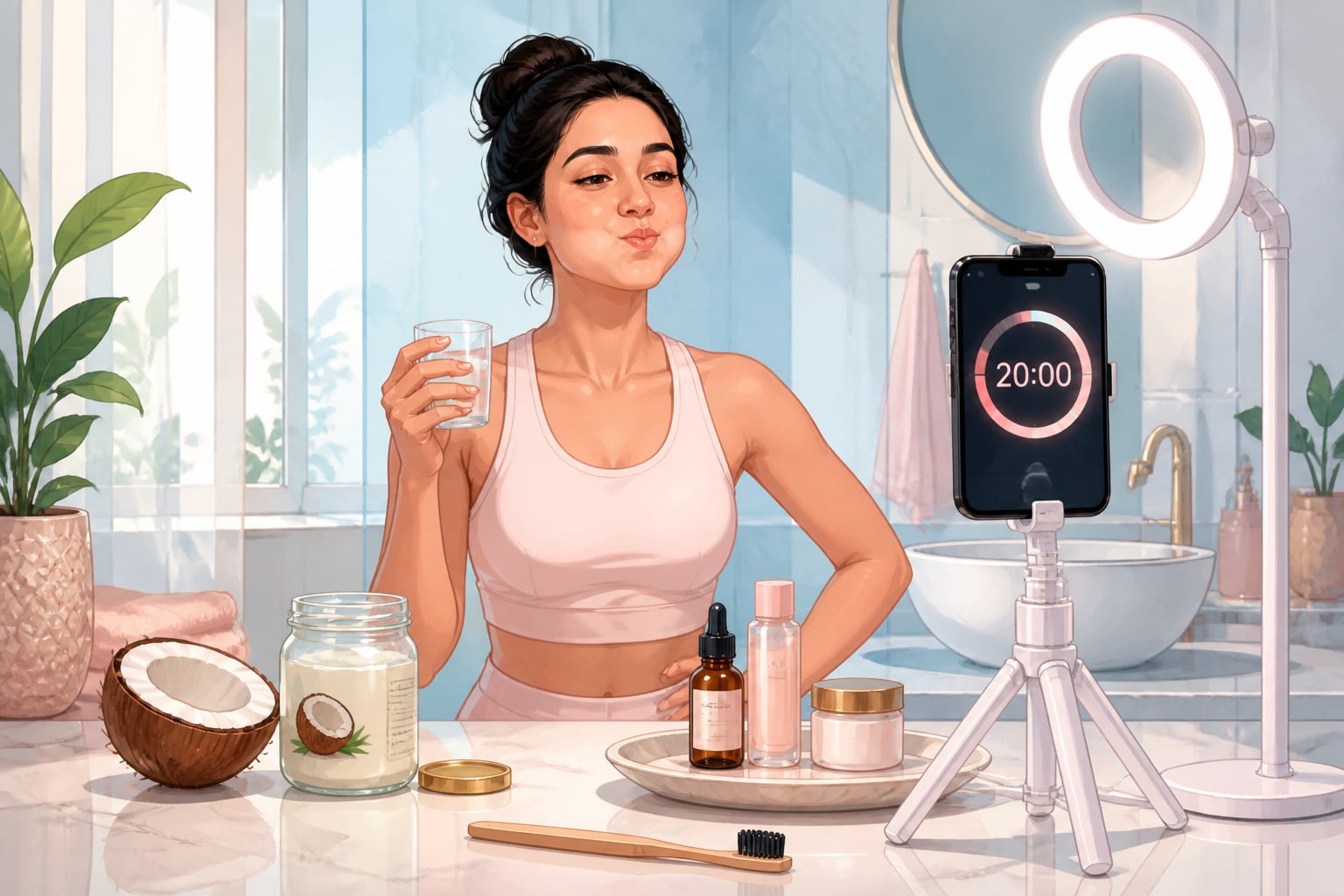
A modern wellness influencer filming a viral oil pulling video

In 2014, a wellness website published an article claiming that swishing oil in your mouth for 20 minutes could 'pull toxins from your blood,' whiten teeth, cure headaches, prevent heart disease, and clear skin. The practice was called 'oil pulling', an ancient Āyurvedic technique, the article claimed, that mainstream medicine didn't want you to know about.

Man performing gandusha at sunrise

The article went viral. Celebrities endorsed it. Gwyneth Paltrow's Goop featured it. TikTok influencers filmed themselves swishing coconut oil while doing their makeup. Amazon filled with 'oil pulling' products, flavored oils, single-use packets, special 'pulling formulas.' A Google search for 'oil pulling benefits' now returns millions of results promising everything from cavity prevention to diabetes cure.

Here's what's true: Āyurveda does include oral oil therapies. They've been practiced for millennia. They have legitimate benefits for oral health.

Here's what's not true: Almost everything else in that viral article.

The classical texts describe not one but TWO distinct practices, gaṇḍūṣa and kavala, with specific protocols, therapeutic purposes, and limitations. Neither involves 20-minute swishing sessions. Neither claims to 'pull toxins from blood.' Neither promises to cure systemic diseases. And the benefits, while real, are modest and local, primarily supporting oral hygiene, not revolutionizing your health.

This is the story of how a simple morning practice became a miracle cure, and what actually works when you strip away the hype.

Two Practices, Not One

A vaidya teaching the classical distinction between gaṇḍūṣa and kavala

The classical Āyurvedic texts describe two distinct oral oil therapies that modern 'oil pulling' conflates:

Gaṇḍūṣa (गण्डूष), Oil Holding

Filling the mouth completely with oil or medicated liquid and holding it still, no swishing, no gargling, just holding. The mouth is filled to capacity (ākanthapūrṇa, 'up to the throat'). The liquid is held until the mouth produces saliva, the nose runs, or the eyes water, signs that the therapy has taken effect. Then it's spit out. Duration: typically 3-5 minutes, until natural secretion occurs.

Kavala (कवल), Oil Swishing

Taking a comfortable amount of oil or medicated liquid and moving it around the mouth, swishing, pulling between teeth, gargling. The quantity is less than gaṇḍūṣa (a comfortable mouthful, not maximum capacity). The motion is gentle, the duration shorter. This is closer to what modern 'oil pulling' describes, but the texts don't specify the extended 15-20 minute sessions that became viral.

These are different therapies for different purposes:

Modern 'oil pulling' collapsed these into one practice, then added arbitrary time requirements (20 minutes!) and systemic health claims that appear nowhere in the classical literature.

What the Texts Actually Prescribe

The Aṣṭāṅga Hṛdaya includes gaṇḍūṣa and kavala in the dinacaryā (daily routine) chapter, alongside tongue scraping and tooth cleaning. The Caraka Saṃhitā describes specific variations for therapeutic purposes.

The Classical Protocol:

  1. Perform after tongue scraping, in the morning
  2. Choose oil based on purpose: sesame for Vāta, cooling oils for Pitta, lighter preparations for Kapha; medicated oils for specific conditions
  3. For gaṇḍūṣa: fill the mouth completely, hold without moving, until secretions appear (3-5 minutes typically)
  4. For kavala: take a comfortable amount, swish gently, gargle if appropriate
  5. Spit out, rinse mouth
  6. Proceed with other morning practices

The Listed Benefits:

Notice what's NOT claimed: curing systemic diseases, 'pulling toxins from blood,' whitening teeth dramatically, clearing skin, preventing heart disease. The texts describe oral therapy with oral benefits, logical, limited, local.

The Viral Transformation

How did gaṇḍūṣa and kavala become 'oil pulling', and how did a modest oral hygiene practice become a miracle cure?

The 1990s Bridge: Dr. F. Karach, a Ukrainian physician, presented a paper at an oncology conference claiming that oil swishing cured his chronic blood disease. His claims, unverified, never replicated, spread through alternative health networks. The practice was attributed to 'ancient Ayurvedic medicine' without citation.

The Wellness Blog Era (2000s-2010s): Health blogs discovered oil pulling as content gold. Each post added new claimed benefits: whiter teeth, clearer skin, more energy, weight loss, headache cure. The attributed benefits multiplied with each share. No one checked the original texts.

Celebrity Endorsement (2010s): Gwyneth Paltrow's Goop featured oil pulling. Other celebrities followed. The practice moved from alternative health circles to mainstream wellness.

Social Media Virality (2010s-present): TikTok and Instagram made oil pulling visual content. Influencers filmed morning routines featuring 20-minute swishing sessions. The practice became aesthetic before it was therapeutic.

Commercial Products: The market responded. 'Oil pulling' products proliferated, flavored oils, single-use sachets, special 'pulling blends,' mouth rinses labeled as 'Ayurvedic.' A practice that traditionally required nothing but a tablespoon of sesame oil became a product category.

The Duration Inflation Problem

Perhaps the most notable deviation from traditional practice is the 20-minute protocol that became standard online.

The classical texts don't specify 20 minutes. Gaṇḍūṣa is held until physiological signs appear, saliva production, nasal secretion, watering eyes, typically 3-5 minutes. Kavala has even shorter duration.

Where did 20 minutes come from? It appears to derive from Dr. Karach's presentations, not from Āyurvedic texts. The number spread through the internet echo chamber until it became unquestioned orthodoxy.

The irony: extending duration isn't necessarily better. The classical signs indicate when the therapy has taken effect. Continuing past that point doesn't add benefit, it just adds tedium. The 20-minute protocol turns a brief morning practice into an obstacle that few can maintain consistently.

Consistency matters more than duration. A 5-minute practice done daily beats a 20-minute practice done occasionally.

What Research Actually Shows

Several dozen studies have examined oil pulling. Here's what they actually demonstrate:

Supported by Evidence:

Not Supported by Evidence:

The Honest Assessment:

Oil pulling is a reasonable addition to oral hygiene. It's not a replacement for brushing and flossing. It doesn't cure diseases. The benefits are real but modest, and entirely local to the mouth.

This is consistent with what the classical texts claim: oral therapy with oral benefits. The tradition never promised miracles. The internet did.

Managing Expectations

Knowing the actual evidence, what can you realistically expect from practicing gaṇḍūṣa or kavala?

What It Can Do:

What It Can't Do:

The Honest Promise:

If you practice kavala or gaṇḍūṣa consistently as part of your morning routine, you'll support your oral health in a gentle, traditional way. That's valuable. It's just not miraculous.

Integration with Dinacaryā

The classical texts don't present gaṇḍūṣa and kavala as standalone practices but as elements of a complete morning routine. The integration matters.

Traditional Morning Sequence:

  1. Wake at appropriate time (ideally brahma muhūrta)
  2. Eliminate (bowel movement, urination)
  3. Clean teeth with traditional tooth stick (dantadhāvana)
  4. Scrape tongue (jihvā nirlekhana), removing overnight coating
  5. Oil in mouth (gaṇḍūṣa or kavala)
  6. Apply eye drops (añjana), traditional for eye health
  7. Nasya (nasal oil), if practiced
  8. Abhyaṅga (self-massage)
  9. Exercise (vyāyāma)
  10. Bathe (snāna)

Notice the sequence: tongue scraping comes BEFORE oil in mouth. The overnight bacterial coating on the tongue is removed first. Then the oil practice follows. This order is logical, you clean the surface, then apply therapeutic oil.

Most viral protocols miss this context entirely. They present oil pulling as a standalone practice, divorced from the system that gives it meaning and effectiveness.

Practicing Authentically

If you want to practice gaṇḍūṣa or kavala authentically, here's what the tradition actually recommends:

For Daily Maintenance (Kavala):

  1. Complete tongue scraping first
  2. Take a comfortable mouthful of oil (1-2 tablespoons)
  3. Swish gently, pulling between teeth
  4. Continue for 3-5 minutes, until your jaw feels worked, not exhausted
  5. Spit into trash (not sink, oil clogs drains)
  6. Rinse mouth with warm water
  7. Proceed with brushing or other morning practices

For Therapeutic Purposes (Gaṇḍūṣa):

  1. Fill mouth completely with appropriate oil or medicated liquid
  2. Hold without moving
  3. Wait for natural signs: increased saliva, nasal secretion, watering eyes
  4. When signs appear, spit out
  5. Rinse and proceed

Oil Selection:

What to Skip:

The Deeper Teaching

The oil pulling phenomenon reveals something about how wellness culture works.

A traditional practice exists: modest, effective for its intended purpose, part of a larger system. The internet discovers it. Claims inflate with each share. Celebrities endorse it. Products proliferate. The practice becomes famous for promises it never made and can't keep.

Meanwhile, the actual practice, simple, unglamorous, consistent daily oral hygiene, gets lost in the noise.

Gaṇḍūṣa and kavala are valuable practices. They support oral health. They've been used for millennia. They work, for what they were designed to do.

They don't work as miracle cures because nothing works as a miracle cure. The tradition never claimed otherwise. Only the internet did.

Practice authentically: briefly, consistently, as part of a complete routine, with realistic expectations. The modest but real benefits accumulate over time. That's how traditional practices actually work, not through viral transformation but through daily repetition.

The mouth is the gateway to the body. Traditional cultures understood this. Keeping that gateway clean is valuable. It's just not magic.

The internet promised miracles: toxin removal, disease prevention, dramatic whitening, systemic health transformation. Research shows: modest reduction in oral bacteria, some support for gum health, possible reduction in bad breath. Real but limited. If you practice kavala expecting miracle cure, you'll be disappointed. If you practice expecting gentle oral hygiene support, you'll get what you came for.

Viral oil pulling extracts the practice from its context, often presenting it as the sole morning ritual. The tradition understood synergy: tongue scraping prepares the mouth; oil therapy follows on clean surfaces; subsequent practices continue the sequence. Practice kavala as part of a complete routine, not an isolated intervention.

Key figures

Vāgbhaṭa

Author of the Aṣṭāṅga Hṛdaya, which places gaṇḍūṣa in the dinacaryā chapter alongside other daily oral hygiene practices and specifies the signs indicating when the therapy has taken effect.

The Aṣṭāṅga Hṛdaya's clear listing of gaṇḍūṣa benefits (oral health, dental strength) without systemic health claims represents what the tradition actually taught, modest, local, real benefits.

Suśruta

Author of the Suśruta Saṃhitā, which provides the definitive distinction between gaṇḍūṣa (holding) and kavala (swishing), two practices that modern oil pulling conflates.

The Suśruta Saṃhitā's technical precision, 'filled to the throat' for gaṇḍūṣa, 'moved around' for kavala, shows the tradition's attention to methodology that internet protocols ignore.

Caraka

Compiler of the Caraka Saṃhitā, which mentions both gaṇḍūṣa and kavala together and emphasizes 'vidhivat' (according to proper method) as essential for obtaining benefits.

The Caraka Saṃhitā lists sensible benefits: oral purity, dental strength, taste improvement, nasal clarity. No systemic detoxification claims, no miracle cures, just local oral health benefits from oral practices.

Case studies

From Morning Practice to Miracle Cure: The Viral Journey of Oil Pulling

**2014**: A wellness blogger publishes an article claiming oil pulling 'pulls toxins from blood,' cures headaches, prevents heart disease, and whitens teeth dramatically. The article attributes these claims to 'ancient Ayurveda' without citation. It goes viral - millions of shares, countless reposts. **2015**: Gwyneth Paltrow's Goop features oil pulling. Other celebrities follow. The practice moves from alternative health circles to mainstream wellness. The 20-minute protocol becomes standard - a duration appearing nowhere in classical texts. **2016-2020**: TikTok and Instagram embrace oil pulling as visual content. Influencers film themselves swishing oil while doing makeup. The practice becomes aesthetic before it's therapeutic. Claims continue to inflate: weight loss, skin clearing, energy boosting. **2020-present**: Amazon lists thousands of 'oil pulling' products - flavored oils, single-use sachets, special formulas. A practice that traditionally required nothing but sesame oil becomes a product category generating millions in revenue. **What the research actually shows**: Several dozen studies find modest oral health benefits - reduction in certain bacteria, some improvement in gingivitis, possible reduction in bad breath. No evidence for systemic detoxification, disease prevention, or any benefit beyond the mouth. **What the texts actually say**: Two distinct practices (gaṇḍūṣa and kavala) with specific protocols, performed briefly as part of daily routine, providing oral health benefits. No miracle claims, no 20-minute sessions, no systemic effects.

Charaka Samhita distinguishes between Shodhana (purification) and Shamana (palliative) therapy, noting that true detoxification requires careful assessment of the patient's strength, season, and specific toxin burden. The text warns against purification in weak patients or wrong seasons, a nuance absent from social media detox trends.

Understanding this pattern helps you evaluate any wellness claim. When something promises miracles, check the source. When ancient traditions are cited, read the actual texts. The tradition taught oral therapy with oral benefits - sensible, limited, real. The internet taught miracle cure with world-changing effects - exciting, inflated, mostly false.

The gap between what went viral and what the tradition actually teaches reveals how wellness culture works: modest practices are inflated into miracle cures, simple techniques become product categories, brief daily rituals become elaborate performances. The actual benefits - real but limited - get lost in the hype.

Oil pulling went from ancient oral hygiene practice to viral wellness trend to scientifically validated technique in under a decade. The cycle of viral exaggeration followed by clinical correction is now predictable: every traditional practice that goes mainstream gets overclaimed, then studied, then validated at a more modest level than influencers promised.

A 2023 analysis found that #detox content on TikTok received over 18 billion views, while peer-reviewed detox research received fewer than 2 million academic citations in the same period, highlighting the gap between popularity and evidence.

Historical context

Classical Āyurveda to Viral Wellness (c. 600 BCE - Present)

Living traditions

Oil pulling became one of the most viral Āyurvedic practices of the 2010s-2020s, though in a form barely recognizable from the tradition. The internet version, 20-minute swishing sessions with miracle cure claims, differs substantially from the brief, modest practices described in classical texts. Commercial 'oil pulling' products proliferate while authentic practice (brief, integrated, realistic) remains less known. A small counter-movement promotes evidence-based understanding: modest oral health benefits, traditional protocols, integration with complete morning routine.

Reflection

More in Śodhana: From Sacred Purification to Detox Culture

All lessons in Śodhana: From Sacred Purification to Detox Culture · Indian Wellness Traditions: Modern Connections course