Nasya: Nasal Therapy Before Neti Pots Went Mainstream

Walk into any pharmacy in America today and you'll find an entire aisle dedicated to sinus care, neti pots in cheerful plastic colors, saline packets stacked like sugar sachets, squeeze bottles promising 'natural relief.' What you won't find is any mention that this practice traveled from ancient yogic and Āyurvedic traditions, through millennia of refined therapeutic application, to become a $200 million market that strips away nearly everything that made it medicine.

The transformation of nasya, nasal therapy, into the modern 'neti pot' represents perhaps the starkest example of how traditional practices get reduced to their most mechanical elements when divorced from their philosophical and medical context. It's the difference between a surgical scalpel and a butter knife: both can cut, but only one was designed with precision and purpose.
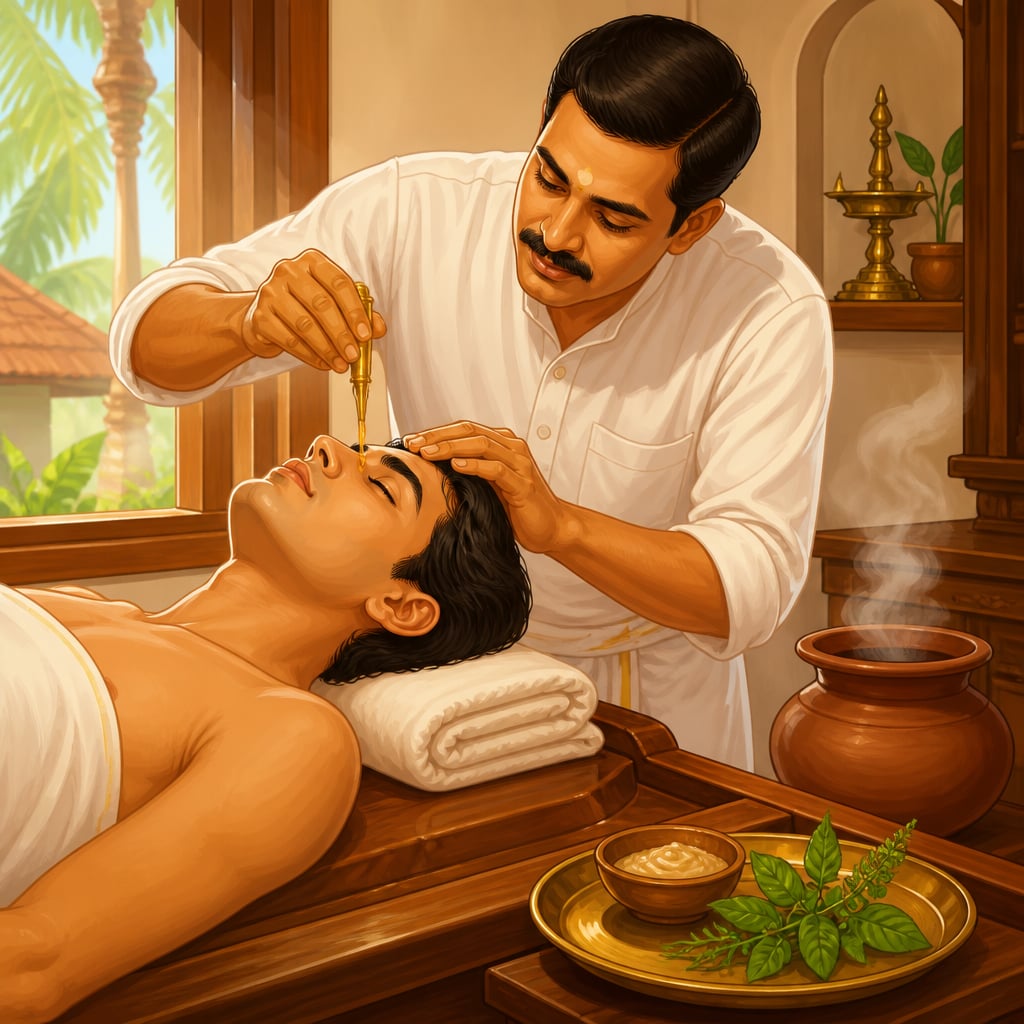
Traditional nasya therapy session

The Nose as Gateway: Traditional Understanding

Āyurvedic and yogic traditions understood the nose not merely as an air filter or smell receptor, but as the direct gateway to consciousness itself. The texts are explicit: "Nāsā hi śirasō dvāram", the nose is the door to the head. This wasn't anatomical naivety but sophisticated observation. The nasal passages connect to regions that modern neuroscience now recognizes as crucial for cognitive function, emotional regulation, and even immune response.

The traditional practice of nasya encompasses far more than the water-based cleansing that modern neti pots provide. Classical texts describe multiple categories: pratimarśa nasya (daily preventive application of small amounts of oil), marśa nasya (therapeutic administration of larger quantities), dhūma nasya (medicated smoke inhalation), and avapīḍa nasya (fresh juice application). The neti pot practice, jala neti, was actually classified as a śodhana kriya in Haṭha Yoga, a purification action meant to prepare the body for prāṇāyāma practice. It was never the entirety of nasal care.

From Sacred Practice to Pharmacy Staple

A modern American pharmacy aisle dedicated to sinus care

The neti pot's journey to mainstream Western acceptance began in the 1970s with yoga's growing popularity, accelerated through the 1990s natural health movement, and achieved true commercial breakthrough when a major pharmaceutical company introduced a squeeze-bottle version in the early 2000s. By 2007, neti pots were being featured on daytime television, endorsed by celebrity doctors, and flying off pharmacy shelves.

What arrived on those shelves, however, was a ghost of the original practice. The traditional ceramic or copper vessels, shaped to direct water flow precisely, became plastic containers in 'fun' colors. The careful protocol of water temperature, salt quality, and timing disappeared into generic instructions: "Use as needed." The prerequisite training, traditionally, one learned from a teacher who assessed individual constitution and condition, vanished entirely. Anyone could buy a pot and start pouring water through their nose.

Most significantly, the understanding of why the practice worked was replaced with mechanical explanation. Traditional texts spoke of clearing kapha accumulation, balancing prāṇa vāyu, and preparing the mind for higher practices. Modern marketing speaks of "flushing out mucus" and "moisturizing nasal passages." Both descriptions have validity, but one understands the practice as part of an integrated system of health; the other treats it as isolated plumbing maintenance.

The Prāṇa Pathway: What Modern Users Miss

The nose, in yogic understanding, is the primary entry point for prāṇa, the vital force that animates all living things. This isn't mystical speculation but observable reality: breathing affects consciousness. Anyone who has noticed how deep breathing calms anxiety or how nasal congestion affects mental clarity has experienced this connection.

Traditional nasya therapy works with this understanding. When medicated oils are applied to the nasal passages, they're not simply "moisturizing" but delivering specific therapeutic substances to regions that affect neurological function. The oils used, anu taila being the most famous, contain herbs processed in sesame oil base, each chosen for specific effects on the mind and nervous system.

This is why traditional nasya was administered with the patient lying down, head tilted back, often after facial massage and steam application. The position and preparation ensured the medicated substances reached the targeted areas. The modern practice of standing over a sink, squirting saline solution, achieves only the most superficial cleansing effect.

When Simplification Becomes Dangerous

The consequences of stripping traditional practice of its protocols became tragically apparent in 2011 and 2012 when two deaths in Louisiana were attributed to brain-eating amoeba infections from neti pot use. The victims had used tap water rather than distilled or properly boiled water, a mistake traditional practitioners would never make, because the texts are explicit about water quality and preparation.

The traditional protocol requires water to be boiled and cooled, or otherwise purified. The temperature must be specific, neither too hot nor too cold. Salt, when used, should be of proper quality and proportion. These weren't arbitrary rules but accumulated wisdom from centuries of practice. When the practice was commercialized, the "rules" became suggestions printed in small font on packaging that most users never read.

Beyond acute dangers, there are subtler risks that traditional practitioners understood but modern users often ignore. Jala neti should not be performed during acute respiratory infections, in certain weather conditions, immediately before going outside, or when the nasal passages are already irritated. The practice is contraindicated for certain constitutional types and medical conditions. Yet modern marketing presents it as universally beneficial, "natural" and therefore safe for everyone.

What Traditional Nasya Actually Involves

A proper Āyurvedic nasya treatment bears little resemblance to the bathroom sink ritual of modern neti pot users. The process begins with facial massage using warm oil, stimulating the marma points (vital energy centers) around the face and head. Steam is applied, often infused with herbs, to open the channels and prepare the tissues.

The patient lies supine with the head slightly tilted back. The practitioner administers precise quantities of medicated oil, the specific formulation chosen based on the patient's constitution, current condition, season, and therapeutic goals. The oil is gently massaged into the nasal passages while the patient breathes slowly and deliberately.

After administration, the patient remains reclined while the practitioner performs gentle massage of the face, shoulders, and soles of the feet. The patient then sits up slowly, allows excess material to drain, and performs gentle gargling with warm water. The entire process takes 30-45 minutes and is typically performed as part of a larger therapeutic protocol, not as an isolated daily habit.

The Oils That Matter

Traditional preparation of anu taila in a Kerala Ayurvedic kitchen

Anu taila, the classical preparation for nasya, contains over a dozen herbs processed through an elaborate traditional method. The herbs include bilva, bṛhatī, śyonāka, jīvantī, devadāru, and others, each contributing specific therapeutic properties. The preparation process itself takes days and requires precise technique.

Compare this to the saline packets sold at pharmacies: sodium chloride, sometimes sodium bicarbonate, occasionally a preservative. The difference isn't just in complexity but in therapeutic intention. Saline rinses clear mucus; traditional nasya preparations treat conditions ranging from headaches to memory problems to emotional disorders.

This doesn't mean saline rinsing has no value, it clearly does, as both traditional recognition and modern research confirm. But presenting saline rinsing as "the" traditional nasal therapy is like presenting aspirin as "the" traditional herbal medicine. It's one simple application stripped from a rich therapeutic system.

ENT Medicine Catches Up

In an ironic turn, Western medicine has spent the past two decades "discovering" the benefits of nasal irrigation that Āyurveda documented millennia ago. Research now confirms that regular nasal irrigation reduces sinus infections, improves symptoms in chronic sinusitis, reduces allergy symptoms, and may even help prevent respiratory infections.

More interesting are emerging studies on nasally-administered medications for neurological and psychiatric conditions. Researchers have found that certain substances, when delivered through the nose, can bypass the blood-brain barrier and directly affect brain function. This "nose-to-brain" pathway is precisely what traditional texts described when they called the nose the "door to the head."

The traditional practice, it turns out, wasn't confused about anatomy. It understood something that took modern science considerable time and technology to verify: the nose is indeed a gateway to the brain, and what we put through that gateway matters profoundly.

Reclaiming Intelligent Practice

The path forward isn't to abandon the accessible neti pot entirely, accessibility has value. But intelligent practice requires understanding what has been lost and consciously reclaiming it where possible.

First, understand that saline rinsing is one technique within a larger system, not the entirety of nasal care. It's useful for certain purposes, clearing congestion, reducing allergens, but isn't a comprehensive approach to nasal health.

Second, respect the protocols. Use properly purified water. Ensure appropriate temperature. Don't practice when contraindicated. These rules exist because generations of practitioners learned, sometimes through adverse outcomes, what works safely.

Third, consider the broader practice. The traditional preparation, facial massage, steam, proper positioning, isn't elaborate ritual for its own sake. These steps enhance effectiveness and safety. Even if you can't do everything traditionally, doing more than the minimum helps.

Finally, if you have specific conditions you're hoping to address, consult practitioners trained in traditional methods. The pharmacy neti pot is to Āyurvedic nasya what a bandage is to surgery, useful for minor issues, insufficient for serious conditions, potentially harmful if substituted where real treatment is needed.

The nose remains what it always was: a gateway. Modern commerce has provided a key that opens the outer door. Traditional wisdom knows the passages beyond.

Key figures

Vāgbhaṭa

7th century CE

Svātmārāma

15th century CE

Dr. David Frawley (Vāmadeva Śāstrī)

1950-present

Case studies

From Sacred Practice to CVS Shelf: The Neti Pot's Journey

In 2007, the neti pot achieved something rare for an ancient practice: mainstream American visibility. Featured on the Oprah show and endorsed by Dr. Mehmet Oz, the small teapot-shaped vessel suddenly appeared in pharmacies nationwide. Sales surged. A practice that had traveled from ancient India through centuries of yogic tradition had arrived, quite literally, on the shelves of CVS. But what exactly had arrived? The journey began in traditional contexts where jala neti (water cleansing) was one of six purification practices in Haṭha Yoga. It was taught by experienced teachers to students who had already developed a foundation of practice. The procedure included specific water preparation, precise technique, and integration with other practices - particularly prāṇāyāma, for which neti was considered essential preparation. The first wave of Western adoption came through yoga centers in the 1970s. Here, some context remained. Teachers explained the practice's purpose, demonstrated technique, and addressed individual considerations. Students learned when to practice, when to avoid it, and how to integrate it with their broader yoga work. The commercialization phase changed everything. Pharmaceutical companies saw a market opportunity. The traditional ceramic or copper vessels became injection-molded plastic in cheerful colors. The preparation protocols became simple instructions: fill with saline, tilt head, pour. The spiritual and therapeutic context disappeared entirely. The product that reached CVS shelves was technically recognizable as neti - same basic action of running water through the nasal passages - but stripped of nearly everything that made it effective medicine or meaningful practice. Gone was the assessment of individual constitution. Gone was the integration with broader health protocols. Gone were the contraindications, the timing considerations, the preparation requirements. Most significantly, gone was the understanding of why the practice works. Traditional texts described neti as preparing the subtle energy channels for prāṇa flow, cleansing accumulated kapha, and enabling 'divine sight' through purification. The pharmacy version promised to 'flush out mucus' and 'relieve congestion.' Both descriptions have validity, but one sees the body as an integrated system of physical and subtle energies; the other sees sinuses as clogged pipes. The consequences of this transformation became visible in several ways. First, the tragic amoeba cases - deaths that occurred because users substituted tap water for properly purified water, violating a basic traditional protocol. Second, the epidemic of overuse - people practicing multiple times daily, irritating nasal tissues, disrupting natural mucus production. Third, the missed therapeutic opportunity - millions of people using a simplified version while remaining unaware of the richer practice it came from. The neti pot's journey illustrates a pattern repeated across traditional practices entering modern markets: accessibility increases dramatically while depth decreases proportionally. More people gain access to something, but what they access is a shadow of the original. The path forward isn't to return neti pots to exclusive yoga ashrams - accessibility has genuine value. Rather, it's to restore context alongside the product. The same pharmacy shelf that holds plastic neti pots could hold accurate information about traditional protocols. Users could be directed to resources that explain the practice's deeper dimensions. The product could serve as an entry point rather than an endpoint. Instead, the current market treats neti as a finished product rather than a gateway to deeper understanding. The ancient door to the head has been replaced with a plastic squeeze bottle.

The Hatha Yoga Pradipika describes Jala Neti as one of the six Shatkarmas (purification practices), specifically prescribed as preparation for pranayama. The practice was taught in the context of a complete sadhana (spiritual practice) with specific guidelines for water preparation, technique, and integration with other practices.

Outcome not available.

Accessibility without context creates risks that traditional protocols prevented Commercial success doesn't equal therapeutic effectiveness The simplest version of a practice may lose its essential components

Neti pots are now sold at every major pharmacy chain in America, but two contamination deaths in 2011 from tap water use highlighted what happens when traditional protocols (which specified boiled or purified water) are stripped from commercialized products. The safety framework was ancient; the negligence was modern.

The nasal irrigation market reached $534 million in 2023. A 2021 Cochrane review of 11 RCTs found that saline nasal irrigation reduced sinusitis symptoms by 36% and antibiotic use by 28%, but noted that proper technique training was rarely included in commercial products.

Historical context

1500 BCE - Present (Classical codification 500 BCE - 700 CE, Western commercialization 1990s - present)

Living traditions

Reflection

More in Śodhana: From Sacred Purification to Detox Culture

All lessons in Śodhana: From Sacred Purification to Detox Culture · Indian Wellness Traditions: Modern Connections course