Basti: The Therapy Too Powerful to Commercialize
Why the 'king of Pañcakarma' refused to become a spa treatment
Discover why Basti, considered 'half of all treatment' in Āyurveda, remains in clinical settings while other therapies were commercialized. Learn what makes this therapy so powerful that it requires professional supervision, and why some practices should NOT be made accessible to everyone.
The Therapy Without a Spa Menu
Walk into any wellness spa in Los Angeles, London, or Dubai. Browse the 'Ayurvedic' offerings: Abhyaṅga massage, Śirodhārā (warm oil on forehead), Udvartana (herbal scrub), perhaps even a 'Pañcakarma Package.' What you will not find, anywhere, is Basti.
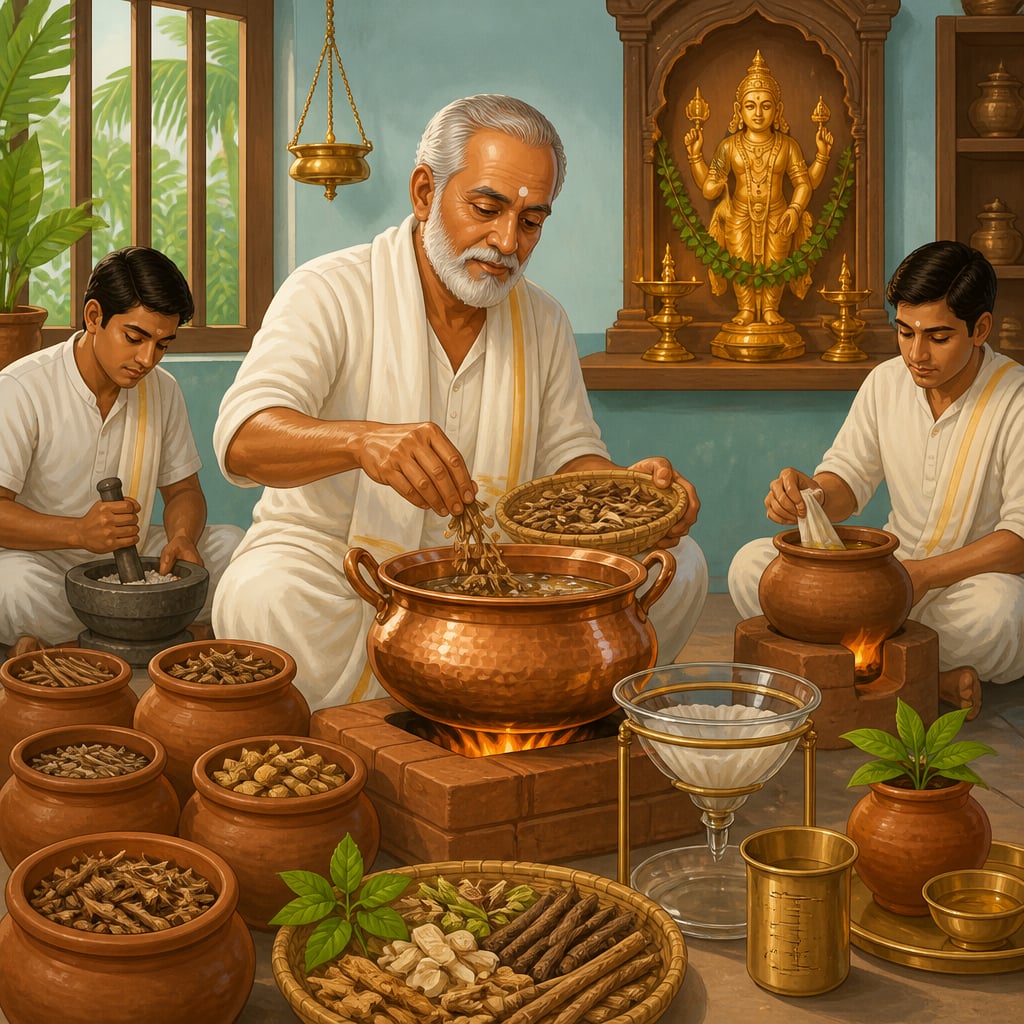
This is not an oversight. Basti, medicated enema therapy, is considered the single most powerful treatment in classical Āyurveda. Caraka calls it 'ardha cikitsā', half of all treatment. The Aṣṭāṅga Hṛdaya declares that Basti alone can accomplish what all other therapies combined cannot. It's the cornerstone of Pañcakarma, the therapy that addresses the deepest imbalances, the treatment serious practitioners consider most essential.
And yet, while massage became luxury spa service, while oil pulling went viral on TikTok, while even Pañcakarma became a weekend retreat package, Basti remained where it started: in clinical settings, administered by trained practitioners, unavailable for casual purchase.
This isn't a failure of marketing. It's a success of wisdom. Some therapies are too powerful to commercialize. Some practices should not be made accessible to everyone. And understanding why reveals something important about the difference between wellness entertainment and actual medicine.
Why Basti Is Called the King
The classical texts don't exaggerate when they call Basti the most important therapy. Here's why:
Vāta Is the Root: In Āyurvedic pathology, Vāta doṣa underlies the majority of diseases. The texts enumerate 80+ Vāta-dominant disorders, everything from arthritis to anxiety, constipation to certain types of infertility, neurological conditions to chronic pain. Pitta and Kapha disorders are said to number far fewer. Address Vāta effectively, and you address the majority of chronic conditions.
The Colon Is Vāta's Seat: The large intestine is considered Vāta's primary location. This is where Vāta accumulates, becomes vitiated, and spreads to cause disease elsewhere. Basti delivers treatment directly to Vāta's home territory.
Medicinal Absorption: Unlike oral medicines that pass through digestive processing, substances administered rectally enter the bloodstream more directly. The medicated oils and decoctions used in Basti deliver therapeutic compounds efficiently, hence the remarkable effects reported for conditions seemingly unrelated to the colon.
Comprehensive Formulation: A single Basti can contain dozens of herbal ingredients, oils, honey, rock salt, and other substances, a complex formulation that would be impractical to deliver orally. This therapeutic complexity is part of Basti's power.
The result: conditions that don't respond to other treatments often respond to Basti. Chronic arthritis, neurological disorders, certain types of infertility, intractable constipation, even some psychiatric conditions, traditional practitioners report successes where other approaches failed.
The Two Primary Types
Classical texts describe dozens of Basti variations, but two main categories cover most therapeutic applications:
Nirūha Basti (निरूह बस्ति), Decoction Enema
Also called Āsthāpana Basti. Uses a decoction (kashāya) base, water-extracted herbal preparations. The formulation includes honey, rock salt, medicated oils, herbal paste, and the main decoction. Volume is larger (typically 400-800ml). It's evacuative, it cleanses and is expelled. Primarily used for eliminating accumulated doṣas and treating specific conditions. Duration in the body: short (expelled within 30-60 minutes).
Anuvāsana Basti (अनुवासन बस्ति), Oil Enema
Uses medicated oil as the primary substance. Smaller volume (typically 50-100ml). It's nourishing, meant to be retained and absorbed, not expelled immediately. Primarily used for strengthening, lubricating, and nourishing the tissues. Duration in the body: longer (retained for hours or overnight).
A complete Basti protocol typically alternates these types, nirūha for cleansing, anuvāsana for nourishing, in specific sequences lasting from 8 to 30 days depending on the condition. The famous 'Yoga Basti' uses 8 treatments over 8 days; 'Karma Basti' uses 30 treatments over 30 days.
This is not a one-time procedure. This is not a spa afternoon. This is medical treatment requiring diagnosis, formulation, sequencing, and supervision.
Why It Resisted Commercialization
Other Āyurvedic therapies were easily commercialized. Why not Basti? Several factors:
Technical Complexity: Basti formulations require precise preparation. A single nirūha basti might include 15+ ingredients in specific proportions, prepared in a specific sequence. The herbs must be properly identified, processed, and combined. This isn't something you can package for mass market.
Diagnostic Requirement: Choosing the right Basti type and formulation requires diagnosis, understanding the patient's constitution, current imbalance, strength, digestive capacity, and specific condition. One-size-fits-all doesn't work. A Basti appropriate for one person could harm another.
Supervision Needs: Basti done incorrectly can cause perforation of the intestinal wall, electrolyte imbalances, dangerous reactions, or dependency. The procedure requires monitoring during and after administration. You can't just hand someone a kit and say 'good luck.'
Sequential Protocol: Effective Basti treatment involves multiple sessions over days or weeks, often alternating different types. This doesn't fit the spa model of one-time indulgence. It requires commitment, follow-through, and ongoing clinical relationship.
Uncomfortable Reality: Let's be honest, enema therapy doesn't have the aesthetic appeal of massage or forehead oil dripping. It's not Instagram content. It doesn't fit the luxury wellness narrative. The procedure is intimate, sometimes messy, and definitely not glamorous.
These factors combined to keep Basti where it belongs: in clinical settings, administered by qualified practitioners, for patients who actually need it.
The Wisdom of Not Commercializing
Here's the contrarian teaching: some therapies SHOULD be difficult to access.
Modern wellness culture assumes that accessibility is always good, that any barrier between consumer and practice is an obstacle to overcome. If massage is good, everyone should be able to get massage. If prāṇāyāma is beneficial, everyone should practice prāṇāyāma. If Āyurveda works, Āyurveda should be available at every spa.
But the tradition understood something different: therapeutic power and risk correlate. The most powerful therapies are also the most dangerous when misused. Basti that heals arthritis can perforate a bowel. Pañcakarma that reverses chronic disease can destabilize someone who didn't need it. The very potency that makes these treatments effective makes them harmful in the wrong hands.
The 'difficulty' of accessing authentic Basti isn't a bug, it's a feature. The requirement for diagnosis ensures the therapy is appropriate. The need for trained administration ensures it's done correctly. The clinical setting provides supervision if something goes wrong.
When we strip away these 'barriers' in the name of accessibility, we don't democratize healing, we create hazards. DIY Pañcakarma protocols sold online, colonics offered at day spas, home enema kits marketed as 'Ayurvedic', these represent the commercialization of form without the preservation of safety.
Basti's resistance to commercialization is a model of appropriate gatekeeping. Not everything should be accessible to everyone. Some things require expertise. Some therapies need supervision. Some practices are too powerful to trust to the market.
What Modern 'Colonics' Get Wrong

Colon hydrotherapy (colonics) exists as a commercial service in many countries. People often assume it's similar to Basti. It's not.
What Colonics Do: Flush the colon with plain or lightly treated water under gentle pressure. The goal is mechanical cleansing, removing accumulated waste material.
What Basti Does: Deliver specific medicated substances to the colon for therapeutic purposes beyond cleansing. The formulation addresses the specific condition. The effect is not just mechanical but pharmaceutical.
What's Lost:
Medicinal Action: A nirūha Basti might contain dashmoola (ten roots for Vāta), bala (strengthening), medicated oils, honey, rock salt, and specific herbal paste. Each ingredient serves a therapeutic purpose. Plain water has none of this.
Constitutional Consideration: Traditional Basti is prescribed based on individual diagnosis. Colonics are offered to anyone who walks in. What benefits a Kapha constitution may harm a Vāta constitution.
Nourishing Dimension: Anuvāsana (oil) Basti nourishes the tissues with medicated oils meant to be absorbed. Colonics offer only removal, not restoration.
Integrated Protocol: Traditional Basti occurs within a larger treatment context, preparation, administration, follow-up, diet, lifestyle. Colonics are typically standalone procedures.
This isn't to say colonics have no value, simple cleansing has its uses. But calling colonics 'Ayurvedic' or equivalent to Basti misrepresents both practices. The therapeutic depth of traditional Basti has no commercial equivalent.
Integration with Pañcakarma
Basti doesn't exist as an isolated procedure, it's embedded in the Pañcakarma system.
Preparation (Pūrvakarma): Before Basti, the patient typically undergoes snehana (oleation) and svedana (sweating) for several days. This preparation loosens toxins and prepares the body to receive treatment.
Main Procedure (Pradhāna Karma): Basti is administered according to the chosen protocol, often in multi-day sequences alternating nirūha and anuvāsana.
Follow-up (Pascātkarma): After Basti, specific dietary and lifestyle guidelines support the treatment effects and prevent recurrence.
Extracting Basti from this context, offering it as a standalone procedure, reduces effectiveness and increases risk. The tradition developed integrated protocols because integration works better than isolation.
This is another reason Basti resisted commercialization: it doesn't work well as a standalone service. You can't offer 'Basti Day Spa Experience' because the experience requires weeks, not hours.
Respecting Traditional Expertise

Authentic Basti administration requires skills developed through years of training:
Diagnostic Ability: Determining which patients are appropriate candidates. Not everyone should receive Basti. Contraindications include pregnancy, certain digestive conditions, extreme debility, and other factors that require clinical assessment.
Formulation Knowledge: Selecting and preparing the appropriate herbal combination. Classical texts describe dozens of Basti formulations for different conditions. The practitioner must know which to use, how to prepare it, and how to adjust for individual needs.
Administration Technique: Proper administration includes positioning, temperature, speed of introduction, and timing. Incorrect technique can cause harm.
Monitoring Capacity: Recognizing signs of proper effect versus adverse reaction. Knowing when to continue, modify, or stop treatment.
These skills don't come from weekend workshops. They develop through traditional education, typically 5+ years of formal Āyurvedic training followed by clinical apprenticeship. When we 'democratize' access to powerful therapies while bypassing this expertise, we don't empower consumers, we endanger them.
The appropriate response to learning about Basti isn't 'How can I do this at home?' It's 'How can I find a qualified practitioner if I ever need this?'
The Deeper Teaching
Basti's story offers a countercultural message: not everything should be accessible, commercialized, or democratized.
Wellness culture celebrates removing barriers. Make it available. Make it affordable. Make it DIY. Bring it to the masses. This narrative assumes that more access equals more benefit, that the only problem with powerful therapies is that not enough people can get them.
Basti challenges this assumption. Here's a therapy of extraordinary power that the tradition deliberately kept difficult to access, not out of elitism but out of recognition that power without expertise is danger. The 'barriers' to Basti, the need for diagnosis, the requirement for trained administration, the clinical setting, are protective, not punitive.
In an age when everything is being democratized and commercialized, Basti stands as a reminder: some things are too important to make easy.
The king of Pañcakarma refused to become a spa treatment. And in that refusal lies wisdom the wellness industry would do well to heed.
Not everything ancient should be modernized. Not everything powerful should be accessible. Not everything therapeutic should be commercialized.
Some things should stay exactly where they are: in the hands of those trained to wield them safely.
Modern wellness culture assumes accessibility is always good, that barriers between consumer and practice are obstacles to overcome. Basti teaches otherwise: therapeutic power and risk correlate. The most effective treatments are often the most dangerous when misused. The 'barriers' to authentic Basti, diagnosis, qualified administration, clinical supervision, are protective, not punitive. Some things should not be DIY.
When considering any traditional therapy, ask: What expertise does this actually require? Weekend workshops and online certifications cannot replicate years of clinical training. A practitioner offering Basti should have substantial Āyurvedic education and clinical experience, not just massage training with an 'Ayurvedic' add-on.
Key figures
Caraka
Compiler of the Caraka Saṃhitā, which devotes an entire section (Siddhisthāna) to Basti therapy and famously declares it 'ardha cikitsā', half of all treatment.
The Caraka Saṃhitā's Siddhisthāna provides comprehensive Basti protocols including the classification of nirūha and anuvāsana, specific formulations for different conditions, and the famous 'Yoga Basti' (8-day) and 'Karma Basti' (30-day) sequences.
Vāgbhaṭa
Author of the Aṣṭāṅga Hṛdaya, which dedicates Chapter 19 entirely to Basti and declares it 'sarva-doṣa-ghnam', destroyer of all doṣas.
The Aṣṭāṅga Hṛdaya organizes Basti knowledge clearly, distinguishing types, formulations, indications, and contraindications. Vāgbhaṭa's statement that Basti 'alone removes all diseases' reinforced its supreme therapeutic position.
Suśruta
Author of the Suśruta Saṃhitā, which provides the physiological rationale for Basti's power: the large intestine as Vāta's seat, explaining why rectal administration can affect systemic conditions.
The Suśruta Saṃhitā's explanation of pakvāśaya (large intestine) as Vāta's seat provides the rationale for Basti's remarkable scope. This physiological understanding helps practitioners recognize which conditions may respond to Basti therapy.
Case studies
Why No Spa Offers 'Basti Day Package'
**At Kerala's Kottakkal Arya Vaidya Sala**: Rajesh, 52, arrives with rheumatoid arthritis that hasn't responded to conventional treatment. The vaidya examines him thoroughly - constitution, current imbalance, digestive strength, disease progression. Diagnosis: Vāta-dominant condition suitable for Basti therapy. The prescription: Karma Basti - a 30-day protocol alternating nirūha (decoction) and anuvāsana (oil) treatments. Formulations are prepared daily in the hospital pharmacy: dashmoola kashāya for the decoctions, bala taila for the oils, each adjusted based on Rajesh's response. Days 1-7: Preparation with snehana and svedana. Days 8-37: Daily Basti administration with clinical monitoring. Days 38-44: Recovery phase with specific diet and rasāyana (rejuvenation) treatments. Total time: 6 weeks away from normal life. Total cost: ₹2,50,000 ($3,000). Total comfort: minimal - the treatments are demanding. Three months later: significant reduction in joint inflammation, improved mobility, reduced pain medication. **Meanwhile, at any commercial spa**: No such offering exists. Why? - **Diagnostic requirement**: You can't prescribe Basti without clinical assessment. Spas don't diagnose. - **Formulation complexity**: Each Basti requires specific herbal preparation. Spas don't have pharmacies. - **Duration**: A 30-day protocol doesn't fit the spa model. Spas offer hours, not months. - **Supervision needs**: Complications require medical response. Spas aren't clinics. - **Risk profile**: Basti done wrong can cause perforation. Spas can't accept that liability. - **Aesthetic mismatch**: Enema therapy doesn't photograph well. Spas sell luxury image.
Charaka Samhita (Siddhi Sthana) describes 700+ formulations specifically for Panchakarma procedures, each customized by dosha, disease, patient strength, and season. The text's emphasis on individualized treatment protocols aligns with modern precision medicine's goal of tailoring interventions to the individual patient.
When other therapies were commercialized, they were necessarily simplified, abbreviated, and stripped of their therapeutic depth. Basti's resistance to this process preserved its power. Patients with chronic conditions who need real treatment, not spa relaxation, can still access authentic Basti at traditional institutions - precisely because it wasn't made commercially accessible.
Every factor that made Basti resistant to commercialization is actually a feature of its therapeutic design. The complexity ensures proper formulation. The duration ensures adequate treatment. The supervision ensures safety. The clinical setting ensures appropriate response to complications. These 'barriers' are why Basti works - and why it hasn't been diluted into wellness entertainment.
Basti remains largely unknown outside traditional Ayurvedic practice precisely because its complexity resists simplification for mass markets. In a wellness landscape flooded with oversimplified adaptations, Basti's commercial resistance is actually a quality signal indicating that some therapies require clinical expertise that cannot be packaged into consumer products.
A 2021 systematic review in the Journal of Clinical Medicine analyzed 37 clinical trials on Panchakarma and found significant improvements in rheumatoid arthritis (40% symptom reduction), metabolic syndrome (28% improvement), and chronic pain (35% reduction).
Historical context
Classical Āyurveda to Present (c. 600 BCE - Present)
Living traditions
Basti remains primarily in clinical settings, Āyurvedic hospitals, qualified vaidya practices, and teaching institutions. While colon hydrotherapy (colonics) became commercially available in the West, authentic Basti with its medicated formulations and comprehensive protocols stayed within traditional medicine. This preservation-through-restriction means that patients who need genuine Basti therapy can still access it in its powerful form at institutions maintaining classical standards. The therapy's refusal to be commercialized is, in this sense, its greatest modern success.
- Arya Vaidya Sala (AVS) Kottakkal: One of the premier institutions for authentic Basti therapy. AVS offers complete Pañcakarma protocols including various Basti sequences (Yoga Basti, Karma Basti) administered by trained vaidyas with proper diagnosis and supervision. Formulations are prepared in their own pharmacy from quality-controlled herbs.
- Kottakkal Arya Vaidya Shala Hospital: The hospital wing of AVS provides Basti as medical treatment for chronic conditions. Patients undergo full diagnostic workup before treatment. The clinical setting ensures proper monitoring and response to any complications, the safety infrastructure that makes powerful therapy responsible.
- Government Āyurvedic Medical Colleges: Government Āyurvedic colleges with attached hospitals offer Basti therapy at subsidized rates. These institutions train future vaidyas and provide authentic treatment within a teaching-hospital model. Quality varies by institution, but the best represent Basti practice as it has been transmitted for generations.
Reflection
- Have you ever assumed that 'accessibility' is always beneficial? Can you think of contexts, medical, spiritual, or otherwise, where restricting access might actually protect people rather than exclude them?
- Basti is called 'half of all treatment' yet remains unavailable at wellness spas. What does this suggest about the relationship between therapeutic power and commercial viability?
- The tradition kept Basti within clinical settings while massage and oil treatments became spa services. What principles might guide decisions about which practices should remain restricted and which can be democratized?