Philosophy & Dharma: The Moral Framework

Righteousness in War, Wisdom in Governance

Nagabhata I's actions were guided by dharmic principles drawn from ancient texts, philosophical traditions, and kshatriya duty. His moral framework addressed profound questions: When is warfare righteous? How does a defender maintain ethical conduct? What obligations does power create? Understanding his philosophical foundation illuminates both his decisions and the larger questions leaders face when violence becomes necessary for protection.

The Dharmic Dilemma

Nagabhata I faced questions that have troubled moral philosophers and leaders throughout history: Is violence ever righteous? Can warfare serve dharma? How does one fight enemies while maintaining ethical integrity? These weren't abstract philosophical questions but urgent practical concerns. His answers, drawn from Hindu philosophical traditions and kshatriya duty, shaped his approach to leadership and defense.

The Hindu tradition offered sophisticated frameworks for thinking about these questions. The Bhagavad Gita, set on the battlefield of Kurukshetra, directly addressed the warrior's moral dilemma. The dharmashastra texts outlined duties of rulers and warriors. The great epics, Ramayana and Mahabharata, provided narratives of righteous warfare and its complications. Nagabhata inherited these philosophical resources and applied them to the 8th century challenges he faced.

Kshatriya Dharma and Dharmayuddha
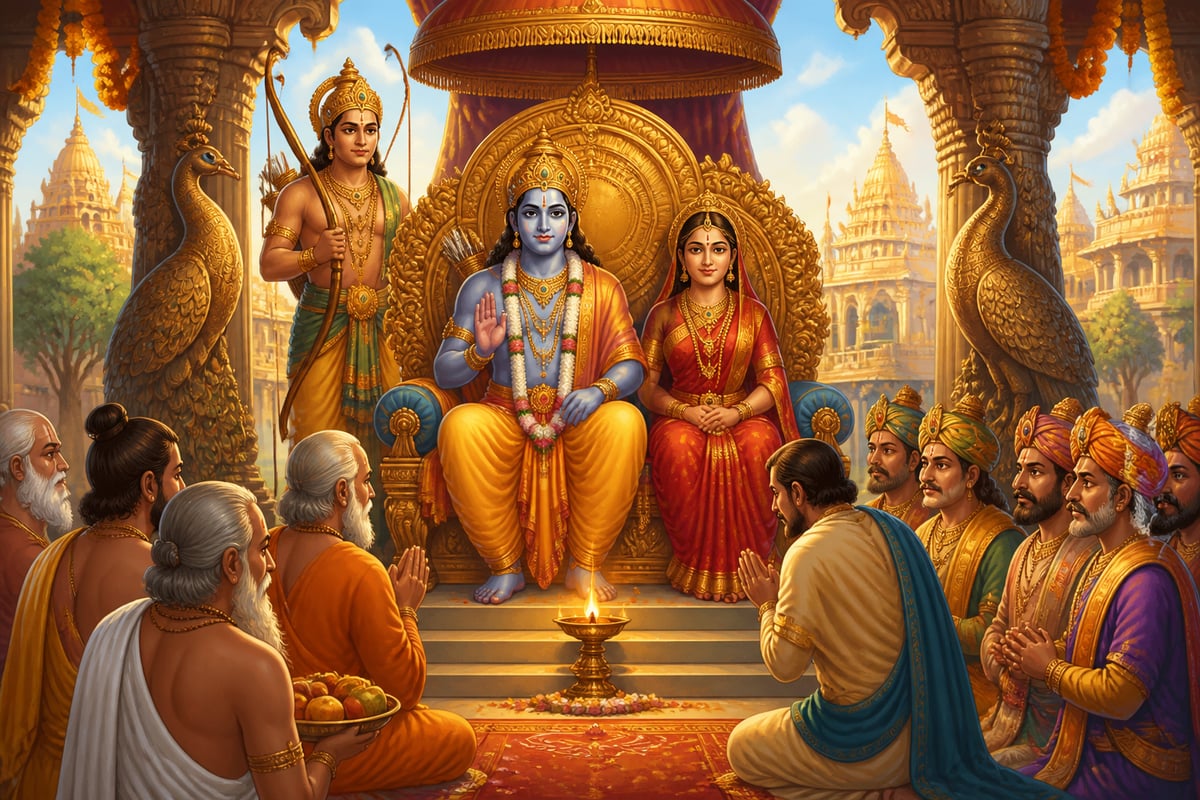
Lord Rama enthroned in dharmic kingship at Ayodhya

At the foundation of Nagabhata's worldview was the concept of kshatriya dharma, the warrior's sacred duty. According to Hindu social philosophy, different varnas had different dharmas. For kshatriyas, protecting society from threats was not merely a profession but a sacred obligation. Failure to fight when protection was needed was itself adharmic, a violation of duty. The Bhagavad Gita's core teaching addressed Arjuna's reluctance to fight: when violence is necessary for dharma's protection, refusing to act is cowardice, not compassion.

For Nagabhata, facing Arab invasion that threatened Hindu temples, traditional learning, and dharmic society, the duty to fight was clear. His title 'dharmarakṣaka' wasn't just political propaganda but a statement of his understanding of duty.
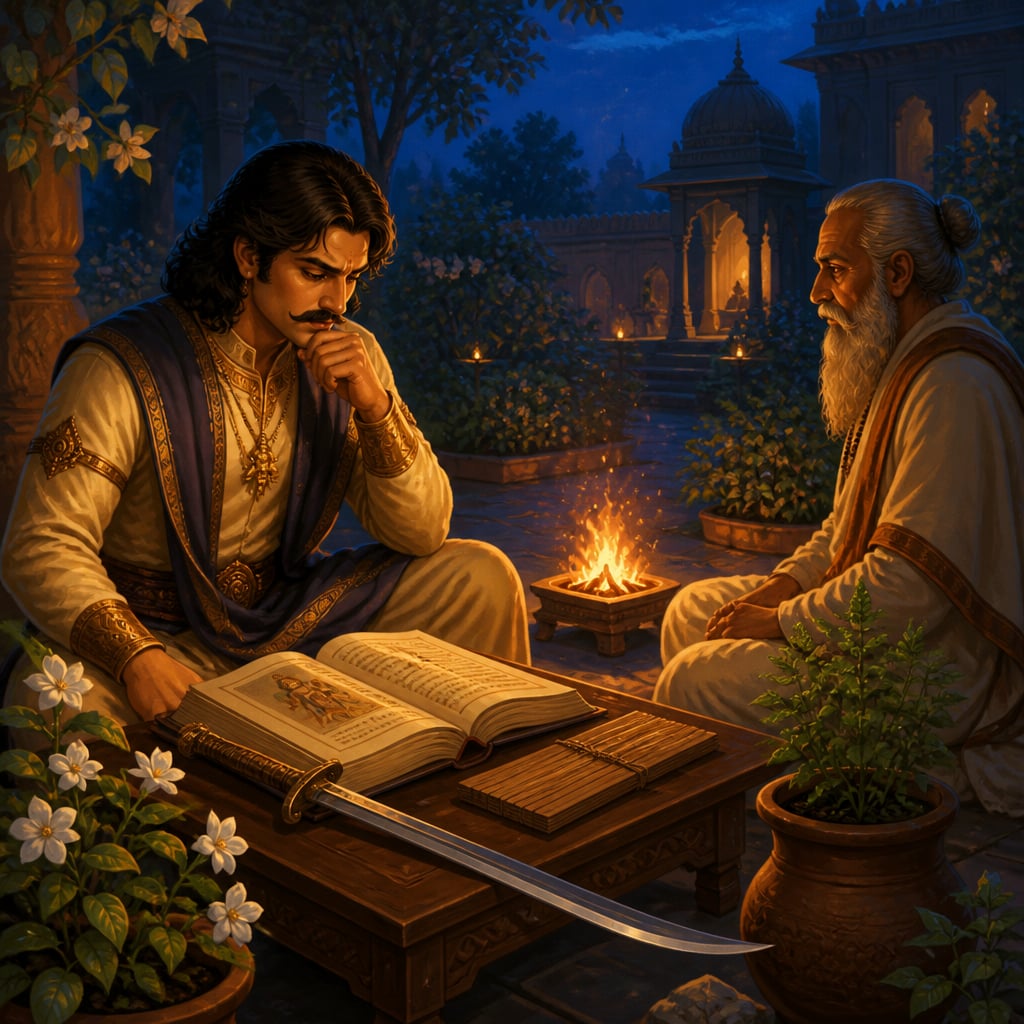
Nagabhata I in solitary dharmic deliberation by the council fire

Yet Hindu tradition didn't simply sanction all warfare, it distinguished between dharmayuddha (righteous war) and other forms of conflict. Dharmayuddha principles included: fighting only when necessary for protection; treating non-combatants humanely; respecting enemies who surrender; following rules of combat; and avoiding unnecessary destruction. The confederacy fought to repel invasion, not to conquer and enslave. Once Arab forces retreated to Sindh, the confederacy didn't pursue campaigns of revenge or conquest. The war's purpose was defensive, restore the status quo ante, not seize territory beyond what defense required.

Raja Dharma and Danda: The King's Obligations

Beyond warrior duty, Nagabhata bore the responsibilities of raja dharma, the king's dharma. The dharmashastra texts and Arthashastra outlined extensive obligations: protect subjects from external threats and internal disorder; administer justice fairly; support brahmins and religious institutions; maintain prosperity; rule according to dharmic principles rather than mere self-interest.

Nagabhata dispensing justice with the danda staff in his audience hall

Nagabhata's administration appears to have taken these obligations seriously. The inscriptional praise for his just rule (nyāya), his extensive religious patronage, his protection of merchant routes, and his alliance-building all reflect raja dharma principles. A king's legitimacy rested not just on power but on demonstrated fulfillment of dharmic obligations. This created accountability, a ruler who failed to protect subjects or ruled unjustly lost legitimacy.

Ancient Indian political philosophy also recognized the necessity of danda, the rod of punishment, governmental force necessary for maintaining order. The Arthashastra pragmatically acknowledged that dharma requires enforcement, that protection requires power. Yet danda required wise wielding. Too little and disorder prevailed; too much and rulership became tyranny. Nagabhata maintained sufficient military power to deter and defeat aggression, using force decisively when necessary. But his administration was praised for justice, and his alliances were maintained through partnership rather than domination. Power was wielded purposefully but not tyrannically.

The Question of Violence and Difficult Choices

The necessity of violence in defense posed genuine philosophical challenges. The Mahabharata explored the complications and moral costs of even righteous warfare. The great war was necessary, but it left the victors traumatized and the kingdom devastated. Nagabhata likely understood these complications. Warfare, even in defense, creates suffering, soldiers die, families lose fathers and sons, resources are consumed, and violence can corrupt those who employ it.

The dharmic tradition acknowledged these costs while maintaining that defensive violence was still necessary and, when properly conducted, righteous. The key was maintaining right intention and ethical conduct. Violence for protection, minimized and constrained by dharmic principles, was qualitatively different from violence for conquest or domination. Nagabhata's framing of his warfare as dharma protection rather than empire-building suggests awareness of these distinctions.

Leadership often involves tragic choices, situations where any decision involves some harm. Building the confederacy required kingdoms to subordinate autonomy to collective security. Mobilizing for war consumed resources. The dharmic framework provided guidance: prioritize protection of dharma and society; choose the path that serves the greater good; accept necessary suffering while minimizing unnecessary harm. Allied kings accepted cooperation's costs because conquest and cultural destruction was worse. The dharmic framing helped people understand sacrifice as necessary rather than arbitrary.

Moral Leadership and Its Limits

Philosophical frameworks matter little if leaders don't embody the principles they espouse. Nagabhata's personal conduct, his devotion to Vishnu, his support for brahmins and temples, his presence on the battlefield alongside his allies, demonstrated commitment to dharmic ideals. This moral authority strengthened his political authority. Leaders who violate proclaimed principles lose legitimacy. Nagabhata's long-term success suggests he maintained consistency between proclaimed principles and actual conduct.

Yet philosophical frameworks didn't resolve all dilemmas. The texts themselves contained tensions, the Gita's acceptance of warrior duty versus Buddhist emphasis on non-violence, Arthashastra's pragmatism versus dharmashastra's idealism. Nagabhata operated in a world where philosophical ideals met practical constraints. Perfect adherence to all dharmic principles was impossible, situations arose where different principles conflicted, where information was incomplete, where choices involved genuine moral complexity.

What distinguished dharmic leadership was not perfect moral clarity but the commitment to operating within a framework of moral principles, to seeking the dharmic path even amid complexity, and to accepting accountability for choices. Nagabhata's philosophical framework didn't eliminate difficult choices, but it provided orientation for making them.

The Enduring Questions

The philosophical questions Nagabhata confronted remain relevant. When is defensive violence necessary and righteous? How do leaders maintain moral integrity while wielding power? What obligations does strength create toward the weak? How can societies balance ideals with practical necessity? These aren't ancient questions but perennial ones, faced by every generation and every leader.

Nagabhata's responses, drawing on dharmic tradition, emphasizing duty over personal preference, maintaining ethical constraints even in warfare, wielding power for protection rather than domination, offer one framework for addressing these enduring dilemmas. Whether we accept his specific answers or not, the questions he grappled with remain urgent, and his thoughtful engagement with them demonstrates that power and philosophy, warfare and ethics, need not be opposites but can be integrated through conscious moral reflection.

Historical context

730-760 CE

The 8th century saw continued development of Hindu philosophical schools, Advaita Vedanta under Adi Shankara was emerging, dharmashastra texts were being elaborated, and political philosophy continued to be refined. The challenge of Arab invasion forced practical engagement with questions about righteous warfare, cultural defense, and the relationship between power and dharma. Nagabhata operated in an intellectually sophisticated context with deep philosophical resources to draw upon.

Living traditions

The philosophical questions Nagabhata grappled with remain relevant: When is defensive violence necessary and righteous? How do leaders maintain ethical integrity while wielding power? What constraints should limit the use of force? Modern democratic theory, just war doctrine, and leadership ethics continue to address these perennial questions. Nagabhata's integration of philosophical principles with practical leadership offers one model, rooted in a specific tradition but addressing universal dilemmas.

Reflection

More in Nagabhata I

All lessons in Nagabhata I · Lesser Known Guardians of Dharma course