Legacy of the Founder
What Dantidurga Made Possible
Dantidurga's brief reign established one of history's great empires. The dynasty he founded would rule for over two centuries, create architectural wonders, produce philosopher-kings, and be recognized as one of the four great powers of the medieval world. His legacy lies not just in what he did, but in what he made possible.
Measuring a Founder
How do we assess a dynasty's founder who reigned only three years? Dantidurga did not have time to build temples, compose literature, or demonstrate the full range of his capabilities. His reign was almost entirely consumed by the acts of conquest and consolidation.
Yet without him, none of what followed would have been possible. The Rashtrakuta empire lasted from 753 to 973 CE - over 220 years. Every achievement of that empire traces back to Dantidurga's initial act of foundation.
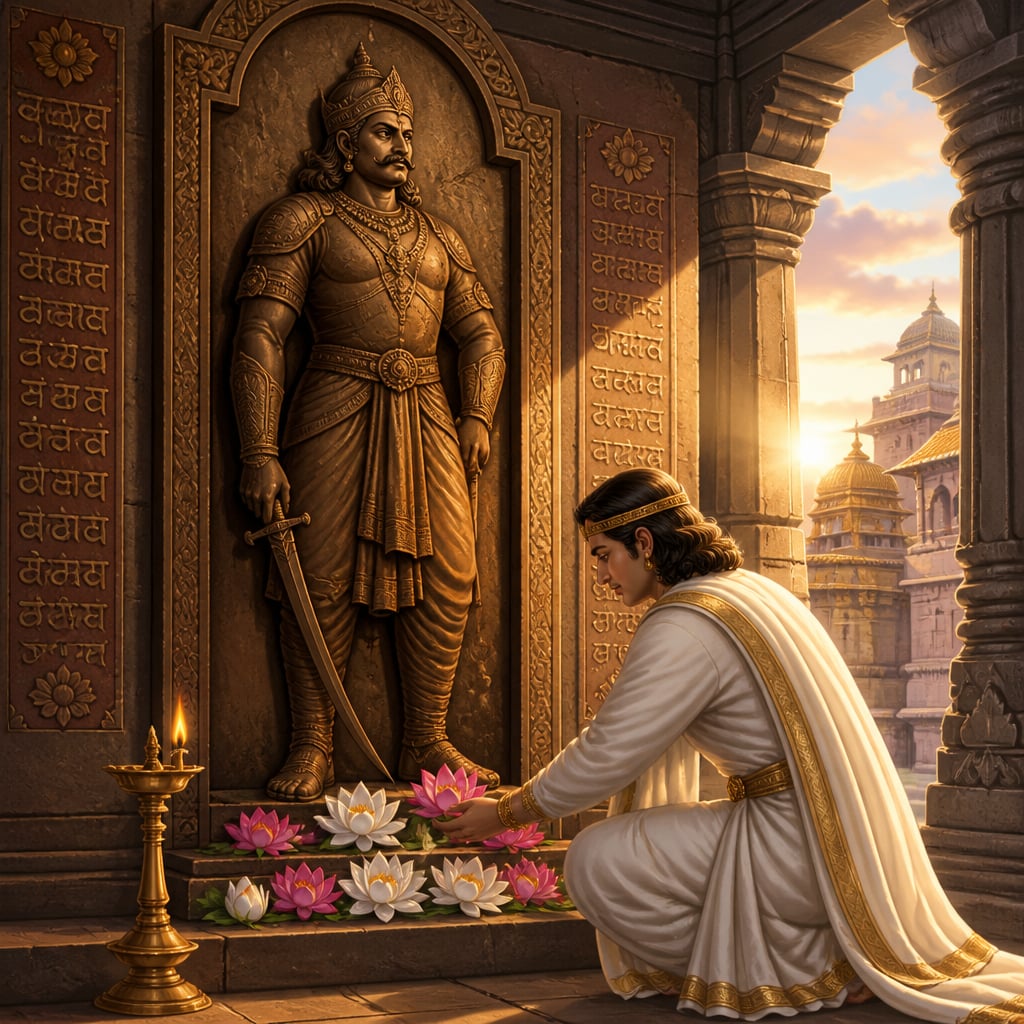
The Empire He Founded
At its peak under Govinda III (793-814 CE), the Rashtrakuta empire was:
- One of the four great empires of the medieval world, according to Arab geographers
- The paramount power in India, having humiliated both Pratiharas and Palas
- A center of culture and learning that attracted scholars from across Asia
- An economic powerhouse controlling major trade routes and ports
All this from the seed Dantidurga planted.
Architectural Legacy
The Rashtrakutas became master builders. Their achievements include:
The Kailasa Temple (Ellora, Cave 16): Begun by Krishna I, this temple carved from solid rock remains one of humanity's greatest architectural achievements.
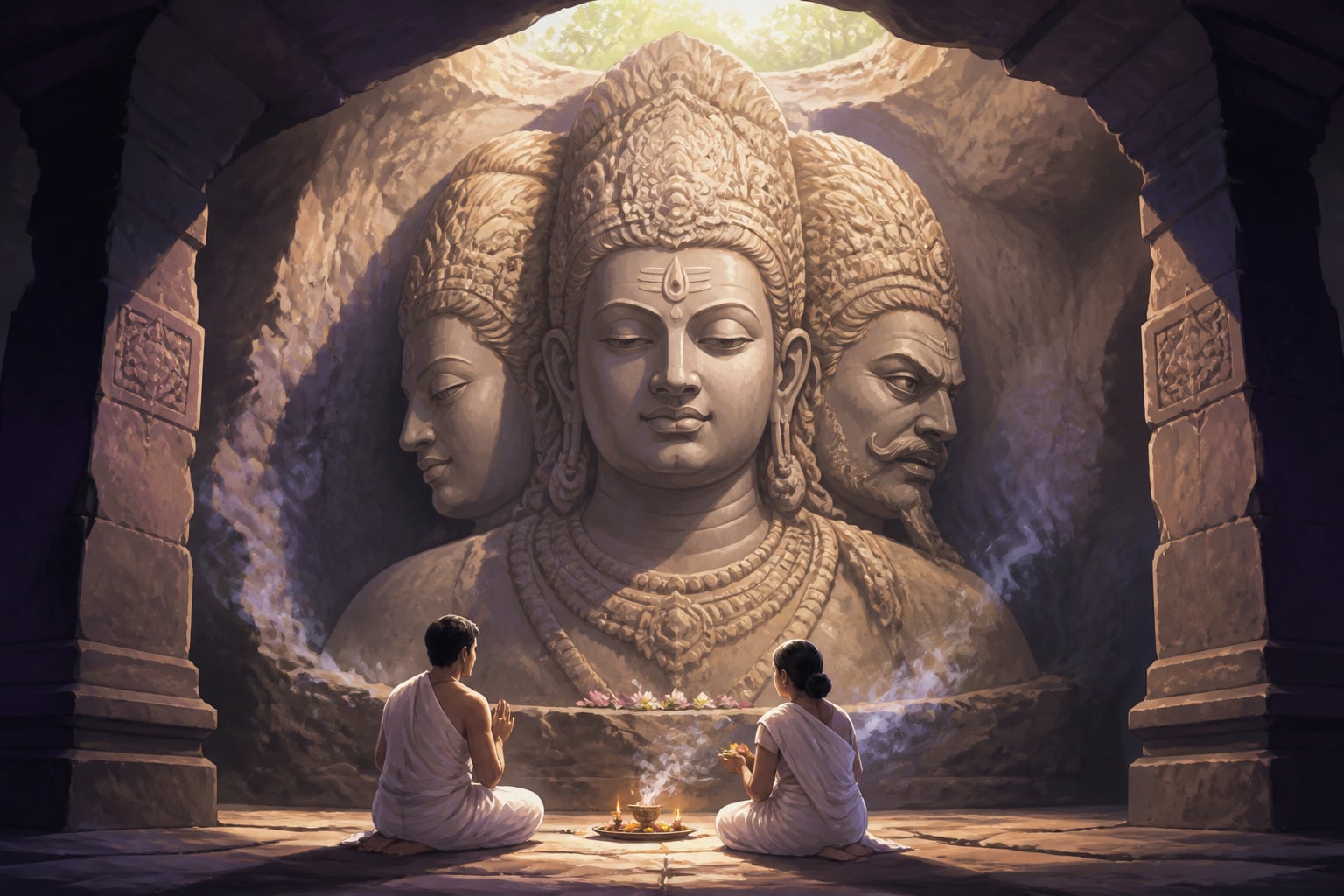
Elephanta Caves: The magnificent Shiva sculptures on the island near Mumbai were created or enhanced under Rashtrakuta patronage.
Numerous Temple Complexes: Across the Deccan, Rashtrakuta-era temples stand as testimony to their cultural investment.
Dantidurga himself may have begun work at Ellora, establishing the connection between his dynasty and this sacred site.
"The temples they carved outlasted the thrones they sat upon. Stone remembers longer than power persists."
Literary and Scholarly Achievement
The Rashtrakuta court became a center of learning:
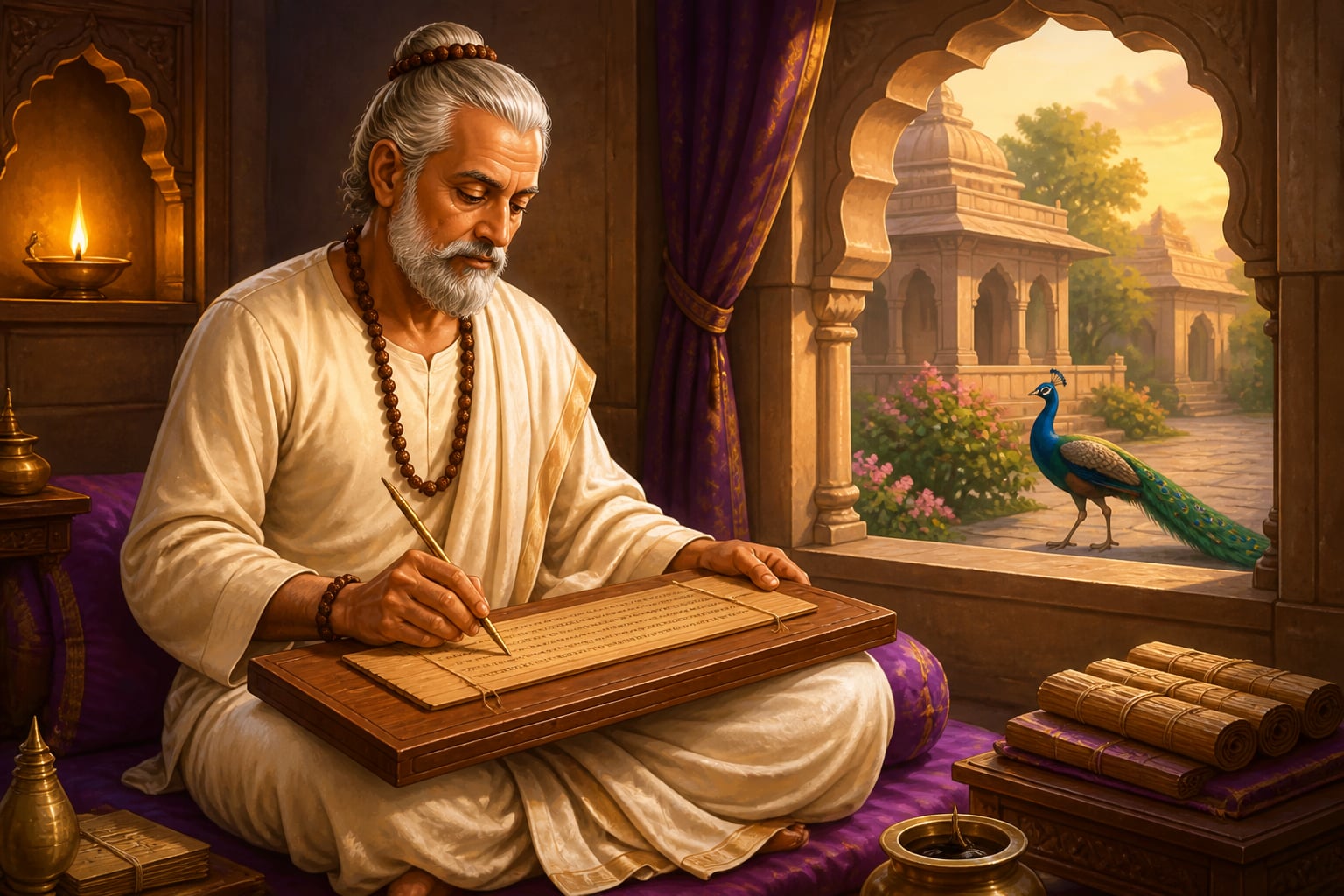
Amoghavarsha's Kavirajamarga: The first work on Kannada poetics, written by a Rashtrakuta emperor
Mathematical Advances: Mahaviracharya's Ganitasarasangraha was produced under Rashtrakuta patronage
Jain Scholarship: The great Jain texts of the Digambara tradition were supported by Rashtrakuta kings
Sanskrit Literature: Classical Sanskrit poetry and drama flourished at Manyakheta
Political Significance
Dantidurga's success had broader implications for Indian political history:
End of Chalukya Dominance: The Chalukyas of Badami, who had ruled for nearly two centuries, were swept away
New Power Balance: The Rashtrakutas became central players in the "tripartite struggle" for dominance over northern India
Deccan Centrality: Under the Rashtrakutas, the Deccan became a major power center, not just a peripheral region
Model for Succession: The pattern of capable relatives succeeding (lateral succession) influenced later dynasties
Religious Tolerance
The Rashtrakutas practiced remarkable religious tolerance:
- Shaivism received major patronage (Kailasa Temple)
- Jainism flourished, with Amoghavarsha personally embracing it
- Vaishnavism was supported
- Buddhism was tolerated
This ecumenical approach, evident from the dynasty's beginning, allowed the Rashtrakutas to rule a diverse population effectively.
Dantidurga Among the Guardians
Within the narrative of the Guardians of Dharma, Dantidurga occupies a pivotal position:
Defender Against Arabs: He built his reputation fighting Arab raiders, protecting temples and civilians
Founder of Resistance: The empire he created would continue to resist western incursions for over two centuries
Preserver of Traditions: By maintaining a Hindu-majority empire in the Deccan, he helped preserve Indian civilization during a turbulent period
Model for Others: His success showed that bold action could create new orders capable of defending dharma
The Transition Point
Dantidurga represents a transition in the Guardians narrative:
Before Dantidurga: Resistance to Arab expansion was fragmented, led by various regional powers (Bappa Rawal in Mewar, Nagabhata I and the Pratiharas in the north)
After Dantidurga: The Rashtrakutas provided a stable, centralized power in the Deccan that could coordinate resistance across a vast territory
He transformed scattered resistance into organized empire.
What If He Had Lived Longer?
Historical speculation is uncertain, but we can wonder:
- Would he have conquered more territory than his successors?
- Would he have developed different policies than Krishna I?
- Would the Kailasa Temple have been built in his reign?
- Would he have been a philosopher-king like his descendant Amoghavarsha?
We cannot know. His three years left only the foundation, not the building.
The Founder's Qualities
From the historical record, we can discern certain qualities:
Patience: He waited years for the right moment to strike against the Chalukyas
Military Skill: He defeated both Arab raiders and the Chalukya army
Political Acumen: He built alliances and secured feudatory support
Legitimacy Consciousness: He understood the importance of ritual (Hiranyagarbha) in establishing rightful rule
Ambition: He aimed not just at regional power but at imperial status
The Price of Foundation
Founding a dynasty through conquest came at costs:
Chalukya Victims: The overthrown dynasty lost power, prestige, and many lives
War's Devastation: Even successful wars bring destruction
Precedent of Violence: The Rashtrakutas would eventually fall to a similar feudatory revolt
Legitimacy Questions: Usurpers are always vulnerable to charges of illegitimacy
History judges Dantidurga favorably because his dynasty succeeded. Had it failed, he would be remembered as a rebel, not a founder.
Lessons from Dantidurga
What can we learn from Dantidurga across thirteen centuries?
Preparation Matters: His years of patient preparation enabled rapid success when the moment came
Legitimacy Is Essential: Military victory alone is not enough; rulers need ideological and ritual legitimacy
Defense Can Build Power: His reputation came from protecting against foreign threats, not from aggression against neighbors
Foundations Determine Outcomes: The structure Dantidurga created shaped everything that followed
The Final Assessment
Dantidurga was:
- A successful rebel who overthrew an ancient dynasty
- A capable defender who protected against foreign raids
- A shrewd politician who understood legitimacy and power
- A limited builder who had only three years to construct
- A dynasty founder whose legacy lasted over two centuries
In the end, his greatest achievement was making things possible - the temples, the scholarship, the 64-year reign of Amoghavarsha, the recognition as one of the world's great empires.
The Seed and the Tree
Dantidurga planted a seed in 753 CE. He did not live to see it grow into a mighty tree. But every branch, every leaf, every fruit of that tree traced back to his planting.
The Kailasa Temple, carved from living rock, was his seed's flower. The Kavirajamarga was its fruit. The 220 years of Rashtrakuta rule were its shade.
In history, as in nature, the planter does not always enjoy the harvest. But without the planting, there is no harvest at all.
Dantidurga planted. India harvested.
Historical context
Post-Rashtrakuta Historical Assessment, 8th-10th century CE
The Rashtrakutas dominated the tripartite struggle for Kannauj against Pratiharas and Palas. Their religious tolerance and patronage of multiple faiths created a flourishing multicultural civilization in the Deccan.
Living traditions
The Kailasa Temple remains one of humanity's greatest architectural achievements, drawing millions of visitors annually. Karnataka's state identity draws on Rashtrakuta heritage and Kannada literature begun under their patronage.
- Kailasa Temple, Ellora: The greatest achievement of Rashtrakuta architecture, begun by Krishna I after Dantidurga. One of the largest monolithic rock excavations in the world.
- Elephanta Caves: Magnificent Shiva sculptures enhanced under Rashtrakuta patronage, featuring the famous Trimurti sculpture.
- Malkhed (Manyakheta): The later Rashtrakuta capital, with ruins and commemorative structures marking the zenith of the dynasty Dantidurga founded.
Reflection
- How do we measure the success of someone who creates possibilities rather than achievements?
- What does the Rashtrakutas' fall to their own feudatories teach about historical patterns?
- Why might Dantidurga's legacy of religious tolerance be especially relevant today?