Easter Week, 1930
The board before the raid, the night of 18 April, the stand on Jalalabad hill, and the four years that followed
On Good Friday 1930 a schoolteacher named Surya Sen and about sixty young people took the armouries of Chittagong and held the town for a night. This scene-setter follows the raid target by target, the fight on Jalalabad hill, and the four years that cost five of them everything.
The Parade Ground at Ten O'Clock
It is Friday, 18 April 1930, a little after ten at night. The police lines at Dampara, Chittagong, are quiet. It is Good Friday, and most of the British officers of the town are away or at home. A schoolteacher named Surya Sen stands on the parade ground in a khaki uniform that does not quite fit him. Around him, about sixty young men and boys are shouting. Some are still in their teens.
Ten minutes ago this ground belonged to the British Empire. Now the Union Jack is down. A tricolour goes up the pole in its place. The boys shout Vande Mataram, and the schoolteacher takes a military salute from people who, until this week, were his students.
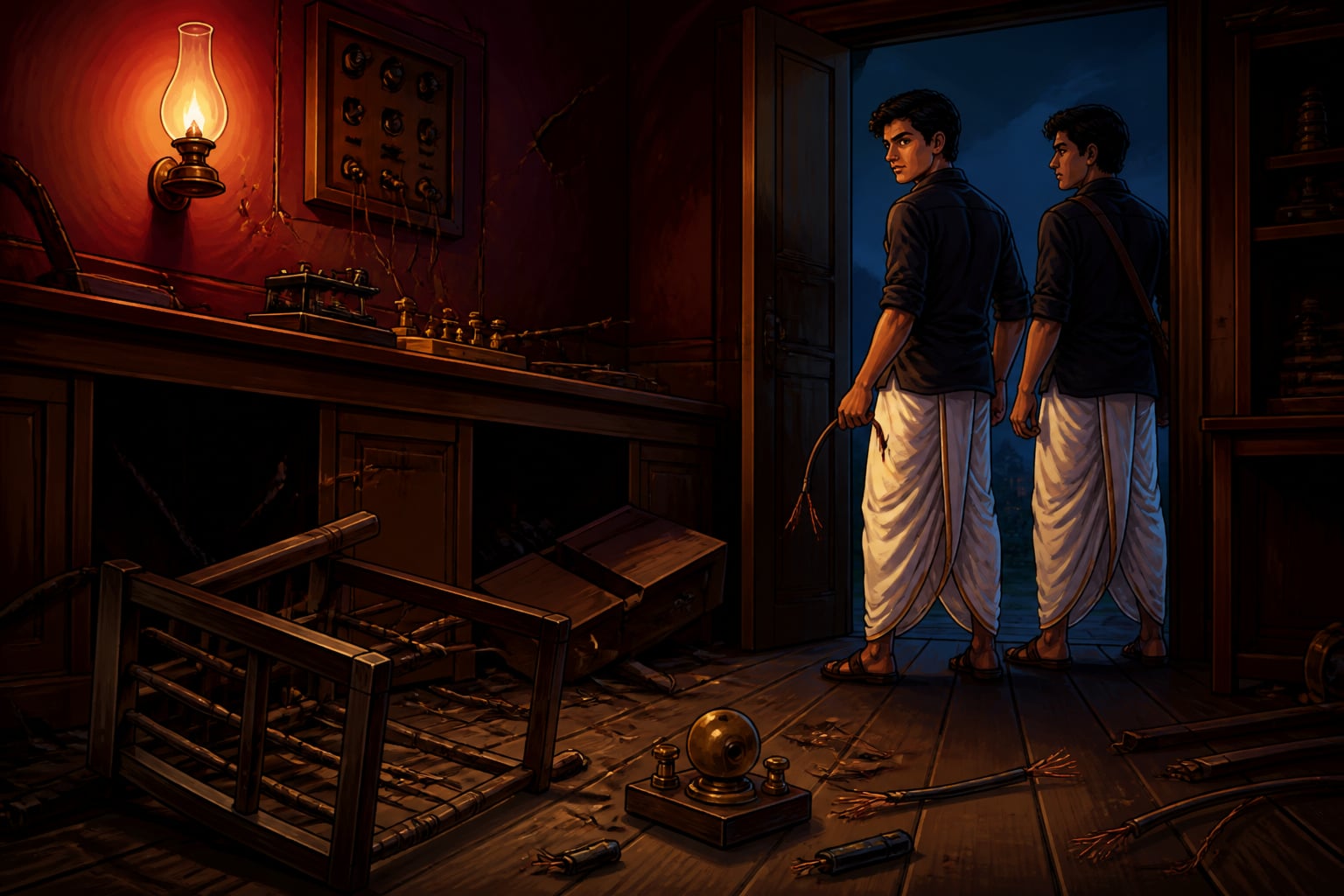
Behind them, the doors of the police armoury hang open. Rifles and revolvers lie in heaps on the ground. Across town, a second armoury has been emptied, the telegraph office has been smashed, and the railway lines out of Chittagong have been cut. For one night, the second largest port in Bengal has no way to call for help.
Surya Sen has just done something no one in India has tried since 1857. He has taken a town from the Raj by force. The question that matters is not whether he can hold it. He knows he cannot. The question is what he will do with the four years he has left.
Who These People Were
The group called itself the Indian Republican Army, Chittagong Branch. The name was borrowed from Ireland, whose Easter Rising of 1916 the Bengal underground had studied closely. That is why the date was Easter week. It was a message, not a coincidence.
Surya Sen, called Master da (teacher, elder brother) by everyone who knew him, taught at a national school in Chittagong. He had joined the Jugantar party, one of the two old secret societies of Bengal, as a young man. For over a decade he built a network in the district with a patience that the police files describe with something close to respect.