Taking a Fort

Methods of Conquest

Four ways to take a fort, sama, dana, bheda, danda. Kautilya's systematic framework for conquest, where force is the last resort and persuasion, incentives, and division often succeed where violence would fail.

The Commander's Choice
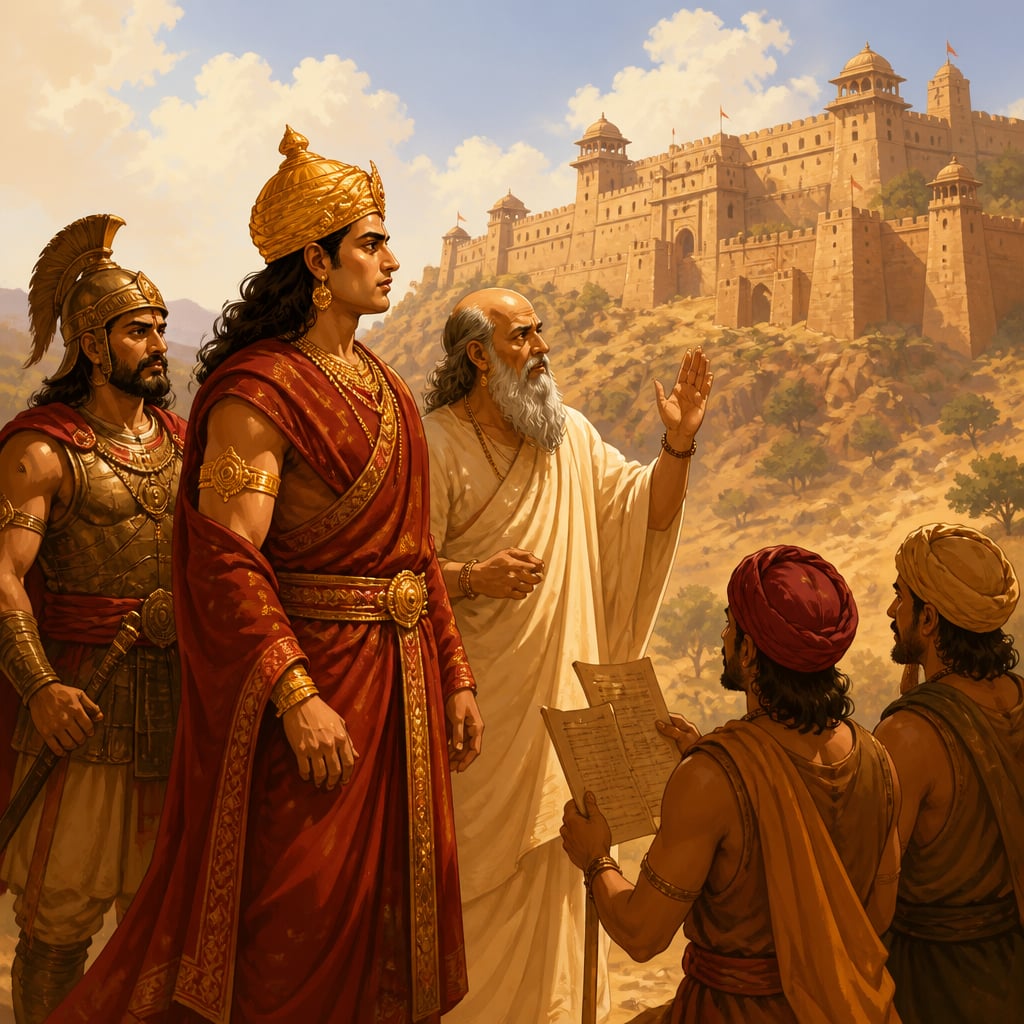
Chandragupta and Kautilya holding war council before Shravasti

Chandragupta stood before his war council, the fortress of Shravasti rising on the distant hillside. Six thousand defenders manned those walls. Twenty thousand of his own soldiers waited in the camp below. The mathematics seemed simple.

"Storm the walls," urged General Bhadrasena. "We have the numbers. Accept the casualties and end this in three days."

Kautilya raised his hand. "And if Shravasti's allies see us bloodied? If our army limps home with half its strength? What then prevents Magadha from striking while we recover?"

He unrolled a parchment, intelligence reports from agents inside the fortress. "The garrison commander's brother serves in our army. The merchants fear their trade will suffer under prolonged siege. The soldiers haven't been paid in two months." Kautilya smiled. "We don't need to break those walls. We need to make them irrelevant."

This was the essence of Kautilyan conquest: force is not a first resort but a last one. Before any assault, four systematic approaches must be considered, and usually, one of the first three succeeds.

The Four Methods: An Overview

Kautilya articulated four methods for taking fortified positions, arranged in ascending order of force and descending order of preference:

Sama (Conciliation/Negotiation): Achieving objectives through diplomacy, persuasion, and agreement. The enemy becomes an ally, the fort opens voluntarily, and resources are preserved for both sides.

Dana (Gifts/Incentives): Achieving objectives through economic incentives, bribes to key officials, rewards for defection, economic pressure that makes resistance costly and cooperation profitable.

Bheda (Division/Sowing Discord): Achieving objectives by fragmenting enemy unity. Turning commanders against each other, populations against garrisons, factions against leaders. The divided fortress defeats itself.

Danda (Force/Punishment): Achieving objectives through military power. Assault, siege, or threat of overwhelming destruction. The most expensive option, reserved for when others fail.

"Sāmadinā upakrameta, Begin with sama and the others," Kautilya taught. Force was not weakness to be avoided at all costs, but it was expensive, unpredictable, and destructive. Smart strategists exhausted cheaper options first.

Sama: The Art of Agreement

The highest art in conquest is making enemies into friends, or at least into neutrals who open their gates.

When Sama Works:

Sama Techniques:

Honorable Exit: Offer terms that let defenders claim they achieved something. Face-saving formulas, alliance rather than surrender, autonomy under protection, preservation of positions for leaders, make agreement psychologically possible.

Shared Interest Appeal: Identify common enemies or opportunities. "Together we can face the real threat" reframes opposition into partnership. The defender who feared conquest becomes ally against something worse.

Kinship and Connection: Family ties, caste connections, trade relationships, religious bonds, these create channels for negotiation that pure military pressure cannot. Kautilya's intelligence network identified such connections before campaigns began.

Demonstration of Inevitability: Sometimes sama works by making alternatives so clear that negotiation becomes rational. "You will fall eventually; choose when and on what terms" isn't threat but strategic logic.

Modern diplomatic practice follows Kautilya's framework. International negotiations seek win-win outcomes; treaties offer benefits to all signatories; alliance offers frame cooperation as mutual advantage. The goal is the same: achieve objectives without costly confrontation.

Dana: The Power of Incentives

When agreement on principle fails, agreement on interest often succeeds. Dana uses economic incentives to achieve what pure persuasion cannot.

When Dana Works:

Dana Techniques:

A Mauryan envoy in disguise bribing a fortress garrison captain at night

Bribery of Key Figures: The gate commander who accepts gold to leave his post open, the guard captain who accepts land grants for his family, the advisor who counsels surrender in exchange for continued position. Dana targets individuals whose decisions determine outcomes.

Economic Pressure: Offering siege relief in exchange for concessions. "Open your markets to our merchants and we'll lift the blockade" gives economic benefit for compliance. The besieged population pressures defenders to accept.

Rewards for Defection: Soldiers who switch sides receive land, positions, or treasure. This targets individuals while undermining collective resistance. Each defection makes the next easier, if they left, why shouldn't I?

Future Promises: Trade agreements, tax concessions, economic privileges, dana extends beyond immediate bribes to structural incentives that make cooperation more valuable than resistance over time.

Kautilya was characteristically practical about dana: "Artha-lobhāt svayaṃ āgacchati, Because of greed for wealth, they come by themselves." Human nature included self-interest; ignoring this was strategic naiveté.

Modern parallels abound: corporate acquisitions that buy out key employees, political deals that offer positions to opponents, negotiations that create economic benefits for compliance. Dana isn't corruption, it's understanding that people respond to incentives.

Bheda: The Art of Division

United defenders are formidable; divided defenders defeat themselves. Bheda systematically fragments enemy cohesion.

When Bheda Works:

Bheda Techniques:

Amplifying Existing Tensions: Intelligence identifies natural fault lines, class divisions, ethnic tensions, factional rivalries, personal grudges. Psychological operations then amplify these: rumors that one faction will be favored, suggestions that another plans betrayal, evidence (real or fabricated) of unequal treatment.

Offering Differential Terms: Make separate peace offers to different groups within the fortress. "The soldiers will be spared; the commanders will be punished" or "The merchants will keep their trade; the nobles will lose their lands." Each group calculates: should we sacrifice ourselves for them?

Leadership Targeting: Undermine faith in commanders through rumor, bribery attempts (whether successful or merely exposed), or demonstrated incompetence. Leaders whose troops don't trust them cannot coordinate defense.

Creating Impossible Dilemmas: Situations where defending one group requires sacrificing another. Limited supplies mean feeding soldiers or civilians. Military necessity requires abandoning outer positions, who goes?

Kautilya specified that bheda was often most effective: "Bhedopāyena vijayaḥ, Victory through division." The fortress that fought itself required no external assault.

Danda: The Force Option

When sama, dana, and bheda fail or are impossible, danda remains: achieving objectives through military force.

When Danda Becomes Necessary:

Danda Principles:

Force Must Be Sufficient: Inadequate force fails and invites counterattack. If danda is chosen, apply overwhelming capability to ensure success. Half-measures in violence are the worst choice.

Minimize Unnecessary Destruction: Even in assault, distinguish between military necessity and gratuitous damage. The fortress you destroy becomes worthless; the fortress you capture intact retains value.

Speed Over Elegance: Extended combat bleeds both sides. Once danda is chosen, execute rapidly. The prolonged assault allows defenders to recover, reinforce, and counter.

Prepared for Aftermath: Danda creates particular challenges for governance afterward. Populations conquered by force are harder to reconcile than those who surrendered. Plan for pacification before the assault.

Kautilya never glorified danda. It was necessary sometimes, preferable never. "Danda is the last resort of those who have exhausted wisdom," he might have observed. The strategist who reached danda had either faced an implacable enemy or failed at sama, dana, and bheda.

The Sequence Matters

Kautilya emphasized not just the four methods but their sequence. Begin with sama; move to dana; attempt bheda; resort to danda only when necessary.

This sequence was strategic, not moral:

Cost Efficiency: Sama costs nothing but time. Dana costs treasure but preserves soldiers. Bheda costs effort but preserves both. Danda costs everything, blood, treasure, time, and often the prize itself.

Outcome Quality: Objectives achieved through sama create allies. Dana creates transactions, stable if profitable, unstable if circumstances change. Bheda creates chaos requiring management. Danda creates enemies who await revenge.

Reputation Effects: The commander known for fair terms faces faster surrenders. The one known for massacre faces desperate resistance. Reputation accumulated across conquests, affecting the cost of future ones.

Sustainability: Territories integrated through agreement remain stable. Those bought require continued payment. Those divided need continued manipulation. Those conquered by force require permanent occupation.

The sequenced approach reflected Kautilya's efficiency obsession: achieve objectives with minimum resource expenditure, leaving maximum capability for future challenges.

Combining Methods

Often conquest required not one method but combinations:

Sama Backed by Danda: Negotiation succeeds when the alternative is clear. Military positioning that demonstrates capability makes diplomatic offers more attractive. "We prefer agreement; we're prepared for assault."

Dana Targeting Bheda: Bribing one faction while excluding another creates division. The included group has incentive to justify their choice; the excluded group has grievance against former allies.

Bheda Enabling Sama: Once unity is fractured, separate negotiations with different factions become possible. Each group can be offered different terms tailored to their interests.

All Four Simultaneously: The comprehensive approach: diplomatic outreach (sama), economic incentives to key figures (dana), psychological operations against unity (bheda), and military preparations demonstrating danda capability. Defenders face pressure from every direction, making some form of capitulation likely.

This multidimensional pressure was Kautilya's signature. Never single-method; always combined arms applied across military, economic, psychological, and diplomatic domains.

The Shravasti Resolution

Return to Chandragupta's council. Kautilya's analysis produced a comprehensive plan:

Sama: Send envoys offering alliance against Magadha's growing power. Frame the choice not as surrender but strategic partnership. Appeal to shared interests in containing the common threat.

Dana: The garrison commander's brother carries gold and land grants for key officers. Merchants receive promises of restored trade routes. Soldiers hear that joining Chandragupta's army means regular payment.

Bheda: Rumors spread that the civilian population will be spared but the garrison executed, or vice versa. Intelligence suggests the commander has secretly negotiated his own escape. Different factions receive different information.

Danda: Chandragupta's army conducts visible assault preparations, siege towers, rams, scaling ladders. The message is clear: we can take this fortress if we choose.

The Shravasti garrison commander surrendering his sword to Chandragupta

The result: within two weeks, Shravasti's gates opened. The commander received honorable terms. Key officers joined Chandragupta's forces. The population was spared siege suffering. And twenty thousand soldiers remained ready for the next campaign, unbled and undiminished.

"The best conquest," Kautilya observed, "is one where no sword is drawn."

Modern Applications

Kautilya's four methods apply wherever opposition must be overcome:

Corporate Negotiations:

Political Campaigns:

Personal Relationships:

Institutional Change:

The framework provides structured analysis: before any confrontation, what are the sama options? What dana incentives exist? What bheda opportunities? Only then: is danda necessary?

Strategic Patience

The four methods require patience that aggressive temperaments resist. Why negotiate when we can attack? Why bribe when we can conquer? Why manipulate when we can overwhelm?

Kautilya's answer was pragmatic: because force is expensive, uncertain, and often counterproductive. The commander who always chooses danda may win battles but loses campaigns. Resources wasted on unnecessary force are unavailable for necessary force later.

Moreover, the world watches. Reputation for preferring peaceful resolution makes peaceful resolution more likely in future encounters. Reputation for violence ensures desperate resistance at every turn.

The wise strategist asks not "Can I win by force?" but "What is the cheapest way to achieve my objectives?" Often, that answer is sama, dana, or bheda, not danda.

The Fort Within

Kautilya's four methods apply to internal challenges as well as external:

The habit you want to change, negotiate with yourself (sama), reward progress (dana), divide the habit from identity (bheda), or impose discipline (danda).

The fear you want to overcome, reason with it (sama), incentivize courage (dana), separate the fear from its source (bheda), or force yourself through (danda).

The relationship you want to repair, seek understanding (sama), offer what they need (dana), address specific grievances separately (bheda), or accept consequences of confrontation (danda).

The internal fortress is often the most difficult. We know all our weaknesses; we can anticipate our own moves; we are experts at resistance. But the four methods still apply, and typically, sama deserves more attention than our impatient nature prefers.

Diplomatic Priority - The principle that negotiated solutions are generally preferable to imposed ones.

Modern negotiation theory (Fisher and Ury's 'Getting to Yes') emphasizes interest-based bargaining before positional confrontation. Conflict resolution prioritizes dialogue before enforcement. International law prefers diplomatic solutions to military ones. The principle is universal: agreement is cheaper than conquest.

Kautilya integrated diplomatic priority into systematic framework with clear sequencing. Modern approaches often treat negotiation and force as alternatives; Kautilya recognized them as stages, each appropriate at different points, but with clear ordering. This provides decision structure for when to move between methods.

The Cuban Missile Crisis (1962) demonstrated diplomatic priority under extreme pressure. Despite military options (invasion, air strikes), Kennedy chose negotiation, exchanging missile withdrawal for non-invasion pledge. The sama solution achieved objectives without the catastrophic costs danda would have imposed.

Incentive Alignment - The principle that people respond to incentives, and strategy should create incentives for desired behavior.

Modern economics is built on incentive analysis. Behavioral economics studies how incentives shape decisions. Corporate management uses compensation structures to motivate performance. The insight is universal: understand what people want, and align your objectives with their incentives.

Verses

सामादिना उपक्रमेत।

sāmādinā upakrameta |

One should begin with sama (conciliation) and the others [in sequence].

This foundational sutra establishes the methodological sequence of the four upayas. Conciliation comes first not from squeamishness about force but from strategic efficiency, it's cheapest and produces the best outcomes.

Book 9, Chapter 6, Verse 56 (R.P. Kangle)

अर्थलोभात् स्वयं आगच्छति।

artha-lobhāt svayaṃ āgacchati |

Because of greed for wealth, they come by themselves.

Kautilya's pragmatic observation about human nature: self-interest motivates behavior more reliably than principle, loyalty, or fear. The strategist who offers appropriate incentives finds that obstacles remove themselves.

Book 9, Chapter 4, Verse 27 (R. Shamasastry)

भेदोपायेन विजयः।

bhedopāyena vijayaḥ |

Victory [comes] through the means of division.

Division is often the most effective of the four methods because it turns enemy strength against itself. United opposition requires overwhelming force to defeat; divided opposition defeats itself.

Book 7, Chapter 8, Verse 31 (Patrick Olivelle)

Case studies

The Acquisition of Instagram

In 2012, Facebook faced a strategic challenge: Instagram's photo-sharing platform was growing rapidly, potentially threatening Facebook's social media dominance. Facebook could have competed directly (danda), building competing features, attempting to destroy Instagram through market power. Instead, Mark Zuckerberg chose acquisition.

Facebook applied Kautilya's framework: (1) Sama, initial discussions about partnership and shared vision. (2) Dana, $1 billion acquisition price, massive premium over Instagram's revenue, plus autonomy for founders. (3) Bheda, unnecessary, as Instagram's team was unified but could be brought into Facebook through attractive terms. (4) Danda, avoided entirely; competition would have been costly and uncertain.

Instagram accepted acquisition. The platform grew from 30 million users to over 1 billion under Facebook ownership. Founders received wealth and autonomy; Facebook eliminated a competitor and gained a platform. Total cost: $1 billion. Value created: tens of billions. Dana achieved what danda could not have.

Kautilya's framework applies to corporate strategy: acquiring capability through purchase (dana) is often cheaper than building it through competition (danda). The $1 billion seemed expensive; years of competitive warfare would have cost more and might have failed.

The acquire-vs-build decision remains one of the most consequential choices in business strategy. Google acquiring YouTube, Disney acquiring Pixar, and Amazon acquiring Whole Foods all followed the same logic: buying established capability is faster and often cheaper than building from scratch. The companies that evaluate this tradeoff honestly, without ego or sunk-cost bias, consistently make better strategic decisions.

Facebook acquired Instagram for $1 billion when it had 30 million users and 13 employees. By 2024, Instagram had over 2 billion monthly active users and generated an estimated $50 billion in annual revenue.

The End of Apartheid

By the late 1980s, South Africa's apartheid regime faced mounting pressure: international sanctions (external bheda), internal resistance (domestic bheda), economic strain (dana pressure), and potential for civil war (danda on all sides). The situation seemed to demand violent resolution.

Instead, South Africa's transition demonstrated sama at its highest level: (1) Negotiations between the apartheid government and ANC created framework for transition. (2) Dana, economic interests on all sides favored peaceful transition. (3) Bheda, pressure came from divisions within white community and international isolation. (4) Danda, both sides possessed military capability, creating mutual deterrence that made sama more attractive.

Negotiated transition to democracy (1994). Despite deep injustice and decades of conflict, violence was minimized. Truth and Reconciliation Commission addressed past crimes through acknowledgment rather than punishment. A situation that seemed to require danda resolution achieved transformation through sama.

Kautilya's sama can resolve even extreme conflicts when both parties calculate that agreement is preferable to force. The threat of danda (civil war) made sama more attractive. But it required leaders (Mandela, de Klerk) willing to pursue conciliation despite pressure for vengeance.

Corporate transformations under pressure, from Microsoft's cultural overhaul under Nadella to Apple's near-bankruptcy turnaround under Jobs, follow the same pattern. When all parties recognize that the status quo is unsustainable, negotiations that once seemed impossible become achievable. Internal corporate change, like political change, often requires the shared recognition that the alternative to agreement is mutual destruction.

South Africa's Truth and Reconciliation Commission heard testimony from over 21,000 victims and granted amnesty to 1,500 perpetrators. The process cost a fraction of what civil conflict would have cost the economy.

Historical context

c. 4th century BCE

The four-methods framework reflects Indian strategic traditions that valued wit (upāya) alongside might (bala). Epic literature (Mahabharata) depicts heroes using guile, negotiation, and subversion alongside warfare. Kautilya systematized this tradition into teachable doctrine.

Kautilya's four-methods framework influenced Indian political thought for millennia and anticipated modern strategic and diplomatic theory. The principle of sequenced escalation, trying cheaper methods before expensive ones, remains foundational to conflict resolution, negotiation, and strategic planning.

Reflection

More in Durga: Forts and Siege

All lessons in Durga: Forts and Siege · Arthashastra: Art of Strategy course