The Civilizational Stakes

What We Lose When We Can't Debate

When Hindus lose debates, three specific things go missing: narrative control, institutional power, and cultural sovereignty. Macaulay's Minute of 1835 is the textbook case of a debate that decided a civilization's future without the civilization in the room. The same pattern is still running. This lesson maps the stakes and explains why a debate course belongs inside a Dharmic curriculum, not next to it.

The Memo That Never Held a Debate

On 2 February 1835, in a high-ceilinged office at the Council of India in Calcutta, Thomas Babington Macaulay finished a memo and sealed it. He was thirty-four years old, in India for fourteen months, and could not read a single line of Sanskrit, Persian, or Arabic. The memo ran for thirty-eight paragraphs. It argued that one shelf of a good European library was worth the whole native literature of India and Arabia.
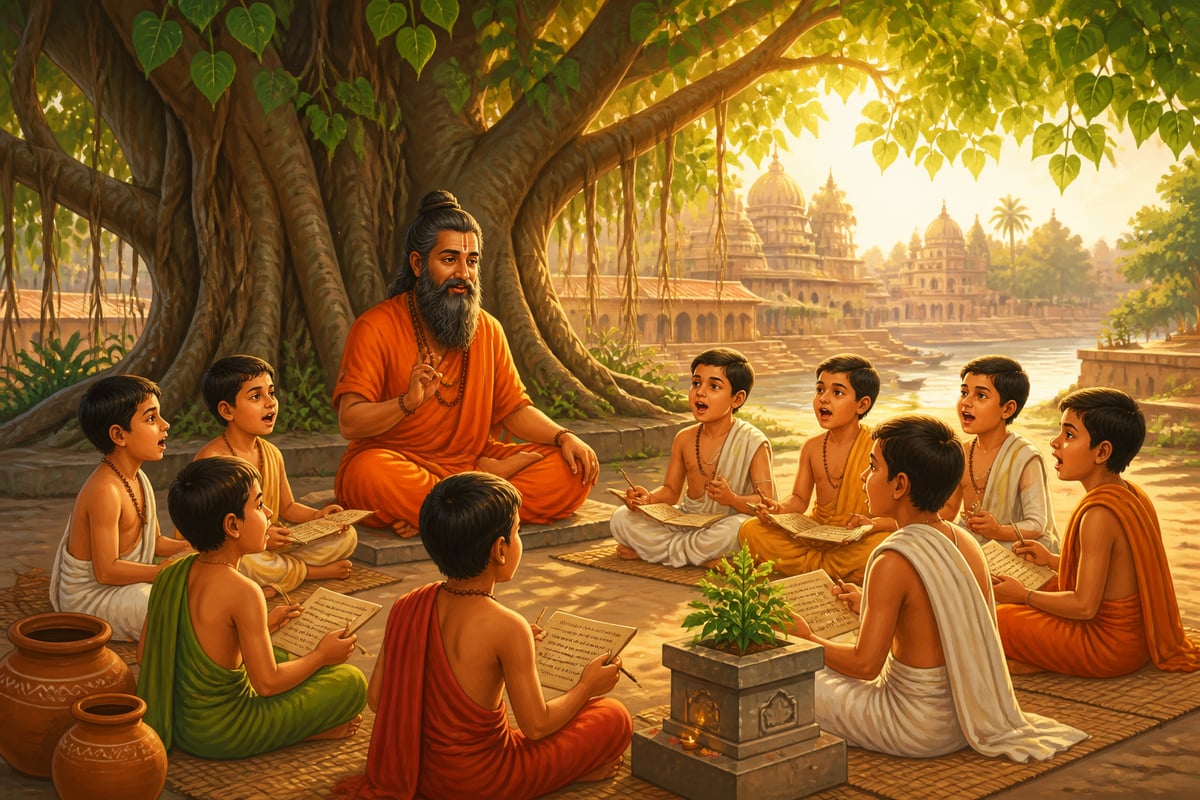
Pathshala children learning under a banyan

Across the same city, in a thousand pathshalas and tols, scholars were teaching children grammar, logic, astronomy, medicine, and metaphysics in their own languages. They had no idea a debate was being held. They were never invited.
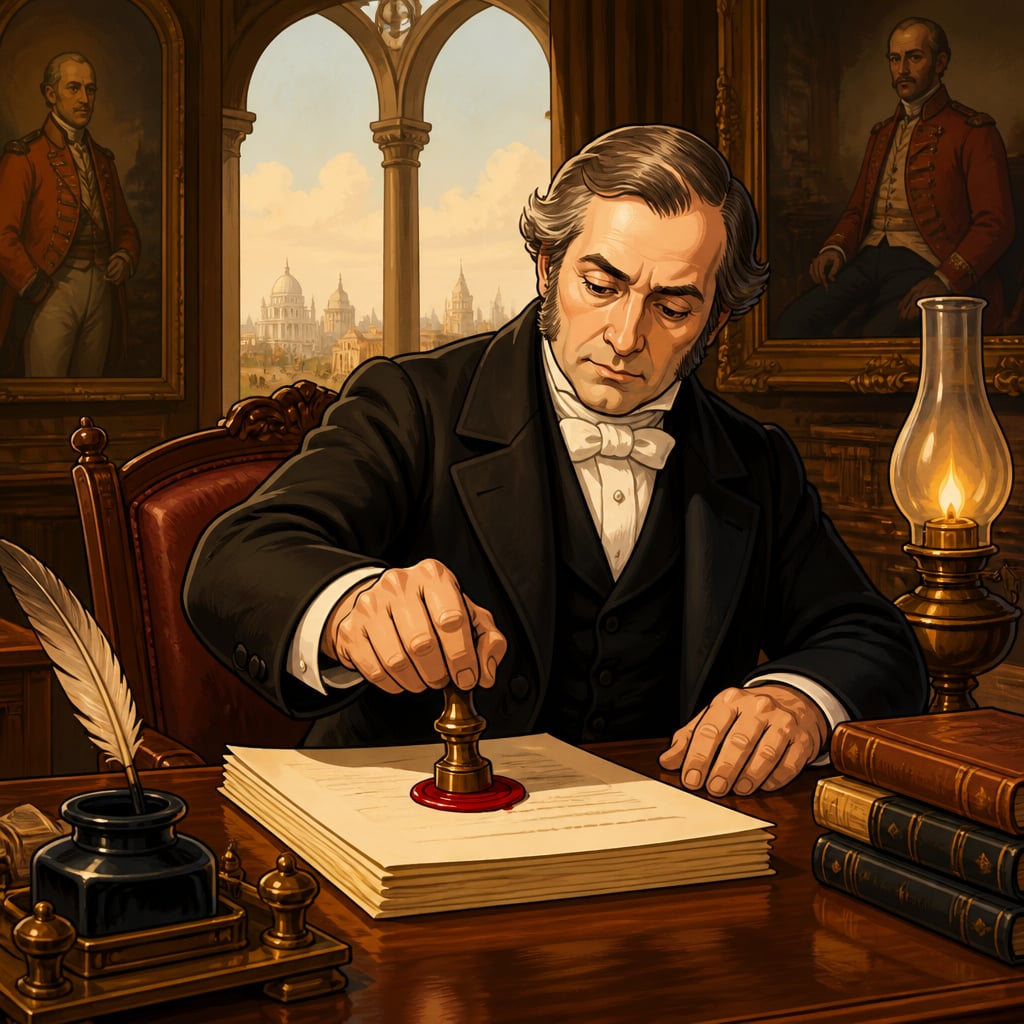
Macaulay sealing his Minute on Education in Calcutta

Lord William Bentinck, the Governor-General, signed Macaulay's recommendation a month later. Within a generation, the gurukul system that had trained Indian minds for two thousand years was defunded into collapse. The educated Indian who emerged from the new English schools could quote Shakespeare and had never read the Nyaya Sutras. He had been argued out of his own civilization by a man who never engaged its scholars.

This is what it looks like when one side does not show up to the debate.

The Three Losses

When a civilization cannot debate, three specific things go missing. Together they decide who controls the future.

The first loss is narrative control. Whoever frames the story decides what the story means. After 1835, the story of Hindu civilization was told in English, by people trained on European categories, for an audience that included Hindus themselves. Caste was framed as race. Bhakti was framed as superstition. Yagna was framed as wasteful ritual. The frames were not argued against because the people inside the frames had been taught not to argue. They had been taught to translate.

The second loss is institutional power. Debate sustains institutions. A tradition that cannot defend itself in argument cannot defend itself in court, in parliament, in the press, or in the academy. After Macaulay, the schools that taught Sanskrit, Ayurveda, Jyotish, and Dharma were starved of state support. The schools that taught English, common law, and Western medicine were funded. Two centuries later, the asymmetry is still visible. A Hindu temple in Tamil Nadu can be administered by a state board. A mosque or a church on the next street cannot. The legal frame that produced this asymmetry was set in arguments Hindus did not effectively contest.

The third loss is cultural sovereignty. When you cannot defend your meanings in public speech, your meanings drift into other people's hands. Yoga is now a global industry worth more than one hundred and thirty billion dollars. The word Hindu has been scrubbed from most of it. In 2010, the Hindu American Foundation launched a "Take Back Yoga" campaign to reclaim the connection. Western yoga teachers wrote angry replies in the New York Times and on popular yoga blogs. Hindus had built the practice over thousands of years. They could not hold the linguistic frame on their own export.

Three losses. One root cause. The skill of public argument was unevenly developed.

When Vaada Is Refused, Vitanda Wins

In the previous lesson, you met three kinds of debate. Vaada seeks truth. Jalpa seeks victory. Vitanda only destroys.

A civilization that wants to live needs Vaada to be its dominant mode. Truth-seeking debate is what holds courts honest, holds historians accountable, and holds law connected to lived reality. When a society loses the appetite for Vaada, the empty space does not stay empty. Jalpa moves in. Then Vitanda. The loudest tactic wins because nothing in the room is fighting for truth.

After 1835, public Hindu discourse fragmented into two unhelpful poses. The first was angry refusal: dismiss the new English-educated elite as compromised, refuse to engage their categories at all. The second was apologetic translation: accept the categories, then plead that Hinduism is "really" something acceptable to them. Neither was Vaada. Neither could win.

The Dharmic debater knows the third path. Represent the opposing position more honestly than the opposition can. Then respond. This is Purva Paksha, and you will study it in detail in the next chapter. In its absence, Hindu intellectuals could neither name what was being done to them nor mount a structured reply.

Dharma Raksha as a Speech Discipline

Most Hindus think of Dharma Raksha, the protection of Dharma, as a temple matter. Soldiers protect temples. Devotees protect rituals. Reformers protect customs. All of this is true. But there is an older, less visible front.

धर्म एव हतो हन्ति धर्मो रक्षति रक्षितः।

dharma eva hato hanti dharmo rakṣati rakṣitaḥ

Dharma destroyed destroys; Dharma protected protects.

Manusmriti 8.15

The verse is usually read to mean that righteous conduct shields the righteous. It also means something more specific. Dharma cannot protect a generation that has lost the words to defend it. Dharma is transmitted through speech, debate, recitation, court argument, family conversation, and public teaching. Cut the transmission lines and even the most heroic ritual cannot hold the meaning together.

This is why a debate course belongs inside a Dharmic curriculum, not next to it. Speech is the river that carries Dharma forward. The five Dharmic anchors of this course, the Nyaya Shastra, the Arthashastra, the Bhagavad Gita, the Mahabharata, and the Upanishads, are themselves debate texts. Yajnavalkya argues with Gargi. Krishna argues with Arjuna. Vidura argues with Dhritarashtra. Vyasa is recording an argument so it can be argued again, every generation, forever. The tradition is a conversation. To leave the conversation is to leave the tradition.

The Same Pattern, Today

The pattern Macaulay set is still running.

Sabarimala temple with police barricades in 2018

In September 2018, the Supreme Court of India ruled in the Sabarimala case that women of all ages must be allowed entry to the Ayyappa temple. The traditional advocates lost the constitutional debate not because their position lacked merit, but because they argued it inside a frame their opponents had set. The frame was "discrimination versus equality." Inside that frame, any restriction reads as bias. The Dharmic frame, that this is one deity's specific vrata in one of many open Ayyappa temples, was never effectively introduced. The first move in any debate is to choose the frame. Hindu advocates did not choose. The Ayyappa devotees, including hundreds of thousands of women, then took the argument back to the streets and the ballot box, which is where most lost debates have to be re-fought at much higher cost.

The institutional pattern is even older. Tamil Nadu's Hindu Religious and Charitable Endowments department alone administers more than thirty-six thousand temples and routes the revenues to non-religious uses. Andhra Pradesh and Karnataka run similar systems. The same state has no comparable authority over mosques or churches. Pew Research has reported that India carries one of the world's highest religious-restrictions burdens in part because state actors are deeply embedded in the religious affairs of one community alone. The asymmetry is documented. The debate to undo it is still mostly unfought.

Modern Echoes

It is worth naming the few moments when the skill of public Vaada has been used and has worked. Rajiv Malhotra's 2011 book Being Different did what most Hindu intellectuals had not done in a century. He used the exact technique this course teaches. He steelmanned Western universalism more rigorously than most Western scholars before offering the Dharmic reply. The book reached major bestseller lists and was read inside graduate seminars. One person, doing Vaada properly, moved a needle that two centuries of refusal could not. The skill works. It just has to be practiced.

Back to the Office in Calcutta

Macaulay sealed his memo and sent it to Bentinck. The room was quiet because no one was there to argue back. The next two centuries were paid in that silence. The next lesson gives you the Dharmic Debater's Code, the oath that ensures you do not leave a room of your own century equally quiet.

Case studies

Macaulay's Minute (1835): The Debate That Was Never Held

On 2 February 1835, Thomas Babington Macaulay, law member of the Council of India, finalized a thirty-eight paragraph memo arguing that English should replace Sanskrit, Persian, and Arabic as the medium of higher learning in India. He could not read any of the three. He had spent fourteen months in the country. The memo's most quoted line claimed that one shelf of a good European library was worth the entire native literature of India and Arabia. Inside the British administration, two camps debated the question, the Anglicists and the Orientalists. Indian scholars, who were the actual carriers of the literature being weighed, were not invited to either side. Lord William Bentinck signed Macaulay's recommendation on 7 March 1835. Funding shifted. The pathshala and tol system that had run for two thousand years was starved within a generation.

This is the canonical Dharma-Rakṣā failure on the speech front. The Vidura Niti and the Sabha Parva of the Mahabharata both warn that a kingdom is undone first in its assemblies, not on its battlefields. Macaulay's Minute is exactly that pattern. The fight was over the meaning and value of Indian knowledge. The carriers of that knowledge were not in the room. Even Vidura needs to be present at court to deliver his counsel. A civilization that cannot get its scholars into the assemblies that decide its future is already losing.

Within fifty years the gurukul system had collapsed in most of British India. The first generations of English-educated Indians could quote Shakespeare and had often never read the Nyaya Sutras. Two centuries later, the same elite still mediates how India is described to itself in academia, media, and law. Most of the categories used to describe Hindu civilization in 2026 were inherited from arguments Hindus did not attend in 1835.

If you do not show up to the debate that decides your future, the debate still happens. Get into the assemblies. Build the speech skill. Train the next generation in argument, not just in heritage.

Estimates from Dharampal's archival research in The Beautiful Tree (1983) suggest pre-1830 Indian literacy through the indigenous schooling system was higher than contemporary England, with one school per village in many districts of Bengal, Madras, and Punjab. Within fifty years of Macaulay's Minute, that network had collapsed.

Take Back Yoga (2010): Losing the Frame on Your Own Export

By 2010, yoga in the West had become a multi-billion dollar industry. Most yoga studios, magazines, and teacher-training programs had quietly removed any reference to the Hindu roots of the practice. The Hindu American Foundation, led by Aseem Shukla and Suhag Shukla, launched a campaign called Take Back Yoga. The campaign did not ask anyone to convert or to change how they practised. It only asked that the Hindu origin of yoga be acknowledged. The reply was immediate and hostile. Deepak Chopra wrote a public dissent arguing that yoga was older than Hinduism. Yoga Journal, the largest yoga publication in the United States, defended the move to scrub the word Hindu from the practice. Op-eds in the New York Times debated the campaign. The frame on the debate was set, in nearly every Western outlet, as Hindus making an inappropriate ownership claim, not as Hindus correcting a long erasure.

This is a textbook narrative-frame defeat. The first move in any Vaada is to choose the frame. The HAF entered a debate that had already been framed by their opponents as a cultural-appropriation overreach. Inside that frame, the more facts the HAF presented, the more they looked like aggressors. The Dharmic frame, that yoga is one of the six darshanas of Hindu thought and that erasing the word Hindu from it is a falsification, was never seriously argued in the mainstream Western press because almost no one in the Hindu community had the public Vaada skill to introduce and defend it.

Fifteen years later, the global yoga industry has grown past one hundred and thirty billion dollars. The word Hindu remains absent from most of it. The HAF campaign is remembered, in the few corners that remember it, as a curiosity rather than as a serious challenge. A practice Hindus refined over millennia is now mostly named, taught, and monetized without them, and the linguistic frame that produced this outcome is now treated as common sense even inside India.

Cultural sovereignty is a speech competition. If you do not contest the frame in which your tradition is described, you do not own the tradition's meaning, no matter who built it or how long ago. Choose the frame first. Defend it relentlessly. Treat language about your tradition as you would treat a deed to your own land.

Wellable's 2024 Wellness Industry Trends report and IHRSA's Global Report estimate the global yoga industry at over USD 130 billion. A 2016 Yoga in America Study by Yoga Journal and Yoga Alliance counted 36 million American practitioners, of whom under one percent identified yoga's Hindu lineage as central to their practice.

State Control of Hindu Temples: The HR&CE Asymmetry

In Tamil Nadu alone, the Hindu Religious and Charitable Endowments Department (HR&CE) administers more than thirty-six thousand Hindu temples. It appoints priests, controls pujari salaries, audits hundi collections, and routes a significant fraction of temple revenues into the state treasury for non-religious uses. Andhra Pradesh, Telangana, Karnataka, Kerala, and Odisha run versions of the same system, with varying degrees of intrusion. The same state governments do not administer mosques or churches in any comparable way. The Places of Worship Act of 1991 and the Waqf Act of 1995 hand significant autonomy and protective scope to non-Hindu institutions. Hindu plaintiffs have challenged the asymmetry in court repeatedly. The constitutional debate has remained largely undecided for decades. Most Hindus do not know the asymmetry exists. Most Hindus who do know cannot articulate it in a single, frame-defining sentence.

Kautilya's Arthashastra is sharp on this point. State revenue extraction from religious institutions, without comparable obligations placed on the state, is treated as a sign of administrative decay. The Dharmic frame for the modern question is not 'should the state reform temples'; it is 'why does one community alone bear state administration of its religious institutions while others do not'. That frame, once introduced, makes the asymmetry indefensible. Almost no one introduces it cleanly in mainstream debate, which is why the asymmetry has persisted for seven decades.

Tamil Nadu HR&CE alone is reported to manage temple assets worth several lakh crores in real estate alone, while many priests earn near-poverty wages and many sub-shrines collapse for want of repair. The lost revenue has been documented by writers like J. Sai Deepak and the temples-restoration movement. The fundamental constitutional debate has been lost not because it cannot be won, but because it is rarely fought with the frame fully in hand.

Institutional capture follows narrative capture. By the time the courts and parliaments are ruling, the public-speech debate that should have set the frame is usually decades behind. If a Hindu institution is being administered in a way no other community would tolerate, the first repair is not a court case. It is a clean, frame-setting public argument that the reader can repeat in a single sentence.

Tamil Nadu HR&CE's own 2018-19 policy note records the department administering 36,425 temples, 56 mathas, and 1,721 specific endowments, with movable and immovable assets worth several thousand crores. No comparable state authority administers any of Tamil Nadu's mosques, churches, or gurudwaras.

Reflection

More in Vaada Kshetra: The Battlefield of Words

All lessons in Vaada Kshetra: The Battlefield of Words · Vaada Shastra: The Dharmic Art of Debate course