Civilizational Warfare & Faultline Engineering
How Empires Identify and Deepen Fractures
Civilizations are dismantled through faultline engineering: the systematic weaponization of natural differences. This lesson reveals the four domains of attack, the five-step process of weaponization, and the Arthashastra framework for civilizational immunity.
See It Today: Syria's Engineered Fragmentation
In 2011, Syria had a population of 22 million people who had coexisted for decades under a fragile but functional social contract. Alawites, Sunni Arabs, Kurds, Christians, Druze, and Turkmen lived in the same cities, shopped in the same markets, and sent children to the same schools.
By 2015, those same communities were killing each other in a civil war that would displace 13 million people and kill over 500,000. What happened was not spontaneous combustion. It was faultline engineering at industrial scale.
When protests broke out in Daraa in March 2011, at least six external powers identified exploitable faultlines. The United States, Turkey, Saudi Arabia, and Qatar funded and armed Sunni rebel groups. Iran and Russia backed the Alawite-led Assad government. Each actor chose a faultline to exploit. Turkey backed Turkmen and Sunni groups along its border. Saudi Arabia funded Salafist militias. The US armed "moderate rebels" who frequently shifted allegiance to extremist groups. Russia provided air cover that devastated Sunni-majority areas.
The result was the systematic weaponization of every existing difference in Syrian society: religious identity, ethnic background, tribal affiliation, regional loyalty. All became battle lines because external actors chose to make them so.
Syria did not break on its own. It was broken by actors who identified its natural diversity as exploitable faultlines and then provided the money, weapons, and ideology to turn those faultlines into fractures. This is civilizational warfare. And it has a science.
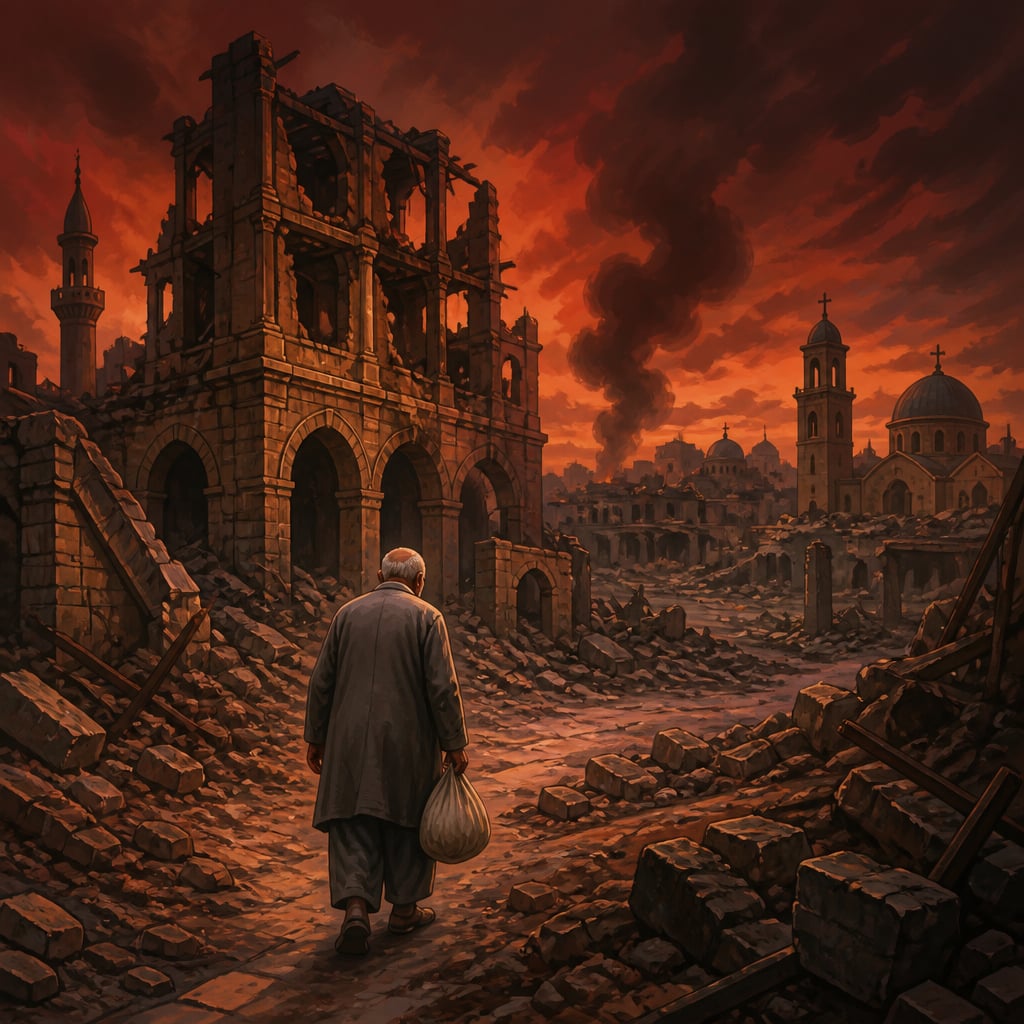
The Mechanism: The Four Domains of Civilizational Attack
Every civilization contains natural differences. Language, region, religion, caste, class, ethnicity, ideology. These differences exist in every human society. The question is not whether differences exist, but whether they are managed as diversity or weaponized as division.
Civilizational warfare operates by converting diversity into division. It works through four interconnected domains.
The Epistemological Domain: Controlling What People Know
The first and most powerful domain targets knowledge itself. Who controls what people know about their own history, philosophy, and identity? When an external power rewrites a civilization's history, distorts its philosophical traditions, or captures its educational institutions, it attacks the civilization's ability to understand itself.
In Syria, decades of Ba'athist education had already weakened organic cultural identity. When the war began, competing media ecosystems, each aligned with a different external patron (Al Jazeera with Qatar, RT with Russia, Western outlets with NATO interests), ensured that no Syrian could agree on basic facts about what was happening in their own country.
Kautilya identified this in the Arthashastra as the foundation of Bheda. Before you divide a population physically, you divide them epistemologically. Make them unable to agree on shared facts, shared history, or shared identity.
The Ontological Domain: Redefining Who People Are
The second domain attacks identity itself. Who are you? Are you Syrian first, or Sunni first? Are you Indian first, or Dalit first? Tamil first, or Bharatiya first?
Civilizational warfare works by making sub-identities more powerful than civilizational identity. When Belgian colonial administrators issued identity cards labeling Rwandans as "Hutu" or "Tutsi," they were not recording a pre-existing reality. They were creating a new one. The ontological attack redefines people's primary identity from a civilizational whole to a sub-group fragment.
This is what Rajiv Malhotra calls the "Breaking India" dynamic. External actors do not create India's diversity. They weaponize it by making regional, caste, linguistic, or religious identity feel more urgent than civilizational identity.
The Institutional Domain: Capturing or Destroying Institutions
The third domain targets the institutions that hold a civilization together: courts, universities, temples, media, bureaucracies, cultural organizations. When these are captured by hostile actors or destroyed outright, the civilization loses its structural framework.
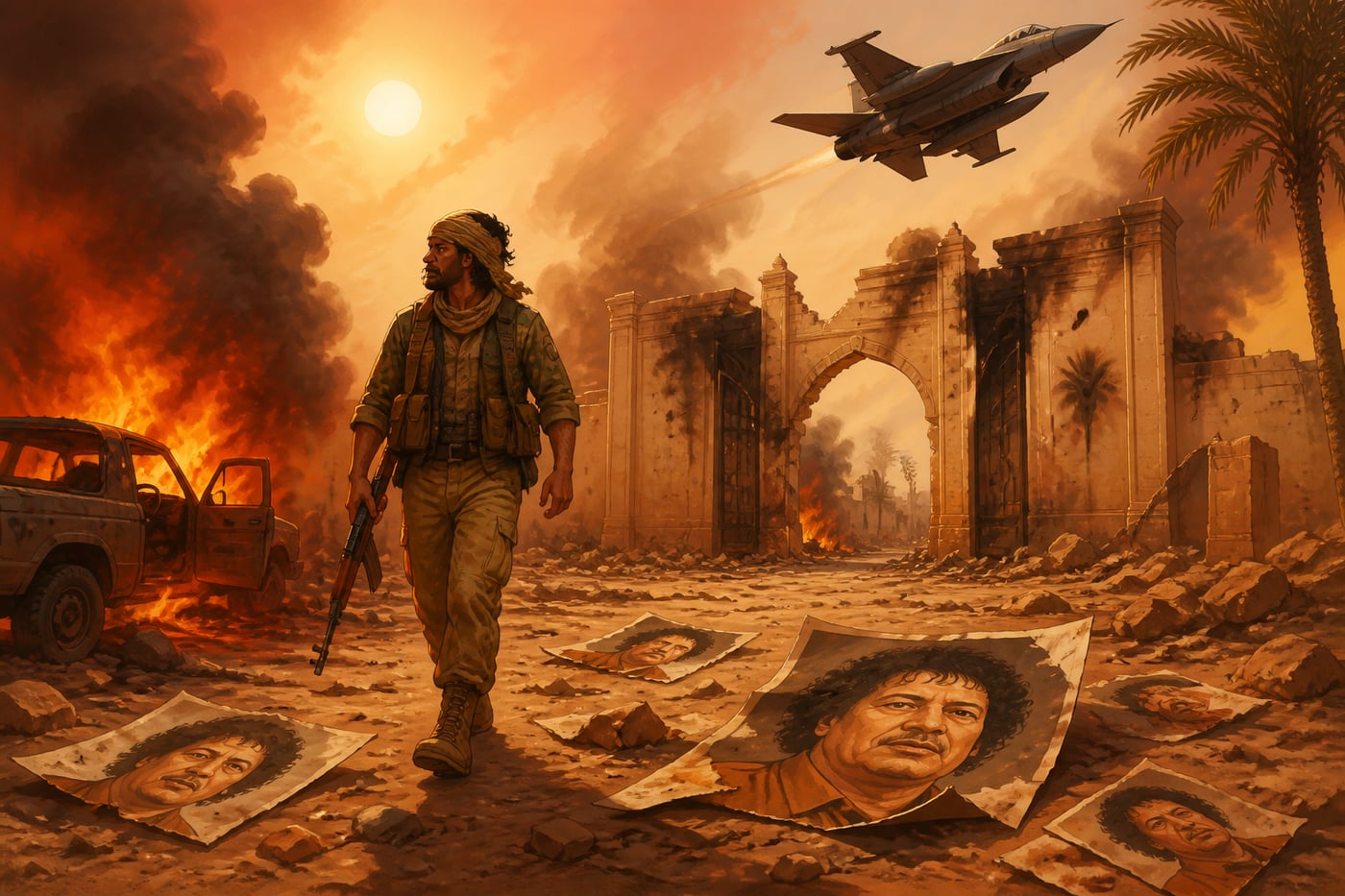
In Libya, NATO's 2011 intervention did not just remove Muammar Gaddafi. It destroyed the institutional framework that held together a tribal society. The result was not democracy but institutional vacuum, filled by militias organized along tribal faultlines.
Institutions are the skeleton of a civilization. Remove the skeleton, and the body collapses regardless of how strong the muscles are.
The Cultural Domain: Eroding Shared Practices
The fourth domain attacks the shared cultural practices that create civilizational cohesion: festivals, rituals, art forms, languages, pilgrimage traditions, food cultures. These everyday practices make a civilization a lived reality rather than an abstract concept.
When cultural practices are commercialized without meaning, suppressed as "backward," or replaced by globalized alternatives, the civilization loses its connective tissue. People may still share geography, but they no longer share a civilizational experience.
Natural vs. Weaponized Differences
The critical distinction is between natural faultlines and weaponized faultlines. Every society has natural differences. These are normal features of complex civilizations. Weaponization occurs when an actor deliberately:
- Identifies a natural difference
- Amplifies it through media, academia, or political mobilization
- Rigidifies it by creating institutional categories (census classifications, legal designations, electoral divisions)
- Funds one or both sides to escalate the difference into active conflict
- Provides ideological frameworks that make reconciliation seem impossible
This five-step process is the mechanism of faultline engineering. It is not conspiracy theory. It is documented statecraft, practiced by empires from Rome to the present.
The Pattern: Rwanda and the Manufacture of Genocide
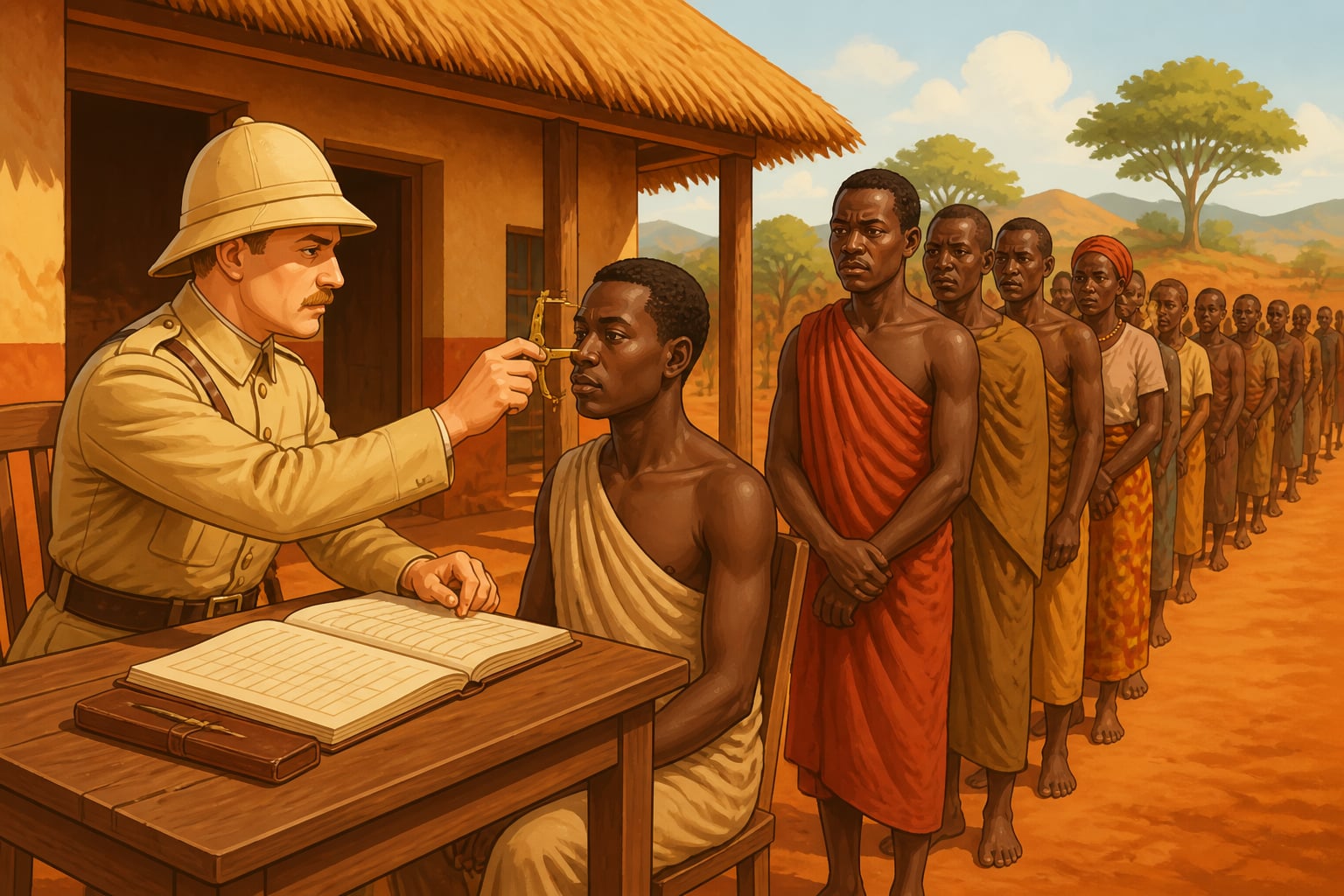
The most devastating example of faultline engineering in modern history is what happened when colonial Belgium decided to classify the people of Rwanda.
Before Belgian colonization, the terms "Hutu" and "Tutsi" described fluid social categories. They were closer to class designations than ethnic identities. Intermarriage was common. A Hutu who acquired cattle could become Tutsi. The categories were porous, contextual, and non-violent.
The Belgian colonial administration, applying European racial science, decided these were fixed racial categories. In 1933, they issued identity cards that permanently classified every Rwandan as Hutu, Tutsi, or Twa. Fluid social categories became rigid ethnic identities overnight.
The Belgians then created a colonial hierarchy. Tutsis were designated the "superior" race and given preferential access to education, administration, and economic opportunities. Hutus were designated the laboring class.
This is faultline engineering in its purest form. The Belgians did not create the difference between Hutu and Tutsi. They weaponized it by rigidifying it, hierarchizing it, and embedding it in institutional structures.
When Belgian control ended, the weaponized faultline remained. Decades of resentment, political mobilization along ethnic lines, and external interference (France backed the Hutu government) culminated in the 1994 genocide. Approximately 800,000 Tutsis were murdered in 100 days.
The lesson is precise: a natural social difference, once rigidified by colonial classification and embedded in institutional structures, can produce civilizational destruction decades after the original engineers have departed. The faultline, once weaponized, takes on a life of its own.
This pattern repeats. The British census in India rigidified jati into "caste." The Ottoman millet system's categories became the basis for post-World War I partition. Yugoslavia's ethnic categories, sharpened by Tito's federal structure, became the basis for the wars of the 1990s.
The engineers of these faultlines are rarely present when the destruction occurs. They set the charges. Time detonates them.
Dharmic Wisdom: Bheda and Viveka
The Arthashastra describes Bheda (sowing dissension) as one of the four Upayas available to a ruler. The other three are Sama (conciliation), Dana (inducements), and Danda (force). Of these, Kautilya considered Bheda the most cost-effective weapon in statecraft. It requires no armies. It costs no treasure. It simply requires understanding the existing differences within an adversary's society and amplifying them until the adversary destroys itself from within.
What makes the Arthashastra remarkable is not that it teaches Bheda. Every strategic tradition teaches division. Its distinction lies in also teaching defense against Bheda. Kautilya devotes extensive attention to Abhyantara Vidhi (internal consolidation), Gudhapurusha (intelligence networks), and Yogakshema (maintenance of social welfare and harmony) as defenses against external attempts at division.
The Mahabharata offers the same wisdom through narrative. Shakuni's entire strategy against the Pandavas is Bheda: exploiting jealousy between cousins, enabling gambling addiction, weaponizing wounded pride, and undermining institutions. The sabha (assembly) that watched Draupadi's humiliation and did nothing represents the institutional failure that allows faultline exploitation to succeed. Every one of these is a natural human weakness. Shakuni's skill lay in weaponizing them into civilizational destruction.
The Mahabharata also offers the antidote. Krishna's counsel is built on Viveka: discernment. The ability to see what is being done to you. To recognize when your natural emotions are being manipulated by someone else's strategy. To distinguish between genuine grievance and manufactured outrage.
Viveka is the first defense against Bheda. You cannot resist a weapon you cannot see.
The Defense: Three Levels of Civilizational Immunity
If Bheda is the disease, what is the immune system? Civilizational immunity operates at three levels.
Individual level: Cultivate Viveka. Learn to ask: "Who benefits from my anger?" Every time a news story, social media post, or academic paper frames your sub-identity (caste, region, language, religion) as under threat from another Indian group, pause. Ask who benefits from this division. Follow the funding. Trace the narrative to its source. This is not paranoia. It is the discipline of discernment that both Kautilya and Krishna prescribe.
Community level: Strengthen civilizational identity. The strongest defense against faultline engineering is a civilizational identity deeper and more meaningful than any sub-identity. When people feel genuinely connected to a shared heritage through festivals, philosophy, shared narratives, pilgrimage, and arts, sub-identities become enriching rather than divisive. Tamil, Punjabi, Bengali, Marathi: these are treasures within a civilizational framework. They become weapons only when the framework is weakened.
Institutional level: Build counter-infrastructure. Civilizations that survive faultline attacks do so because they build institutions designed to counter them: intelligence systems that track foreign funding of divisive movements, media ecosystems that compete with hostile narratives, educational institutions that teach civilizational history alongside regional history, and legal frameworks that address foreign interference in domestic faultlines.
The lesson from Syria, Rwanda, and Libya is clear: civilizations that cannot see the engineering do not survive it. The first step in unbreaking India is learning to see the science of breaking nations.
Case studies
Rwanda: The Belgian Engineering of Genocide
Before Belgian colonization, 'Hutu' and 'Tutsi' were fluid social categories in Rwanda, closer to class than ethnicity. Intermarriage was common, and a Hutu who acquired cattle could become Tutsi. In 1933, the Belgian administration issued identity cards that permanently classified every Rwandan as Hutu, Tutsi, or Twa, applying European racial science to create fixed ethnic categories. Tutsis were given preferential access to education and administration. This rigidification created a colonial hierarchy that outlasted colonial rule.
The Arthashastra warns that Bheda succeeds by exploiting existing structures. The Belgians followed the five-step weaponization process: identify (social categories), amplify (racial theory), rigidify (identity cards), fund (educational preferences for Tutsis), and provide ideology (racial superiority framework). Kautilya would recognize this as textbook Bheda at civilizational scale.
Decades after Belgian departure, the weaponized faultline exploded. The 1994 Rwandan genocide killed approximately 800,000 Tutsis in 100 days. The identity cards that Belgians introduced in 1933 were used at roadblock checkpoints to identify Tutsis for killing sixty years later.
Colonial classification does not expire with colonial rule. Once natural social categories are rigidified into institutional identities, they become self-perpetuating weapons. The engineers leave; the charges remain.
The Rwanda pattern directly parallels the British census rigidification of jati into 'caste' in India. Both involved European colonial powers applying racial science to classify fluid social categories into permanent hierarchies.
The 1994 genocide killed roughly 70% of Rwanda's Tutsi population in just 100 days, making it the most efficient mass killing in recorded history. The identity cards introduced by Belgium in 1933 were the primary tool used to identify victims at checkpoints.
Libya 2011: NATO and the Shattering of a Tribal State
In 2011, NATO intervened in Libya's civil unrest, ostensibly to protect civilians. The intervention resulted in the removal and killing of Muammar Gaddafi and the complete collapse of the Libyan state. Libya's social structure was organized around approximately 140 tribes and clans held together by a centralized (if authoritarian) institutional framework. NATO's intervention destroyed this framework without providing any replacement. The country fragmented along tribal lines into competing governments, militias, and territories.
Kautilya's Arthashastra emphasizes that institutional destruction without replacement creates Matsya Nyaya (law of the fish, where the strong devour the weak). NATO attacked the institutional domain without understanding that these institutions, however imperfect, were the only thing preventing tribal faultlines from becoming battle lines. The Arthashastra would classify this as destroying Danda (state authority) without establishing alternative governance.
By 2014, Libya had two competing governments, hundreds of armed militias, and open slave markets. It became a transit point for migration crises affecting all of Europe. As of 2024, Libya remains a fractured state with no unified government, thirteen years after the intervention.
Destroying institutions without replacement is the fastest path to civilizational collapse. Faultlines managed (even imperfectly) by institutional structures become uncontrollable once those structures are removed.
Libya demonstrates what happens when the institutional domain is destroyed without addressing the ontological or cultural domains. For India, this applies to calls for dismantling existing institutions without first building alternatives.
Libya went from the highest Human Development Index in Africa (2010) to a failed state with open slave markets (2017) in just seven years. The country with Africa's highest per-capita income became a symbol of state collapse.
British Census in India: 60 Years of Bureaucratic Faultline Engineering
Between 1871 and 1931, the British colonial administration conducted decennial censuses that progressively rigidified India's fluid jati system into fixed 'caste' categories. Herbert Hope Risley, Census Commissioner for 1901, explicitly applied racial anthropometry (nasal index measurements) to classify Indian communities into racial hierarchies. Each census created new categories, froze social mobility, and embedded these classifications into legal, administrative, and electoral structures. The 1935 Government of India Act formalized 'Scheduled Castes' as a legal category, completing the institutional rigidification.
The five-step weaponization process visible in slow motion: Identify (the British noticed jati as a social structure), Amplify (applied European racial science to reframe jati as racial hierarchy), Rigidify (census classifications, identity documents), Fund (separate electorates creating political incentives for caste mobilization), Provide Ideology (Aryan Invasion Theory as the framework for caste-as-race). The Arthashastra's Bheda principle applied over sixty years of bureaucratic statecraft.
The census classifications outlived colonial rule. Independent India inherited and in some cases deepened these categories through reservation policies and political mobilization. The fluid jati system that allowed figures like Chandragupta Maurya, Valmiki, and Shivaji to transcend social boundaries became a rigid caste system that defines modern Indian politics.
Bureaucratic faultline engineering is the slowest but most durable form. Unlike military destruction (Libya) or identity card systems (Rwanda), bureaucratic rigidification embeds itself in the governing structure, making it nearly impossible to reverse without dismantling the administrative state.
The British census categories remain the foundation of India's reservation system, electoral politics, and social identity frameworks in 2026. This case study foreshadows Chapter 5 where the full consequences of this engineering are examined.
Risley's 1901 census classified 2,378 castes and tribes into a racial hierarchy based on nasal measurements. These classifications, created by a single colonial bureaucrat using now-discredited racial science, continue to shape Indian law and politics over 120 years later.
Reflection
- Think about the last time a news story or social media post made you feel intense anger toward another Indian community (based on caste, region, language, or religion). Who created and distributed that content? Who benefited from your emotional reaction?
- If every civilization contains natural differences, what determines whether those differences strengthen or destroy a society? Is diversity inherently a vulnerability, or does vulnerability come only from external exploitation?
- Kautilya taught both the use and defense against Bheda. Is it ethical to study the science of civilizational division? Can you genuinely defend against a weapon you refuse to understand?