Coexistence With Eyes Open
Security Against Radicalism With Friendship Toward Communities
The counter-strategy for the Islamist faultline rests on three pillars: security without apology, genuine community partnership, and ideological clarity. Shivaji's dharmic statecraft and Dixit's One Nation Theory provide the blueprint for civilizational coexistence.
See It Today: France's Experiment in Civilizational Discernment
On October 16, 2020, Samuel Paty, a French schoolteacher, was beheaded outside his school for showing Charlie Hebdo cartoons during a class on free expression. The murder followed an organized social media campaign that targeted him by name, posted his school's address, and called for retribution. Within months, France passed the "Loi confortant le respect des principes de la République," commonly known as the Separatism Law, in August 2021.
The law attempted something no Western democracy had tried at this scale: legally distinguishing between Islam as a faith and Islamism as a political ideology seeking to override republican values. It required religious associations to sign a republican principles charter affirming gender equality and rejecting political Islam. It tightened controls on foreign funding of mosques. It created tools to dissolve organizations promoting separatist ideology. It restricted homeschooling, which had been used to bypass secular education requirements.
The results have been instructive but mixed. France dissolved several organizations linked to the Muslim Brotherhood and Turkish nationalist movements. It closed mosques that had served as radicalization centers. It repatriated dozens of foreign-funded imams. But France also faced accusations of surveilling practicing Muslims who had nothing to do with radicalism. Many French Muslims felt targeted rather than protected.
France's experiment reveals both the necessity and the difficulty of the central question: can a diverse society maintain security against radicalization without treating an entire community as suspect? France tried legal precision. It succeeded in dismantling some radical networks but struggled with proportionality. The lesson is not that France's specific approach should be copied, but that the attempt itself, distinguishing ideology from community, security from hostility, is the defining civilizational challenge of this century. India's own tradition offers a more sophisticated and time-tested framework.
The Mechanism: The Arthashastra Model for Eyes-Open Coexistence
Kautilya's Arthashastra provides what may be the world's most sophisticated framework for managing internal diversity while maintaining civilizational security. It operates on a principle that modern political science has not improved upon: assess threats based on behavior and capability, never on identity alone.
Dixit's "One Nation Theory"
Sanjay Dixit, in Unbreaking India, proposes what he calls the "One Nation Theory" as the intellectual counter to the two-nation theory that produced Partition. His argument is precise: the two-nation theory did not die with Partition. It continues to operate as an ideological gravitational pull, visible in separatist movements, pan-Islamist networks, and the theological infrastructure examined in earlier lessons. Any serious civilizational strategy must acknowledge this pull while building a Bharatiya identity strong enough to transcend it.
The One Nation Theory does not deny that the two-nation theory has adherents. It does not pretend that radicalization is imaginary. Instead, it argues that civilizational unity is built not by ignoring threats but by offering something more powerful than the separatist alternative: a genuine, dignified place within the civilizational framework for every community that accepts its foundational principles.
This is the "eyes open" dimension. Coexistence is not naivety. It is a strategic choice made from a position of civilizational confidence and supported by robust security architecture.
The Three-Pillar Framework
Eyes-open coexistence operates on three simultaneous pillars.
Pillar 1: Security Without Apology. Radicalization networks, terror financing, foreign-funded ideological operations, and demographic warfare are security threats. They must be treated with intelligence operations, legal frameworks, and enforcement. The Arthashastra is unambiguous: a state that fails to address internal security threats out of misplaced sentiment will not survive. This is Danda (legitimate force) applied to those who threaten civilizational integrity. The critical distinction: Danda targets behavior and networks, not communities or identities.
Pillar 2: Genuine Partnership. The vast majority of Indian Muslims are Bharatiya in civilizational identity. Their ancestors chose to remain in India at Partition. Many carry traditions, Sufi, Barelvi, and regional, that are deeply embedded in the Bharatiya cultural fabric. Partnership means economic inclusion, political representation that is not mediated by vote-bank politics, and cultural recognition of the shared civilizational heritage that connects Rahim's dohas to Tulsidas's chaupais, Bismillah Khan's shehnai to Ravi Shankar's sitar.
This is Sama (conciliation) and Dana (investment) directed toward community integration. Not as charity or appeasement, but as civilizational strategy. A civilization that alienates its own members creates the very faultlines that adversaries exploit.
Pillar 3: Ideological Clarity. The most challenging pillar. Coexistence requires that all communities accept certain civilizational fundamentals: the territorial integrity of India, the equal dignity of all citizens regardless of religion, the rejection of theocratic governance, and the acknowledgment of India's civilizational heritage as a shared inheritance. These are non-negotiable civilizational principles, not sectarian demands.
Dixit argues that the failure of post-independence Indian secularism was its refusal to demand this ideological clarity. "Secularism" became appeasement of communal demands rather than the establishment of shared civilizational values. The One Nation Theory corrects this by making Bharatiyata (civilizational belonging) the foundation of coexistence rather than communal bargaining.
The Indonesia Contrast
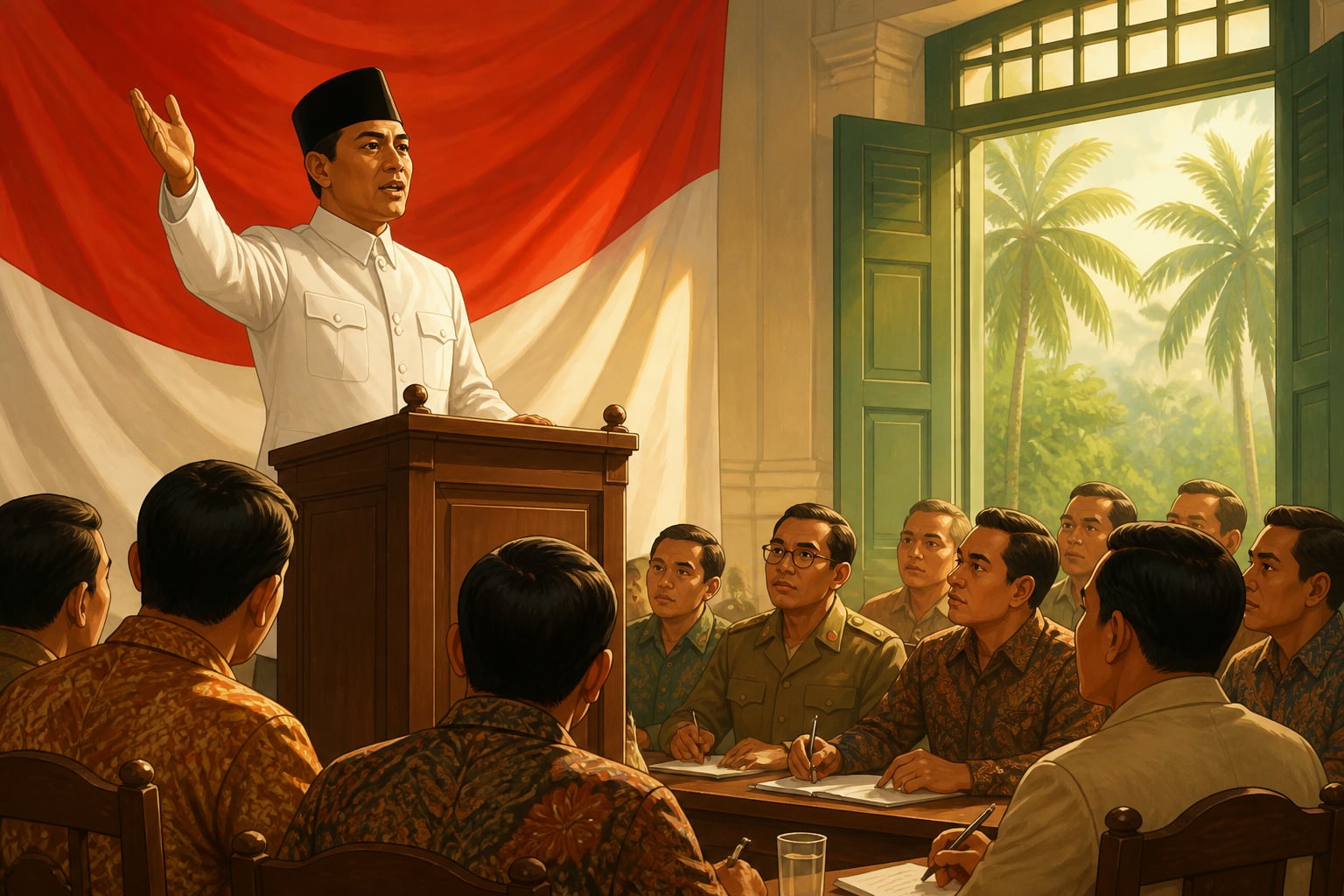
Indonesia, the world's largest Muslim-majority nation, offers a powerful comparative model. When Sukarno proclaimed independence in 1945, the original Jakarta Charter included an obligation for Muslims to follow sharia. This clause was removed within 24 hours to preserve national unity with Christian-majority eastern Indonesia. In its place, Pancasila, five principles anchored in "Belief in the One and Only God" without specifying which, became the constitutional foundation.
Pancasila has survived authoritarian rule, democratic transition, and multiple Islamist challenges. In 2017, Indonesia banned Hizbut Tahrir, an organization promoting a global caliphate, while maintaining robust civic space for Islamic participation in governance and society. The Indonesian model demonstrates that Muslim-majority societies can choose civilizational pluralism over theocratic governance when the unifying framework offers genuine dignity to all communities.
The Arthashastra framework goes further than either the French or Indonesian model because it recognizes that institutional measures alone are insufficient. Civilizational cohesion requires shared narratives, shared practices, and a shared sense of belonging that transcends legal mandates.
The Pattern: Shivaji's Dharmic Statecraft
The most powerful Indian precedent for coexistence with eyes open is Chhatrapati Shivaji Maharaj's approach to the Mughal Empire and Muslim communities.
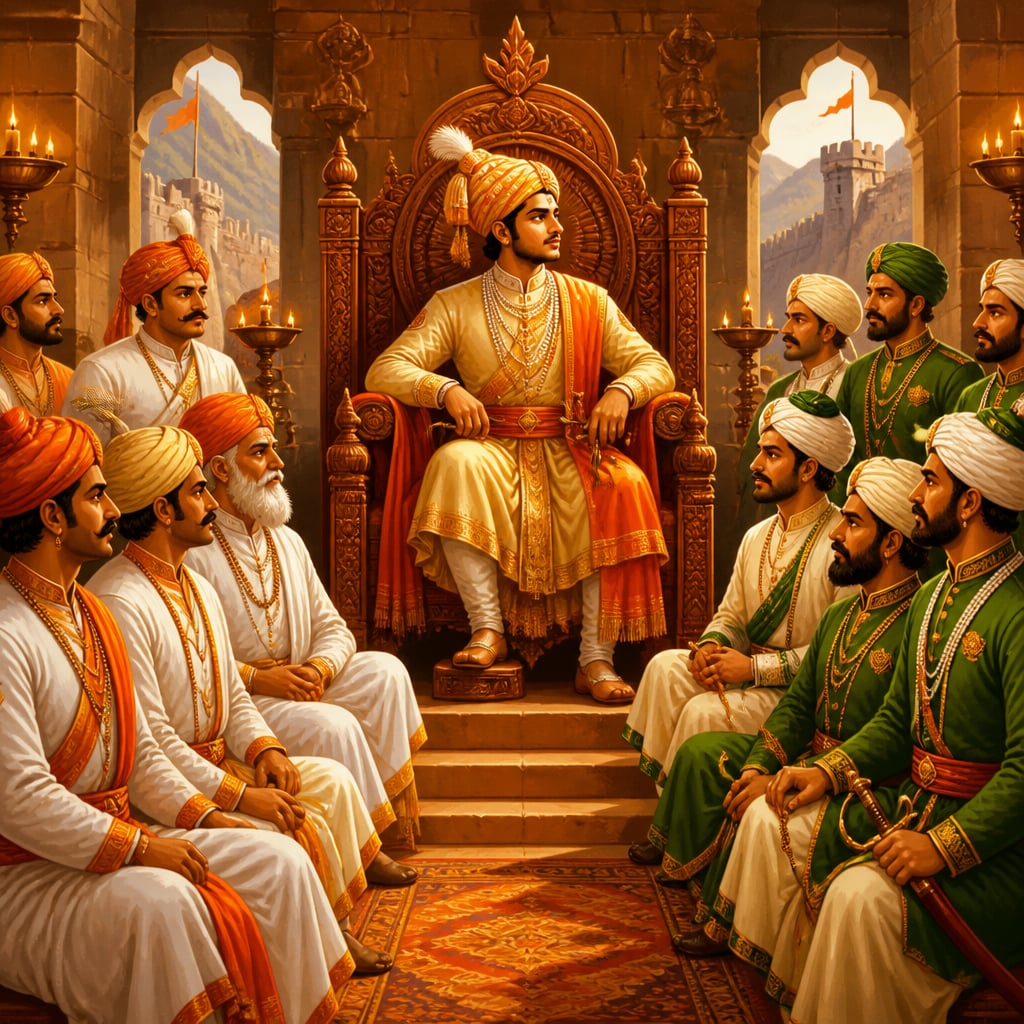
Shivaji fought the Mughal Empire with extraordinary strategic brilliance. He launched guerrilla campaigns against Aurangzeb's forces, fortified the Sahyadri mountains, built a formidable navy, and established Hindavi Swarajya as a civilizational project. By any measure, he was a civilizational warrior of the highest order.
And yet his administration employed Muslim officers and commanders. His navy included Muslim seafarers. When his forces captured women in battle, regardless of their religion, he ordered them treated with absolute honor. In the well-documented incident from the Kalyan campaign, Shivaji rebuked his commander for presenting a captured Muslim noblewoman and ordered her returned with gifts and a military escort. His diplomatic correspondence with Aurangzeb did not attack Islam. It attacked Aurangzeb's betrayal of the Quranic principles of justice and tolerance that Aurangzeb himself claimed to uphold.
This was not weakness or naivety. This was strategic sophistication of the highest order. Shivaji understood what Kautilya had codified centuries earlier: a civilization that fights ideology with identity-based hatred destroys itself. The enemy was not Islam. The enemy was political tyranny that used religion as its vehicle. The moment you confuse the two, you lose the strategic battle even if you win the military one.
Shivaji's practice embodied the three-pillar framework centuries before it was theorized. Security: uncompromising military defense against Mughal expansion. Partnership: Muslim soldiers, administrators, and subjects as integral parts of the Swarajya. Ideological Clarity: the civilizational project was Hindavi Swarajya, self-rule rooted in dharmic governance, not anti-Muslim vendetta.
Compare this with the two-nation theory's architects, who defined identity in exclusionary religious terms. Jinnah's framework required Muslims to see themselves as fundamentally alien to Indian civilization. Shivaji's framework required no such alienation. It offered every community a dignified place within a civilizational order, provided they respected its foundational principles.
This pattern extends beyond Shivaji. The Sikh Gurus fought Mughal tyranny while maintaining deep respect for Islamic spiritual traditions. Guru Gobind Singh's court included Muslim poets. The Vijayanagara emperors employed Muslim generals while defending dharmic civilization against the Sultanates. India's greatest civilizational defenders consistently distinguished between hostile political ideology and the communities from which that ideology drew recruits. When this distinction was maintained, civilizational strength grew. When it was abandoned, integrity suffered.
Dharmic Wisdom: Sama, Danda, and the Art of Civilizational Balance
The Arthashastra does not teach kindness. It does not teach hatred. It teaches strategic calibration based on the nature of the threat and the character of the actor.
Kautilya classifies relationships using the Mandala (circle) theory. Not every neighbor is an enemy. Not every ally is permanent. The wise ruler constantly reassesses based on behavior, capability, and intent. Applied to internal community relations, this principle produces the framework for eyes-open coexistence: judge by actions, not by birth.
The Mahabharata's Shanti Parva provides the philosophical depth. Bhishma, speaking from his bed of arrows, tells Yudhishthira that a king must protect all subjects equally regardless of their beliefs. But he must also remain vigilant against those who seek to undermine the kingdom's foundations from within. Protection and vigilance are not contradictions. They are complementary duties of dharmic governance.
The concept of Yogakshema captures this balance with precision. Yoga (attainment, security) and Kshema (preservation, welfare) must operate together. A state that provides Kshema without Yoga is vulnerable to predation. A state that provides Yoga without Kshema is tyrannical. The civilizational ideal demands both simultaneously.
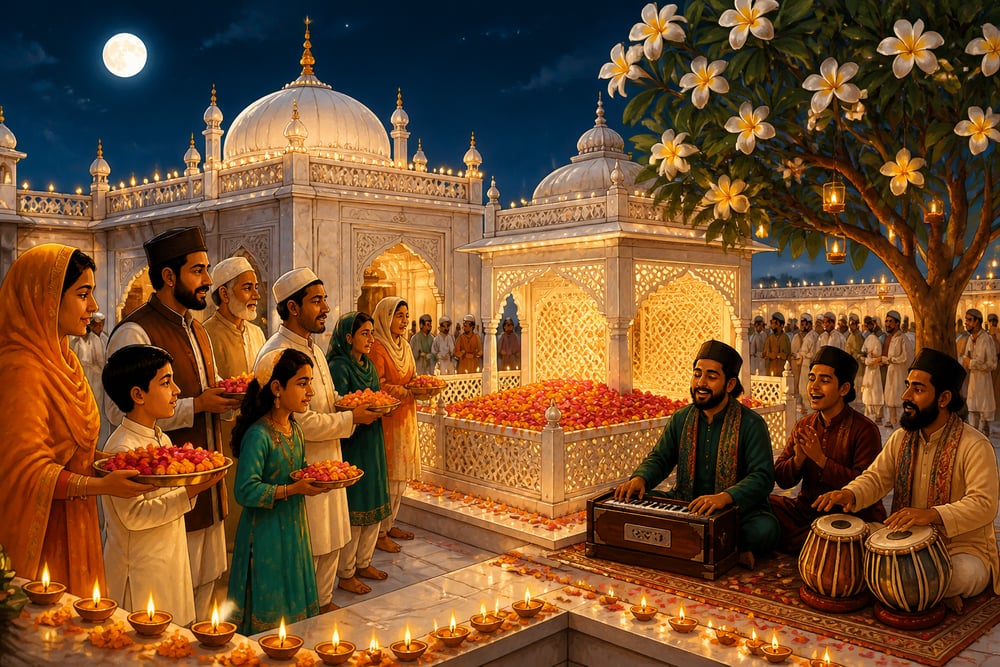
This is precisely what Dixit's One Nation Theory requires: a Bharatiya identity that offers genuine belonging (Kshema) while maintaining civilizational integrity (Yoga). Neither alone is sufficient. Together, they create a civilizational framework more attractive than the separatist alternative and more durable than coercion.
The Vidur Niti warns: the ruler who treats the well-disposed as enemies and enemies as friends ruins his kingdom through confusion of categories. The counter-strategy for the Islamist faultline rests on this precise insight. Treating an entire community as the enemy creates enemies where none existed. Treating genuine security threats as mere "community representatives" prevents effective defense. Viveka, the discernment to tell the difference, is the master key to this entire chapter.
The Defense: Building the Eyes-Open Coexistence Framework
The counter-strategy for Chapter 7 synthesizes into six actionable domains. This is the chapter's complete counter-strategy, not just this lesson's prescription.
1. Security Architecture: Firm and Precise. Build intelligence and legal infrastructure that targets radicalization networks, not communities. FCRA reform to track foreign funding of radical organizations. NIA and state-level counter-terror capacity strengthened continuously. Madrasa modernization with government support for quality education while monitoring for radicalization content. The standard is behavioral: anyone promoting violence, territorial separatism, or theocratic governance is a security concern regardless of religion. Anyone living peacefully is a citizen with full rights regardless of religion.
2. Economic Integration: Shared Prosperity. Radicalization feeds on economic exclusion. The Sachar Committee (2006) documented real economic disparities among Indian Muslims. Address these through skill development, entrepreneurship support, and access to credit. Not through reservation or vote-bank patronage that reinforces communal identity politics. The Arthashastra's Dana principle: investment in community welfare is strategic investment in civilizational stability.
3. Theological Space for Reform. Support and amplify Indian Islamic reform voices. Pasmanda activists challenging ashraf dominance. Progressive scholars promoting Ijtihad (independent reasoning) over Taqlid (blind following). Sufi and Barelvi traditions that emphasize spiritual practice over political Islam. The reform must come from within the community. External pressure produces backlash. But creating space, platforms, and protection for internal reformers is legitimate civilizational strategy.
4. Shared Civilizational Narrative. Build the narrative of shared heritage that Dixit's One Nation Theory demands. Amir Khusrau's Hindi-Persian poetry. Dara Shikoh's translation of the Upanishads. Bismillah Khan's shehnai at the Kashi Vishwanath temple. Rahim's dohas in every Indian schoolbook. Abdul Kalam's Bharatiya identity. These are not exceptions to a rule of civilizational separation. They are evidence of a civilizational synthesis that the two-nation theory tried to erase. Make this synthesis visible, aspirational, and central to national identity.
5. Institutional Safeguards. Uniform Civil Code as civilizational baseline, applied equally to all. Population policy based on development indicators, not communal targeting. Anti-conversion laws that protect genuine choice while preventing coercion and exploitation. Temple liberation that applies the same governance principles to all religious institutions. The key: every policy must be universal in application, even if particular communities feel its impact differently. Universality of law is the foundation of genuine coexistence.
6. Individual Responsibility: The Civilizational Citizen. Every Indian who shares a meal with a neighbor of a different faith, who attends a cultural event from another tradition, who judges individuals by character rather than community label, who refuses to forward hate-filled social media content, who teaches their children that Bharatiyata transcends religious categories: these are the infantry of civilizational coexistence. No government policy can substitute for the daily practice of civilizational citizenship.
The Arthashastra's deepest insight is that civilizational security and civilizational generosity are not opposites. They are the two hands of effective governance. A civilization confident enough to welcome all its members while vigilant enough to defend against those who would fragment it: this is the civilization that cannot be broken.
Coexistence with eyes open is not a compromise. It is the highest form of civilizational strength.
Case studies
France's Separatism Law: The Western Experiment in Eyes-Open Coexistence
In 2021, after a series of terror attacks culminating in the beheading of schoolteacher Samuel Paty, France passed the "Law Reinforcing Republican Principles." The law required religious associations to sign a charter affirming gender equality and rejecting political Islam. It tightened controls on foreign mosque funding, expanded powers to dissolve organizations promoting separatist ideology, restricted homeschooling, and strengthened oversight of religious schools. France explicitly attempted to create legal tools for distinguishing between Islam (protected faith) and Islamism (targeted political ideology).
The Arthashastra's framework reveals both France's insight and its limitation. France correctly identified the need for Danda (legitimate force) against radical networks, which is the first pillar. But France's approach was primarily institutional and legal, addressing only one of the three pillars. It lacked the 'partnership' pillar (genuine community investment that creates civilizational belonging) and the 'ideological clarity' pillar (a positive civilizational identity that Muslim citizens could embrace). Without all three pillars, the law produced compliance without cohesion.
France dissolved organizations linked to the Muslim Brotherhood, closed radicalization-linked mosques, and repatriated foreign-funded imams. However, surveys showed that a significant portion of French Muslims felt targeted rather than protected. The law addressed institutional radicalization but did not solve the deeper identity crisis: France has not offered its Muslim citizens a positive civilizational identity comparable to Bharatiyata or Pancasila.
Legal and security measures are necessary but insufficient. A coexistence strategy that applies Danda without Sama and Dana creates compliance without genuine belonging. Security architecture must be paired with civilizational inclusion.
France's experience directly informs India's approach. India has similar security challenges but possesses something France lacks: a millennia-old civilizational framework that historically included Muslim communities. India can build on existing civilizational synthesis rather than constructing inclusion from scratch.
France has Europe's largest Muslim population (approximately 5.7 million, about 8.8% of the population). Between 2012 and 2020, France suffered more Islamist terror attacks than any other European country, with over 270 people killed, prompting the most comprehensive Western legislative response to radicalization.
Shivaji Maharaj: The Original Eyes-Open Coexistence Model
Chhatrapati Shivaji Maharaj (1630-1680) built the Maratha Empire while fighting the Mughal Empire under Aurangzeb. His military campaigns were decisive and uncompromising. Yet his governance model systematically included Muslim administrators, military commanders, and naval officers within the Swarajya. He protected mosques in conquered territories, returned captured Muslim women with honor and military escort, and his diplomatic correspondence criticized Aurangzeb's tyranny without attacking Islam. His navy, which eventually controlled much of the western Indian coast, included Muslim sailors and commanders.
Shivaji embodied all three pillars simultaneously. Pillar 1 (Security): relentless military defense against Mughal expansion with guerrilla innovation. Pillar 2 (Partnership): Muslim officers like Haider Ali Kohari served in his administration, and Ibrahim Khan commanded artillery. Pillar 3 (Ideological Clarity): Hindavi Swarajya was a civilizational project rooted in dharmic governance, explicitly not an anti-Muslim crusade. Kautilya would recognize this as the complete Arthashastra framework: Danda against hostile power, Sama and Dana toward communities, Viveka to distinguish between the two.
The Maratha Empire that Shivaji founded lasted over 150 years and at its peak controlled most of the Indian subcontinent. Its longevity was built on the civilizational legitimacy Shivaji established: a governance model that people of all communities could participate in with dignity, backed by military strength that no adversary could ignore.
Civilizational defense and community inclusion are not contradictions but complementary foundations of durable power. The statesman who fights tyranny while honoring the communities from which tyranny draws recruits wins both the military and the civilizational contest.
Shivaji's model directly answers the false binary that dominates modern debate: either tough on radicalism or inclusive toward Muslims. Shivaji was both, and his governance proves that this combination is not wishful thinking but demonstrated historical statecraft.
During Shivaji's rule, the Maratha navy grew from a handful of vessels to a fleet of over 400 ships. This navy, which included Muslim seafarers and commanders, controlled the western Indian coast from Mumbai to Goa, demonstrating that inclusive governance and military dominance can coexist.
Indonesia's Pancasila: A Muslim-Majority Nation Chooses Civilizational Pluralism
When Indonesia declared independence in 1945, the founding committee debated whether the new state should be explicitly Islamic. The original Jakarta Charter included "with the obligation for adherents of Islam to carry out Islamic sharia." On August 18, 1945, one day after independence, this clause was removed to preserve national unity with Christian-majority eastern Indonesia. In its place, Pancasila's first principle became "Belief in the One and Only God" without specifying Islam. This framework has governed the world's largest Muslim-majority nation (230+ million Muslims) for nearly eight decades, surviving authoritarian rule, democratic revolution, and multiple Islamist challenges.
Pancasila mirrors the Arthashastra's Yogakshema framework applied at civilizational scale. Yoga (security): Indonesia banned Hizbut Tahrir in 2017 and maintains firm anti-terrorism laws. Kshema (welfare): Pancasila guarantees genuine religious freedom and civic participation for all communities. The removal of the sharia clause was not anti-Islamic but pro-civilizational, creating a framework where Muslim citizens participate as full members of a diverse nation rather than as a religious majority imposing uniformity.
Indonesia has maintained territorial integrity and civilizational cohesion across 17,000 islands, 300+ ethnic groups, and six officially recognized religions. Indonesia's democracy is imperfect but functional, and Pancasila has survived every challenge, from Suharto's authoritarianism to post-2002 Islamist terrorism, proving the durability of the civilizational pluralism model.
Muslim-majority societies can choose civilizational pluralism over theocratic governance when the unifying framework offers genuine dignity and participation to all communities. The key is a positive civilizational identity strong enough to resist the gravitational pull of exclusivist ideology.
Indonesia's experience validates India's civilizational approach. If the world's largest Muslim-majority nation can maintain pluralism through a unifying civilizational framework, India, with its millennia-old dharmic tradition of philosophical pluralism, has even stronger foundations for achieving the same.
Indonesia has 230+ million Muslims, making it the world's largest Muslim-majority nation. Despite its size, it has never had a national sharia-based legal system. The Pancasila framework has governed the archipelago of 17,000 islands for nearly 80 years, surviving 7 presidents and multiple regime changes.
Reflection
- Think about your daily interactions with people from different religious communities. Do you approach these interactions with genuine warmth combined with honest awareness, or do you default to either suspicion or deliberate avoidance of uncomfortable realities? What would change if you practiced both friendship and honesty simultaneously?
- Shivaji fought the Mughal Empire while employing Muslim officers in his own administration. How did he maintain the internal clarity to distinguish between an adversary's political ideology and the communities that ideology claimed to represent? What does this distinction demand of a civilization's self-understanding?
- Is 'coexistence with eyes open' a permanent condition or a transitional strategy? Can a civilization ever reach a point where vigilance is no longer necessary, or is the Arthashastra correct that strategic awareness must be perpetual?