Vangadesha: Bangladesh's Sacred Geography
Jessoreswari, Chatalhati, and Sugandha
Explore the Shakti Peethas in modern Bangladesh. Visit Jessoreswari where Sati's hands fell, Chatalhati, and Sugandha where her nose fell. Understand the challenges faced by these temples, the Hindu minority's devotion, and cross-border pilgrimage traditions.
The Land of the Goddess
Bengal, undivided Bengal, was once the heartland of Shakti worship. The rivers, the monsoons, the fertile delta teeming with life made it natural country for the Mother Goddess. When Partition split this land in 1947, several of the most ancient Shakti Peethas found themselves in what became East Pakistan, later Bangladesh.
Today, these sites endure, diminished but alive, maintained by Bangladesh's Hindu minority with determination that mirrors the Goddess's own indestructible power. The Vangadesha ("land of Bengal") peethas teach that Shakti cannot be erased by political boundaries any more than the monsoon can be stopped by lines on a map.
Jessoreswari: Where the Hands Fell
In the Jessore district (now Yashohara) of southwestern Bangladesh lies Jessoreswari, where Sati's palms (tala) or hands are said to have fallen. The Goddess here is worshipped as Yashoreswari or Jessoreswari, the "Lady of Jessore."
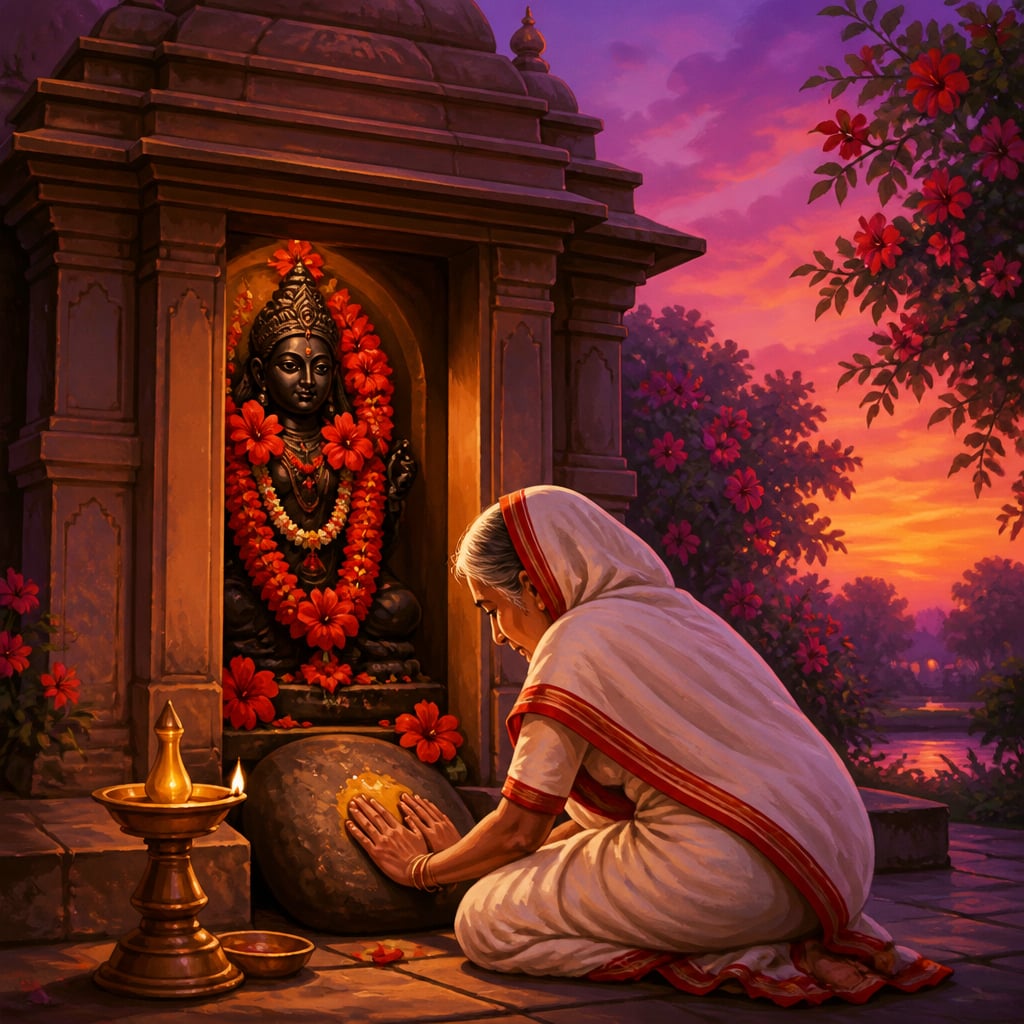
The temple, located in the town of Ishwaripur, was once a major pilgrimage center for the entire Bengal region. The original structure dates to ancient times, though it has been rebuilt multiple times through history. The sanctum houses the sacred stone believed to represent the Goddess's hands, the instruments through which Shakti acts in the world.
The Symbolism of Hands
In Hindu iconography, hands represent karma, action, work, blessing, and giving. The Goddess's hands are always depicted in meaningful gestures: abhaya mudra (the gesture of fearlessness), varada mudra (the gesture of boon-giving). That her hands fell at Jessoreswari suggests this is a place where divine action enters the world, where the Goddess's blessings become tangible.
Devotees come here seeking practical help, success in work, removal of obstacles, the capacity to act effectively in the world. The hands that fell here still reach out to bless.
The Bhairava: Chanda
The Bhairava at Jessoreswari is Chanda (sometimes listed as Chanda Bhairava), representing the fierce, passionate aspect of Shiva-consciousness. The name relates to intensity, heat, anger, the transformative fire of consciousness that accompanies powerful action.
Sugandha: Where the Nose Fell

In the Shikarpur area of Bangladesh (near ancient Sugandha village) lies another peetha where Sati's nose (nasika) is said to have fallen. The Goddess here is called Sunanda or Sugandha, names meaning "beautiful fragrance" and "sweet scent."
The Symbolism of Fragrance
The nose, in yogic understanding, connects to prana, the breath of life. Fragrance is subtle, invisible, yet immediately perceptible. The Goddess at Sugandha represents the subtle presence of the divine, not always visible, but always sensed by those with awareness.
The name "Sugandha" may also reflect the region's historical connection to spice trade and aromatic plants. The sacred and the commercial intertwined: merchants seeking divine blessing for their fragrant wares, the Goddess herself embodied as the essence that travels invisibly on the wind.
The Bhairava: Tryambaka
The Bhairava here is Tryambaka, "the three-eyed one," a direct reference to Shiva's transcendent vision. The third eye sees beyond physical appearance to subtle reality, appropriate for a site dedicated to the nose, the organ of subtle perception.
Chattala/Chatalhati: The Disputed Peetha
Some traditions identify a third major peetha in the Bangladesh region at Chattala or Chatalhati (near Chittagong). This site's exact location and the body part associated with it vary in different texts, some say Sati's right arm, others her bangles or ornaments.
The uncertainty reflects a broader truth: the Shakti Peetha tradition is not a rigid historical record but a living mythology. Sites emerge, are identified, disputed, forgotten, and rediscovered. The Goddess cannot be pinned to coordinates; she manifests where devotion calls her.
Survival Against Odds
The Hindu population of Bangladesh has declined from approximately 22% at Partition to around 8% today. Through communal violence, emigration, and social pressure, the community has shrunk dramatically. Yet the temples remain.
Local Hindu families continue to maintain these sites, often at personal risk. During festivals, the temples come alive with worship, even if the crowds are smaller than in pre-Partition days. Pilgrims from India, especially from West Bengal, still make the journey when visas and circumstances permit.
This persistence is itself a form of Shakti, the power that sustains against destruction, the mother who protects her children against all odds.
The Undivided Bengal Memory
For older Bengali Hindus, especially those whose families fled during Partition, the Bangladesh peethas carry special poignancy. These are ancestral lands, family homesteads, childhood memories preserved in temple stones.

The annual Durga Puja celebrations at Jessoreswari and other sites attract not just local devotees but diaspora Bengalis seeking connection to roots. The Goddess becomes a bridge across time and borders, a reminder that before there was India and Bangladesh, there was simply Bengal, and before that, simply the body of the Goddess spread across the land.
Faith Persisting
These sites teach resilience. The Shakti Peethas of Bangladesh exist in a context of minority vulnerability, yet worship continues. The temples may be modest, the crowds smaller, the priests fewer, but the shakti is undiminished.
The Goddess who lost her physical body and was scattered across the subcontinent understands something about surviving loss. Her devotees in Bangladesh enact this understanding daily, maintaining sacred space in a landscape where their presence is precarious, trusting that the Mother's power transcends all worldly circumstances.
Historical context
Ancient origins, medieval flourishing, modern challenges (post-1947)
Bengal was the heartland of Shakta worship in medieval India. The tantric traditions that generated the Shakti Peetha system were centered here. The Pala and Sena dynasties patronized goddess temples, and even under Muslim rule, many survived through various accommodations. Partition was a catastrophic rupture, not just politically but spiritually, severing communities from their sacred sites.
The Bangladesh peethas matter as evidence of both loss and persistence. They document what Partition meant for religious geography, ancient pilgrimage networks sundered by new borders. But they also document survival, temples maintained by shrinking communities, traditions preserved against odds. They challenge simple narratives about Hindu-Muslim relations, showing that sacred sites can persist in Muslim-majority contexts when local communities choose to protect them. They remind us that political boundaries are recent overlays on far older sacred geographies.
Living traditions
The Bangladesh peethas represent resilience, the survival of ancient sacred sites despite dramatic demographic change. They challenge narratives of complete religious division, showing that shared heritage persists in quiet ways. Bangladesh's Hindu minority, though small, maintains these temples with dedication. Recent years have seen some government support for major Hindu festivals, and cultural organizations work to preserve heritage sites. Cross-border pilgrimage, though bureaucratically difficult, continues to connect the separated halves of Bengal's sacred geography.
- Cross-Border Pilgrimage: Devotees from West Bengal and other parts of India travel to Bangladesh to visit ancestral villages and Shakti Peethas. This requires obtaining Bangladeshi visas, which can be challenging, but organized pilgrimage groups do make the journey, especially during major festivals.
- Durga Puja Celebrations: The great autumn festival of the Goddess is celebrated at Bangladesh's Shakti Peethas with elaborate rituals, though on a smaller scale than in India. Local Hindu communities organize pujas, create temporary pandals, and maintain the tradition despite being a small minority.
- Incense and Flower Offerings: At Sugandha peetha, devotees emphasize fragrant offerings, jasmine, champa, rajnigandha (tuberose), and the finest incense. The ritual recreates the 'sweet fragrance' for which the Goddess is named.
- Hand Blessing Rituals: At Jessoreswari, special emphasis is placed on rituals involving hands, receiving prasad in open palms, having the priest touch one's hands during blessing, and performing seva (service) with one's own hands.
- Jessoreswari Temple: The main temple where Sati's palms fell. Contains the sacred stone representing the Goddess's hands. Managed by local Hindu community with ancient priestly lineage.
- Sugandha Temple: The peetha where Sati's nose fell. Simpler structure than some other peethas, but maintained by devoted local Hindus. Famous for fragrant offerings.
- Dhakeshwari Temple: Though not always counted among the 51 peethas, this is Bangladesh's most important Hindu temple and 'national temple.' Large Durga Puja celebration. Important to visit when exploring Bangladesh's Shakti heritage.
- Kalighat Kali Temple: The major Shakti Peetha just across the border in India. Many Hindus from Bangladesh who cannot easily travel to the Bangladesh peethas visit Kalighat as a more accessible alternative. Kalighat and the Bangladesh peethas were all part of undivided Bengal's sacred geography.
- Kamakhya Temple: The greatest tantric peetha, located in northeast India near Bangladesh. Historically connected to Bengal's tantric traditions. Many practices at Bangladesh peethas derive from the same Shakta Tantra lineages centered at Kamakhya.
Reflection
- Jessoreswari marks where the Goddess's hands fell, hands that bless, protect, and work. What are your hands for? If you imagined your hands as instruments of the divine, how would you use them differently?
- The Hindu minority in Bangladesh maintains these temples against significant challenges. What sacred commitment would you maintain even if almost everyone around you stopped caring about it? What 'temple' would you tend even if you were the last devotee?
- Sugandha's symbolism suggests the divine is like fragrance, present but invisible, known through subtle awareness rather than direct perception. How might you perceive the sacred if you couldn't see it, only sense it indirectly? What practice would cultivate this subtle awareness?