Madhyadesha: Central India's Secrets

Shivani at Chitrakoot, Devgarh, and Ramgiri

Discover the hidden Shakti Peethas of Central India. Visit Shivani temple at Chitrakoot where Ram performed Sati's last rites in one tradition, explore Devgarh and Ramgiri peethas, and understand how these sites connect to the Ramayana geography.

The Heart of Bharat

Madhyadesha, literally 'the middle land', is the geographical and spiritual heart of the Indian subcontinent. This region, spanning modern Madhya Pradesh, Chhattisgarh, and parts of Uttar Pradesh, holds Shakti Peethas that remain largely unknown to mainstream pilgrimage. Yet these sites preserve some of the oldest goddess worship traditions in India, often intertwined with Ramayana geography.

The terrain itself tells a story: forested hills that once sheltered ascetics, rivers that mark the boundaries between northern and southern kingdoms, and rock formations that ancient sculptors transformed into temples. Here, goddess worship was never purely 'religious', it was woven into the fabric of tribal life, royal politics, and the great epic narratives.

Shivani at Chitrakoot: Where Rama Grieved

The Body Part and Its Fall

Chitrakoot's Shakti Peetha is associated with Sati's right chest (or in some traditions, her right shoulder). The site's name, 'Shivani,' emphasizes its connection to Shiva, here the Goddess is understood as Shiva's wife, the gentle counterpart to his fierce asceticism.

But Chitrakoot holds a unique mythological layer. Some local traditions claim that when Rama, during his exile, heard of the cosmic events, Sati's self-immolation and the distribution of her body parts, he performed special rites at this location. This weaves the Shakti Peetha mythology into the Ramayana narrative, connecting two of Hinduism's great story-cycles.
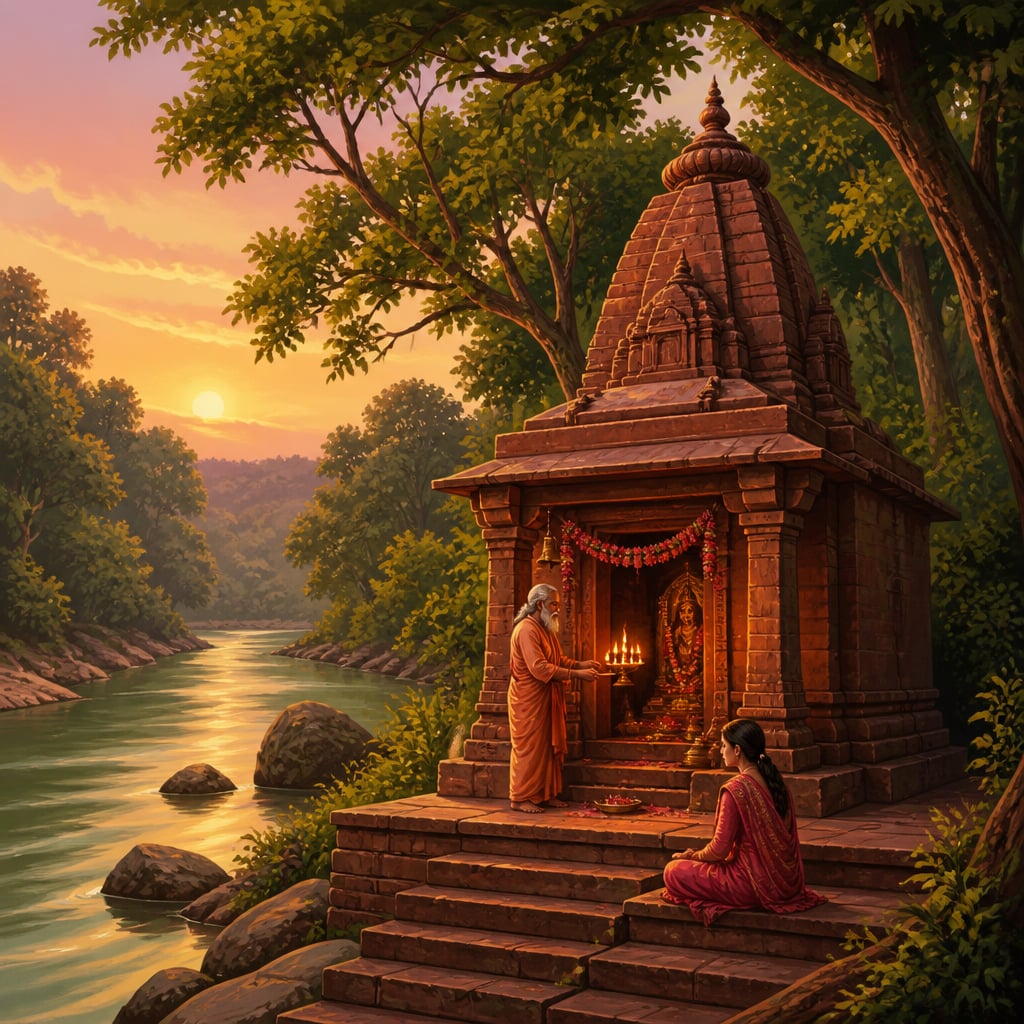
Shivani Devi temple on the Mandakini at Chitrakoot

The Sacred Landscape

Chitrakoot is more than a single temple, it's a landscape of sacred geography. The region is mentioned in the Valmiki Ramayana as the place where Rama, Sita, and Lakshmana spent years of their exile, and where Bharata came to plead with Rama to return to Ayodhya.

The Mandakini River flows through this region, considered a manifestation of the Ganga. The hills themselves, Kamadgiri, Hanuman Dhara, Gupta Godavari, are all sites of worship. Among these, the Shivani peetha sits quietly, often overlooked by pilgrims focused on Ramayana sites but holding power for those who seek it.

The Temple and Its Worship

The Shivani temple is modest compared to the great peethas. It doesn't attract the crowds of Kamakhya or Vaishno Devi. This quietude is actually an advantage for serious practitioners, the energy is accessible without the overlay of mass tourism.

The Goddess here is worshipped as both fierce and gentle, a protector of the forest-dwelling communities who have tended this site for generations. Local priests maintain traditions that predate the formal codification of Shakti Peetha lists.

The Tantric Teaching

Chitrakoot's teaching relates to the spirituality of exile. Just as Rama found divine purpose in what seemed like punishment, the hidden peethas suggest that the Goddess dwells especially in overlooked places. The teaching: what the world ignores, the divine inhabits. Power doesn't always announce itself.

For the seeker, this means looking for the sacred in unexpected places, the humble temple, the ordinary moment, the 'exile' experiences of life that feel like punishment but may contain hidden blessings.

Devgarh: The Hill of the Gods

Location and Significance

Devgarh (sometimes spelled Deogarh) in Madhya Pradesh holds one of the lesser-known peethas associated with Sati's body. The name means 'fortress of the gods,' and the site has been sacred since at least the Gupta period (4th-6th century CE).

The Devgarh Shakti Peetha is associated with Sati's left shoulder (or in some lists, her left arm). The site is remarkable for its archaeological richness, Gupta-era sculptures and temples dot the landscape, suggesting that goddess worship here goes back at least 1,500 years.

The Dashavatara Temple Connection

The Gupta-era Dashavatara temple at Devgarh with the Shakti shrine adjacent

Devgarh is most famous for its Dashavatara Temple, one of the earliest structural Hindu temples surviving in North India. While this temple is dedicated to Vishnu, the presence of Shakti worship on the same hill demonstrates the fluidity of Hindu traditions. The gods were not in competition, a site could be sacred to multiple deities simultaneously.

The Shakti temple at Devgarh sits near these Gupta ruins, inheriting their ancient sanctity. Pilgrims who come for the archaeological treasures often discover the peetha by accident, or perhaps by the Goddess's design.

The Archaeological Evidence

What makes Devgarh significant for understanding Shakti Peethas is the archaeological evidence. We can see here that goddess worship was not a later addition but existed alongside Vaishnavism from the classical period. Stone inscriptions mention donations to goddess temples, suggesting royal patronage.

This matters because it contradicts the narrative that Shakti Peetha worship is 'merely' folk religion. At Devgarh, we see it integrated into elite, courtly, Sanskritic culture from at least the Gupta era.

The Tantric Teaching

Devgarh teaches the integration of different paths. The Vaishnavite Dashavatara Temple and the Shakti Peetha stand on the same hill, neither diminishing the other. The teaching: authentic spirituality doesn't require rejecting other approaches. The Goddess is not jealous, she appears in all forms, honors all sincere worship.

For practitioners, this means releasing sectarian rigidity. You can honor Vishnu AND Shakti, or Buddha AND the Goddess. The mountain doesn't care which peak you climb from, only that you climb.

Ramgiri: The Mountain of Rama

Tribal women circumambulating the Ramgiri peetha in the Vindhya hills

Location and Mythology

Ramgiri, located in the Vindhya range, is another hidden peetha connected to Ramayana geography. The name means 'Rama's mountain,' and the site claims Rama's presence during his exile period. The peetha here is associated with Sati's right cheek or, in some traditions, her ear.

What makes Ramgiri unique is its layered mythology. The site was sacred to tribal communities long before either Ramayana narratives or Shakti Peetha formulations reached it. When Brahmanical traditions arrived, they didn't replace the indigenous goddess but identified her as a form of Sati.

The Living Tradition

Ramgiri's peetha is maintained primarily by local tribal communities, making it distinct from temples managed by Brahmin priests. The rituals here preserve elements that are pre-Vedic, animal offerings (now largely replaced by vegetable substitutes), possession trances by female devotees, and worship conducted outdoors rather than in enclosed sanctums.

This 'raw' quality can be uncomfortable for visitors expecting sanitized temple experiences. But for those who can approach with respect, Ramgiri offers a glimpse of goddess worship as it may have existed before temples, before texts, before formal priesthoods.

Kalidasa's Connection

The classical poet Kalidasa mentions Ramgiri in his masterpiece 'Meghadutam' (The Cloud Messenger). In the poem, a yaksha (nature spirit) sends a message to his beloved via a passing cloud, describing the cloud's journey across Central India. Ramgiri is one of the mountains the cloud passes.

This literary reference tells us that Ramgiri was already a recognized sacred site in the Gupta era (when Kalidasa likely lived). The goddess of this mountain was sufficiently well-known to appear in court poetry.

The Tantric Teaching

Ramgiri teaches the value of the unpolished, the raw, the wild. The Goddess here hasn't been tamed by Brahmanical refinement, she retains something of the forest, the mountain, the pre-civilized. This isn't 'primitive' in a negative sense; it's original, closer to source.

The teaching: sometimes we need to encounter the divine before it was packaged for our comfort. The fierce, wild Goddess of Ramgiri reminds us that Shakti is not only beautiful and nurturing but also wild, dangerous, and utterly free.

The Ramayana Connection

Why These Sites Link to Rama

It's not coincidental that multiple hidden peethas in Central India connect to Ramayana geography. The exile of Rama, Sita, and Lakshmana covered precisely this region, the forests of Chitrakoot, the Vindhya mountains, the Dandakaranya wilderness.

When the Shakti Peetha tradition developed, it naturally incorporated sites that were already sacred because of their Ramayana associations. The body of Sati fell where divine presence was already recognized. The mythology layers upon earlier mythology.

But there's a deeper connection. Sita herself is a form of Shakti, the Earth Goddess, daughter of the furrow, who emerges from and returns to the ground. Her journey through Central India during the exile sanctified the land for goddess worship. The Shakti Peethas here are as much about Sita as about Sati.

Sita as Shakti

The hidden peethas of Madhyadesha invite us to see the Ramayana through Shakti-centered eyes. Sita is not merely Rama's wife, the passive victim of Ravana's abduction. She is Bhumi-devi, the Earth Goddess. She is tested by fire and emerges purified. She raises her sons in forest exile, embodying both nurturing and fierce independence.

When we visit these sites, we're walking where Sita walked, and Sita is Shakti in a different mythological frame. The seemingly separate traditions of Shakti Peetha and Ramayana merge in this sacred geography.

The Forgotten and the Found

Why These Sites Remain Hidden

These Central Indian peethas never achieved the fame of Kamakhya or Varanasi's Vishalakshi. Several factors contributed: the region's relative inaccessibility before modern roads, the lack of royal patronage after Islamic conquests disrupted local dynasties, and the absence of famous saints who might have publicized the sites.

But hiddenness itself has a teaching. The Goddess doesn't require fame. She exists whether worshipped by millions or by a few forest-dwellers. The hidden peethas preserve something that popular sites often lose: intimacy, authenticity, the feeling of discovering rather than consuming.

Finding the Hidden

For contemporary seekers, these sites offer an alternative to spiritual tourism. You won't find them on package pilgrimage tours. There are no luxury dharamshalas or crowded darshan queues. What you'll find is the Goddess in her less mediated form, and that can be more powerful than any famous temple.

The pilgrimage to Madhyadesha's hidden peethas is ultimately an inner journey. You must want to find what's hidden. You must be willing to travel without guidebooks. And in that willingness, something shifts. The seeker becomes the sought.

Living traditions

Madhyadesha's hidden peethas have inspired a growing movement of 'pilgrimage tourism' that values authenticity over convenience. Several ashrams in the region now offer programs combining goddess worship with forest living, attracting seekers tired of commercialized spirituality. Academics are increasingly documenting tribal goddess traditions before they're absorbed into standardized Hinduism.

Reflection

More in Gupta Peethas: The Hidden Sacred Sites

All lessons in Gupta Peethas: The Hidden Sacred Sites ยท The Shakti Peethas course