Sati Devi: The Devoted Daughter
The divine birth and unwavering love for Shiva
Explore the story of Sati's birth as Daksha's daughter, her tapasya to win Shiva as her husband, and her marriage against her father's wishes. This lesson sets the stage for understanding why the Shakti Peethas came to be.
The Daughter Who Changed Everything
Before there were Shakti Peethas scattered across the Indian subcontinent, before grief transformed into sacred geography, there was a girl born with a singular purpose: to love Shiva.
Her name was Sati, a name that would become synonymous with devotion itself. But to understand how her story created the most sacred pilgrimage sites in the Shakti tradition, we must begin at the beginning.
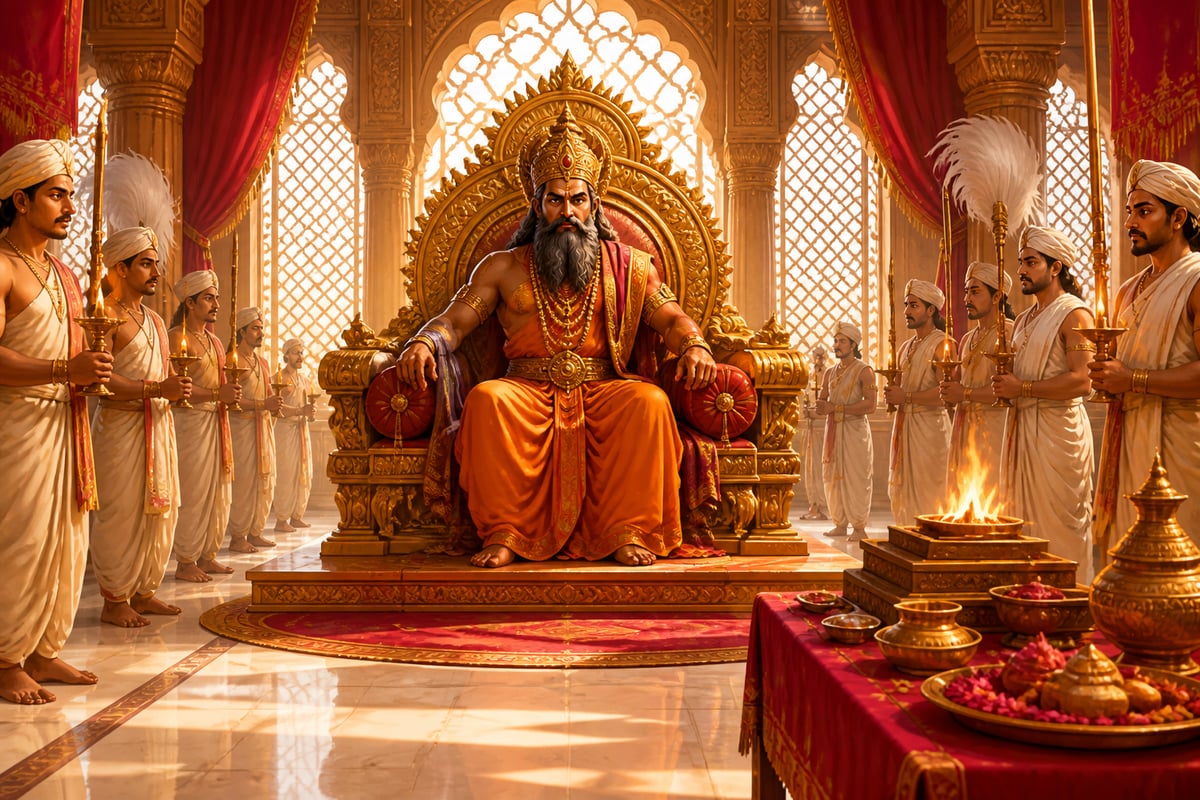
Daksha: The Proud Patriarch
Daksha Prajapati was no ordinary being. As one of the mind-born sons of Brahma, he was a progenitor of creation itself, a cosmic patriarch whose duty was to populate the universe. He had already fathered the twenty-seven Nakshatras (star-goddesses) who married the Moon, and countless other divine beings.
Daksha was brilliant, powerful, and deeply invested in the proper order of things. He valued ritual precision, social hierarchy, and the respect owed to those in positions of authority, especially himself. He was, in short, a man who believed the universe should run according to his expectations.
This would prove to be his greatest limitation.
A Prayer and Its Answer
Despite his many children, Daksha yearned for a daughter of supreme spiritual power, one who would embody the Divine Feminine itself. He performed intense tapasya to the Goddess Adi Shakti, the primordial energy that underlies all creation.
Adi Shakti, pleased with his devotion, granted his wish, but with a condition that would shape everything to come. She would take birth as his daughter, but only for as long as he honored her. The moment he showed her disrespect, she would depart from his life forever.
Daksha, in his pride, likely assumed this would never be a problem. Who would disrespect his own daughter?
Thus was born Sati, the Goddess herself, veiled in human form.
The Girl Who Saw Beyond
From childhood, Sati was different. While other divine maidens concerned themselves with the pleasures of Daksha's celestial court, Sati's heart was drawn to stories of Shiva, the ash-smeared yogi who lived on Mount Kailash, who danced the Tandava that could destroy and recreate universes, who sat in meditation so deep that even the gods dared not disturb him.
To Daksha's eyes, Shiva was everything wrong with the cosmos: unkempt, unconventional, associated with ghosts and cremation grounds, dismissive of social hierarchies and ritual propriety. Shiva didn't attend Daksha's gatherings or show the patriarch the respect he felt he deserved.
But Sati saw what her father could not. Where Daksha saw disrespect, she saw freedom from ego. Where he saw impropriety, she saw authenticity. Where he saw an ash-covered wanderer, she saw the supreme consciousness that pervades all existence.
She had recognized her eternal beloved.
The Tapasya of Longing
Knowing her father would never approve, Sati did what devotees have done since time immemorial: she took matters into her own hands through the power of tapasya.
She left the comforts of Daksha's palace and retreated to the forest. There, she undertook severe austerities, fasting, meditating, enduring heat and cold, focusing her entire being on one object: Shiva.
This was not the passive pining of romantic stories. This was active, fierce, disciplined devotion. Sati was not waiting for Shiva to notice her; she was making herself worthy of the union she sought. She was burning away everything in herself that was not love.

The intensity of her tapasya shook the three worlds. Even the gods grew concerned, such concentrated spiritual power could destabilize creation itself.

Shiva Takes Notice
And then, one day, he came.
Shiva, the supreme yogi who had remained unmoved for eons, opened his eyes. He felt the pull of a devotion so pure, so unwavering, that it reached even into the depths of his cosmic meditation.
He descended from Kailash to find this remarkable being who had called to him not with pleas or bargains, but with the silent thunder of absolute love.
When Shiva appeared before Sati, the universe held its breath. The Lord of Dissolution, who had spurned the advances of countless divine beings, looked at Daksha's daughter and recognized his own Shakti, the power that was inseparable from himself, returning to him in human form.
He agreed to marry her.
A Wedding Against the Father's Will
The marriage of Shiva and Sati is celebrated across Hindu traditions, but the texts do not hide the shadow that hung over it: Daksha was furious.
In some versions of the story, Daksha reluctantly gave his consent, swayed by the intervention of Brahma or other gods who recognized the cosmic significance of this union. In others, Sati married Shiva despite her father's explicit disapproval, choosing her heart's truth over filial obedience.
Either way, a fracture had opened. Daksha felt humiliated. His daughter had chosen a 'vagabond' over the respectable suitors he had envisioned. His authority had been challenged. His worldview had been rejected.
Sati left for Kailash with her beloved, embarking on a life of bliss with Shiva. But the wound in her father's pride would fester, growing into something monstrous, something that would ultimately set in motion the tragedy of the Shakti Peethas.
The Seed of What Comes Next
For now, Sati was happy. On the snow-capped peaks of Kailash, she lived with Shiva in a state of divine union, two aspects of the same ultimate reality, reunited at last. She had followed her heart against all opposition, and love had triumphed.
But in Daksha's court, resentment was building. The father who could not control his daughter would soon attempt to erase her husband from existence itself.
The invitation that wasn't sent, the yajna that excluded Shiva, the confrontation that led to Sati's self-immolation, all of this was coming.
The Shakti Peethas exist because Sati loved Shiva absolutely. But they also exist because Daksha could not let go of his pride.
This is the beginning of that story.
Living traditions
The story of Sati's devotion continues to inspire: her willingness to pursue what she loved despite opposition, her use of tapasya as active rather than passive devotion, and her refusal to compromise on matters of the heart. Modern interpretations emphasize her agency, she chose Shiva, she performed tapasya, she later chose to leave her father's yajna. Sati is not a passive figure but a model of fierce, self-directed devotion.
- Gauri Vrata: Young women observe fasts and rituals dedicated to Goddess Gauri (another name for Sati/Parvati), praying for a devoted spouse. The vrata often includes creating clay or turmeric images of the Goddess and offering flowers
- Temples at Sites of Sati's Tapasya: Several temples mark spots traditionally associated with Sati's tapasya. While the Shakti Peethas mark where her body parts fell, these sites honor where her devoted practice took place
Reflection
- Sati recognized Shiva as her beloved despite, or perhaps because of, his unconventional appearance and ways. What qualities in people or paths do you initially judge as 'wrong' that might actually point to something authentic and valuable?
- Sati undertook intense tapasya to win Shiva, she didn't passively wait or hope. What goal do you care about deeply enough to practice 'tapasya', sustained, disciplined effort even when it's uncomfortable?
- Adi Shakti agreed to become Daksha's daughter on one condition: she would leave if disrespected. Why might the Divine Feminine require respect as a condition for presence? What does this suggest about honoring the sacred in our lives?