Relevance in 2026 and Beyond
Mastering Communication in an Age of AI and Information Overload
How the Vedic teachings on Vāc, speech as creative power, truth, strategic silence, and trust, apply to modern communication challenges, from AI-generated content to leadership in crisis.
The Question No One Asked
You're reading something online, a product review, a news article, a colleague's email. And somewhere in the back of your mind, a question forms that your grandparents never had to ask: Was this written by a human?

In 2025, this question has become background noise. ChatGPT writes marketing copy. Claude drafts legal briefs. AI assistants compose emails in our voice. The volume of words in the world has exploded, but has the quality of communication improved? Has trust increased?
Three thousand years ago, the Vedic Rishis faced a different kind of problem with words. Not too many, but too powerful. They understood that Vāc, speech, wasn't merely information transfer. It was action. It created worlds, bound promises, destroyed reputations, and built civilizations. And so they developed a remarkably sophisticated philosophy of communication that feels strangely relevant today.
The Modern Communication Crisis
The statistics tell part of the story. The average knowledge worker receives 120+ emails daily. Social media generates 500 million tweets, 4 million hours of YouTube content, and countless AI-generated articles every 24 hours. Yet survey after survey shows that employees feel less informed, less connected to leadership, and less trusting of institutional communication than a decade ago.
Elon Musk's transformation of Twitter into X offers a case study in communication dysfunction at the highest levels of tech leadership. From October 2022 onwards, Musk's communication was prolific, often 50+ tweets daily, but erratic. Policy announcements contradicted each other within hours. Employees learned of their terminations through tweets. Advertisers were publicly mocked when they expressed concerns. The sheer volume of speech created not clarity but chaos.
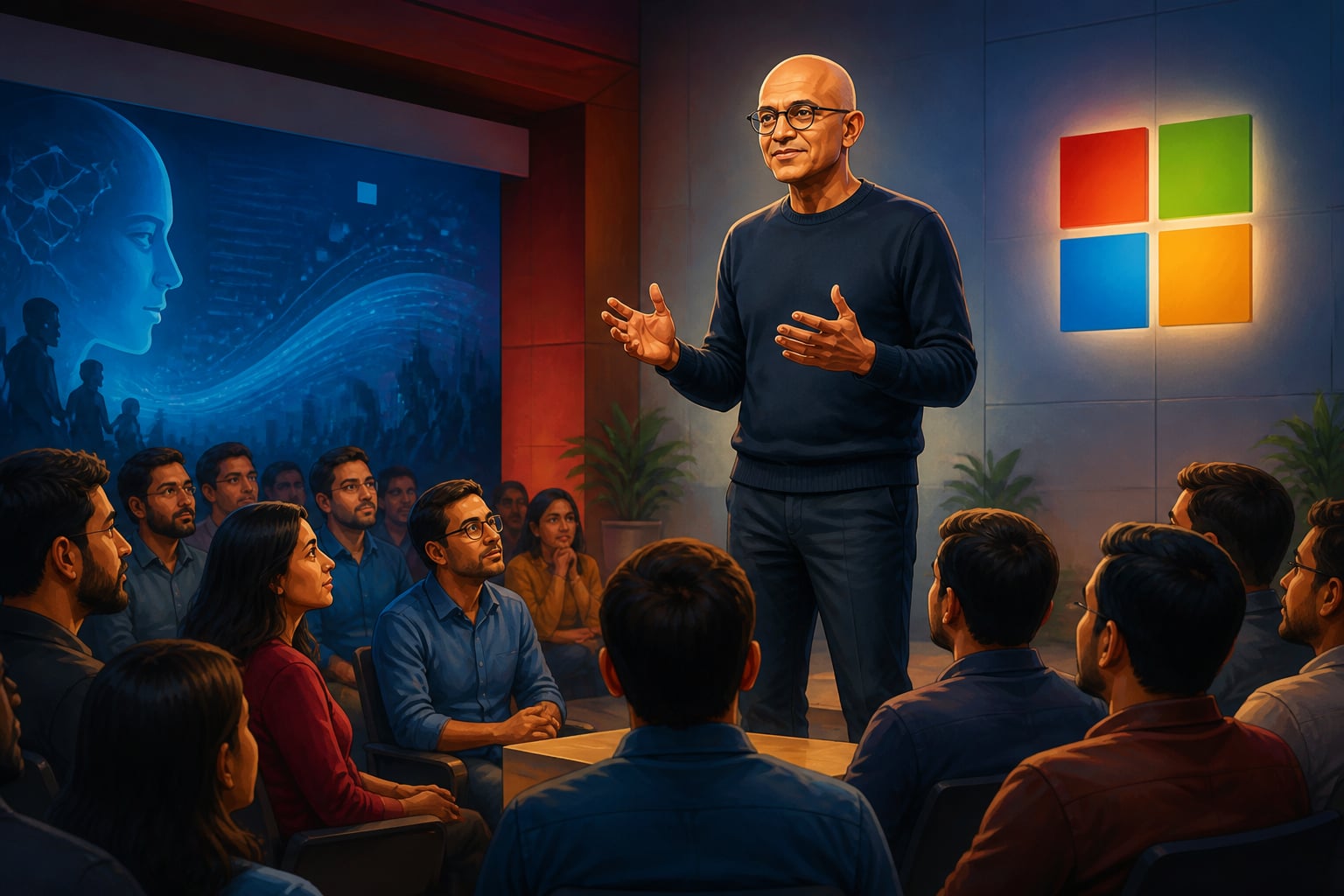
Consider the contrast: Microsoft CEO Satya Nadella, facing the AI transformation of his company, demonstrated what the Rishis might recognize as Satya-Vāc, truthful speech. He acknowledged challenges honestly, offered concrete commitments, and maintained consistency between private and public statements. His communication was measured, strategic, and trust-building. The result? Microsoft's market cap tripled while Twitter/X's valuation collapsed by over 70%.
This isn't just a tech industry problem. In hospitals, communication failures contribute to an estimated 70% of sentinel events. In marriages, research by John Gottman shows that the ratio of positive to negative speech predicts divorce with over 90% accuracy. Words have consequences, the Rishis knew this. We're rediscovering it.
What the Vedic Tradition Actually Teaches
This chapter explored six dimensions of Vāc that the Rishis understood:
Speech as Action: The Rig Veda doesn't treat words as neutral carriers of meaning. Vāco vegam, the power of speech, creates reality. When a leader says "We will overcome this," they're not just predicting; they're shaping possibility space. When Chanakya counseled Chandragupta, his words didn't describe strategy, they constituted it.
Satya-Vāc: Truth in speech isn't merely moral preference; it's practical necessity. Elizabeth Holmes's Theranos collapse demonstrated what happens when speech disconnects from reality, not immediately, but inevitably. The Rishis understood that falsehood carries its own entropy.
Stuti and Morale: Praise, narrative, and story aren't soft skills, they're force multipliers. Shivaji's addresses to his outnumbered Maratha forces created the psychological conditions for victory. MS Dhoni's calm words in pressure matches do the same.
Mauna: Strategic silence isn't absence of communication, it's its own message. Warren Buffett's "quiet periods" and the Buddha's noble silence on unanswerable questions show that knowing when not to speak is as important as knowing what to say.
Dharmic vs. Adharmic Speech: The distinction between influence and manipulation comes down to respect for the listener's autonomy. Shakuni's counsel in the Mahabharata, like Cambridge Analytica's micro-targeting, treats listeners as objects to be moved rather than subjects to be engaged.
Vishvasa: Trust through speech is built through consistency, vulnerability, and time. Sardar Patel unified 562 princely states not through coercion but through patient, consistent communication that made unity feel inevitable.
Bridging Ancient and Modern
How do these principles translate to 2026?
In Leadership: The rise of remote work has made intentional communication more critical. Leaders can no longer rely on hallway conversations and lunch meetings to build culture. Every Slack message, every email, every video call carries outsized weight. The Vedic insight that words create reality becomes literal, for distributed teams, words are reality. The leader who masters Satya-Vāc (honest speech), Stuti (motivating narrative), and strategic Mauna (knowing when to step back) has an advantage that no amount of AI tooling can replicate.
In Psychology: The mental health epidemic correlates with communication patterns. Research by James Pennebaker shows that how we talk about our experiences, the words we choose, actually shapes our psychological processing of them. The Vedic emphasis on speech as world-creating isn't mysticism; it's a insight that cognitive science is validating. CBT works, in part, because changing speech patterns changes thought patterns.
In Relationships: Dating apps have increased the volume of potential connections while decreasing their depth. The swipe culture treats conversation as transaction. The Vedic teaching on Vishvasa, building trust through consistent, truthful speech over time, offers a counter-model. Relationships that last aren't built on clever messaging; they're built on accumulated credibility.
In Ethics: AI-generated content raises unprecedented questions about authenticity and attribution. When a CEO's earnings call uses AI-drafted talking points, is that still "their" speech? The Vedic tradition, which held individuals accountable for their words, suggests we need new frameworks for AI-assisted communication that preserve personal responsibility. The principle of Dharmic speech, communication that respects the listener's autonomy, becomes more important when AI can personalize manipulation at scale.
Honest Objections
Some skepticism is warranted. The Vedic world had no concept of social media, AI, or global instantaneous communication. The scale and speed of modern communication create genuinely new challenges that ancient frameworks cannot directly address.
Moreover, the Vedic tradition emerged from a hierarchical society with different assumptions about authority and propriety. Not all its communication norms translate to democratic, egalitarian contexts. The emphasis on who speaks (Brahmin vs. Shudra) is not a model for modern organizations.
What does translate is the fundamental insight: speech is not neutral. Words are actions. Actions have consequences. And the character of a communicator, their commitment to truth, their respect for listeners, their strategic wisdom about when to speak and when to be silent, shapes the consequences. This core insight requires no cultural translation. It's as relevant in a Zoom call as it was in a Vedic assembly.
From Insight to Practice
Three actionable principles emerge from this chapter:
First: Before any important communication, ask the Satya question, "Is this true? Is this the whole truth? Am I saying this for the right reasons?" Elizabeth Holmes presumably never asked this. Satya Nadella presumably does.
Second: Develop Mauna muscle. In an age of constant communication, strategic silence is a competitive advantage. Before filling silence with noise, ask: "Does this need to be said by me, right now, in this way?"
Third: Build Vishvasa systematically. Trust isn't built in moments of crisis; it's accumulated through countless small consistencies. Track the ratio of your promises kept to promises made. It's the leading indicator of your leadership credibility.
The Rishis understood something we're learning the hard way: in a world drowning in words, the quality of speech matters more than its quantity. Choose yours wisely.