The Pahalgam Massacre
26 Innocents - The Attack That Demanded Response
On April 22, 2025, terrorists massacred 26 innocent tourists in Pahalgam, Kashmir. Among the dead were families on vacation, honeymooners, and children. First responders rushed to help. The nation mourned. But this time, India was ready to respond with unprecedented force. The attack that led to Operation Sindoor.
Paradise Turned to Hell
Pahalgam is called the "Valley of Shepherds." Nestled in the Anantnag district of Kashmir, it is one of India's most beloved tourist destinations. Snow-capped peaks, pine forests, the Lidder River flowing crystal clear - tourists come here to escape the plains, to breathe mountain air, to find peace.
On April 22, 2025, peace was shattered.
Around 6:30 PM, as tourists gathered near Baisaran meadow - known locally as "Mini Switzerland" - terrorists opened fire. The attackers were heavily armed with automatic weapons. Their target was not military or government - it was civilians. Families. Children. Honeymooners.
The shooting lasted several minutes. When it stopped, 26 people lay dead. Dozens more were wounded. Among the victims were tourists from across India - from Gujarat, Maharashtra, Karnataka, Tamil Nadu, Rajasthan, and beyond. Their only crime was wanting to see Kashmir.
The Victims
The 26 who died were ordinary Indians:
- A newlywed couple from Gujarat on their honeymoon
- A retired bank manager from Pune traveling with his wife
- A software engineer from Bengaluru on vacation with his family
- A family of four from Jaipur, including two children
- College students on a trip organized by their college
- A couple celebrating their 25th wedding anniversary
- A young woman traveling solo, an adventure enthusiast
They came from different states, spoke different languages, followed different professions. What united them was their love for India - for its mountains, its beauty, its diversity. Kashmir was their country too. They had every right to be there.
The terrorists murdered them anyway.
The First Responders
In the chaos that followed, ordinary people became heroes.
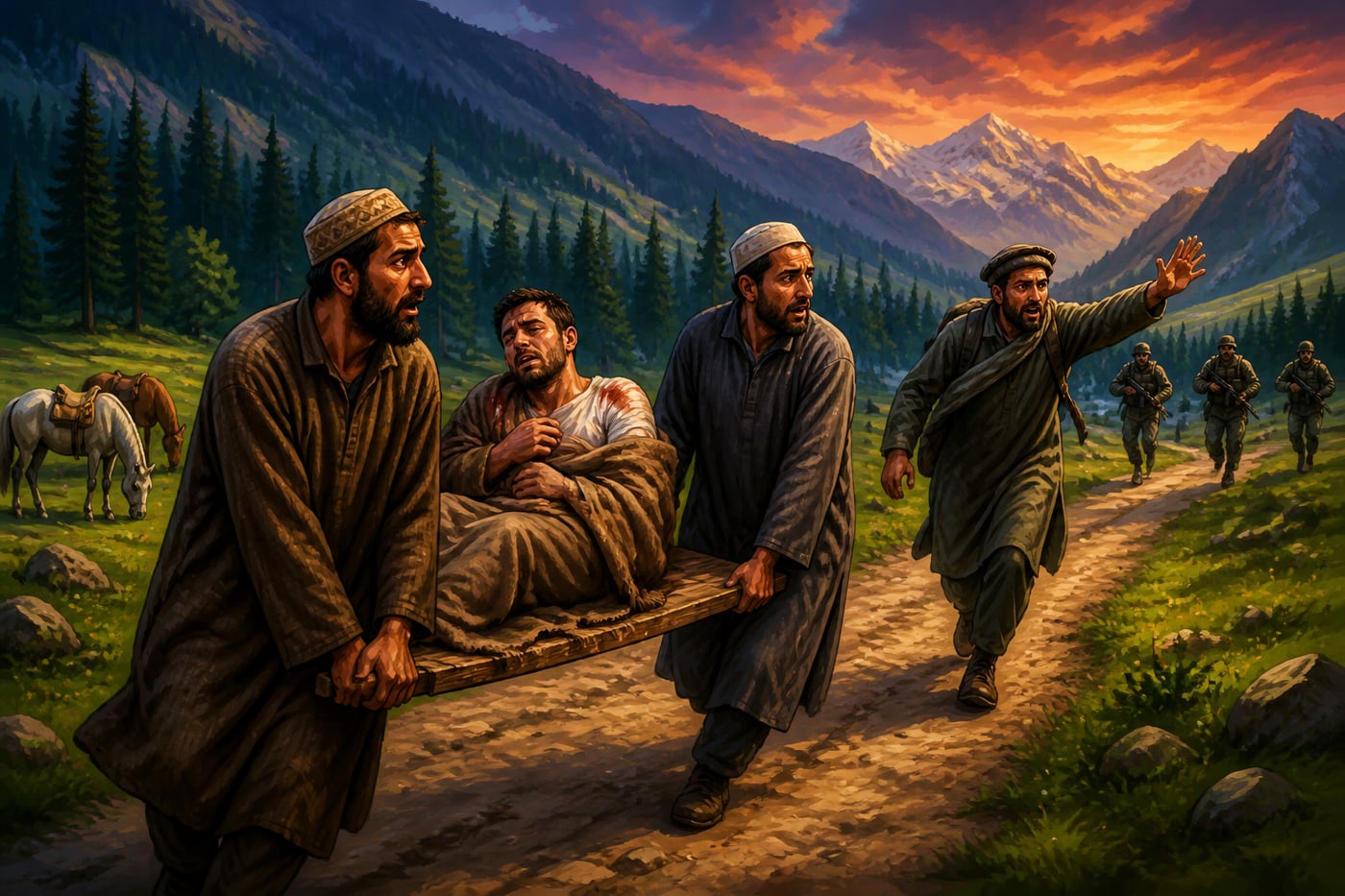
Local Kashmiri guides rushed toward the gunfire, not away from it. They helped carry the wounded to vehicles. They applied pressure to wounds. They called for help.
The pony-wallahs who take tourists on rides abandoned their ponies to help. One man lost his own son while trying to save others. He kept working anyway.
Hotel staff from nearby resorts ran to the scene with first aid kits and blankets. They converted their lobbies into triage centers.
Security forces arrived within minutes. CRPF and J&K Police personnel secured the area, evacuated survivors, and began the hunt for the attackers.

Doctors and nurses at Anantnag district hospital worked through the night. Some of the wounded survived because of their tireless efforts.
These first responders - many of them Kashmiris - demonstrated that terrorism does not represent Kashmir. The terrorists came to create division; the first responders responded with unity and compassion.
The Nation Mourns
The news spread across India within hours. Social media filled with images of the dead and wounded. Candlelight vigils were held in cities across the country. The Prime Minister addressed the nation, his words heavy with grief and resolve.

But grief was not the only emotion. There was anger. Deep, burning anger.
India had endured terrorism for decades. The Parliament attack of 2001. The Mumbai attacks of 26/11 in 2008. Uri in 2016. Pulwama in 2019. Each time, India mourned. Each time, the world offered condolences. Each time, Pakistan denied involvement while sheltering the perpetrators.
Pahalgam was different. Not because 26 deaths were more than previous attacks - Pulwama had killed 40 CRPF jawans, 26/11 had killed 166. What made Pahalgam different was timing and accumulation.
India had changed. The patience that had once characterized India's response to terrorism had finally, irrevocably, ended.
The Attackers
The terrorists were identified within days. They belonged to The Resistance Front (TRF), a front organization for Lashkar-e-Taiba - the same Pakistan-based terror group responsible for the 2008 Mumbai attacks. The weapons were Pakistani. The training was Pakistani. The handlers, operating from Pakistan-occupied Kashmir, were Pakistani.
Pakistan, as always, denied involvement. It called the attack the work of "lone wolves" and "misguided elements." It demanded "evidence" while simultaneously refusing access to the terror camps on its soil.
India had heard these denials before. After Parliament. After Mumbai. After Pathankot. After Uri. After Pulwama. Each time, Pakistan lied. Each time, the terror infrastructure remained intact. Each time, India was expected to show "restraint."
Not this time.
The Decision
Within 48 hours of the attack, the Cabinet Committee on Security (CCS) met in emergency session. The military presented options. Intelligence agencies provided targeting data. The decision was made.
India would strike. Not a limited "surgical strike" like 2016. Not a single target like Balakot in 2019. This time, India would hit the entire terror infrastructure - camps, training facilities, headquarters, communication centers.
The operation was given a name that would echo across the subcontinent: Operation Sindoor.
Why Pahalgam Changed Everything
Pahalgam crossed a line. The victims were not soldiers whose job involves risk. They were not politicians or security personnel. They were families on vacation. They were children. They were honeymooners dreaming of the future.
Terrorism had always targeted the innocent. But Pahalgam was a direct attack on India's ability to exist as a normal country. If tourists could not visit Kashmir, then Kashmir was not truly Indian. If families feared massacre at a picnic spot, then terrorism had won.
India's leadership understood this. The response would not be about revenge - it would be about establishing a new normal. Pakistan had to understand that the cost of sponsoring terror had changed permanently.
Remembering the 26
Every victim of Pahalgam deserves to be remembered. Not as a statistic, but as a person:
- The 8-year-old boy from Jaipur who loved cricket and dreamed of seeing snow
- The 65-year-old grandmother from Chennai who had saved for years for this trip
- The young couple from Ahmedabad married just 10 days before
- The college student from Mumbai who was an aspiring photographer
- The solo traveler from Bengaluru who had visited 20 states and dreamed of all 28
Each of them believed in India. Each trusted that their country would protect them. Each had a life full of promise, cut short by evil.
Their deaths demanded a response. Not a press conference. Not a condemnation. Not a UN resolution. A response that the terrorists and their handlers would understand.
That response came 15 days later.
The Legacy of Pahalgam
Pahalgam's legacy is not just grief. It is transformation.
It transformed how India responds to terrorism. The doctrine of "strategic restraint" died at Baisaran meadow. India would no longer absorb attacks and wait for international pressure on Pakistan that never came.
It transformed Kashmir's security apparatus. The integration of intelligence, the deployment of advanced surveillance, the coordination between forces - all were accelerated.
It transformed India's position in the world. When Operation Sindoor was launched, the international community understood that India had been pushed beyond endurance. The usual calls for restraint were muted because everyone knew: this time, India had every justification.
Most importantly, Pahalgam reminded India of its unity. In the aftermath, there was no Hindu vs Muslim, no North vs South, no rich vs poor. There was only grief for 26 Indians, and resolve that their deaths would not be meaningless.
The 26 of Pahalgam are gone. But they are not forgotten. Their sacrifice - for that is what it was, even if unwilling - helped forge a stronger, more resolute India.
We remember them. And we remember what India did in their name.
Key figures
The 26 Victims
Kashmiri First Responders
Medical Teams
Case studies
Running Toward Danger
You hear gunfire and screaming. Most people run away. Do you have the courage to run toward the danger to help others?
Courage is not the absence of fear - it is acting despite fear. The bravest people are often ordinary people in extraordinary moments.
Studies on mass casualty events show that bystanders who intervene in the first minutes save more lives than professional responders who arrive later. The instinct to run toward danger rather than away from it is present in roughly 15% of people, and it can be cultivated through training and mental preparation.
When Restraint Becomes Weakness
For decades, your country has shown restraint in the face of terrorism. The international community praises your patience. But the attacks continue. When does restraint become complicity in your own suffering?
Patience is a virtue, but not an unlimited one. Sometimes, decisive action is the only response that works.
In negotiation theory, 'repeated concessions without consequences' is recognized as a pattern that invites escalation. Whether in diplomacy, business partnerships, or personal relationships, there comes a point where continued patience signals weakness rather than strength.
Historical context
The Pahalgam Attack
Reflection
- Why do terrorists target civilians, including tourists and families, rather than military targets?
- What responsibility does the international community have when countries shelter terrorists?
- How do we honor victims of terrorism without letting their deaths be used for hatred?