Galwan - Medieval Combat at 14,000 Feet

Colonel Santosh Babu and 16 Bihar Regiment

On the night of June 15, 2020, Chinese troops ambushed an Indian patrol in Galwan Valley. What followed was medieval warfare at 14,000 feet - no guns fired, just stones, iron rods, and fists. Colonel Santosh Babu led his men into the clash and died fighting. 20 Indian soldiers fell but inflicted heavy casualties on the Chinese.

The Treachery at Galwan

The evening of June 15, 2020, began like any other in the desolate Galwan Valley of eastern Ladakh. At 14,000 feet above sea level, where temperatures drop below freezing even in summer and oxygen is scarce, Indian soldiers maintained their vigil at Patrolling Point 14.

A few days earlier, during corps commander-level talks, both sides had agreed to disengage from the friction points along the Line of Actual Control (LAC). Colonel Bikumalla Santosh Babu, commanding officer of 16 Bihar Regiment, led a patrol to verify that the Chinese had dismantled their tent at PP14 as agreed.

What happened next would shock the world.

The Ambush
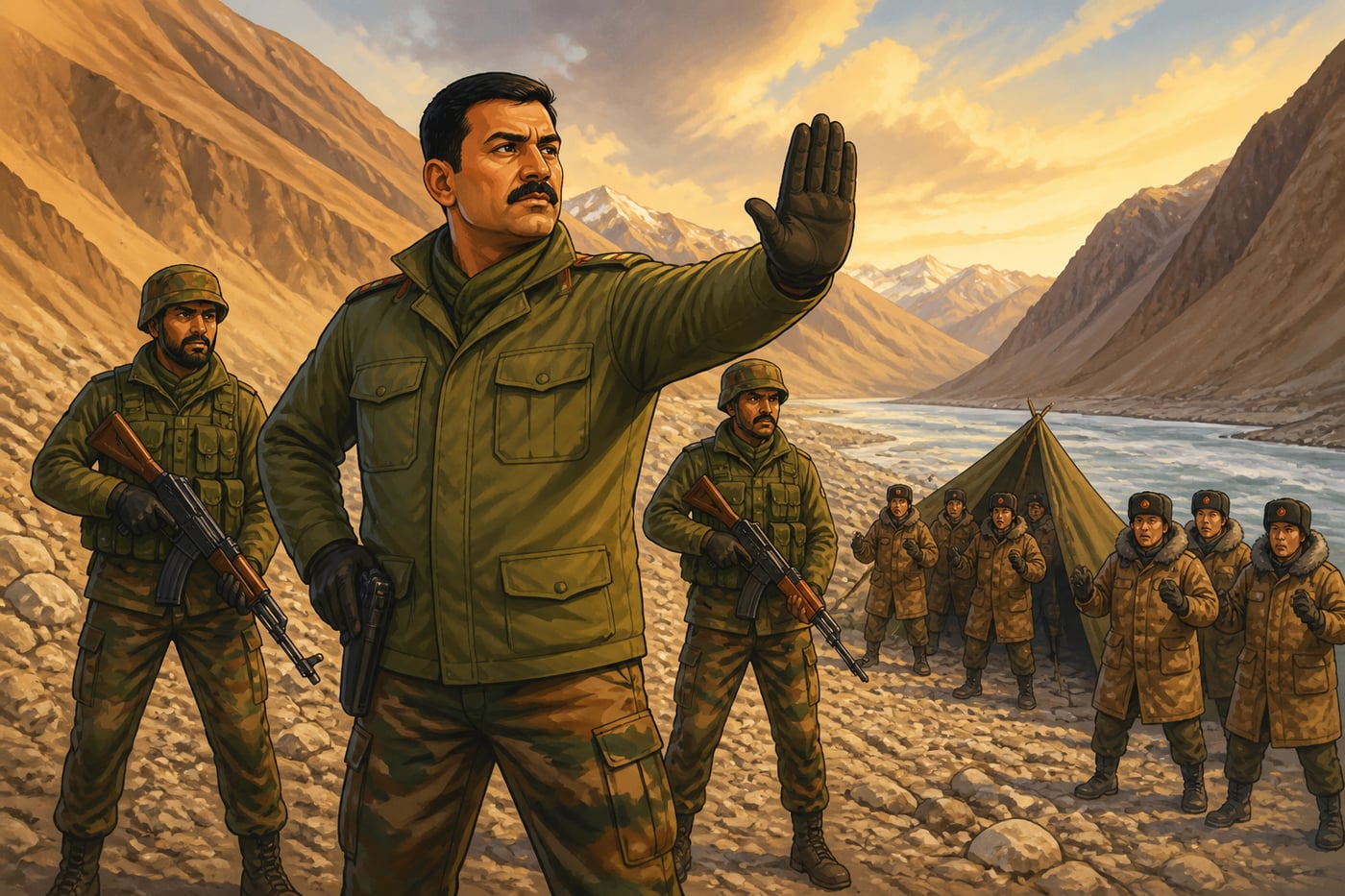
Colonel Santosh Babu confronting Chinese soldiers at the Galwan tent standoff

As Colonel Santosh Babu's patrol approached the site around 6 PM, they found not an empty tent, but Chinese soldiers returning to re-erect their structure - a direct violation of the agreement reached just days before. The Colonel confronted the Chinese officer.

What followed was a planned ambush. Hidden in the ridges above, hundreds of Chinese soldiers - estimates range from 300 to 600 - had been lying in wait. As Colonel Santosh Babu argued with the Chinese, they attacked.

But this was no ordinary battle. Due to protocols established after the 1996 and 2013 agreements, soldiers on both sides did not carry firearms to patrol meetings. What ensued was medieval combat - fought with stones, iron rods wrapped in barbed wire, nail-studded clubs, and bare fists.
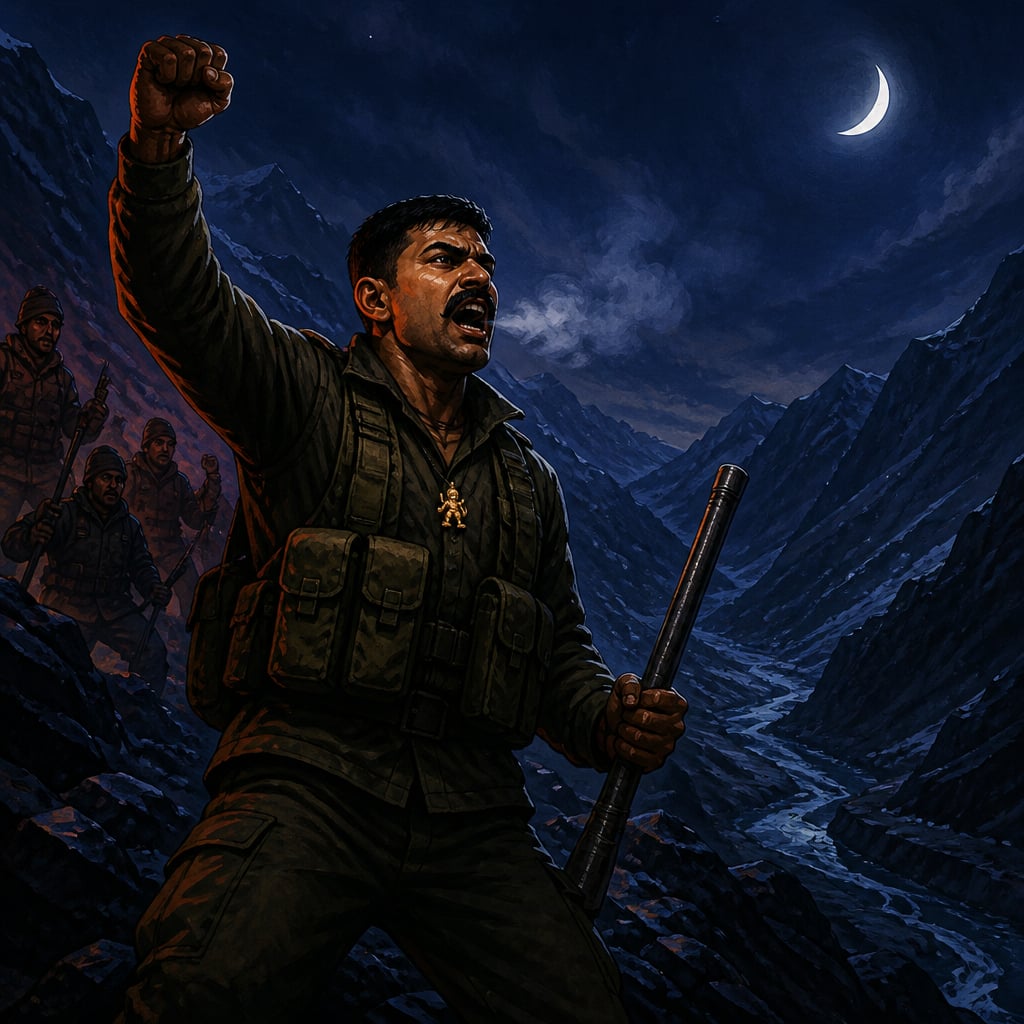
A Bihar Regiment jawan with iron rod in the Galwan valley at night

Colonel Santosh Babu - The Warrior

Colonel Bikumalla Santosh Babu was a third-generation Army officer from Suryapet, Telangana. His grandfather served in the Nizam's army, his father was a Colonel in the Indian Army. Soldiering was in his blood.

Commissioned into 16 Bihar Regiment in 2004, Santosh Babu had served in counter-insurgency operations in Kashmir and the Northeast. Known for his physical fitness and leadership, he had won multiple commendations. His men called him "Sahab" with respect and affection.

When the Chinese attacked, Colonel Santosh Babu did not retreat. Despite being outnumbered perhaps ten to one, he led his men in hand-to-hand combat. Witnesses report he fought with a fury that stunned the Chinese, rallying his men even as reinforcements poured down from the ridges.

He was struck multiple times with iron rods and stones. Even mortally wounded, he continued to fight until his last breath.

The Battle in the Darkness

The fighting continued for hours in the frozen darkness. Indian reinforcements arrived, and what had begun as an ambush turned into a full-scale brawl involving hundreds of soldiers.

The terrain made the fighting even more brutal. The narrow valley, the freezing river, the rocky ground - soldiers slipped, fell, were pushed into the ice-cold Galwan River. Some drowned. Some died of hypothermia after falling in. Some were beaten to death.

The Chinese had come prepared - with specialized weapons, with overwhelming numbers, with a plan. Yet the Indians fought back with a ferocity that the Chinese had not anticipated. By the time it was over, 20 Indian soldiers lay dead, including Colonel Santosh Babu.

But the Chinese had paid a heavy price. Although China initially denied any casualties, later reports and intelligence estimates suggest between 35 and 45 Chinese soldiers died that night - with some estimates going as high as 60. China eventually admitted to 4 deaths, awarding posthumous medals, but satellite imagery of the battlefield and independent reports suggest the true toll was far higher.

The Significance

Galwan was the first deadly clash between India and China in 45 years, since the 1975 Tulung La incident. It shattered the illusion that the LAC was a frozen, stable border. It exposed Chinese treachery - the willingness to violate agreements, to ambush soldiers during a verification patrol, to use overwhelming force.

But it also revealed something about Indian soldiers. Outnumbered, caught in an ambush, fighting with their bare hands in freezing darkness, they did not flee. They fought back. They inflicted casualties on a force that had planned this attack for days. They proved that the spirit of the Indian soldier - the same spirit that held Rezang La in 1962, that scaled Tiger Hill in 1999 - burns as brightly as ever.

Colonel Santosh Babu was awarded the Maha Vir Chakra, India's second-highest wartime gallantry award. His sacrifice, and that of his men, ensured that Galwan would be remembered not as a defeat, but as a testament to Indian valor.

The Aftermath

Galwan changed everything. India responded with the largest military deployment since 1962, rushing over 50,000 troops to the LAC. Infrastructure that had been neglected for decades was built at war speed. The economic relationship with China was re-evaluated, with bans on Chinese apps and increased scrutiny of Chinese investments.

Most importantly, Galwan changed how India sees China. The neighbor that was supposed to be a trading partner, that was courted at Wuhan and Chennai summits, revealed itself as an adversary willing to use deadly force. The betrayal of June 15, 2020, cannot be forgotten.

The Post 120 memorial honouring the Galwan martyrs at first light

At Post 120 in Galwan, a memorial now stands. It is called "Gallants of Galwan" under Operation Snow Leopard. On it are inscribed the names of 20 soldiers who fell that night. Colonel Santosh Babu's name leads the list.

Their sacrifice was not in vain. Because of them, India awoke. Because of them, the LAC is now defended as it should have been all along. Because of them, China knows that every inch of Indian territory will be paid for in blood.

Key figures

Colonel Bikumalla Santosh Babu

16 Bihar Regiment

Lt Gen Harinder Singh

Case studies

Fighting Against Impossible Odds

You are leading a patrol to verify an agreement. Instead of compliance, you find an ambush - hundreds of enemy soldiers attacking with clubs and stones. You are outnumbered 10 to 1. What do you do?

Leadership is revealed in crisis. When everything goes wrong, a true leader doesn't abandon his men or his mission. He fights.

Corporate leaders face scaled-down versions of this when deals go wrong, partnerships betray trust, or markets crash unexpectedly. The leaders remembered are those who stayed, fought, and protected their teams rather than those who bailed at the first sign of trouble.

The Weight of Agreements

Both sides have agreed to disengage. You go to verify. The other side is violating the agreement. Do you escalate? Do you report and withdraw? What's the right response?

Agreements mean nothing if violations go unchallenged. Sometimes standing firm is the only honorable option, regardless of the cost.

In international trade, companies that let intellectual property theft or contract violations slide 'to keep the peace' eventually lose everything. The Galwan principle applies to business: agreements are only as strong as your willingness to enforce them.

Historical context

The Galwan Crisis

Reflection

More in The New Frontier - 2020s

All lessons in The New Frontier - 2020s ยท Param Veer: Guardians of the Heights (1984-Present) course