Operation Sindoor - India Strikes Back
22 Minutes, 9 Terror Camps, Zero Indian Casualties
On May 7, 2025, between 1:05 and 1:30 a.m., IAF struck 9 terror camps in Pakistan and PoK. First strikes across the international border since 1971. 22 minutes of precision strikes. 100+ terrorists neutralized. Operation Mahadev followed to eliminate the Pahalgam attackers. India's new doctrine of decisive response.
1:05 AM, May 7, 2025
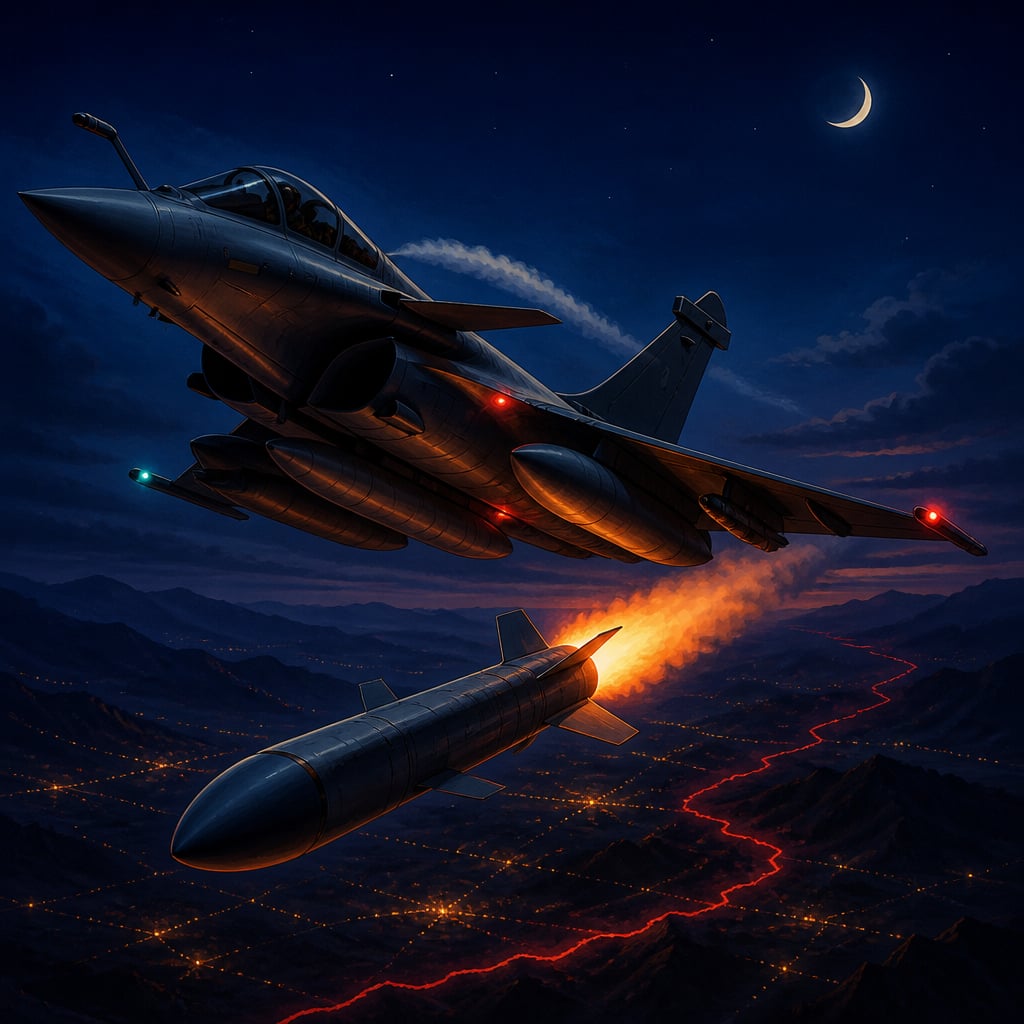
As most of India slept, the Indian Air Force launched the largest offensive air operation since the 1971 war. In the darkness over Pakistan and Pakistan-occupied Kashmir, precision munitions began finding their targets.
Between 1:05 AM and 1:30 AM - just 22 minutes - India struck 9 terror camps and facilities. Simultaneously. Precisely. Devastatingly.
This was Operation Sindoor. And it changed everything.
The Targets
The strikes hit carefully selected targets across Pakistan and PoK:
In Pakistan-Occupied Kashmir:
- The Muzaffarabad headquarters of Jaish-e-Mohammed
- A Lashkar-e-Taiba training camp near the Line of Control
- A logistics and weapons depot serving multiple terror groups
In Pakistan proper:
- The Bahawalpur complex used by JeM leadership
- A Lashkar training facility in Punjab province
- Communication centers coordinating terror operations
- A safe house network used by handlers
These were not random targets. They were the infrastructure of terror - the camps where attackers trained, the warehouses where weapons were stored, the command centers where operations were planned. Including the operations that killed 26 innocents at Pahalgam.
The Execution
Operation Sindoor was a masterpiece of military planning:
Precision: Every strike used precision-guided munitions. There was no carpet bombing, no area bombardment. Each weapon hit its intended target within meters.
Timing: All strikes occurred within a 22-minute window. This prevented Pakistan from scrambling effective defenses. By the time their air defense fully activated, the IAF was already returning home.
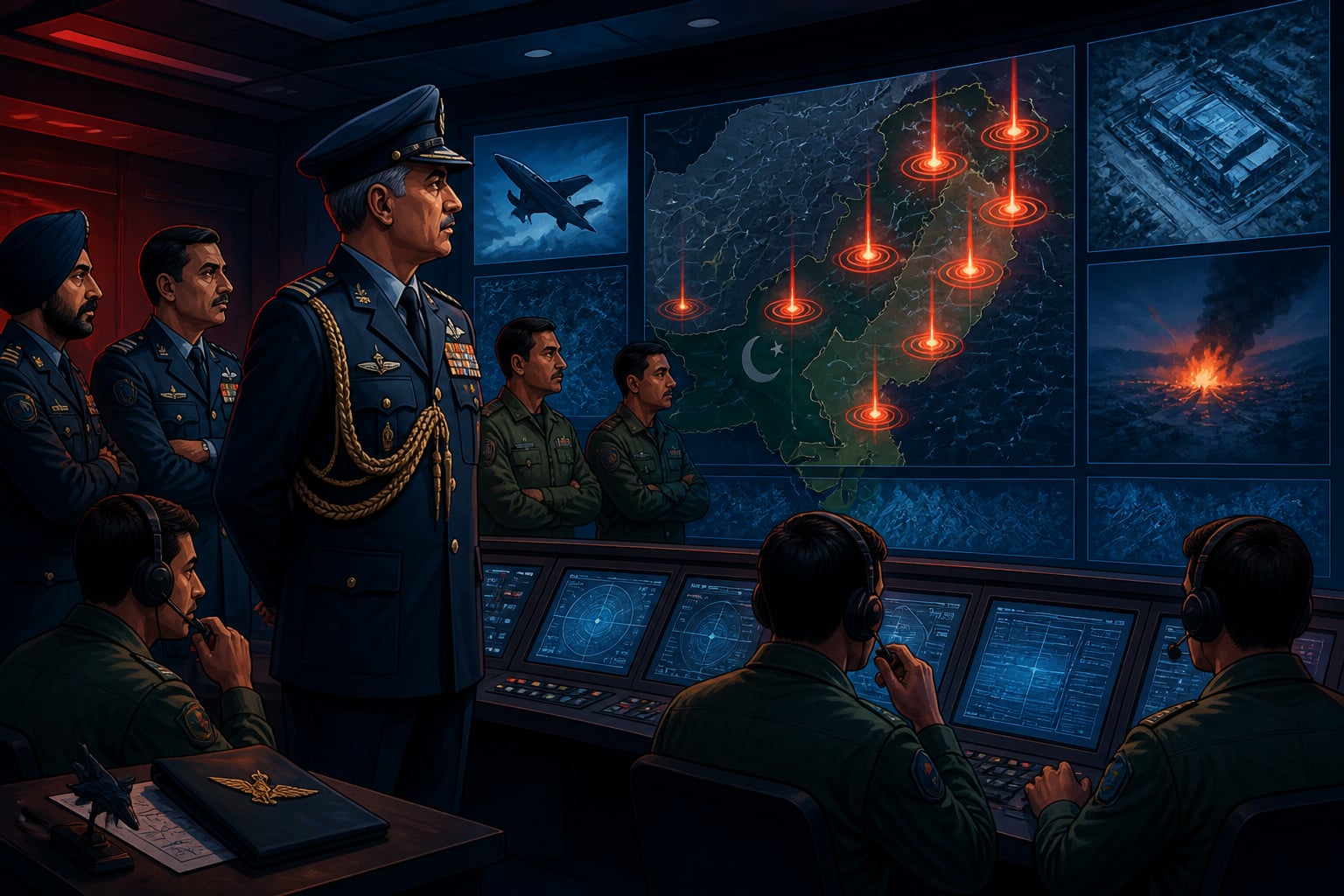
Coordination: Multiple aircraft types participated - Rafale jets carrying SCALP cruise missiles, Su-30MKIs carrying BrahMos missiles, Mirage 2000s with Spice bombs. Each platform played its role perfectly.
Stealth: The approach routes avoided Pakistan's early warning systems. Indian aircraft flew low, used electronic countermeasures, and exploited gaps in Pakistani radar coverage.
Safety: Not a single Indian aircraft was lost. Not a single pilot was endangered beyond acceptable operational risk. The strikes achieved their objectives with zero Indian casualties.
The Aftermath
By dawn, the scale of the operation became clear.
Pakistan's military establishment was in shock. Their air defense systems had failed to intercept a single Indian aircraft. Their terror infrastructure - built over decades - had been hit in one night.
The terrorists themselves were devastated. Estimates suggest over 100 terrorists were killed in the strikes, including trainers, operatives, and commanders. The camps that had operated with impunity for decades were now smoking ruins.
Internationally, reactions were measured. The United States, while calling for restraint, acknowledged India's right to self-defense. The UK and France expressed understanding. Even China's response was muted - a far cry from the usual defense of its "all-weather friend."
Pakistan's Prime Minister addressed his nation, claiming the strikes had caused minimal damage and promising retaliation. But the images told a different story. Satellite photos showed destroyed buildings. Intercepted communications revealed panic. The terror infrastructure had been dealt a blow it would take years to recover from.
Why 'Sindoor'?
The operation's name carries deep meaning. Sindoor - the vermillion mark worn by married Hindu women - symbolizes the bond between husband and wife. It represents protection, commitment, and the promise to stand together.
The name sent a message: India would protect its own. The tourists at Pahalgam - the honeymooners, the families, the ordinary Indians - were under India's protection. Those who harmed them would face consequences.
The name also invoked the concept of "tilak" - the mark that warriors receive before battle. India had received the blood-tilak of Pahalgam's martyrs. The nation went to war in their name.
Operation Mahadev
Operation Sindoor was followed by Operation Mahadev - a targeted campaign to eliminate the specific terrorists responsible for the Pahalgam attack.

Using intelligence gathered from multiple sources, Indian agencies tracked the surviving attackers and their immediate handlers. Some were eliminated in follow-up strikes. Others were killed in ground operations in the days that followed.
By May 15, every terrorist directly involved in the Pahalgam massacre had been accounted for. Justice had been served - not through courts that Pakistan would never allow, but through the ancient law of consequence.
The New Doctrine
Operation Sindoor was not just a military operation. It established a new doctrine for India's response to terrorism:
No Restraint: India would no longer absorb attacks and wait for international condemnation of Pakistan that never came. The response would be swift and devastating.
Cross-Border Strikes: The international border was no longer a shield for terrorists. If Pakistan hosted terror camps, those camps would be destroyed regardless of which side of the border they stood.
Proportionality Redefined: Previous responses - the 2016 surgical strikes, the 2019 Balakot strike - had been calibrated to be "proportional." Operation Sindoor was calibrated to be effective. Nine targets in 22 minutes sent a message that proportionality had a new meaning.
Zero Indian Casualties: The operation proved that India could strike deep into enemy territory without losing personnel. This changed the cost-benefit calculation for future operations.
Pakistan's Dilemma
Operation Sindoor left Pakistan in an impossible position.
If they escalated, they risked a broader conflict with a militarily superior India. Their economy was already struggling; war would be catastrophic.
If they didn't escalate, they accepted that India could strike at will - a humiliation for the military that dominates Pakistani politics.
They chose a middle path: limited retaliatory strikes on Indian military positions, carefully avoiding casualties that might provoke further escalation. India's response was measured but firm, and both sides pulled back from the brink.
But the fundamental equation had changed. Pakistan now knew that sponsoring terror had costs - real, immediate, and devastating.
The World's Response
The international community's response to Operation Sindoor was notably different from previous Indian operations:
The United States called for "all parties to exercise restraint" but notably did not condemn India. The State Department spokesperson acknowledged India's "serious security concerns."
France and the UK expressed "understanding for India's position" given the "horrific terrorist attack at Pahalgam."
The UAE and Saudi Arabia - historically close to Pakistan - called for dialogue but did not criticize India's strikes.
Even Russia and China issued relatively balanced statements, avoiding the pro-Pakistan tilt that might have been expected.
The world understood what India had done and why. Decades of Pakistani-sponsored terrorism, culminating in the massacre of tourists at Pahalgam, had finally exhausted international patience. India's response, while dramatic, was seen as justified.
The Heroes of Sindoor
Operation Sindoor's heroes are, by necessity, anonymous. The pilots who flew into enemy airspace. The ground crews who prepared the aircraft. The intelligence officers who identified the targets. The commanders who planned the operation.
Their names may never be known publicly. Their faces will not appear on magazine covers. But they executed one of the most complex military operations in India's history with flawless precision.
Someday, when the classified files are opened, their stories will be told. For now, we can only honor them collectively - the men and women who proved that India can and will defend its citizens, no matter the cost.
The Message
Operation Sindoor sent a message that echoed across the subcontinent and the world:
To terrorists: Your camps are not safe. Your training grounds are not safe. Anywhere you gather, you are targets.
To Pakistan: Your support for terror has consequences. The international border will not protect you. The terror infrastructure you have built can be destroyed in hours.
To the world: India is no longer a victim waiting for sympathy. India acts. India defends its citizens. India will pay any price to protect the innocent.
To Indians: Your nation will protect you. Whether you are a soldier on the border or a tourist at Pahalgam, India will respond to those who harm you.
May 7: A New Chapter
May 7, 2025, marked a new chapter in India's history. The doctrine of strategic restraint - of absorbing attacks and hoping diplomacy would eventually work - ended that night.
In its place emerged a doctrine of decisive response. Attack India, and India will strike back. Shelter terrorists, and your shelter will become a target. Harm Indian citizens, and consequences will follow.
The 26 innocents who died at Pahalgam did not die in vain. Their deaths catalyzed a transformation in how India defends itself. The terror infrastructure that killed them lies in ruins.
Operation Sindoor was their memorial - not in stone, but in action. Not in words, but in fire.
India struck back. And the world noticed.
Key figures
IAF Strike Pilots
Air Chief Marshal
Intelligence Agencies
Case studies
Decisive Action vs. Endless Patience
For decades, a country has been attacking you through proxies while denying involvement. The world sympathizes but does nothing. Do you continue showing restraint, or do you act decisively?
Sometimes, decisive action accomplishes what years of patience cannot. When dealing with bad-faith actors, strength is the only language they understand.
Deterrence theory in international relations holds that capability without demonstrated will is insufficient. India's progression from diplomatic protests to surgical strikes to full-spectrum operations follows the classic escalation ladder that security scholars have long advocated for asymmetric threat environments.
Precision Over Destruction
You have the capability to cause massive damage to your enemy. Do you use maximum force, or do you use precision to achieve specific objectives?
True strength is shown through control, not excess. Achieving objectives precisely demonstrates greater capability than causing indiscriminate destruction.
Precision in military operations mirrors the broader principle of proportionality. In cybersecurity, targeted responses to attacks are more effective than scorched-earth countermeasures. In business, surgical restructuring outperforms mass layoffs. The ability to apply force precisely demonstrates greater competence than applying it indiscriminately.
Historical context
Operation Sindoor
Reflection
- How does Operation Sindoor compare to previous Indian responses to terrorism like the 2016 surgical strikes and 2019 Balakot strike?
- Why was the international response to Operation Sindoor relatively muted compared to India's expectations?
- What does the name 'Sindoor' tell us about how India frames its military actions?