The Shadow Warriors

Ajit Doval and the RAW Operatives Who Can Never Be Named

From Ajit Doval - the 'James Bond of India' who operated undercover in Pakistan and became NSA - to the countless operatives whose names we will never know. The Intelligence Bureau, RAW, and the shadow warriors who protect India from threats invisible to ordinary citizens.

The World of Shadows

Every nation has two defenses: the visible army that stands on borders, and the invisible army that operates in shadows. Soldiers fight in uniform, with honor and recognition awaiting the brave. Intelligence operatives fight in disguise, with anonymity as their only reward.

India's intelligence community includes thousands of men and women who have served in the most dangerous circumstances - undercover in Pakistan, embedded with terrorist groups, operating in hostile territories worldwide. Most of their names will never be known. Their stories will never be told. Their sacrifices will remain invisible forever.

But occasionally, one of these shadow warriors emerges into the light - and we glimpse the extraordinary world they inhabit.

Ajit Doval is such a man. India's current National Security Advisor, once known as the 'James Bond of India,' spent decades in the shadows before emerging as one of the nation's most important strategic thinkers.

His story - and the stories of those who remain in darkness - reveals the hidden defenders who protect India from threats most citizens never see.

Ajit Doval: The Making of a Spy

Ajit Kumar Doval was born on January 20, 1945, in Ghiri Banelsyun, Pauri Garhwal, Uttarakhand - in the lap of the Himalayas. His father was a Major in the Indian Army, and young Ajit grew up with military discipline and patriotic values.

After completing his education, Doval joined the Indian Police Service (IPS) in 1968 - the Kerala cadre. But his exceptional abilities soon caught the attention of the Intelligence Bureau (IB), India's domestic intelligence agency.

In 1972, he was inducted into the IB. His career in the shadows had begun.

Seven Years in Pakistan
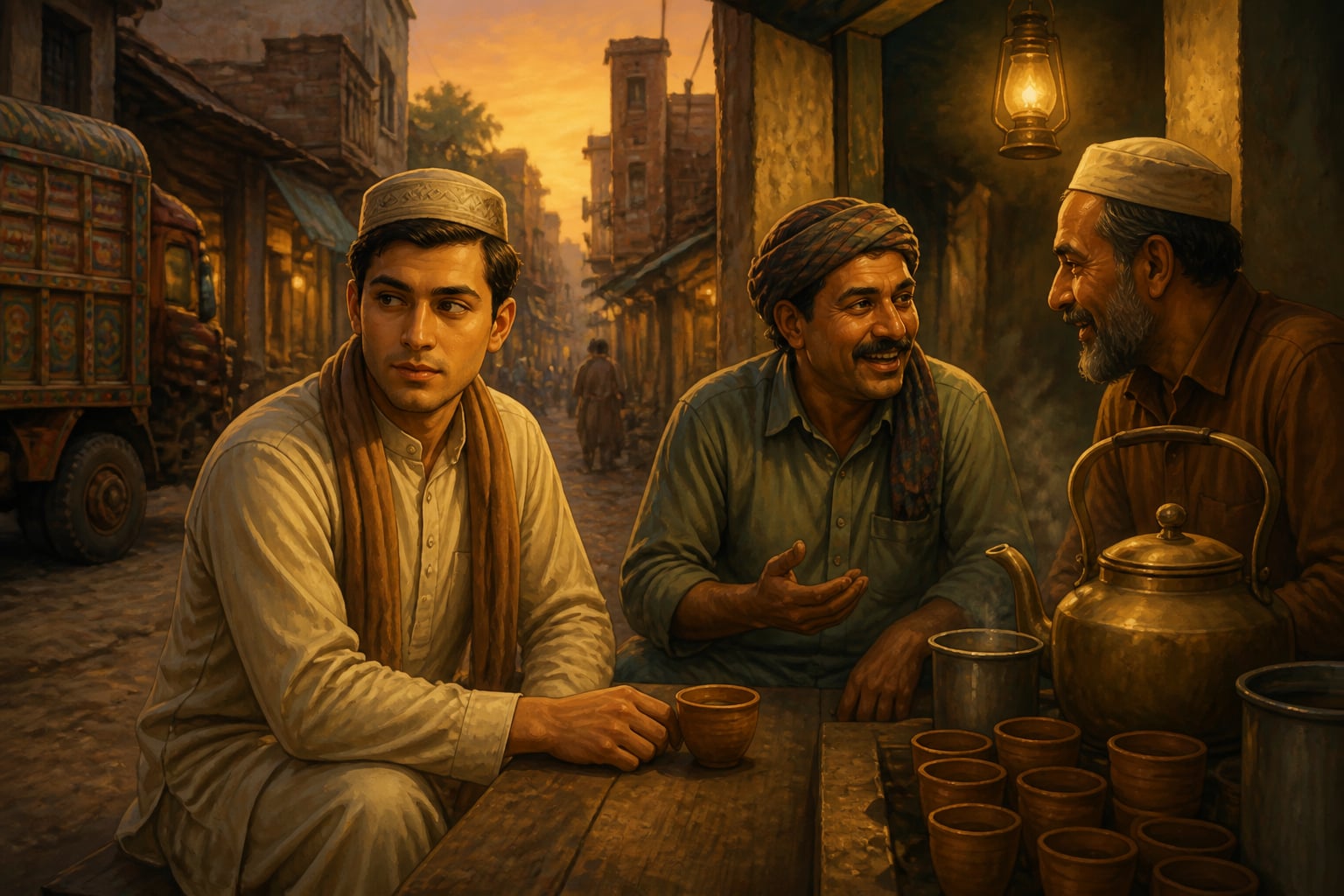
Young Ajit Doval undercover at a Lahore tea stall

Doval's most legendary achievement came in the 1970s and 1980s when he reportedly spent seven years undercover in Pakistan. Operating as a Pakistani Muslim, he infiltrated extremist groups and gathered intelligence on Pakistan's nuclear program, military capabilities, and support for terrorism in Punjab and Kashmir.

The details of these operations remain classified. What is known is that Doval earned the trust of Pakistani operatives, moved freely in Pakistan's sensitive areas, and returned with intelligence that shaped India's strategic decisions for decades.

He was not a desk officer analyzing reports. He was a field operative who lived with the enemy, ate with them, prayed with them - all while secretly serving India.

The Khalistan Operations

In the 1980s, Punjab was burning. Khalistani terrorists, supported by Pakistan, were conducting a campaign of assassination and bombing. The Indian state seemed helpless.

Ajit Doval was sent to Punjab. His mission: infiltrate the Khalistani movement and disrupt it from within.

Using his language skills and his ability to blend in, Doval reportedly established contact with senior Khalistani leaders. He gathered intelligence on their operations, their Pakistani support networks, and their plans. More importantly, he sowed discord within the movement, turning factions against each other.

The full extent of his operations remains classified, but those who know credit Doval with playing a crucial role in the eventual defeat of the Khalistani insurgency.

Operation Black Thunder

Doval disguised as a journalist inside the Golden Temple during Operation Black Thunder

In 1988, Khalistani militants had once again occupied the Golden Temple in Amritsar. The government, scarred by Operation Blue Star, was reluctant to use force. A peaceful resolution seemed impossible.

Ajit Doval was reportedly one of the key operatives who entered the temple complex disguised as a journalist. He gathered intelligence on the militants' positions, their weapons, their numbers, and their psychology.

The intelligence he provided allowed the security forces to conduct Operation Black Thunder - a surgical operation that removed the militants without damaging the shrine and with minimal casualties.

Unlike Blue Star, Black Thunder was seen as a success. The hidden hand that made it possible was Ajit Doval.

The Kandahar Negotiations

In December 1999, Indian Airlines Flight IC-814 was hijacked by Pakistani terrorists and taken to Kandahar, Afghanistan. The hijackers demanded the release of three terrorists, including Masood Azhar, who would later found Jaish-e-Mohammed.

Ajit Doval was part of the negotiating team that went to Kandahar. He later publicly opposed the decision to release the terrorists, arguing that it would lead to more hijackings and attacks.

He was proven right. The released terrorists went on to orchestrate attacks including the 2001 Parliament attack, 26/11 Mumbai attacks, and countless operations in Kashmir. Doval's opposition to the release, though overruled, established his reputation as a hawk who prioritized long-term security over short-term resolution.

The Kirti Chakra

In 1988, Ajit Doval was awarded the Kirti Chakra - India's second-highest peacetime gallantry award - for his operations in Punjab. The citation details remain classified, but it recognized exceptional courage in intelligence operations.

He is one of only three IB officers to have received the Kirti Chakra. The award publicly acknowledged what insiders knew: Doval was one of India's most valuable and courageous intelligence operatives.

From Shadow to Spotlight

In 2014, when Narendra Modi became Prime Minister, he appointed Ajit Doval as National Security Advisor. The man who had spent decades in shadows now operated in the spotlight.

Ajit Doval as National Security Advisor at South Block desk

As NSA, Doval has been credited with architecting India's more assertive security policy:

The Surgical Strikes (2016): After terrorists attacked Uri, India conducted cross-border surgical strikes into Pakistan. Doval is believed to have personally monitored the operations.

The Balakot Airstrikes (2019): After the Pulwama attack, IAF jets struck terrorist camps deep inside Pakistan. The strategic framework was Doval's.

Doklam Standoff (2017): When Chinese forces tried to construct a road in disputed territory, Doval managed the crisis, eventually compelling a Chinese withdrawal.

Article 370 Abrogation (2019): The security arrangements that allowed the peaceful integration of Kashmir were Doval's responsibility.

Galwan Response (2020): When Chinese troops killed 20 Indian soldiers, Doval shaped the military and diplomatic response.

The shadow warrior had become the visible hand guiding India's national security.

The Operatives We'll Never Know

Ajit Doval is famous because he emerged from the shadows. But for every Doval, there are hundreds of operatives who will never emerge.

RAW and IB employ thousands of field operatives who:

These operatives have no public identity. Their families often don't know what they do. If they're caught, India denies them. If they die, they die alone.

Some spend years undercover, building identities and networks. Some conduct quick surgical operations and extract. Some never come back.

They are the shadow warriors - India's first line of defense against threats that never make the newspapers.

The Psychology of the Spy

What drives someone to become an intelligence operative? To live a life of deception, isolation, and constant danger?

Those who have studied intelligence operatives identify several factors:

Patriotism: A deep love of country that transcends personal comfort and recognition.

Intellectual Challenge: The spy's life is one of constant mental challenge - maintaining covers, reading people, solving puzzles.

Adventure: The thrill of living on the edge, of danger overcome.

Sense of Purpose: The knowledge that your work matters, that you're protecting millions of people who will never know.

Detachment: The ability to compartmentalize, to keep secrets even from loved ones, to live with isolation.

Ajit Doval reportedly once said that an intelligence officer must have "a cold head and a warm heart" - the analytical detachment to make hard decisions and the emotional commitment to serve regardless of cost.

The Doval Doctrine

As NSA, Doval has articulated what some call the "Doval Doctrine" - a more aggressive approach to India's security challenges:

Defensive Offense: India will not wait to be attacked. It will strike first when threats are identified.

Cost Imposition: Pakistan must pay a price for terrorism. The cost of aggression must exceed any possible benefit.

Strategic Patience with China: Unlike Pakistan, China requires careful diplomacy. But India will not cede territory or principle.

Internal Security Integration: All security agencies must work together, sharing intelligence and coordinating operations.

Technology Focus: Modern threats require modern solutions - cyber capabilities, surveillance technology, precision munitions.

This doctrine represents the lessons of a lifetime spent in the shadows - the understanding that security comes not from hope but from capability and will.

The Unseen Battle

Every day, India faces threats that most citizens never see:

Every day, shadow warriors work to prevent these threats from becoming reality. They infiltrate, they gather intelligence, they disrupt operations, they neutralize threats.

When they succeed, nothing happens - and that's the point. The attack that never occurred, the plot that was disrupted, the network that was rolled up - these are the invisible victories.

When they fail, the nation learns their names only to mourn them.

The Code of Silence

Intelligence operatives live by a code that separates them from ordinary people:

Silence: Never reveal sources and methods. Never discuss operations. Never seek credit.

Compartmentalization: Know only what you need to know. Trust only those you must trust.

Sacrifice: Be prepared to give up everything - family, identity, life itself.

Loyalty: Your country comes first, always. Even when your country cannot acknowledge you.

Professionalism: Never let emotion compromise mission. Stay calm under pressure.

This code creates a unique fraternity - men and women who share an experience no one else can understand, bound by secrets they can never reveal.

Honoring the Invisible

How do we honor those whose honor must remain invisible?

The answer is simple: by recognizing that they exist, that they sacrifice, that our security depends on their courage.

We may never know their names. We may never hear their stories. But we can acknowledge the truth: that behind every day of peace, there are shadow warriors who made that peace possible.

Ajit Doval's emergence from shadow to spotlight allows us to glimpse this world. Through his story, we honor all those who remain in darkness.

The James Bond of India is just one of thousands. Most will never be James Bond - they'll remain anonymous, unrecognized, invisible.

And that, perhaps, is their greatest sacrifice: not just risking their lives, but giving up the very possibility of being remembered.

Key figures

Ajit Kumar Doval

The Intelligence Bureau

The Unknown Operatives

Case studies

Operation Black Thunder - Intelligence Enabling Precision

Militants have occupied a religious shrine. Force will cause civilian casualties and religious outrage. But negotiation has failed. How do you resolve the crisis?

Good intelligence transforms impossible situations into solvable problems. The information gathered by operatives at personal risk enabled a solution that neither pure force nor pure negotiation could achieve.

Hostage negotiation teams, SWAT units, and crisis management firms all operate on the same principle: better intelligence enables better outcomes. The 2011 Abbottabad raid succeeded because years of patient intelligence work preceded the 40-minute operation. Information is the force multiplier that converts impossible situations into achievable missions.

Kandahar - The Cost of Compromise

Terrorists have hijacked a plane with 150+ hostages. They demand release of dangerous terrorists. Do you negotiate, risking future attacks? Or refuse, risking the hostages' lives?

In security matters, short-term compassion can create long-term suffering. The calculus of lives saved vs. lives risked is never simple. Sometimes the harder choice is the right choice.

Ransomware attacks on hospitals and critical infrastructure present the modern equivalent of this dilemma. Paying ransom saves immediate victims but funds future attacks. Governments and companies worldwide struggle with this calculus, and there is still no universally accepted right answer.

The Surgical Strikes - Defensive Offense

Terrorists based in Pakistan have attacked Indian soldiers at Uri. India has always responded with diplomatic protests. Should India change its approach?

Deterrence requires demonstrated capability and will. Sometimes the best defense is showing you're willing to attack. The 'Doval Doctrine' changed the cost-benefit calculation for Pakistani terrorism.

Israel's Iron Dome and targeted operations, the US shift from large-scale military deployments to precision strikes, and India's evolution from diplomatic protests to surgical strikes all reflect the same strategic insight: demonstrated willingness to act offensively is more effective deterrence than purely defensive postures.

Historical context

The Evolution of Indian Intelligence

Reflection

More in The Invisible Warriors

All lessons in The Invisible Warriors ยท Param Veer: Guardians of the Heights (1984-Present) course