The First Responders
NDRF, Fire Services, and Civilian Heroes
Not all heroes wear uniforms. NDRF disaster responders who save lives in earthquakes and floods. Fire service personnel who run into burning buildings. Civilians who risk their lives for strangers. The spirit of valor that lives in ordinary Indians when crisis strikes.
When Crisis Calls
On an ordinary day, they are farmers, shopkeepers, teachers, office workers. Then disaster strikes - an earthquake, a flood, a fire, a terrorist attack - and ordinary people become extraordinary heroes.
India has faced countless disasters: earthquakes in Gujarat and Nepal, floods in Kerala and Uttarakhand, cyclones in Odisha and Bengal, fires in hospitals and factories. In each crisis, the first responders - trained or untrained - make the difference between life and death.
Some are professionals: the National Disaster Response Force (NDRF), fire service personnel, medical teams. Some are civilians: farmers who rescue neighbors, passersby who pull victims from wreckage, volunteers who appear from nowhere when needed.
Together, they represent a different kind of heroism - not against an enemy nation, but against disaster itself.
The National Disaster Response Force
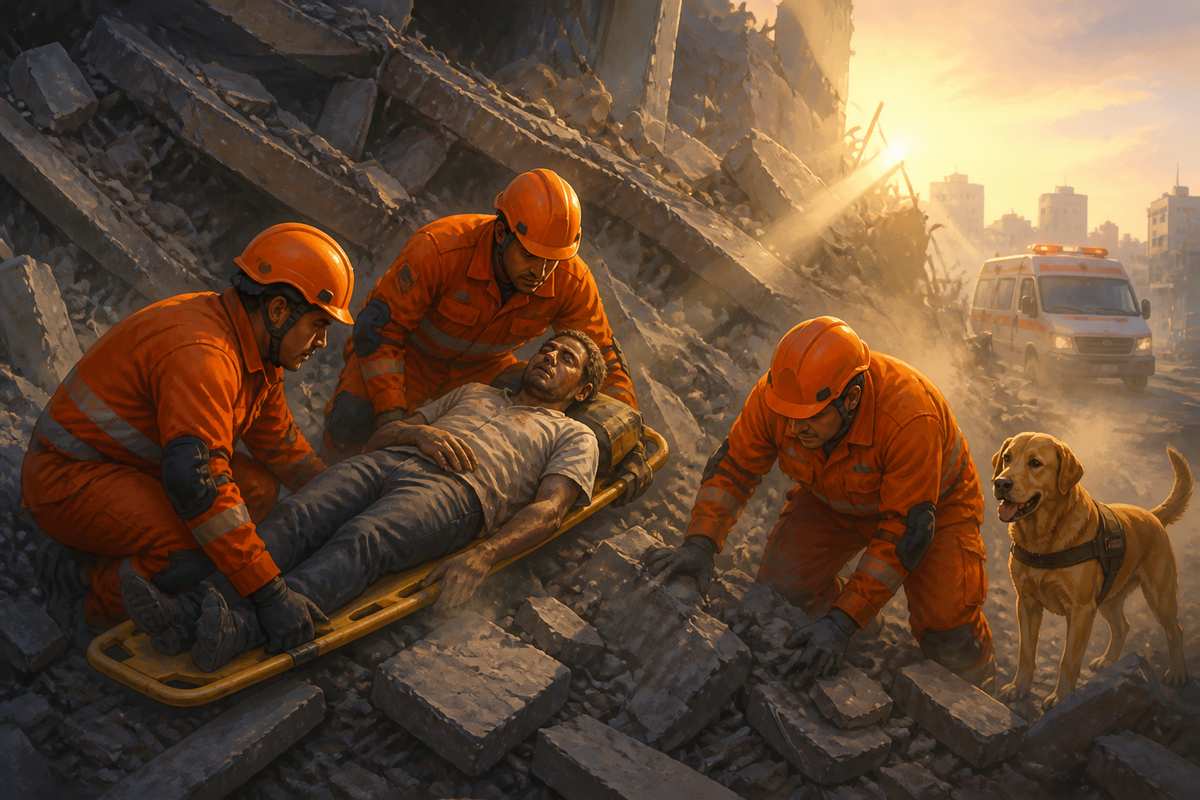
The NDRF was born from tragedy. The 2001 Gujarat earthquake and the 2004 tsunami exposed India's lack of a dedicated disaster response force. When tens of thousands died in earthquakes and floods, the need for specialized rescue teams became undeniable.
Established in 2006, the NDRF is India's specialized force for disaster response. Its 12 battalions, each with 1,149 personnel, are trained for every kind of disaster: earthquakes, floods, cyclones, building collapses, chemical accidents, nuclear emergencies.
The Training: NDRF personnel undergo rigorous training that most people would find terrifying. They learn to:
- Enter collapsed buildings where aftershocks could bring the structure down
- Navigate flood waters carrying desperate survivors
- Conduct rescues in complete darkness using acoustic equipment
- Handle hazardous materials that could kill them instantly
- Provide medical care in chaotic, dangerous conditions
The Response: When disaster strikes, NDRF teams are often the first on scene. They have responded to:
- The 2013 Uttarakhand floods (rescued 10,000+ people)
- The 2015 Nepal earthquake (deployed to neighboring country)
- Annual flood operations across India
- Cyclone Fani, Amphan, and numerous other storms
- Building collapses in Mumbai, Delhi, and other cities
NDRF personnel work without rest for days during disasters. They dig through rubble with bare hands when equipment isn't enough. They carry the elderly through flood waters. They hold flashlights for surgeons performing emergency operations.
Fire Service Heroes
India loses thousands of lives to fires every year. In hospitals, factories, high-rises, slums - fire is a constant threat in a country where building regulations are often ignored.
Fire service personnel face this threat daily. They enter burning buildings when everyone else is running out. They climb ladders into infernos. They cut through wreckage to reach trapped victims.
The Uphaar Cinema Fire (1997): On June 13, 1997, fire broke out during a screening at Uphaar Cinema in Delhi. 59 people died, most from asphyxiation in the stampede and smoke. Fire service personnel worked for hours to rescue the trapped and recover the dead.
The tragedy led to stricter fire safety regulations - though enforcement remains a challenge.

The AMRI Hospital Fire (2011): On December 9, 2011, fire engulfed AMRI Hospital in Kolkata. 93 people - patients, staff, visitors - died in what became one of India's worst hospital fires.
Fire service personnel entered the smoke-filled building repeatedly, pulling survivors from rooms where visibility was zero. Some firefighters suffered permanent lung damage from smoke inhalation.
The Hotel Arpit Palace Fire (2019): On February 12, 2019, fire broke out at Hotel Arpit Palace in Delhi's Karol Bagh. 17 people died. Fire service personnel rescued dozens, including guests who had gathered on the roof.
In each of these tragedies, firefighters did what they are trained to do: run toward danger, enter buildings others flee, save lives at risk of their own.
The Civilian Heroes
Some of India's greatest heroes have no training, no uniform, no obligation to act. They are civilians who, when crisis strikes, choose to help.
Neerja Bhanot (Ashoka Chakra, Posthumous): On September 5, 1986, Pan Am Flight 73 was hijacked by Palestinian terrorists at Karachi airport. Neerja Bhanot, a 22-year-old flight attendant, helped hide American passports from the terrorists (Americans were their primary targets).
When the hijackers began shooting passengers, Neerja opened an emergency exit and helped passengers escape. She was shot while shielding three children from gunfire. She died, but 359 passengers survived largely because of her courage.

She was the youngest recipient of the Ashoka Chakra - India's highest peacetime gallantry award.
The Roji River Rescue (2017): In Kerala, heavy rains had swelled the Roji River. A tourist bus was stranded in the rising waters with 30 passengers trapped. Local fishermen - who had no obligation, no training, no equipment - launched their boats into the dangerous current.
They made multiple trips, pulling passengers from the bus as the water rose. All 30 were saved. The fishermen went home, asked for no recognition, and went back to their work the next day.
The Mumbai Train Helpers: Every day in Mumbai, 7.5 million people travel on local trains. Overcrowding leads to accidents - people falling from trains, getting caught between platform and train, being crushed in stampedes.
When accidents happen, it's usually fellow commuters who respond first - pulling victims from tracks, providing first aid, calling for help. These anonymous heroes save lives daily.
The 26/11 Civilian Response
During the 26/11 terrorist attacks in Mumbai, civilians showed extraordinary courage:
The Taj Hotel Staff: When terrorists attacked the Taj Mahal Palace Hotel, staff members guided guests to safety, even as gunfire echoed through the corridors. Several staff members died protecting guests they had never met before that night.
The Local Fishermen: The terrorists had arrived by sea. Local fishermen at the Cuffe Parade fish market were among the first to notice them. When the attack began, some fishermen helped police identify the landing point, providing crucial information.
The Medical Volunteers: As casualties poured into hospitals, off-duty doctors and nurses rushed to help. Medical students worked alongside professionals. Blood donors lined up outside hospitals.
Mumbai's response to 26/11 showed that heroism is not limited to the uniformed. It lives in the hearts of ordinary people who choose to help when help is needed.
The Spirit of Seva
In Sanskrit, "seva" means selfless service. It is a concept deeply rooted in Indian tradition - the idea that serving others, especially in their time of need, is a sacred duty.
This spirit manifests in countless ways during disasters:
- Gurdwaras opening their doors to refugees and flood victims
- Temples providing free food (prasadam) to thousands
- Mosques organizing blood donation camps
- Churches running relief centers
- Neighborhood groups collecting supplies for the affected
During the COVID-19 pandemic, this spirit shone brightest. When migrants were stranded by the lockdown, ordinary Indians organized food, transport, and shelter. Sikh volunteers drove thousands of kilometers to deliver meals. Muslim organizations arranged ambulances. Hindu temples served as quarantine centers.
The spirit of seva knows no religion, no caste, no boundaries. It is India's deepest heroism - the heroism of ordinary people serving others.
The Ashoka Chakra for Civilians
The Ashoka Chakra - India's highest peacetime gallantry award - has been given to several civilians for extraordinary courage:
Havildar Ishar Singh (1947): A civilian who continued fighting Pakistani raiders even after the military position had fallen, organizing village defense until reinforcements arrived.
Neerja Bhanot (1987): The flight attendant who died protecting passengers from hijackers.
Mohan Singh Kohli (1965): A mountaineer who led rescue operations on Everest, saving multiple climbers at the risk of his own life.
These civilians received the same honor as military heroes - recognition that courage is not limited to those in uniform.
The Unrecognized Heroes
For every civilian who receives an award, there are thousands who receive nothing but the satisfaction of having helped.
The farmer who carries flood victims on his back for kilometers. The auto-rickshaw driver who ferries wounded to hospitals during riots. The shopkeeper who opens his store as a shelter during disasters. The teacher who guides students to safety during earthquakes.
These heroes will never be in newspapers. Their names will never be known beyond their villages. But their courage is no less than those who receive medals.
Becoming a First Responder
The lesson of the first responders is that anyone can be a hero. Heroism is a choice made in a moment, and that moment can come to anyone.
Basic Training: Every Indian can learn basic first response skills:
- First aid and CPR
- Fire safety and evacuation procedures
- Flood safety and water rescue basics
- Earthquake response (drop, cover, hold)
Volunteer Organizations: Many organizations train citizen volunteers:
- Civil Defense
- Red Cross
- St. John Ambulance
- Local disaster management committees
Community Preparedness: Neighborhoods can prepare together:
- Identify safe locations and evacuation routes
- Maintain emergency supplies
- Know who needs help (elderly, disabled, children)
- Practice emergency drills
The Call to Courage
When disaster strikes, you have a choice. You can run away, protecting yourself. Or you can turn around and help.
Most people freeze. A few run. But some - the first responders, trained or untrained - move toward the danger.
What makes the difference? Training helps, but it's not essential. Equipment helps, but many rescues are done with bare hands. What matters most is the decision - the moment when an ordinary person chooses to be extraordinary.
The NDRF officer who digs through rubble for hours made that choice. The firefighter who enters a burning building made that choice. The civilian who pulls a stranger from a flooded car made that choice.
The spirit of Param Veer - supreme courage - is not limited to soldiers on battlefields. It lives in every Indian who chooses to help when help is needed.
The Invisible Army
India's first responders are an invisible army - unseen until crisis strikes, forgotten once the headlines fade. They save thousands of lives every year. They work without glory, often without adequate equipment or pay.
The NDRF battalion that rescues flood victims will not receive medals for their work. The firefighter who enters a burning hospital will not be mentioned in history books. The civilian who dives into a river to save a stranger will not be invited to Republic Day parades.
But they serve nonetheless. They represent the best of India - the capacity for ordinary people to do extraordinary things when others need help.
Not all heroes wear uniforms. Some wear NDRF orange jumpsuits. Some wear firefighter helmets. Some wear the same clothes they were wearing when they saw someone in trouble and decided to help.
The first responders remind us that heroism is not reserved for soldiers. It is a choice available to everyone, every day.
And that choice - the decision to help when help is needed - is the truest measure of courage.
Key figures
Neerja Bhanot
NDRF Teams
The Anonymous Heroes
Case studies
The Choice of Neerja Bhanot
Terrorists have hijacked your plane. They are going to kill passengers. You could hide, play dead, save yourself. Or you could try to help others escape, risking your own life.
Heroism is a choice available to everyone. In the moment of crisis, you decide who you want to be. Neerja chose to be someone who helps, even unto death.
On 15 January 2009, Chesley Sullenberger landed US Airways Flight 1549 on the Hudson River, saving 155 lives. Flight attendants who manage emergencies, teachers who shield students during shootings, and ordinary people who pull strangers from car wrecks all demonstrate that heroism is not reserved for soldiers. It is available to anyone who chooses others over self in the critical moment.
The Uttarakhand Floods
Massive floods have devastated a mountain state. Roads are washed away. Villages are cut off. Thousands are trapped in rising waters. How do you respond?
Professional training saves lives. NDRF's specialized skills allowed them to operate in conditions where untrained responders would have become victims themselves.
Climate change is increasing the frequency and intensity of natural disasters worldwide. The Indian military's disaster response capability, tested repeatedly in floods, earthquakes, and cyclones, is now a model studied by other nations. Japan's Self-Defense Forces and the US National Guard serve similar dual roles, blending combat readiness with humanitarian response.
The Spirit of Seva During COVID
A pandemic has locked down the country. Millions of migrants are stranded without food, transport, or shelter. Official systems are overwhelmed. What do ordinary people do?
When government systems fail, civil society steps up. The spirit of seva - selfless service - is India's invisible safety net, activated whenever crisis strikes.
During the COVID-19 pandemic, community kitchens in India served over 100 million meals through volunteer networks. Sikh langars, Hindu temple prasadam distribution, and Muslim zakat networks activated at scale. This demonstrated that India's civil society infrastructure, rooted in dharmic traditions of seva, can mobilize faster than government machinery in humanitarian crises.
Historical context
India's Disaster Response Evolution
Reflection
- What makes ordinary people like Neerja Bhanot choose to risk their lives for strangers?
- How can the spirit of seva be preserved and strengthened in modern India?
- Could you become a first responder? What would it take for you to run toward danger instead of away from it?