The Black Tiger - India's Greatest Spy
Ravindra Kaushik - The Man Who Became Nabi Ahmed Shakir
Recruited by RAW at 21, Ravindra Kaushik infiltrated Pakistan, joined the Pakistani Army, and rose to access sensitive military information. PM Indira Gandhi titled him 'Black Tiger.' Betrayed and captured in 1983, he died in Pakistani prison in 2001. India never officially acknowledged him. Some sacrifices remain invisible forever.
The Invisible Sacrifice
In the world of intelligence, the greatest heroes are those whose names are never known. They live double lives, cut off from family and country, serving in the shadows with no hope of recognition. If they succeed, no one knows. If they fail, their nation denies them. If they die, they die alone, in foreign prisons, their sacrifice erased from history.
Ravindra Kaushik was such a hero. India's greatest spy, who infiltrated the Pakistani Army itself, who was personally titled 'Black Tiger' by Prime Minister Indira Gandhi, who gave 28 years of his life to the nation - yet India has never officially acknowledged his existence.
His story is not one of medals and parades. It is a story of sacrifice so complete that even the sacrifice itself must remain invisible.
The Boy from Ganganagar
Ravindra Kaushik was born on April 11, 1952, in Sri Ganganagar, Rajasthan - a town near the India-Pakistan border. His father was a school teacher, and young Ravindra grew up in a modest household with strong nationalist values.
From childhood, Ravindra showed two talents that would define his life: acting and languages. He was a gifted performer, winning state-level drama competitions. He could mimic accents and mannerisms with uncanny precision. He also had an ear for languages, speaking Hindi, Punjabi, and Urdu fluently.
In college, he pursued these talents, becoming active in theatre. His dream was to be an actor in Bollywood. Fate had other plans.
The Recruitment
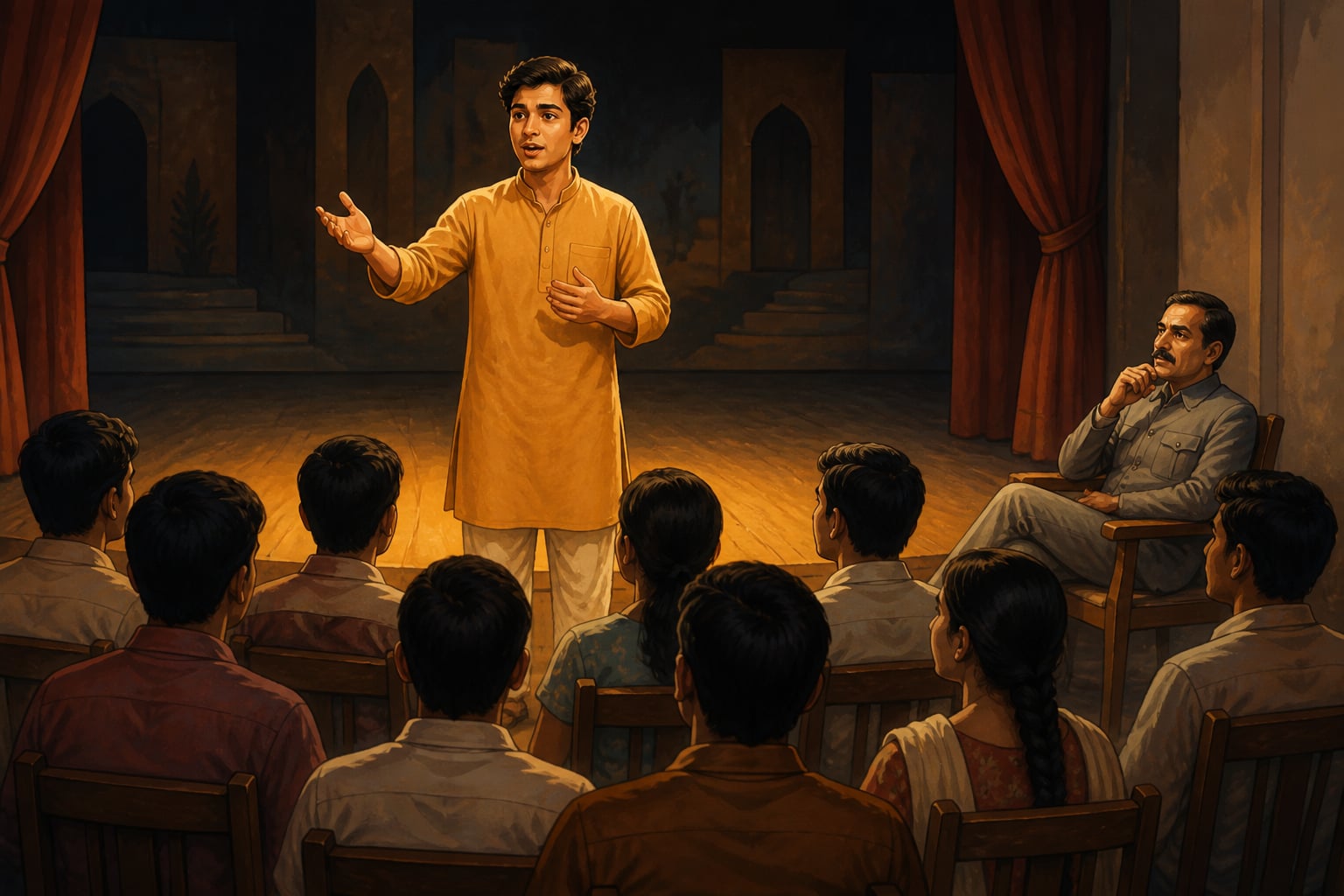
In 1973, at the age of 21, Ravindra Kaushik's life changed forever. He was performing in a play in Delhi when a man approached him after the show. The man was impressed by his acting ability and his linguistic skills. He asked if Ravindra would be interested in serving his country.
The man was a recruiter for RAW - the Research and Analysis Wing, India's external intelligence agency. In the aftermath of the 1971 war, RAW was building its capabilities, looking for agents who could penetrate Pakistan's military and intelligence establishment.
Ravindra Kaushik, with his acting talent, his fluency in Urdu, and his ability to pass for a Muslim Pakistani, was exactly what they needed.
The young man who dreamed of acting in films was being asked to play the most dangerous role imaginable - a role where a single mistake meant death, where success meant anonymity, and where there would be no applause at the end.
He said yes.
The Transformation
What followed was the most intensive training RAW had ever conducted. For two years, Ravindra Kaushik was transformed into a different person entirely.
First, the physical transformation. He was circumcised - a painful and irreversible step that would allow him to pass as a Muslim. He grew a beard in the style common in Pakistan. He learned to walk, gesture, and carry himself like a Pakistani.
Second, the cultural immersion. He learned the Quran, Islamic prayers, and religious practices until they became second nature. He studied Pakistani history, politics, and culture. He learned the names of streets in Karachi and Lahore, the slang of different regions, the subtle differences between Indian and Pakistani Urdu.
Third, the backstory. He was given a new identity: Nabi Ahmed Shakir, born in Karachi, raised in a middle-class Muslim family. Every detail of this fictitious life was memorized until it felt more real than his own past.
By 1975, Ravindra Kaushik had ceased to exist. In his place stood Nabi Ahmed Shakir, a Pakistani citizen ready to serve his country.
Except his country was India.
The Infiltration
In 1975, Nabi Ahmed Shakir crossed into Pakistan. The cover story was simple: he was a young Pakistani returning home after studying abroad. He settled in Karachi and began building his new life.
His mission was audacious: to join the Pakistani Army and rise to a position where he could access sensitive military information. It was a long-term operation, requiring years of patient work with no guarantee of success.
Shakir applied to join the Pakistan Army and was accepted. He served competently, attracting no special attention - which was exactly the goal. He was promoted to the position of an Army clerk, a humble rank that nonetheless gave him access to military documents and communications.
Over the years, he carefully gathered intelligence and transmitted it to RAW through coded messages and dead drops. He reported on troop movements, military exercises, and strategic plans. He identified other potential assets within the Pakistani military.
By the early 1980s, Nabi Ahmed Shakir had become one of India's most valuable intelligence assets. The information he provided was instrumental in India's strategic planning vis-à-vis Pakistan.

The Black Tiger
Prime Minister Indira Gandhi, briefed on the agent codenamed 'Black Tiger,' is reported to have personally congratulated RAW on the operation. The title stuck - Kaushik became known within RAW circles as the Black Tiger, India's deepest penetration agent in Pakistan.
But the life of a spy is one of constant fear. Every day, Nabi Ahmed Shakir lived with the knowledge that a single mistake, a single slip of the tongue, a single moment of recognition could mean capture, torture, and death.
He could never contact his family. His parents, back in Ganganagar, believed their son had simply disappeared. His father died never knowing what had happened to Ravindra. His mother lived with the pain of a lost son.
Shakir married a Pakistani woman as part of his cover. She knew nothing of his true identity. They had a daughter together - a child who would grow up believing her father was a Pakistani Army clerk named Nabi Ahmed Shakir.
The Betrayal
In 1983, disaster struck. Another RAW agent, Inyat Masih, was captured by Pakistan's ISI (Inter-Services Intelligence). Under interrogation, Masih revealed information that led the ISI to Nabi Ahmed Shakir.
Kaushik was arrested. The ISI could not believe what they had found - an Indian agent who had penetrated the Pakistan Army itself, who had been operating under their noses for eight years.
The interrogation was brutal. For two years, Kaushik was tortured to reveal the names of other agents, the methods of communication, the extent of the intelligence he had transmitted. He revealed nothing of value.
In 1985, he was tried by a military court and sentenced to death. The sentence was later commuted to life imprisonment, and he was transferred to various Pakistani prisons.
The Forgotten Years

For the next sixteen years, Ravindra Kaushik - the Black Tiger, India's greatest spy - languished in Pakistani prisons. He was moved from facility to facility, kept in isolation, denied contact with the outside world.
India never officially acknowledged his existence. When Pakistan announced his capture, India neither confirmed nor denied. When his family sought help from the government, they were met with silence. RAW could not acknowledge its agent without compromising other operations.
His wife in Pakistan divorced him, horrified to discover she had been married to an Indian spy. His daughter grew up with the shame of being an 'enemy's child.'
His mother in India spent her last years petitioning the government for any news of her son. She died without answers.
International human rights organizations occasionally raised his case. India remained silent.
The Death
On November 21, 2001, Ravindra Kaushik died in Central Jail, Multan, Pakistan. He was 49 years old. The official cause was heart attack, though those who knew him suspected the years of torture and neglect had simply worn out his body.
He died alone, in a foreign prison, disowned by the country he had served, forgotten by the nation he had loved.
His body was buried in an unmarked grave in Pakistan. His remains have never been returned to India.
The Invisible Hero
The story of Ravindra Kaushik raises uncomfortable questions about how nations treat their intelligence operatives.
India never officially acknowledged him. Even after his death, the government has been reluctant to honor him publicly. His family received no official recognition, no pension, no acknowledgment of his service.
Some argue this is necessary - that acknowledging agents, even dead ones, compromises intelligence operations and puts other operatives at risk. Others argue that basic human decency demands that those who sacrifice everything for the nation receive at least posthumous recognition.
Ravindra Kaushik's case is not unique. Intelligence agencies worldwide operate on the principle of 'plausible deniability' - the ability to deny involvement in operations that go wrong. Agents accept this when they sign up. But the human cost is immense.
The Spy's Dilemma
What drove Ravindra Kaushik to accept such a mission? What keeps intelligence operatives going through years of isolation, fear, and the knowledge that if they fail, their country will deny they ever existed?
The answer varies from person to person, but certain themes recur: patriotism, certainly - the belief that they are protecting their country and countrymen. Adventure - the thrill of living a double life. Purpose - the sense that they are doing something that matters.
But there is also something darker: the knowledge that once you become a spy, there is no way out. Once Ravindra Kaushik became Nabi Ahmed Shakir, he could never go back. His old life was gone. His only option was to continue, to hope that somehow, someday, his sacrifice would be worth it.
The Lesson of the Invisible Warriors
Ravindra Kaushik's story teaches us that not all heroes fight on battlefields. Some fight in shadows, in secret, in places where even the fight itself must remain invisible.
The soldiers at Kargil knew that if they fell, they would be honored. Their families would receive pensions, their names would be inscribed on memorials, their sacrifices would be remembered.
The spy has no such assurance. He knows that if he falls, he falls alone. His family may never know what happened to him. His country may never acknowledge he existed. His sacrifice may remain invisible forever.
And yet they serve.
They serve because someone must. Because the battles fought in shadows are as important as those fought in the open. Because national security depends on intelligence, and intelligence depends on people willing to give up everything - even the hope of recognition.
The Ongoing Struggle
Today, India's intelligence agencies continue to operate in Pakistan and elsewhere. Operatives serve in deep cover, gathering information, taking risks, living double lives.
Some of them will succeed and return home quietly, their service forever secret. Some will be caught and spend years in foreign prisons. Some will die alone, their bodies buried in unmarked graves.
They are the invisible warriors - men and women whose sacrifices protect the nation even as the nation denies they exist.
Ravindra Kaushik was one of them. The Black Tiger. India's greatest spy. A man who gave everything and received nothing in return.
His story is not one of glory. It is one of sacrifice so complete that the sacrifice itself must remain invisible.
And that, perhaps, is the truest form of patriotism: to serve your country so thoroughly that your country can never acknowledge your service.
Key figures
Ravindra Kaushik
Nabi Ahmed Shakir
R.N. Kao
Case studies
The Complete Sacrifice
You are asked to serve your country in a way that requires giving up your identity, your family, your name, and any hope of recognition. If you succeed, no one will ever know. If you fail, your country will deny you exist. Would you accept?
Some forms of service require giving up not just your life but your very existence as a person. The invisible warriors understand this and serve anyway.
Undercover police officers, investigative journalists embedded in criminal organizations, and whistleblowers inside corrupt institutions all sacrifice their normal lives for a larger cause. The psychological toll of living a double life for years is well documented and often leads to identity crises that persist long after the mission ends.
The Ethics of Deniability
An intelligence operative is captured. Acknowledging them would compromise other operations and agents. But denying them means abandoning a loyal servant to torture and death. What is the ethical choice?
Intelligence operations exist in ethical gray zones. Nations must balance operational security against human decency. There are no easy answers - only difficult choices with lasting consequences.
Corporate whistleblowers face a civilian version of this dilemma. Edward Snowden, Chelsea Manning, and numerous corporate insiders who exposed wrongdoing were alternately praised and abandoned by the institutions they served. The tension between protecting the system and protecting the individual who served it remains unresolved in most organizations.
Living a Double Life
Nabi Ahmed Shakir married a Pakistani woman and had a daughter. His wife and child believed he was who he said he was. Was this deception ethical?
Intelligence operations create innocent victims - people who are deceived through no fault of their own. The spy's burden includes the knowledge that their deception harms those who trust them.
Modern intelligence operations, corporate espionage cases, and even undercover journalism create collateral damage among innocent people. The families of undercover DEA agents, the partners of investigative journalists living under assumed identities, and the friends of relocated witnesses all bear costs they never chose.
Historical context
The Cold War Intelligence Era
Reflection
- Should India officially acknowledge Ravindra Kaushik as a national hero, even if it means confirming intelligence methods?
- What kind of person volunteers for a mission where success means anonymity and failure means abandonment?
- Is the 'plausible deniability' doctrine ethically justifiable when it means abandoning loyal operatives?