The Northeast Warrior

Havildar Hangpan Dada - Arunachal's Pride

Havildar Hangpan Dada, from the Tangsa tribe of Arunachal Pradesh, was serving in Kashmir when terrorists attacked. He killed four terrorists, saving his team, but was fatally shot. A tribal soldier from the east, fighting in the north, for all of India. The first Arunachali to receive the Ashoka Chakra.

From the Land of the Rising Sun

Arunachal Pradesh - the land where the sun first touches India. In the village of Borduria, Tirap district, near the Myanmar border, a boy grew up among the Tangsa tribe. His name was Hangpan Dada.
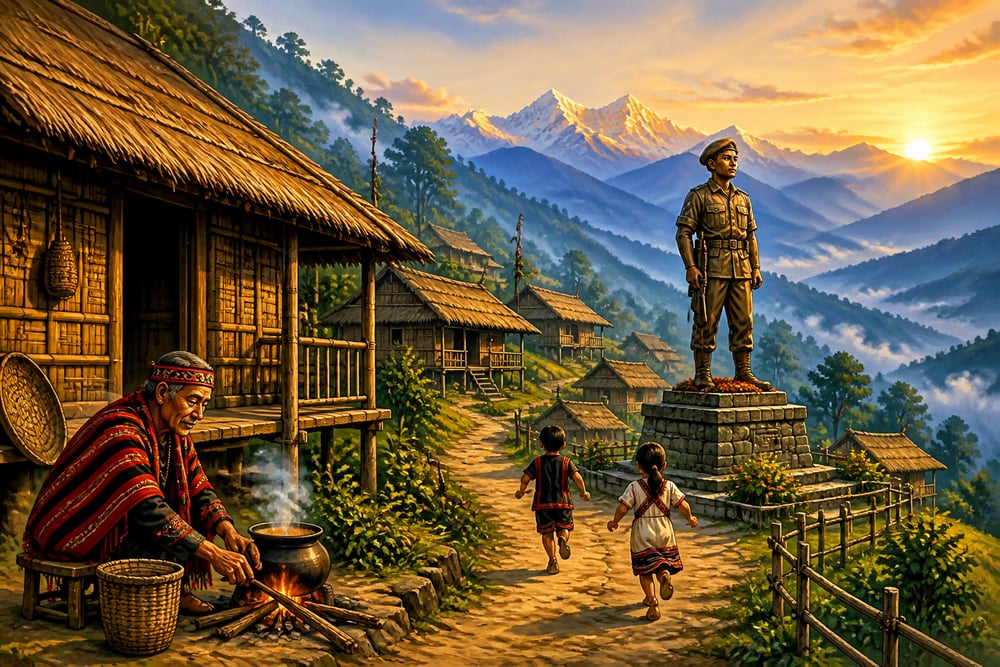
The Tangsa village of Borduria, Hangpan Dada's homeland

The Tangsa are warriors by tradition. For centuries, they have guarded the eastern Himalayas. Their young men learn to hunt in dense jungles, navigate treacherous mountain paths, and survive in conditions that would break most city-dwellers.

Hangpan joined the Indian Army in 1997, initially in the 5th Assam Regiment. He was later attached to the 35 Rashtriya Rifles for counter-insurgency operations. His comrades called him "Dada" - elder brother in Hindi - not just because of his age, but because of how he looked after the younger soldiers.

A Tribal Warrior in Kashmir

By 2016, Havildar Hangpan Dada had served 19 years. He had been deployed in some of India's most dangerous zones - the jungles of the Northeast, the mountains of Kashmir. His experience made him invaluable.

On May 26, 2016, Dada was leading a patrol in Shamsabad, Kupwara district, Kashmir. Intelligence had indicated terrorist presence in the area. The forests of Kupwara, near the Line of Control, are prime infiltration routes.

The patrol was moving through dense undergrowth when the terrorists opened fire.

The Last Stand

The initial burst killed one soldier and wounded two others. Dada immediately assessed the situation - at least four terrorists, well-positioned, with superior firepower.

Most men would have sought cover. Dada did the opposite.

He charged directly at the terrorists. In the firefight that followed, he eliminated the first two. The remaining two tried to flank his position. Dada repositioned and engaged them, killing both.
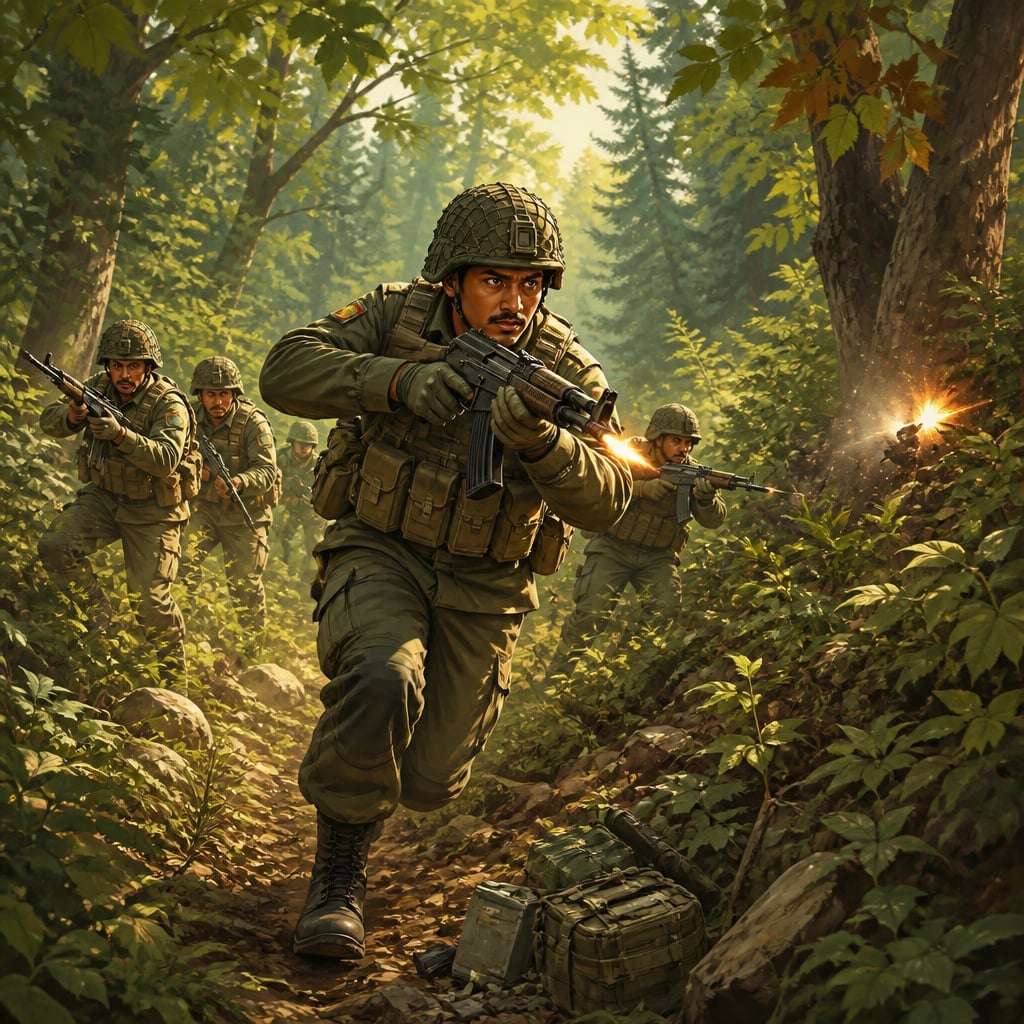
Havildar Hangpan Dada charging Lashkar terrorists in the Kupwara forest

Four terrorists dead. His team saved.

But as Dada scanned for more threats, a hidden fifth terrorist opened fire. The bullet struck him in the chest. Havildar Hangpan Dada, 35 years old, father of two, was martyred in the forests of Kashmir - 3,000 kilometers from his home in Arunachal.

India Mourns a Son of the Northeast

When the news reached Borduria, the entire village wept. The Tangsa tribe had lost its finest warrior. But their grief was shared by a nation.

Dada's body was flown to Arunachal. The Chief Minister, the Governor, military officers, and thousands of citizens came to pay respects. Schools were closed. A state funeral was declared.

In Kashmir, where he died, locals also mourned. Dada had treated them with respect, never seeing them as different from his own people. He was an Indian soldier, fighting for all Indians.

The Ashoka Chakra

Chasen Lowang Dada receiving the Ashoka Chakra from the President

On January 26, 2017, President Pranab Mukherjee presented the Ashoka Chakra to Dada's wife, Chasen Lowang Dada, and their children. Hangpan Dada became the first soldier from Arunachal Pradesh to receive India's highest peacetime gallantry award.

His citation reads: "In a daring display of raw courage, Havildar Hangpan Dada killed four heavily armed terrorists, thereby saving the lives of his fellow soldiers. In this operation, he made the supreme sacrifice."

The Northeast's Contribution

Dada's story highlights a often-overlooked truth: India's northeastern states have contributed disproportionately to national defense. The Assam Rifles, Naga Regiment, Arunachal Scouts, and Gorkha regiments draw heavily from this region.

Why do they serve? The same reason as soldiers from Punjab or Rajasthan - love for the nation. Geography may separate Arunachal from Kashmir, but the flag that flies over both is the same Tiranga.

Dada often told his family: "I am defending India. Whether I fight in Kashmir or in Arunachal, it is the same motherland."

Legacy in the Hills

Today, in Borduria, a statue of Hangpan Dada stands in the village square. Young Tangsa boys look up at it with the same awe that Dada once felt for the soldiers of his father's generation.

The Army has established a memorial in his name. His story is taught in schools across Arunachal. A stadium in Itanagar bears his name.

But the greatest legacy is this: after Dada's sacrifice, recruitment from the Northeast surged. Young men from Nagaland, Manipur, Mizoram, and Arunachal saw that their service mattered. That their sacrifice was remembered. That India truly is one nation - from Kupwara to Kanyakumari, from Borduria to Bikaner.

Key figures

Havildar Hangpan Dada, AC

Chasen Lowang Dada

The Tangsa Tribe

Case studies

Charging into Danger

Your patrol is ambushed. One colleague is dead, two are wounded. The enemy has superior numbers and position. Do you seek cover and call for backup, or do you attack?

In crisis, decisive action often saves more lives than cautious waiting. A leader must be willing to take calculated risks.

In emergency medicine, the 'golden hour' concept holds that decisive action in the first 60 minutes after trauma saves more lives than any later intervention. Whether in battle, business, or personal crisis, the instinct to act decisively rather than freeze and deliberate often determines the outcome.

Fighting Far from Home

You are asked to work in a region far from your home, with different language, culture, and food. Do you see this as a hardship or an opportunity?

National service transcends regional identity. Where you serve matters less than how you serve.

Millions of Indians work far from home: IT professionals in Bangalore from Bihar, construction workers in Dubai from Kerala, doctors in the UK from Tamil Nadu. Each adapts to a new culture while serving their profession. The ability to serve effectively regardless of geography is one of India's greatest competitive advantages in the global workforce.

Historical context

Counter-Insurgency Operations in Kashmir

Reflection

More in The Constant Watch - Counter-Insurgency

All lessons in The Constant Watch - Counter-Insurgency ยท Param Veer: Guardians of the Heights (1984-Present) course