The CRPF Sacrifice
Pulwama Martyrs and CRPF Soldiers Across Kashmir
On February 14, 2019, a suicide bombing killed 40 CRPF jawans at Pulwama - the deadliest terror attack on Indian security forces in three decades. This lesson honors the Pulwama martyrs and the thousands of CRPF soldiers who face terrorism daily. The unsung paramilitary forces who bear the brunt of counter-insurgency.
Valentine's Day, 2019
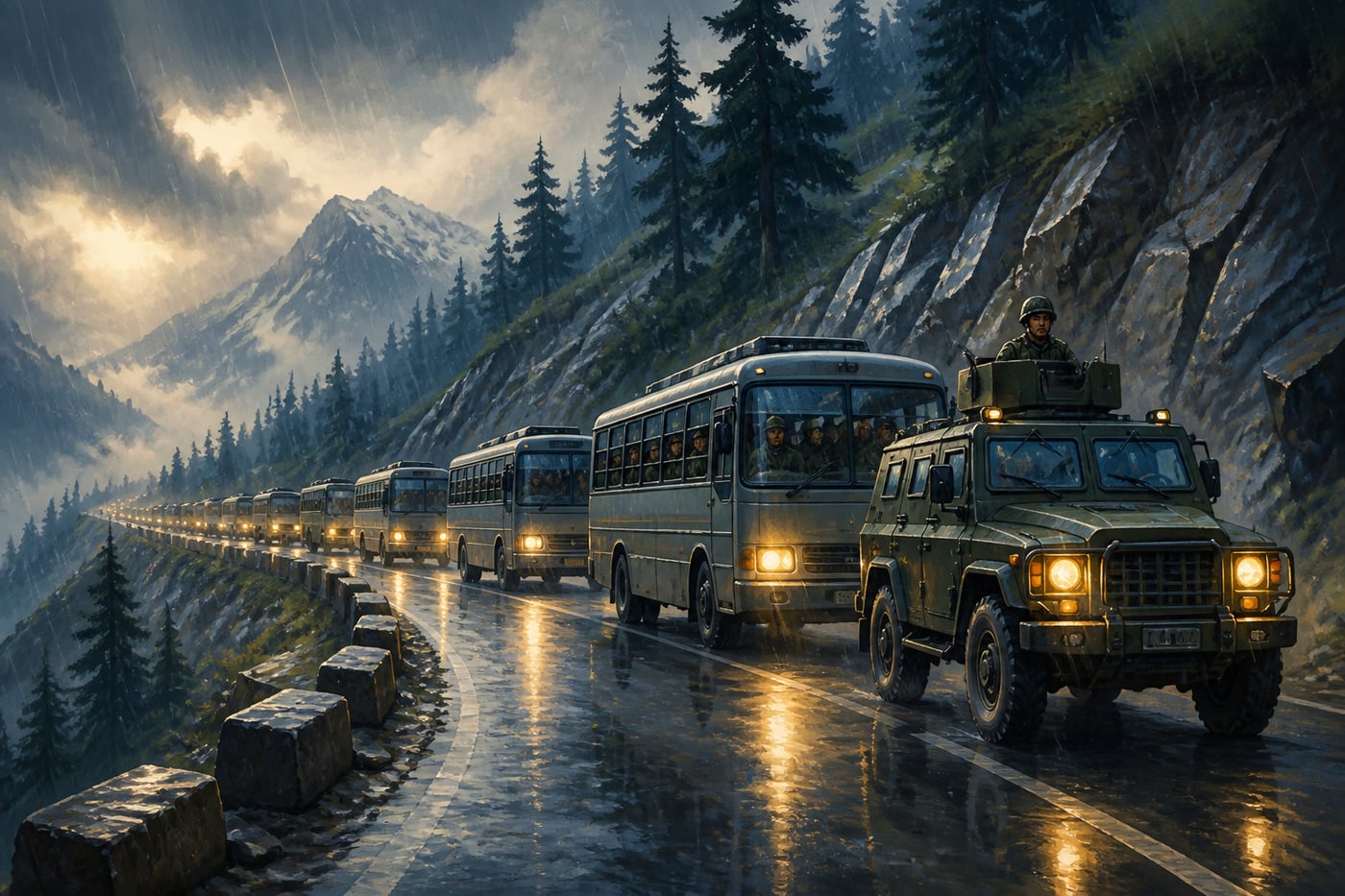
February 14, 2019. While much of India celebrated Valentine's Day, a convoy of 78 vehicles carrying 2,547 CRPF personnel was moving along National Highway 44 in Kashmir. They were returning from leave, heading back to duty in the Srinagar-Jammu sector.
At 3:15 PM, near Lethpora in Pulwama district, a Mahindra Scorpio packed with 350 kg of RDX explosives rammed into one of the buses. The explosion was so powerful that it scattered body parts over a 100-meter radius. The bus was vaporized.
40 CRPF jawans were martyred in an instant. It was the deadliest terror attack on Indian security forces since 1989.
The 40 Martyrs
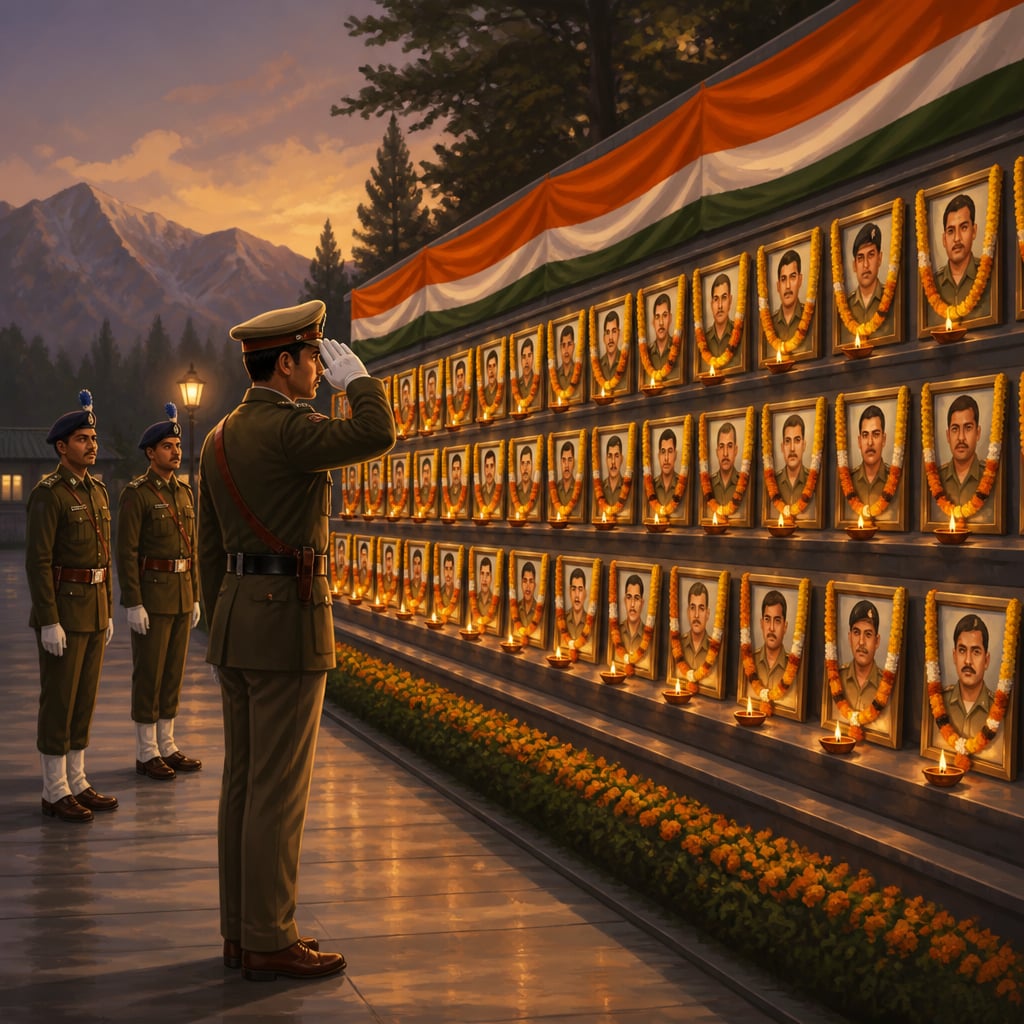
They came from every corner of India. From Bihar and Jharkhand, from Uttar Pradesh and Madhya Pradesh, from Tamil Nadu and Kerala, from Maharashtra and Rajasthan. Young men in their 20s and 30s, with wives, children, parents who loved them.
Head Constable Naseer Ahmad, a Kashmiri Muslim, was among the dead. He had joined the CRPF to protect his homeland. Constable Jaimal Singh from Rajasthan was just 27, with a young daughter. ASI Mohan Lal from Uttarakhand was to retire in months. They died together - Hindu, Muslim, Sikh - united in service to India.
The CRPF: India's Sentinel Force
The Central Reserve Police Force is India's largest paramilitary organization, with over 300,000 personnel. Raised in 1939, the CRPF serves as the country's primary internal security force. In Kashmir alone, tens of thousands of CRPF jawans are deployed for counter-insurgency operations.
They face dangers that most Indians cannot imagine. IEDs on patrol routes. Ambushes in forests. Stone-pelting by mobs. Terrorist attacks on camps. Year after year, CRPF personnel are killed in action, far from the news headlines that cover the Army.
Since 1989, over 2,000 CRPF personnel have been martyred in Kashmir alone. They are India's sentinels in the valley.
The Response: Balakot
Twelve days after Pulwama, India struck back.
On February 26, 2019, at 3:30 AM, Indian Air Force Mirage 2000 jets crossed into Pakistani airspace and bombed Jaish-e-Mohammed's training camp at Balakot in Khyber Pakhtunkhwa. It was the first time since 1971 that Indian aircraft had struck inside Pakistan.
The message was clear: attack our men, and we will hunt you down.
Pakistan retaliated the next day, leading to an aerial dogfight where Wing Commander Abhinandan Varthaman was captured (and returned 60 hours later). The February 2019 standoff brought the subcontinent to the brink of war - all triggered by the massacre of 40 CRPF jawans at Pulwama.
The Everyday Heroes
But beyond Pulwama, beyond the headlines, CRPF jawans die quietly every week. A patrol ambushed in South Kashmir. An IED on a village road. A terrorist attack on a camp at night.
Their names rarely trend on social media. Their funerals don't make prime-time news. Yet they serve, year after year, in the most dangerous deployment in India.
Consider: A CRPF jawan in Kashmir earns roughly the same as one deployed in a peaceful state. He faces death daily. He misses his children's birthdays, his parents' illnesses, his wife's festivals. And he does it because someone must.
The Families Left Behind

After Pulwama, 40 families were devastated. But the nation responded. The Bharat Ke Veer portal, set up by the government to receive donations for families of martyrs, received an outpouring of support. Companies, individuals, and state governments contributed.
But money cannot replace a father, a husband, a son. The real sacrifice is borne by the widows who raise children alone, the parents who bury sons, the children who grow up with only photographs of their fathers.
A Nation's Debt
Every year on February 14, India remembers the Pulwama martyrs. Wreaths are laid. Tributes are paid. Politicians speak of sacrifice.
But the truest tribute would be this: to remember not just Pulwama, but every CRPF jawan who serves in Kashmir. To respect the sacrifice of the Central Armed Police Forces - CRPF, BSF, ITBP, SSB, CISF - who guard India's borders and internal security.
The 40 of Pulwama did not seek glory. They were just going back to work. They died doing their duty. And in that, they were no different from the thousands of their brothers who serve silently, ready to give everything for India.
Key figures
The 40 Pulwama Martyrs
Head Constable Naseer Ahmad
The CRPF Widows
Case studies
Responding to Attack
Your country is attacked. Citizens demand revenge. What is the appropriate response - immediate retaliation, diplomatic pressure, or measured military action?
Effective response requires patience, intelligence, and precision. Emotional reactions rarely produce lasting results.
After the 9/11 attacks, the US had to choose between emotional retaliation and strategic response. Israel's targeted operations follow a similar calculus. India's Balakot strikes demonstrated that measured, precise responses are more effective than emotional overreactions, both militarily and diplomatically.
Serving Without Glory
You have two job options: one is prestigious and well-publicized, the other is essential but unrecognized. Which do you choose?
True service doesn't require recognition. Some of the most essential work is done by those who are never celebrated.
Teachers in rural India, public health workers in remote areas, and government clerks processing files that keep systems running all serve without recognition. The vast majority of essential work in any society is performed by people whose names will never make headlines.
Historical context
Pulwama Attack and Balakot Response
Reflection
- The 40 Pulwama martyrs came from across India. What does this diversity tell us about who defends the nation?
- CRPF jawans face death daily but receive less recognition than Army soldiers. Is this fair?
- How can citizens honor the sacrifice of the Pulwama martyrs and CRPF jawans in daily life?