Tesakuna: The Three Wise Birds
Learning to tell wisdom from flattery
Three royal birds advise King Brahmadatta. The owl says, 'Punish all who displease you.' The mynah says, 'Give gifts to keep everyone happy.' But the parrot, the Bodhisattva, teaches the middle way: 'Judge each case fairly, punish when needed, reward when deserved.' True wisdom lies between harshness and weakness.
The King's Three Advisors
King Brahmadatta of Benares was a good ruler, but lately he was confused. Every decision seemed wrong. Punish a criminal, and people said he was cruel. Forgive a criminal, and people said he was weak. Tax the merchants, and they complained of poverty. Lower the taxes, and the treasury went empty.
"I need wise counsel," the king said to his ministers. "But every human advisor tells me what they think I want to hear."
An old minister had an idea. "Your Majesty, in the royal gardens live three birds famous for their wisdom: an owl, a mynah bird, and a parrot. Perhaps creatures without ambition for wealth or power will speak more honestly."
The king agreed. "Bring them before me."
The Owl Speaks First
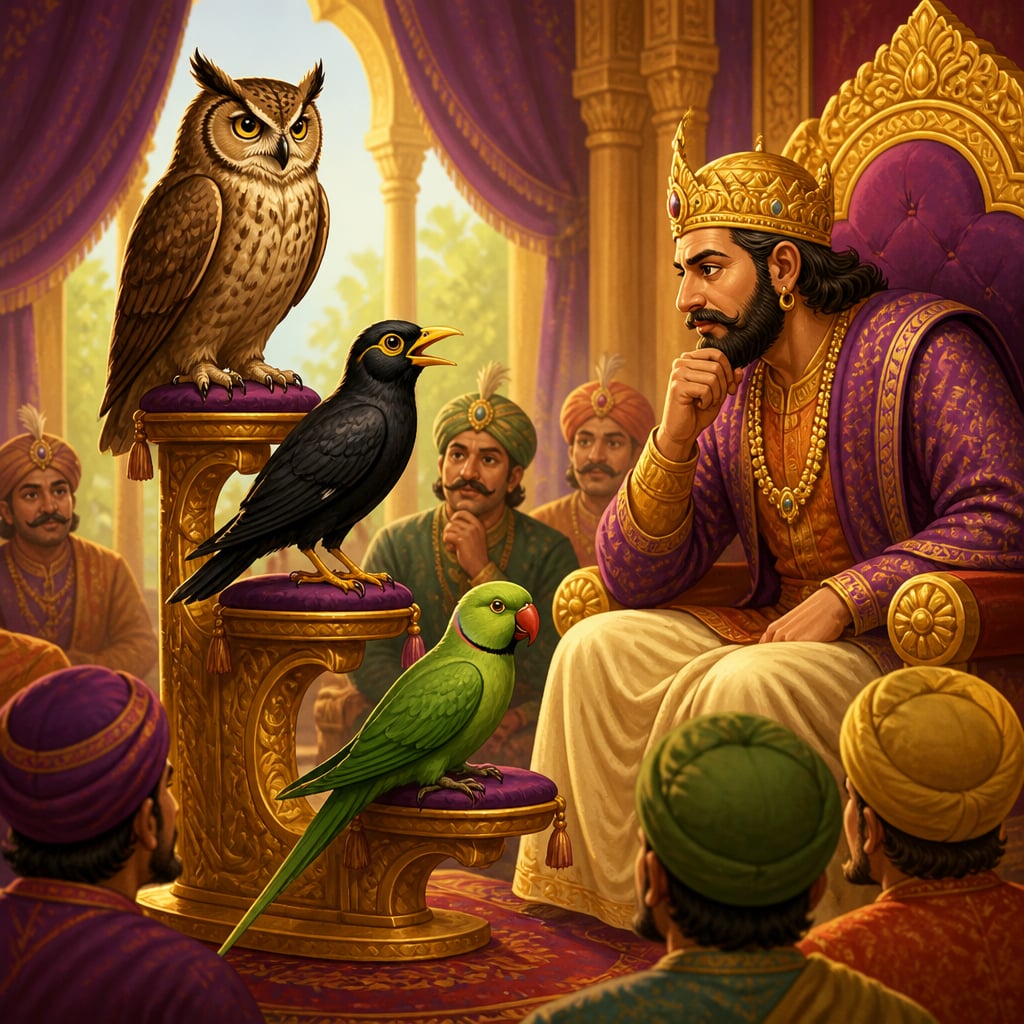
The owl was ancient and stern, with fierce golden eyes. He perched on a golden stand before the throne.
"Great King," the owl hooted, "your problem is simple. You are too soft. A king must be feared! When someone displeases you - punish them. When someone questions your decisions - punish them harder. When people see that you are strong, they will obey without complaint."
The king frowned. "But what of justice? What if I punish someone who did nothing wrong?"
"Better to punish ten innocent people than let one guilty person escape," the owl said. "Fear keeps order. Mercy breeds chaos."
Some ministers nodded. The owl's advice was simple and clear.
The Mynah Speaks Second
The mynah bird was bright and cheerful, with glossy black feathers. He hopped onto the stand, pushing the owl aside.
"Your Majesty, the owl is completely wrong! Punishment just makes enemies. The secret to ruling is making everyone love you. When someone complains - give them a gift! When merchants want lower taxes - lower them! When criminals break the law - forgive them and give them money to start fresh!"
The king raised an eyebrow. "But where would the money come from? And wouldn't criminals simply commit more crimes?"
"People who love you don't cause trouble," the mynah chirped. "Keep everyone happy, and you'll have no problems!"
Other ministers nodded. The mynah's advice sounded pleasant and kind.
The Parrot Speaks Last
The parrot was neither ancient nor flashy - just a green bird with thoughtful eyes. He flew to the stand and bowed respectfully.
"Your Majesty, both my friends have spoken parts of the truth, but neither has spoken wisdom."
The owl and mynah bristled, but the king leaned forward. "Explain."
"The owl says to punish everyone who displeases you. But some displeasure is deserved - if a minister tells you an uncomfortable truth, would you punish honesty? The owl's way creates fear, but fear creates resentment. Resentment creates rebellion."
The owl glared but said nothing.
"The mynah says to please everyone with gifts and forgiveness. But some people cannot be pleased, and some crimes must not be forgiven. If you forgive a murderer, what do you say to the victim's family? The mynah's way creates temporary happiness, but it also creates injustice. Injustice creates anger."
The mynah puffed up angrily but held his tongue.
"True wisdom," the parrot continued, "lies in the middle. Judge each situation on its own merits. Punish fairly when punishment is deserved. Reward generously when reward is earned. Neither rule by fear alone nor by gifts alone, but by justice - which sometimes looks harsh and sometimes looks kind, but is always appropriate."
The Test
The king thought for a moment, then smiled.
"Let us test these three philosophies," he said. "A case has just come before me. A farmer claims his neighbor stole his goat. The neighbor says the goat wandered onto his land by itself and is now legally his. Both men are angry. How would each of you advise?"
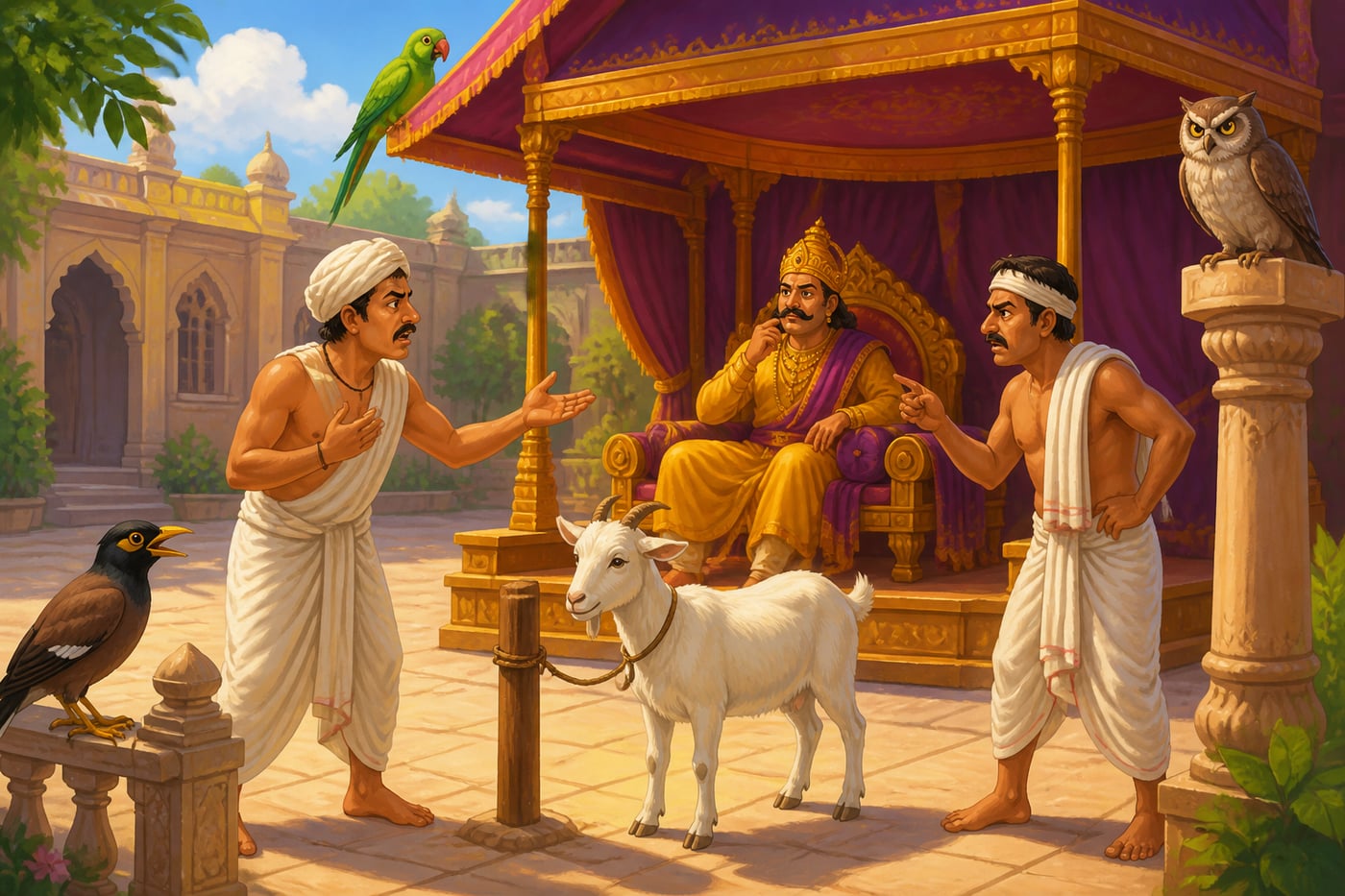
The owl spoke first. "Punish them both for wasting the king's time! Let them each pay a fine, and give the goat to the royal kitchens."
"But neither might be lying," the king said. "The goat may have wandered."
"Then punish them both for not watching the goat properly," the owl snapped.
The mynah spoke next. "Give each man a goat! Then both are happy, and no one feels cheated!"
"But that rewards the man who might have stolen," the king said. "And costs me two goats."
"A small price for peace," the mynah insisted.
The parrot spoke last. "Your Majesty, ask both men to describe the goat's markings. Ask the farmer if the goat answers to its name. Check whose barn has fresh goat droppings. Investigate the truth. If the goat was stolen, punish the thief and return the goat. If the goat wandered, return it to its owner but instruct him to build a better fence. Neither man needs a gift; both men need justice."
The king nodded slowly. "The parrot speaks wisdom."
The King's Decision
King Brahmadatta appointed the parrot as his chief advisor - much to the annoyance of the owl and mynah.
For years afterward, the kingdom was ruled wisely. Criminals were punished fairly. The honest were protected. Taxes were set at reasonable levels - not so high that merchants struggled, not so low that roads went unrepaired.
And whenever the king faced a difficult decision, he would ask: "What would the owl do? What would the mynah do?" And then he would choose the middle path that avoided both extremes.
The Wisdom
The owl represents ruling by fear - the belief that strength means harshness, that respect requires terror. This seems powerful, but it's actually weak. Rulers who govern by fear create subjects who wait for the chance to rebel.
The mynah represents ruling by pleasing everyone - the belief that kindness means never saying no, that love is the same as indulgence. This seems kind, but it's actually cruel. Rulers who never punish let innocent people suffer from the crimes they could have prevented.
The parrot's Middle Way recognizes that wisdom isn't a formula. Sometimes the right answer is punishment. Sometimes the right answer is forgiveness. Sometimes it's somewhere in between. The wise person looks at each situation freshly and asks: "What does justice actually require here?"
In Your Life
You face this choice constantly. A friend hurts your feelings. Do you lash out (the owl's way)? Let it go completely (the mynah's way)? Or address it calmly and fairly - explaining how you feel but also listening to their side?
A sibling borrows something without asking. Do you punish them harshly? Pretend it's fine? Or have a conversation about boundaries that's honest but not cruel?
Extreme reactions are easy. They don't require thinking. "Always be tough" or "always be nice" are simple rules. But wisdom means looking at each situation and asking: "What's actually right here?" That's harder - but it's the only approach that leads to real justice and lasting peace.
Reflection
- Think of a time when you had to choose between being tough and being lenient. What did you do? Looking back, was it the right choice for that specific situation?
- Why do you think the owl's way (rule by fear) and the mynah's way (please everyone) both sound appealing to some people? What makes extreme positions tempting?
- The parrot asked the king to investigate the goat case before judging. In your own life, how often do you investigate before forming opinions? What stops you from looking deeper?