Mahosadha: The Wisest of the Wise
The boy who outthought the kingdom's greatest sages
At age seven, Mahosadha solves riddles that baffle the king's four great sages. When envious nobles plot against him, he outsmarts them at every turn. From finding the owner of a lost cart to uncovering a conspiracy against the throne, young Mahosadha proves that true wisdom comes not from age but from clear seeing and right thinking.
The Boy Who Could See Through Everything
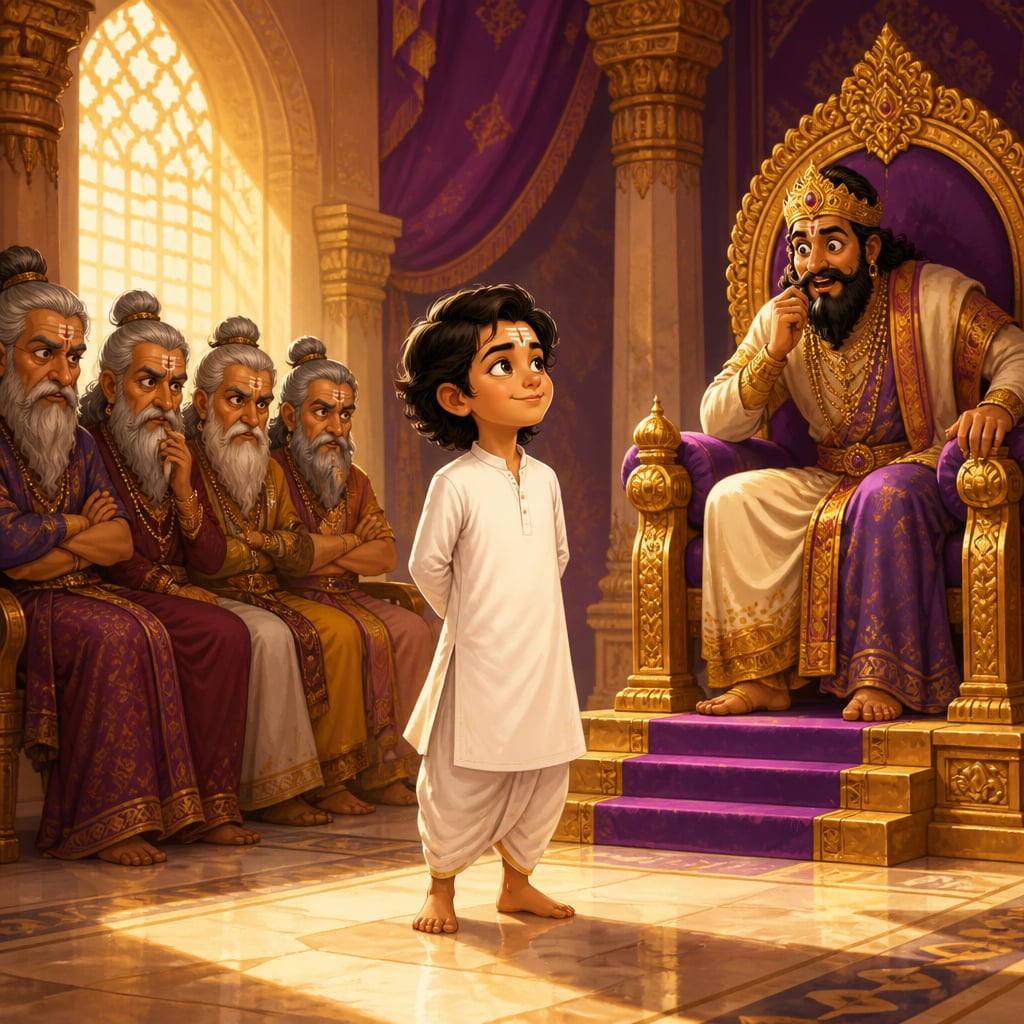
In the great city of Mithila, King Videha had a problem. He had four wise advisors - Senaka, Pukkusa, Kavinda, and Devinda - but lately, their advice had been... well, not very wise at all.
"I dreamed of four pillars of fire," the king announced one morning. "What does it mean?"
The four sages stroked their beards and looked very serious. "A terrible omen, Your Majesty! You must make expensive offerings to ward off disaster!"
But across the city, in a humble home, a seven-year-old boy named Mahosadha laughed.
"Four pillars of fire?" he said to his friends. "That's not an omen of disaster. It means four wise ones will come to serve the king!"
The Riddle Contest
Word of this clever boy reached King Videha. Curious, the king sent his sages to test him.
"Boy," said Senaka smugly, "answer this riddle: What is it that goes on four legs in the morning, two legs at noon, and three legs in the evening?"
Mahosadha didn't even pause. "A human being. We crawl as babies, walk upright as adults, and use a cane when we're old. Even the Greeks know that one!"
The sages whispered among themselves, then tried harder.
"Here's a real puzzle," said Pukkusa. "A farmer claims his ox was stolen. A merchant claims the same ox is his. Both have witnesses. How do you find the truth?"
Mahosadha thought for a moment. "Bring the ox to a crossroads. Let it go free. It will walk home to its true owner."
They tested this, and the ox walked straight to the farmer's barn. The merchant confessed his lie.
The king was astonished. "Bring this boy to my court!"
The Lost Cart
As the royal advisor - at just seven years old - Mahosadha faced bigger challenges.
One day, a man came crying to the palace. "Your Majesty! I left my cart outside an inn while I ate lunch. When I returned, it was gone! Another man is driving it, claiming it's his!"
The other man protested, "This cart has been in my family for years! This stranger is trying to steal it!"
Both men had witnesses. The four old sages scratched their heads.
"Impossible to solve," declared Senaka. "We must divide the cart between them."
"Wait," said young Mahosadha. He walked over to the cart and examined it carefully. Then he asked for a bucket of water.
"Pour it through the cart," he ordered.
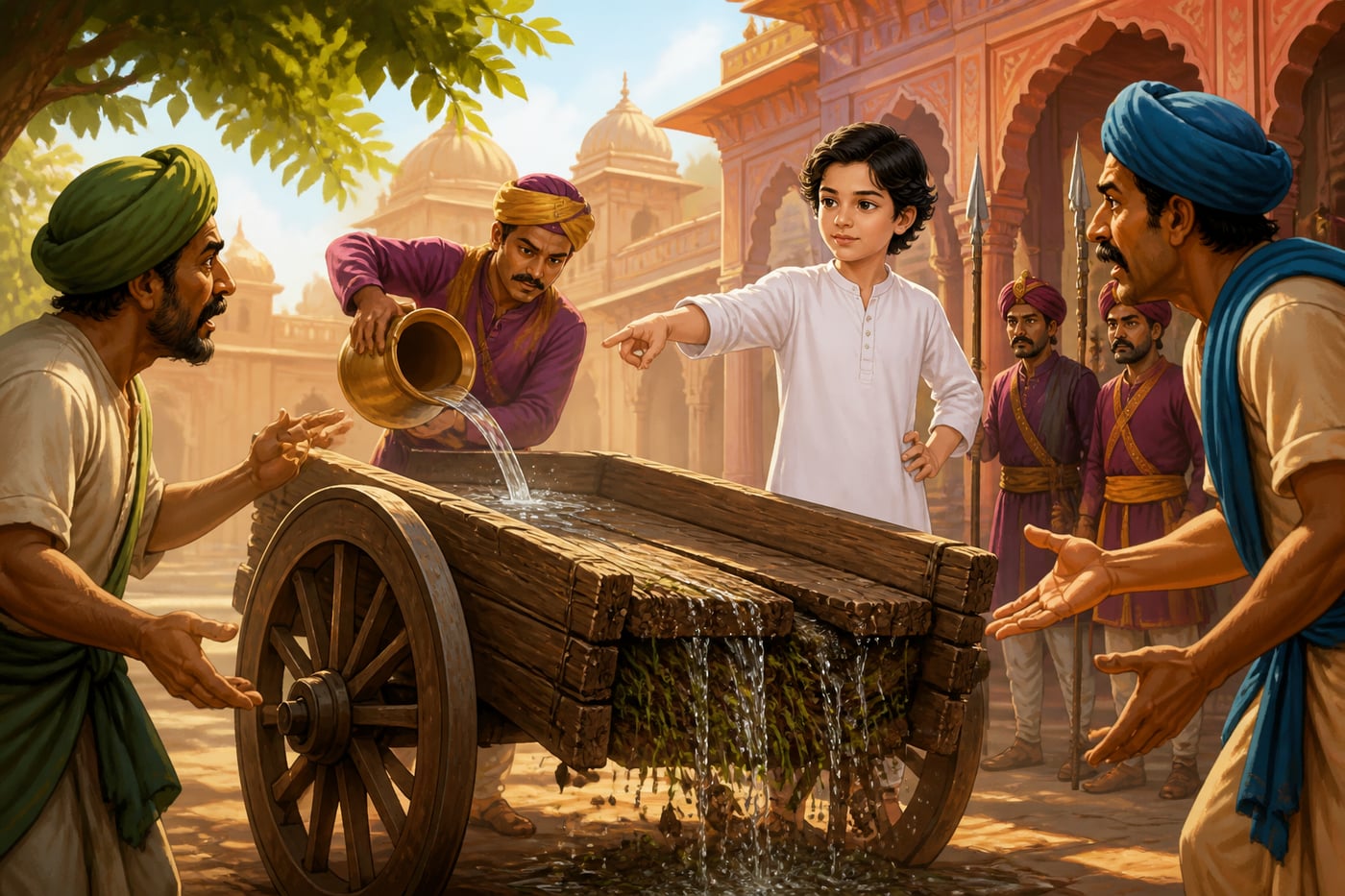
As water dripped through the wooden planks, mud and grass fell out from the cracks - still fresh.
"Now," said Mahosadha, "where did you each travel from today?"
The first man said, "Through the meadows by the river."
The second man said, "Down the main road."
Mahosadha held up the fresh grass and wet mud. "This cart traveled through meadows today. The first man speaks truth; the second is a thief."
The king's jaw dropped. The old sages looked at their feet.
The Conspiracy
The four sages grew jealous. How dare a child make them look foolish? They began plotting.
"We'll trick the king into exiling the boy," Senaka whispered. "Then we'll be the wisest again."
They convinced a servant to hide the king's royal ruby in Mahosadha's home, then accused him of theft.
"Search his house!" they demanded. "You'll find the stolen gem!"
But Mahosadha had noticed the servant acting strangely. He had already found the ruby hidden in his rice jar and moved it.
When the guards searched and found nothing, Mahosadha spoke calmly: "Your Majesty, perhaps you should search the servant's quarters instead."
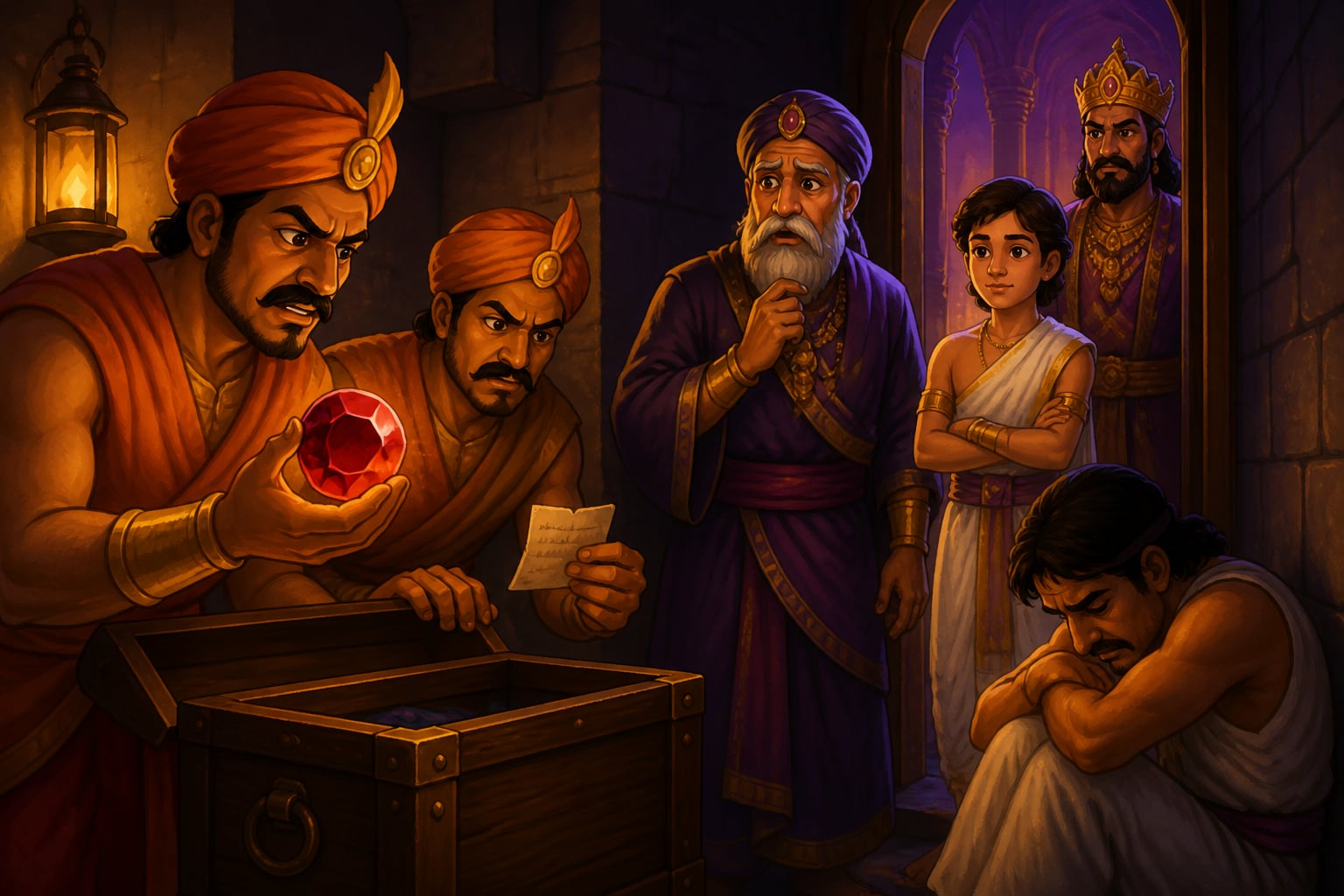
There they found the ruby - along with a note in Senaka's handwriting, promising the servant gold for his treachery.
The conspiracy was exposed. The four sages fell to their knees, begging forgiveness.
King Videha looked at young Mahosadha in wonder. "How did you know?"
"I watched," the boy said simply. "The truth is always there, Your Majesty. We just have to look carefully."
The Wisdom
Mahosadha's gift wasn't magic - it was attention. While others jumped to conclusions, he observed. While others listened to what people said, he watched what they did. While others were distracted by surfaces, he looked deeper.
This is prajna - wisdom. Not book-learning or cleverness, but the ability to see clearly, without letting fear, jealousy, or assumptions cloud your vision.
The four sages were older and had read more books. But their minds were cluttered with pride and desire. Mahosadha's mind was clear as a mountain pool, reflecting the truth without distortion.
In Your Life
You don't need to be a genius to be wise. You need to pay attention.
Next time someone tells you something, don't just accept it - look for evidence. When you face a problem, don't panic - break it down and examine the pieces. When two friends tell different stories about a fight, listen to both sides and look for what actually happened.
Wisdom grows when we stop rushing to conclusions and start asking: "What am I really seeing here? What might I be missing?"
The youngest person in the room might see what the oldest misses - because wisdom isn't about age. It's about keeping your mind clear enough to see the truth.
Reflection
- Think of a time when you noticed something that adults or older kids missed. What helped you see it when they didn't?
- Why do you think the four sages became jealous of Mahosadha instead of learning from him? What does jealousy do to our ability to think clearly?
- Mahosadha's mind is described as 'clear as a mountain pool.' What makes a mind clear, and what makes it cloudy? How can you tell the difference in yourself?