Seriva: The Golden Bowl
Why honesty is the wisest policy
A greedy merchant visits a poor grandmother selling old household goods. Recognizing that her tarnished bowl is pure gold, he lies about its worthlessness, planning to return later and buy it cheap. But a second merchant arrives, tells the truth about the bowl's value, and pays a fair price. The wisdom of honesty brings fortune; the cunning of greed brings only despair.
Two Merchants, One Street
In a bustling city, two traveling merchants worked the same neighborhood, going door to door buying old household goods. They had an agreement: one would work the street in the morning, the other in the afternoon. That way, they wouldn't compete for the same customers.
The first merchant was called Seriva - though we'll call him by his true nature: the Greedy One. The second merchant was the Bodhisattva - and he was known far and wide for his fairness.
One morning, the Greedy One knocked on the door of a tumbledown house.
The Poor Grandmother
An old woman answered, her clothes worn and patched. Behind her stood a young girl - her granddaughter.
"Good merchant," the grandmother said, "we have nothing worth selling. We are very poor."
"Let me look anyway," said the Greedy One, already scanning the humble room for treasures. "Sometimes people don't know what they have."
The grandmother shook her head sadly. "We have only this old bowl that my husband used to eat from. It's been in the family for generations, but it's so tarnished and ugly now. I doubt anyone would want it."
She brought out a blackened bowl, crusted with years of grime. The Greedy One took it in his hands - and his heart nearly stopped.
Under the tarnish, he could feel the weight. He scratched the bottom with his fingernail, and a gleam of pure gold shone through.
This bowl was solid gold. Worth a fortune.
The Lie
The Greedy One's mind raced. If he offered a fair price, he'd make a small profit. But if he could get this bowl for almost nothing...
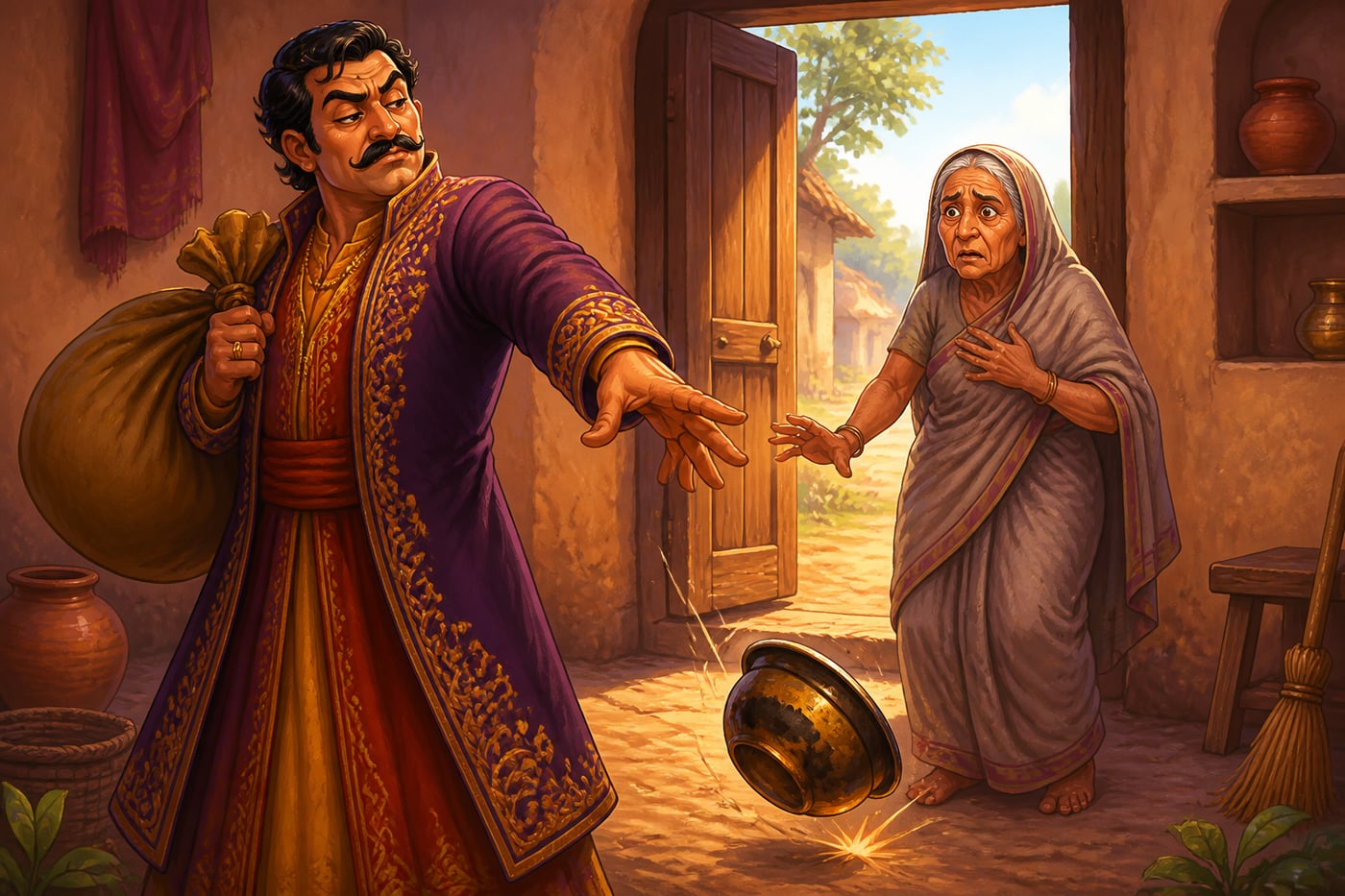
He threw the bowl on the floor in disgust.
"This worthless thing?" he sneered. "It's not even worth the metal it's made of. Garbage! I wouldn't take it if you paid me!"
The grandmother's face fell. "I'm sorry to have wasted your time."
"You certainly did," the Greedy One snapped, and stormed out.
But he didn't go far. He hid around the corner, planning to return in the afternoon, pretending to be a different merchant. He'd offer a few coins for the "worthless" bowl - and the old woman, having been told it was garbage, would be grateful for anything.
"Clever, clever me," he whispered to himself.
The Truth
That afternoon, the Bodhisattva made his rounds. When he knocked on the grandmother's door, she almost didn't answer.
"Another merchant already came," she said tiredly. "We have nothing worth selling."
"I'm happy to look," the Bodhisattva said kindly. "Even if I buy nothing, it costs you nothing to show me."
The grandmother brought out the same tarnished bowl.
The Bodhisattva examined it carefully. He felt its weight. He scratched the bottom gently - and saw the gleam of gold.
"Grandmother," he said quietly, "do you know what this is?"
"The other merchant said it was worthless garbage."
The Bodhisattva shook his head slowly. "Grandmother, this bowl is solid gold. It's worth more money than I have with me. It's worth more than everything I own."
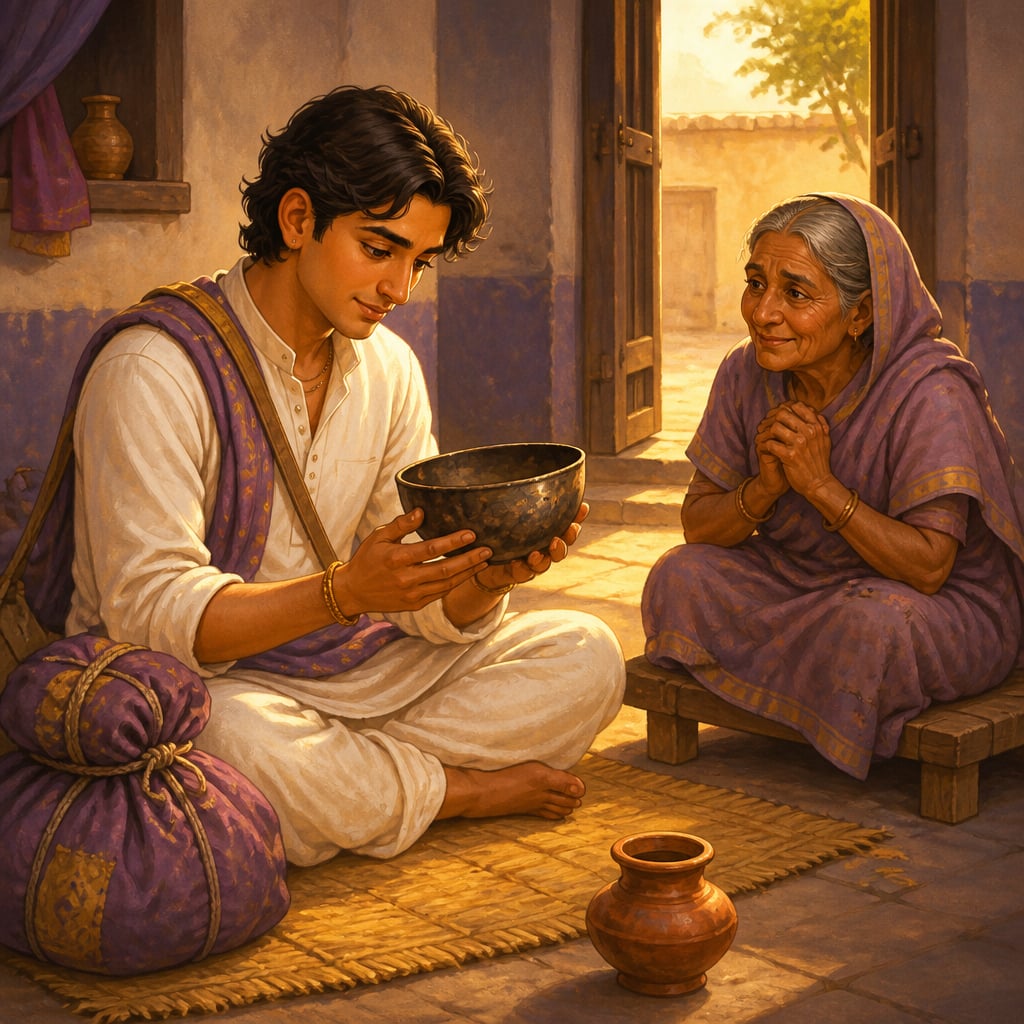
The old woman stared. "Gold? But... but it's so ugly!"
"Gold tarnishes when it's not polished. But underneath, it's still gold." He paused. "I cannot pay you what this is truly worth. I have only five hundred coins and my cart of goods. But I will give you everything I have for it, if you'll accept."
The grandmother burst into tears. "The other merchant - he said it was garbage!"
"The other merchant lied to you."
The Exchange
The grandmother was an honest woman. She didn't try to bargain for more or find another buyer who might pay the full price.
"You told me the truth when you could have lied," she said. "Take the bowl. Give me what you can afford."
The Bodhisattva gave her all five hundred coins and most of his goods, keeping only eight coins for the ferry across the river. He hurried away before the Greedy One could return.
The Greedy One Returns
That evening, the Greedy One swaggered back to the old woman's door, disguised in different clothes.
"Good evening! I'm a traveling merchant. Anything to sell?"
"Oh!" said the grandmother. "You should have come earlier! I had a golden bowl, but I just sold it!"
The Greedy One's smile froze. "Sold it? To whom? For how much?"
"To a kind merchant who told me the truth about its value. He gave me everything he had!"
The Greedy One's face went pale. Then red. Then purple.
"THAT WAS MY BOWL!" he screamed. "I SAW IT FIRST! I WAS COMING BACK FOR IT!"
"But you said it was worthless garbage," the grandmother said, confused.
The Greedy One tore at his hair. He had held a fortune in his hands - and his own greed had cost him everything. He ran to the river, hoping to catch the Bodhisattva, but the ferry had already crossed.
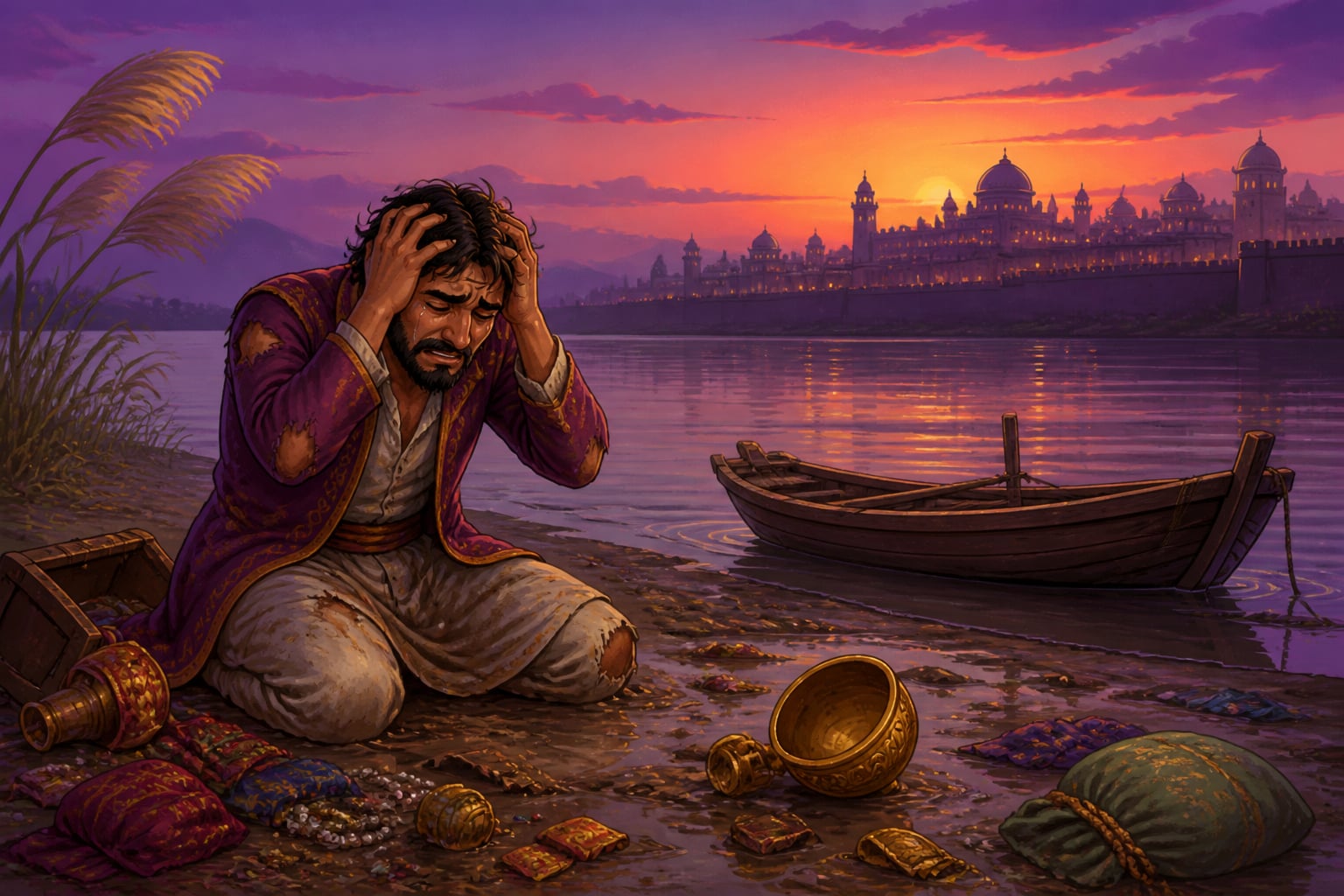
Standing on the riverbank, the Greedy One howled in despair until, the story says, his heart burst from grief.
The Wisdom
Both merchants saw the same golden bowl. Both recognized its value. The difference was in what they did with that knowledge.
The Greedy One thought he was clever. "I'll lie now and profit later!" But his cleverness was actually foolishness. He didn't account for the Bodhisattva coming after him. He didn't realize that dishonesty is always a gamble - and gamblers eventually lose.
The Bodhisattva told the truth even though lying would have made him richer. His honesty wasn't stupidity - it was wisdom. He knew that a reputation for fairness is worth more than one golden bowl. He knew that cheating creates enemies while honesty creates friends.
And perhaps he simply knew that living honestly feels better than living with lies.
In Your Life
You'll face this choice many times. You'll find someone's lost money and have to decide whether to return it. You'll know the answer on a test and have to decide whether to whisper it to a friend. You'll see a store clerk make a mistake in your favor and have to decide whether to speak up.
In the moment, dishonesty often looks like the smart choice. "No one will know!" But someone always knows - you know. And dishonesty has a way of catching up with people.
The Greedy One thought he was wise, but his "wisdom" destroyed him. The Bodhisattva seemed to give up profit, but his honesty brought him a treasure worth more than gold - the knowledge that he had done right.
Which merchant do you want to be?
Reflection
- Have you ever been tempted to lie to get something you wanted? What did you do, and what happened?
- The grandmother trusted the Bodhisattva because he could have lied but didn't. Why does choosing not to take advantage of someone create trust?
- The Greedy One died of grief when he lost the bowl. Was his suffering caused by losing the treasure, or by his own choices? What's the difference?