Apannaka: The Caravan in the Desert
When false promises lead to disaster
This is Jataka number one - the first story in the great collection. Two merchant caravans must cross a waterless desert. A demon offers false promises of water ahead, hoping to feast on those who abandon their supplies. The foolish caravan leader believes the demon. The wise leader investigates for himself - and saves his people.
The First Story Ever Told
Of all the 547 Jataka tales, this is number one - the very first. And it begins with a problem every traveler knows: sometimes the road ahead is dangerous, and you have to decide who to trust.
Two merchant caravans prepared to cross a vast desert. Five hundred carts in each caravan, loaded with goods to sell in the city beyond the sand.
The desert was brutal - no water, no shade, burning sun by day and freezing cold by night. Travelers had to carry everything they needed: water in clay pots, firewood for cooking, food for the journey.
"We cannot cross together," said the first caravan leader, a greedy man. "A thousand carts would drink the wells dry and eat all the grass for our oxen."
So the Bodhisattva, leading the second caravan, agreed to let the first group go ahead.
The Demon's Trap
Now, in that desert lived a yaksha - a demon who fed on travelers. He watched the first caravan enter his territory and smiled.
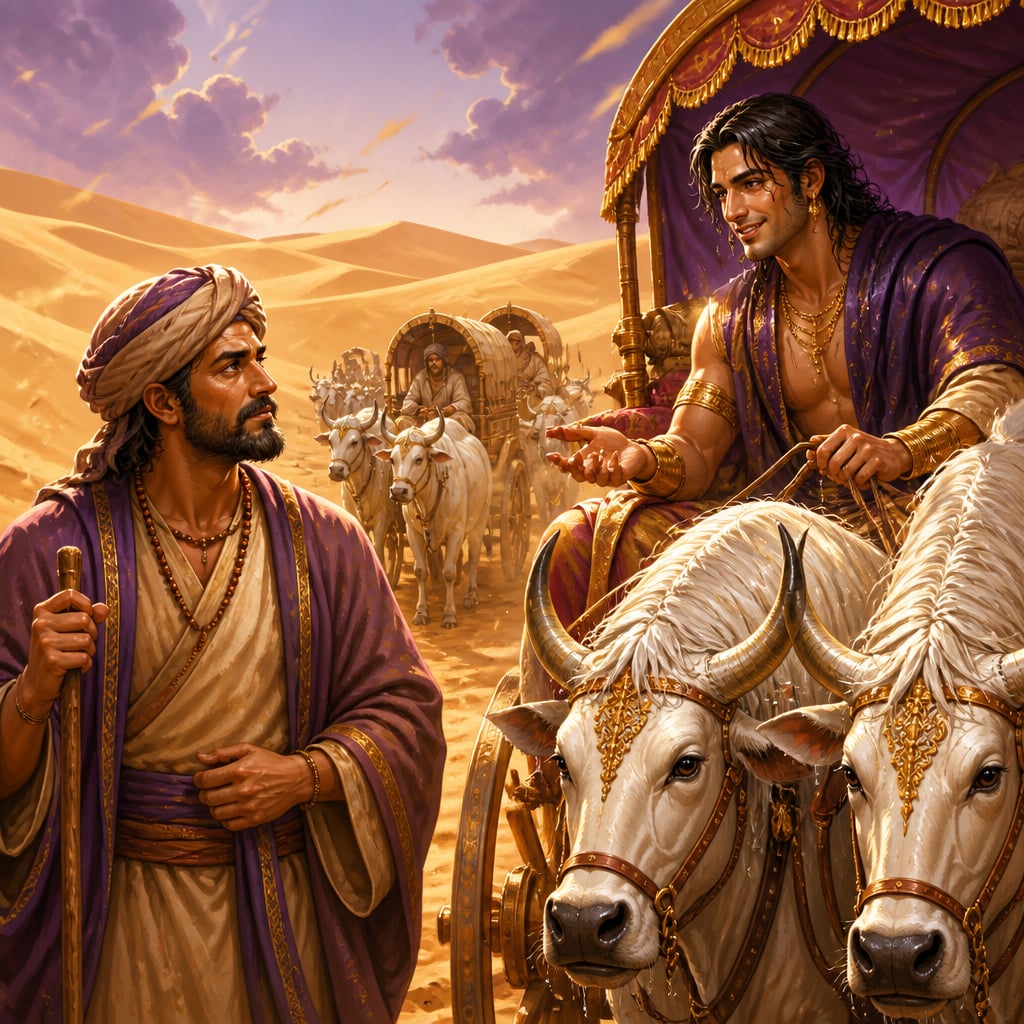
The demon transformed himself into a handsome man with a beautiful cart pulled by white oxen. He made his hair dripping wet and decorated his cart with fresh lotus flowers and mud on the wheels - as if he had just come from a river.
When the first caravan saw him approaching from the direction they were heading, the leader called out, "Stranger! Where do you come from?"
"From the city beyond the desert," the demon said cheerfully. "We just crossed a lovely river - plenty of water, fish jumping, lotus flowers everywhere! Why are you carrying so many heavy water pots? There's water ahead - you're wasting your oxen's strength!"
The greedy caravan leader's eyes lit up. If they dumped their water, the carts would be lighter, the oxen faster, they'd reach the city sooner!
"You heard him!" he shouted to his people. "Pour out the water! Break the pots! We don't need this weight!"
Some of the wiser merchants hesitated, but the leader insisted. They poured their water into the sand.
No Water Anywhere
The caravan pushed deeper into the desert. One day passed. Two days. Three.
No river. No water. Nothing but sand and sun.
By the fourth day, the people were dying of thirst. The oxen collapsed. The demon and his fellow yakshas waited patiently at the edge of the desert.
When the last merchant fell, the demons feasted.
The Wise Leader
Days later, the Bodhisattva led his caravan into the same desert. And wouldn't you know it - the same demon appeared, dripping wet, cart decorated with fresh flowers.
"Good merchant! There's a beautiful river ahead - plenty of water! Why burden your oxen with all those heavy pots?"
The Bodhisattva looked at the stranger carefully. His hair was wet... but his eyes were red and unblinking. His cart had lotus flowers... but no water dripped from them. The mud on his wheels was dry at the edges.
"Thank you for the information," the Bodhisattva said politely. "We'll consider it."
When the demon left, the Bodhisattva gathered his people.
"That was no traveler," he said. "That was a demon. Think about it - we've studied every map of this desert. No one has ever mentioned a river here. If there were water ahead, why would anyone carry supplies through? And look - his lotuses weren't wilted from the desert heat, his mud wasn't cracked from the sun. Everything about him was wrong."
"But what if there IS water?" asked a nervous merchant. "We could move so much faster without these pots!"
The Bodhisattva shook his head. "When you're crossing a desert, you don't throw away water because a stranger says there's more ahead. You throw away water when YOU find water."
Digging for Truth
The caravan continued, keeping every drop of water carefully guarded.
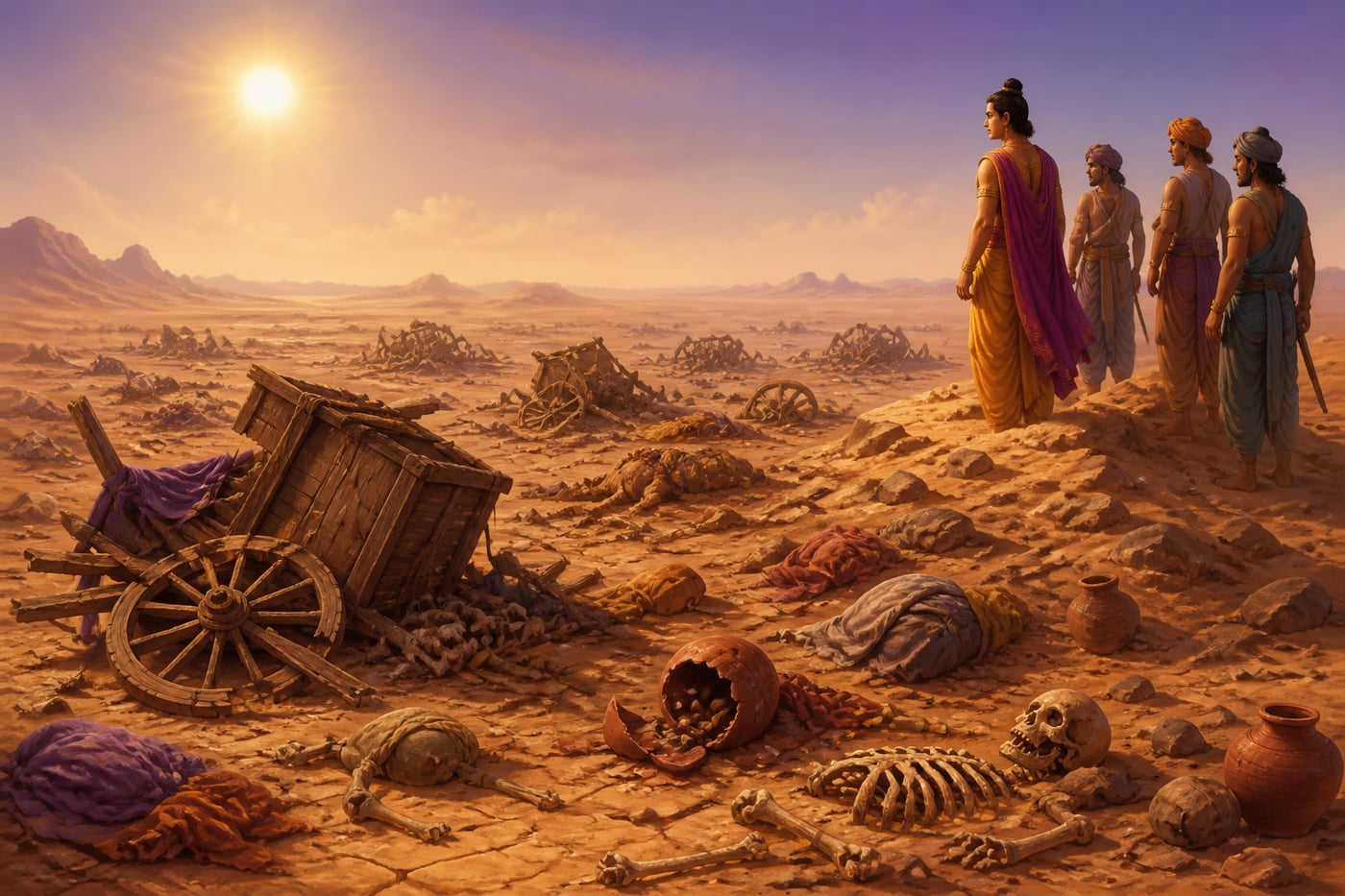
On the fourth day, they found the wreckage - five hundred carts, scattered goods, bones bleaching in the sun. The first caravan, destroyed by their own foolishness.
The Bodhisattva felt sorrow, but pressed on. His own water was now running low.
Then one of his men noticed something: a patch of grass, just a few blades, growing in the sand.
"Grass needs water," the Bodhisattva said. "Dig here."
They dug. One foot. Two feet. Five feet. Ten feet down, they hit rock.
"It's useless," someone said. "Let's move on."
But the Bodhisattva put his ear to the rock. He could hear it - the faint gurgling of underground water.
"Bring me the strongest young man and a heavy hammer," he ordered.
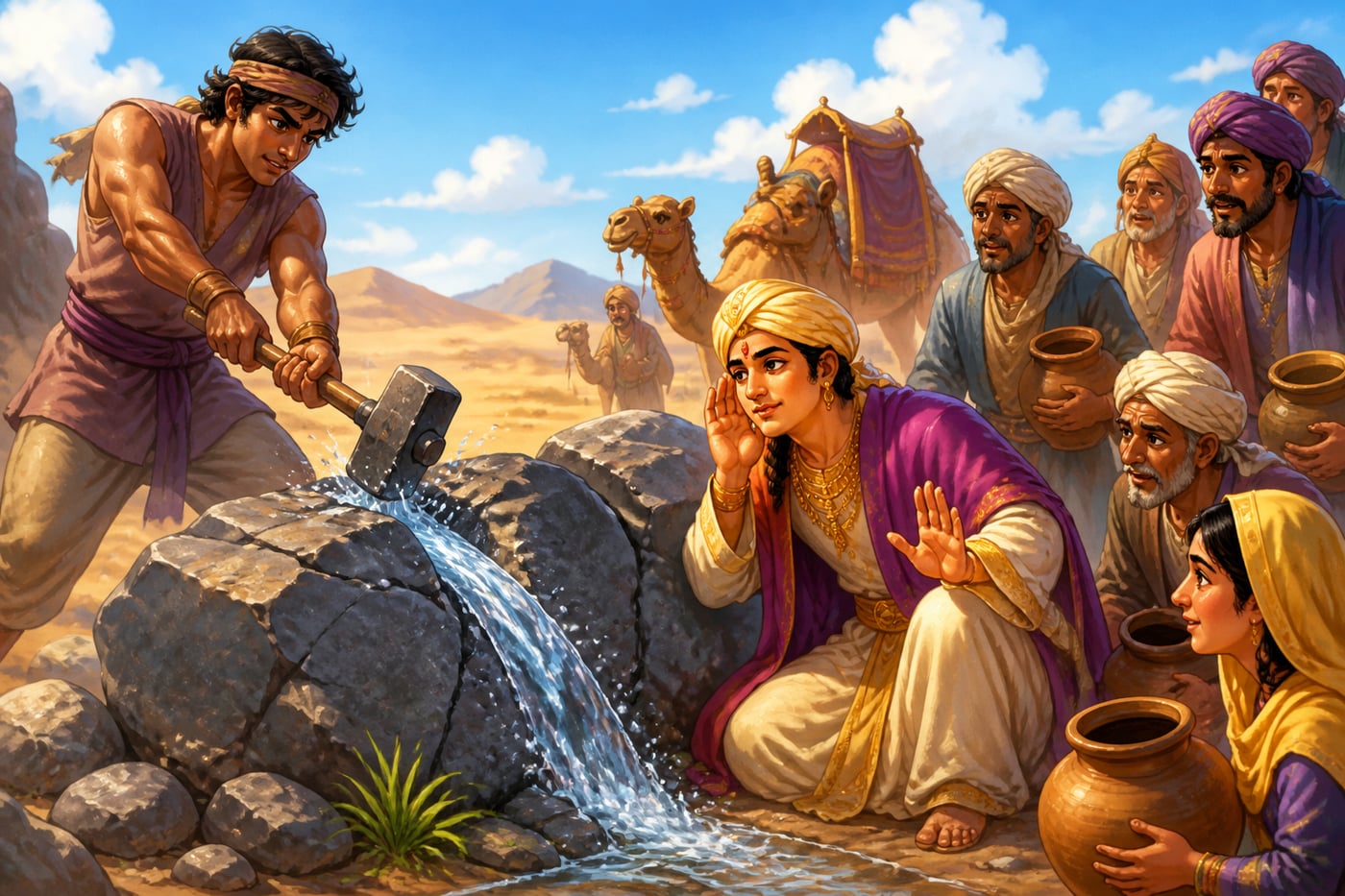
A young servant struck the rock once. Twice. On the third blow, the rock cracked - and water burst upward like a fountain!
The caravan was saved. They filled every pot, watered every ox, and continued their journey. The demon and his kind went hungry.
The Wisdom
The Bodhisattva didn't survive because he was suspicious of everyone. He survived because he thought for himself.
The foolish caravan leader believed the demon because the demon told him what he wanted to hear: "You can have an easier journey! Throw away your burdens!" The leader didn't ask, "Does this make sense? Does the evidence support this?"
Wisdom means not accepting claims just because they're pleasant or convenient. It means investigating for yourself. The Bodhisattva noticed the details that didn't fit - the dry mud, the fresh flowers in burning desert, the red unblinking eyes.
And when things got hard, he didn't give up. He listened to the rock. He kept digging when others wanted to quit. That's also wisdom - knowing when to persist.
In Your Life
Every day, people will tell you things. Some will be true. Some will be false. Some will be lies meant to trick you.
The internet is full of demons offering easy answers: "You can lose weight without exercise! Get rich without working! Pass the test without studying!" These are the modern yaksha, hoping you'll throw away your water.
Wisdom is asking: "Does this make sense? What's the evidence? Why would this person tell me this?" It's not about being paranoid or distrusting everyone. It's about thinking before you act.
And when you've done your research, when you've checked the evidence, when you're sure you're on the right path - don't give up at the first obstacle. Sometimes the water is just under the rock, waiting for one more strike of the hammer.
Reflection
- Think of a time when someone told you something that sounded too good to be true. Did you believe it? What happened?
- The demon didn't force anyone to throw away water - he just offered a tempting lie. Who is more responsible for what happened: the demon who lied, or the leader who believed him?
- The Bodhisattva's people wanted to give up when they hit rock, but he kept going. How do you know when to persist and when it's okay to quit?