Vipassanā: From Bodhi Tree to Corporate Retreat
Tracing the journey of Buddhist insight meditation into modern 10-day silent retreats
The Buddha's vipassanā practice, seeing things as they truly are, traveled from the Bodhi Tree through Burma to become S.N. Goenka's global retreat movement. Explores how a complete path to liberation became a stress-relief technique, and what's preserved and lost when sīla (ethical foundation) and nibbāna (ultimate liberation) fade from view.
Day One, Noble Silence
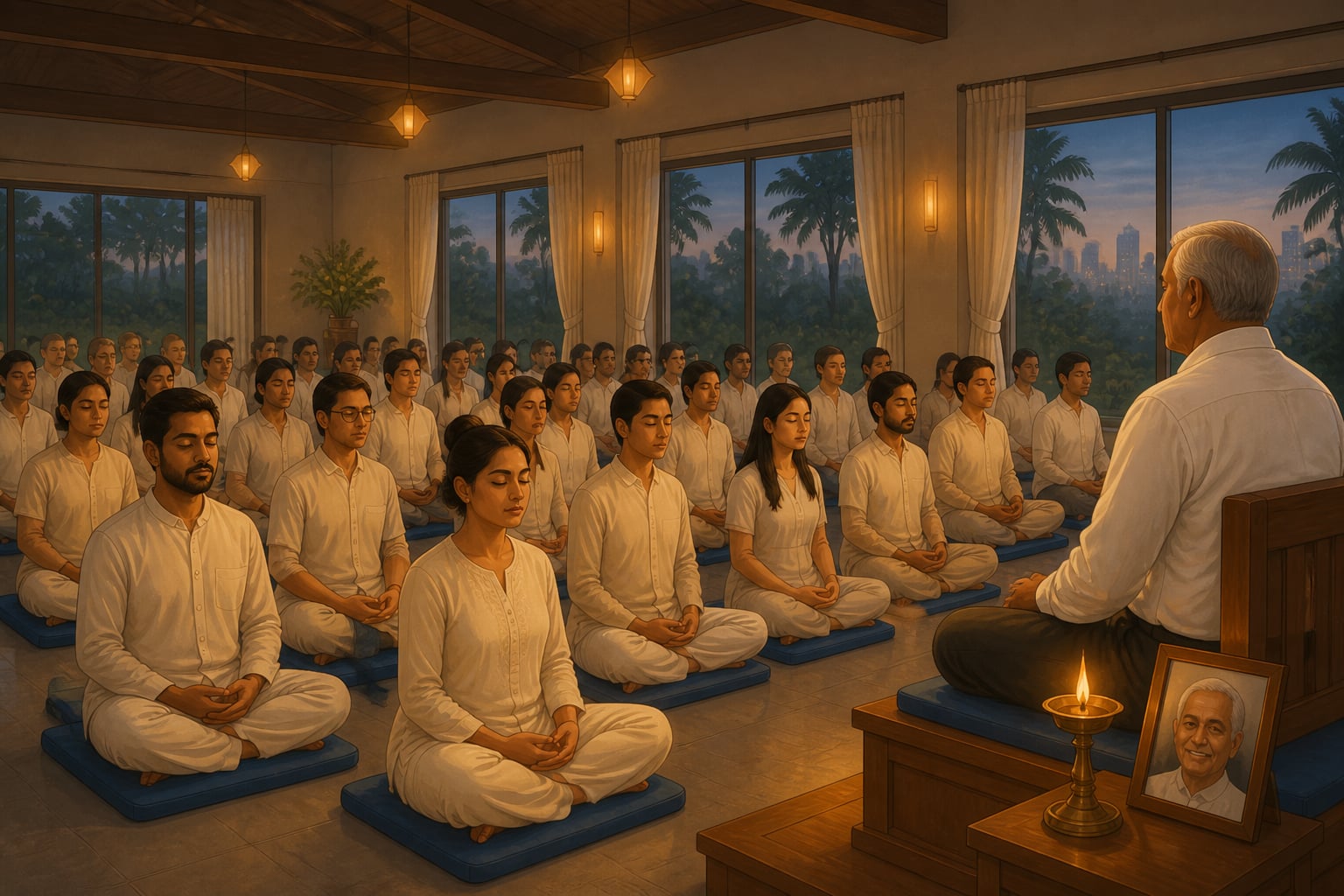
At a retreat center outside Mumbai, or Massachusetts, or Melbourne, five hundred people surrender their phones, sign a code of conduct, and begin ten days of silence. They will wake at 4 AM, meditate for ten or more hours daily, eat vegetarian meals, and speak to no one except their teachers during brief daily interviews.
By day three, many are in crisis. Without digital distraction, without conversation, without even eye contact, the mind turns on itself. Buried emotions surface. Old traumas replay. Some leave; most stay. By day ten, something has shifted. Practitioners report clarity, peace, a new relationship with their own minds.
This is modern Vipassana, one of the most successful spiritual exports of the 20th century. Over 200 centers worldwide now offer this standardized ten-day format, always free of charge, always following the same schedule, always teaching the same technique.
What most participants don't realize is that they're practicing a 2,500-year-old method for achieving nibbāna, complete liberation from the cycle of suffering, that has been adapted, standardized, and in some ways simplified for modern consumption. The technique works. But the full context reveals dimensions that the ten-day format can only gesture toward.
The Buddha's Original Insight
Vipassanā means 'clear seeing' or 'insight', specifically, seeing the three marks of existence that the Buddha identified as the nature of all conditioned phenomena:
Anicca (अनिच्च) - Impermanence. Everything that arises also passes away. Sensations, thoughts, emotions, relationships, empires, all are in constant flux.
Dukkha (दुक्ख) - Suffering or unsatisfactoriness. Because we cling to what is impermanent, we suffer when it changes. Even pleasant experiences carry dukkha because they cannot last.
Anattā (अनत्ता) - Non-self. There is no permanent, unchanging self to be found. What we call 'I' is a constantly changing process, not a fixed entity.
The Buddha taught that directly experiencing these three characteristics, not just understanding them intellectually but seeing them in the moment-to-moment flow of sensation, leads to liberation. When we truly see that sensations are impermanent, we stop clinging. When we stop clinging, we stop suffering. When suffering ceases, nibbāna is realized.
This is vipassanā: the systematic observation of bodily sensations to directly experience impermanence, which loosens the grip of craving and aversion, which ends suffering.
The Kleśas: Buddhism's Psychology of Suffering
But why do we suffer? The Buddhist analysis identifies five kleśas (afflictions) that keep consciousness bound:
Avidyā (अविद्या) - Ignorance or delusion. Not seeing reality as it is. The fundamental misperception that there is a permanent self separate from the flow of experience.
Rāga (राग) - Craving or attachment. The grasping toward pleasant experiences, wanting them to continue, wanting more.
Dveṣa (द्वेष) - Aversion or hatred. The pushing away of unpleasant experiences, wanting them to stop, wanting to escape.
Māna (मान) - Pride or conceit. The comparison of self to others, feeling superior, inferior, or equal, all of which reinforce the illusion of a separate self.
Vicikitsā (विचिकित्सा) - Doubt. Uncertainty about the path, the teaching, or one's own capacity for liberation.
Modern psychology would recognize these patterns immediately. Avidyā is cognitive distortion. Rāga and dveṣa are the attachment and avoidance that drive anxiety and addiction. Māna is the social comparison that fuels depression. Vicikitsā is the self-doubt that prevents action.
The Buddha wasn't offering philosophy, he was offering diagnosis. And vipassanā was the treatment: by observing sensations equanimously, we gradually weaken the reactive patterns of craving and aversion, which loosens the grip of the kleśas, which reveals the nature of mind beneath the afflictions.
The Burmese Transmission: How Vipassanā Survived
For most of Buddhist history, vipassanā was practiced primarily by monastics, those who had renounced worldly life and dedicated themselves full-time to the path. Laypeople supported monks, accumulated merit, and hoped for favorable rebirth. The intensive meditation techniques were considered too demanding for householders.

This changed in Burma (Myanmar) in the late 19th and early 20th centuries. A revival movement, sparked partly by the challenges of British colonialism, began teaching vipassanā to laypeople. The key figures in this lineage:
Ledi Sayadaw (1846-1923) - A scholar-monk who began teaching meditation to villagers, breaking the monastic monopoly on intensive practice. His students spread throughout Burma.
U Ba Khin (1899-1971) - A government official who practiced under Ledi's lineage and eventually became a meditation teacher while maintaining his civil service career. He developed systematic methods for teaching laypeople and established a meditation center in Rangoon.
S.N. Goenka (1924-2013) - A Burmese-Indian businessman who came to U Ba Khin seeking relief from severe migraines. He found something much more: liberation from the reactive patterns that had defined his life. After fourteen years of practice under U Ba Khin, he returned to India in 1969 and began teaching.
Goenka's genius was standardization. He developed a precise ten-day curriculum, the same in every center, the same in every country. He established a network of teachers trained to deliver this curriculum exactly. He made courses free (supported by donations from previous students), removing economic barriers. And he framed the teaching in non-sectarian terms, avoiding Buddhist vocabulary where possible, emphasizing universal applicability.
The result: Vipassana went global. Executives, artists, prisoners, politicians, people from every background now sit these courses. The waiting lists are months long. The impact is real.
What's Preserved: The Power of the Ten-Day Format
Goenka's adaptation preserved something essential: the actual technique works.
The ten-day structure creates conditions that most modern people would never create for themselves. No phones. No reading. No writing. No exercise beyond walking. Just sitting, observing, and the relentless confrontation with one's own mind.
This container, enforced by noble silence, by the schedule, by the sheer momentum of the group, allows something to happen that cannot happen in twenty-minute morning sessions. The first three days teach ānāpāna (breath awareness), concentrating the mind. Days four through nine teach vipassanā proper, scanning the body, observing sensations, maintaining equanimity. Day ten breaks the silence and reintegrates practitioners for return to daily life.
Scientific research has validated the effects. Studies show changes in brain structure, reduced stress markers, improved emotional regulation. The technique, even in this standardized form, produces measurable results.
And for many people, the ten-day retreat is the first time they've ever truly observed their own minds. The insight that 'I am not my thoughts', that there's an observing awareness distinct from the content of consciousness, can be genuinely transformative. People leave with skills they'll use for life.
What's Lost: Sīla and Nibbāna
But something is also missing. Two things, specifically: the ethical foundation that traditionally preceded meditation practice, and the ultimate goal that traditionally motivated it.
The Missing Sīla
In the Buddha's teaching, meditation (samādhi) was never practiced in isolation. It was the middle portion of the Noble Eightfold Path, preceded by sīla (ethical conduct) and followed by paññā (wisdom). The ethical precepts weren't moral requirements but practical prerequisites: a mind engaged in harmful action cannot become still enough for deep insight.
The five basic precepts for laypeople were:
- Abstaining from killing
- Abstaining from stealing
- Abstaining from sexual misconduct
- Abstaining from false speech
- Abstaining from intoxicants
Goenka courses do require participants to follow these precepts during the retreat. But there's minimal attention to integrating them into daily life afterward. The emphasis is on technique, sit, scan, observe, rather than on the ethical way of living that traditionally supported and was supported by meditation.
Practitioners may leave with powerful meditation experiences but return to lives of ethical compromise. They may reduce stress while continuing to harm others through their work. The meditation becomes a coping mechanism for an unexamined life rather than part of a complete transformation.
The Fading Nibbāna
The Buddha's goal was explicit: the complete ending of suffering through liberation from the cycle of rebirth. Nibbāna wasn't stress reduction, it was the extinction of craving, aversion, and delusion, the unconditioned state beyond all conditioned existence.
Modern Vipassana often quietly drops this goal. It's too religious, too metaphysical, too demanding for contemporary sensibilities. Instead, the benefits are framed in therapeutic terms: reduced anxiety, improved focus, better emotional regulation.
These benefits are real. But they're incidental to the original purpose. It's like using a rocket engine to power a leaf blower, effective, but missing the point.
When nibbāna fades as the goal, practice becomes self-improvement rather than self-transcendence. The question shifts from 'How do I end suffering?' to 'How do I feel better?' These are not the same question, and they lead to different relationships with practice.
The Kleśa Pattern in Modern Life
And yet, the kleśas haven't disappeared. They've just taken new forms.
Modern avidyā: The delusion that success, achievement, or accumulation will bring lasting happiness. The inability to see that the self we're building and protecting is itself the source of suffering.
Modern rāga: Scroll addiction. Consumption. The endless pursuit of the next experience, the next purchase, the next relationship that will finally satisfy.
Modern dveṣa: Outrage culture. The pleasure of hating enemies, canceling opponents, maintaining grievances. Aversion rebranded as righteousness.
Modern māna: Social media comparison. The constant measuring of self against curated images of others. The inflation and deflation of self-worth based on likes and followers.
Modern vicikitsā: Decision paralysis. Imposter syndrome. The doubt that prevents commitment to any path.
Vipassana, even in its modernized form, addresses these patterns. By sitting with sensations, by observing the arising and passing of craving and aversion, practitioners begin to loosen the grip of the kleśas. But the full path, sīla, samādhi, and paññā together, offers something more complete.
The Silicon Valley Adaptation
Vipassana found particular resonance in the technology industry. Jack Dorsey of Twitter (now X) famously sat multiple ten-day retreats. Evan Williams of Twitter and Medium practiced. Engineers from Google, Facebook, and countless startups have sat in silence, observing their breath, watching their minds.
The appeal makes sense: vipassana offers a systematic, reproducible method for working with the mind, an algorithm for consciousness. It requires no belief, no devotion, no metaphysical commitment. Just sit, observe, and see what happens.
But something curious occurs when vipassana enters Silicon Valley: it can become a productivity hack. The goal shifts from liberation to optimization, a calmer, more focused mind that can work more effectively on products that may themselves generate craving, aversion, and distraction in billions of users.
This is the shadow side of adaptation: a technique for ending suffering becomes a tool for succeeding in systems that generate suffering. The executives who build addictive platforms may be genuinely calmer, and their calm minds may build more effectively addictive platforms.
This isn't an argument against teaching vipassana to anyone. It's an observation about what happens when technique is separated from ethics and purpose.
Practicing with Fuller Awareness
If you've sat a Goenka course, or plan to, how might understanding the fuller context change your practice?
Take the precepts seriously. The five ethical guidelines aren't just retreat rules. They're the foundation that makes deep practice possible. After your retreat, consider how you might integrate them more fully into daily life.
Remember the goal. Stress reduction is a side effect. The path points toward something more radical: freedom from the reactive patterns that define ordinary consciousness. Holding this larger vision opens dimensions that 'wellness' cannot.
Add the missing elements. Study the teachings (paññā/wisdom) as well as practicing the technique (samādhi/concentration). Engage with the ethical dimension (sīla) as an ongoing practice, not just a retreat requirement.
Find community. Traditional practice happened in saṅgha, community. The ten-day retreat creates temporary community; ongoing practice often becomes isolated. Consider how you might practice with others.
Seek a teacher. The ten-day format provides instruction; ongoing guidance requires relationship. Traditional transmission was always personal. If the practice deepens, you may want more than recorded talks.
The Bodhi Tree and the Conference Room
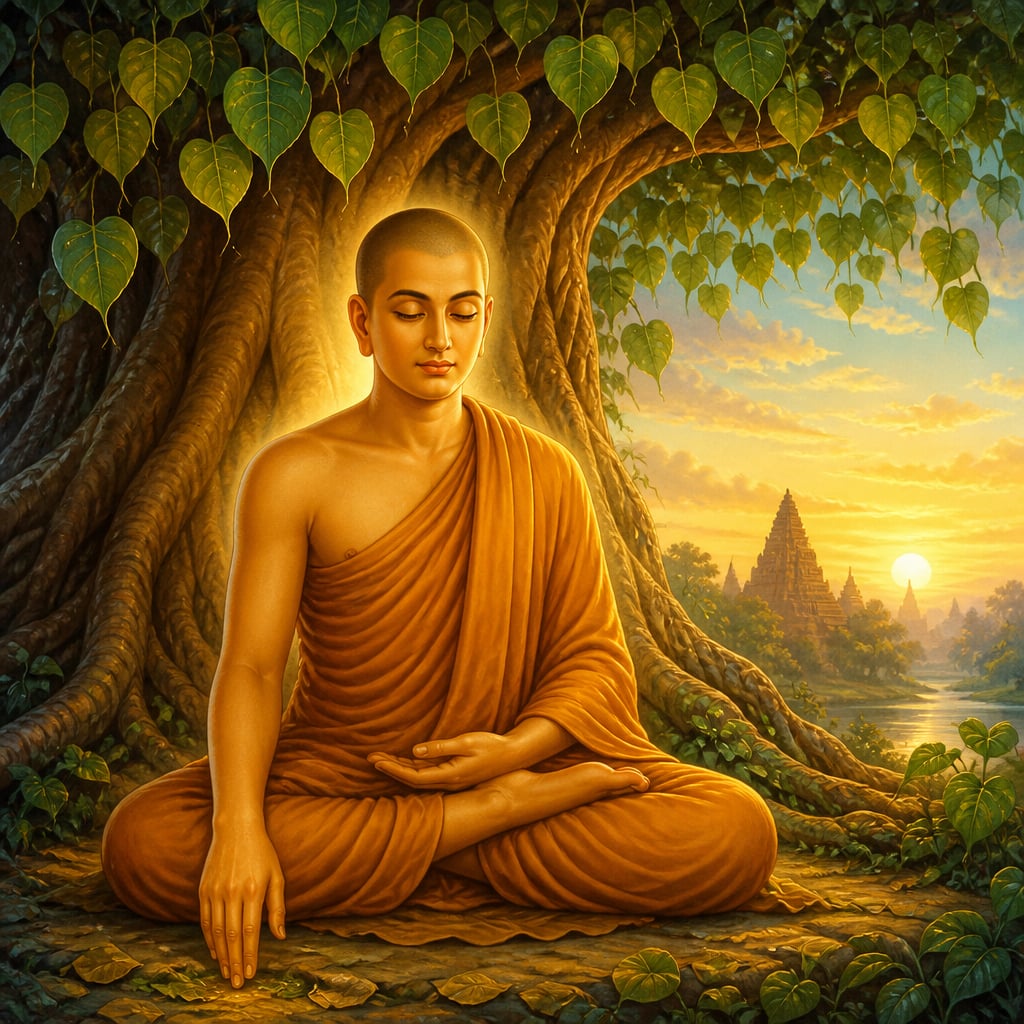
The Buddha sat under the Bodhi Tree seeking complete liberation from suffering, and found it. Twenty-five centuries later, practitioners sit in conference rooms and retreat centers seeking stress relief, and find that.
Both are real. Both have value. But they're not the same thing.
Goenka's great gift was making the technique accessible. Millions who would never have encountered vipassana now practice it. The technique is preserved; the container is sound; the results are genuine.
The invitation is to practice with awareness of the larger context. To recognize that you're inheriting a complete path to liberation, not just a stress-reduction technique. To take seriously the ethical foundations and the ultimate goal, even if you're uncertain about rebirth or nibbāna.
The Buddha wasn't offering self-improvement. He was offering self-understanding so complete that the self is finally seen through, and suffering ends. That possibility remains, for those who want to explore it.
Vipassana works. The question is: toward what end are you working?
After a ten-day retreat, don't let the precepts drop. Choose one to work with consciously: Right Speech, perhaps, noticing when you exaggerate, withhold truth, or speak harshly. The precepts aren't restrictions but practices. When you notice yourself breaking one, that's not failure, it's successful observation.
When difficult emotions arise, anger, fear, grief, apply the retreat instruction: observe the sensations in the body, maintain equanimity, remember anicca. The emotion, like all phenomena, will change. You don't need to act from it, analyze it, or push it away. Just observe, with the same quality of attention you brought to body scanning.
Key figures
S.N. Goenka
Burmese-Indian teacher who brought Vipassana meditation to the world through a standardized ten-day retreat format. Established over 200 centers globally, all teaching for free.
Founded Vipassana International Academy (Dhamma Giri) in India; established global network of centers; developed standardized teacher training; created audio-visual materials that ensure consistent instruction. His evening discourses, delivered in measured cadence, have become iconic, blending traditional teaching with modern accessibility.
U Ba Khin
Burmese lay meditation teacher who developed systematic methods for teaching vipassanā to householders while serving as Accountant General of Burma. Goenka's teacher and the source of his method.
Developed the body-scanning method that Goenka later systematized. Trained dozens of teachers who spread the practice beyond Burma. Demonstrated that the ancient technique could be adapted for modern conditions without losing its power.
Ledi Sayadaw
Burmese Theravāda Buddhist monk who initiated the lay meditation movement, teaching vipassanā to villagers and householders rather than reserving intensive practice for monastics.
Authored over 100 works on Buddhist philosophy and practice; trained hundreds of students, lay and monastic; demonstrated that vipassanā could be transmitted outside monastery walls. The entire modern Vipassana movement traces back to his innovation.
Case studies
S.N. Goenka's Global Standardization: Democratizing an Ancient Practice
When S.N. Goenka returned to India in 1969, vipassanā was virtually unknown outside monastery walls. The technique that the Buddha called 'the direct path to liberation' was practiced by a tiny fraction of Buddhists, primarily in Southeast Asian monasteries. Goenka's first course in Mumbai drew only a handful of students. But word spread: here was a practice that delivered results, taught by a businessman who spoke in terms educated Indians could understand, framed without the religious trappings that might alienate secular seekers. By the time of his death in 2013, Goenka had established over 200 centers worldwide. Millions had sat his courses. The format was identical everywhere: ten days, noble silence, specific schedule, taped discourses. A student in Brazil received the same instruction as a student in Belarus or Bangalore. This standardization was deliberate. Goenka recognized that personal teaching, while ideal, couldn't scale. By creating a precise curriculum - timed to the minute, scripted to the word - he ensured the technique would be transmitted accurately through multiple generations of teachers. The assistant teachers don't improvise; they hold the container. Critics note what's lost: the personal teacher-student relationship, adaptation to individual needs, the deeper scholarly context. Defenders point to what's preserved: the core technique, transmitted to millions who would otherwise never have accessed it. The donation-based model proved that ancient wisdom needn't be commercialized. Every course is free; centers are built and maintained by volunteers; the organization operates without wealth accumulation. This was radical in a wellness industry that increasingly monetizes meditation. The Goenka movement represents the largest successful transmission of a traditional meditation technique to modern lay practitioners. Whether it fully transmits the Buddha's path or a powerful but partial version of it remains debated.
The Satipatthana Sutta describes four foundations of mindfulness: body, feelings, mind, and dharmas. Goenka's Vipassana method draws primarily from the Burmese Theravada tradition transmitted through Sayagyi U Ba Khin, which emphasizes vedana (sensation) as the primary object of meditation, connecting directly to the Buddha's teaching on the relationship between craving and suffering.
The Goenka model influences all subsequent meditation movements. Apps like Headspace and Calm follow the standardization principle - identical content for every user. The question raised by Goenka's approach remains central: can ancient practices be transmitted at scale, or does the scaling inevitably change what's transmitted?
Goenka solved the scaling problem: how to transmit a practice that traditionally required years with a master to millions who have only ten days. His solution - standardization - preserved the technique while necessarily losing the personal adaptation. This trade-off defines modern meditation transmission: reach or depth, accessibility or completeness.
Goenka's 341 centers in 94 countries operate entirely on donations with zero marketing budget, yet maintain a year-long waitlist at most locations. This demonstrates that depth and rigor can scale without commercialization, directly challenging the assumption that accessibility requires dilution.
S.N. Goenka's Vipassana organization operates 341 centers in 94 countries, with over 200,000 students completing 10-day courses annually. A 2020 study found 65% of graduates maintained daily practice after one year.
Historical context
Buddha's Teaching (c. 5th century BCE) to Modern Revival (20th-21st century CE)
Living traditions
Vipassana in the Goenka tradition has become the most accessible form of intensive Buddhist meditation practice in the modern world. Its free courses, standardized format, and global network of centers have introduced millions to meditation who would never have entered a monastery. Critics note what's lost, the scholarly context, the personal teacher relationship, the explicit goal of nibbāna. Supporters point to what's gained, preserved technique, accessible format, measurable results. The debate over whether this represents faithful transmission or adaptation-dilution continues. Meanwhile, the courses fill, the waiting lists grow, and the technique spreads.
- Dhamma Giri, Igatpuri: The international headquarters of the Goenka Vipassana movement, established in 1976. This center in the mountains near Mumbai hosts continuous courses and is the site of major Vipassana events. The pagoda here contains relics and can seat thousands in meditation.
- International Meditation Centre, Yangon: The center established by U Ba Khin, where S.N. Goenka trained for fourteen years. Though the Goenka organization has separate centers, this original site maintains the lineage connection to the Burmese source of the teaching.
Reflection
- If you've sat a vipassanā retreat, what happened to the precepts after you returned home? Did the ethical guidelines become ongoing practice, or were they retreat-only rules? What would integrating them more fully into daily life look like?
- The kleśas (afflictions), ignorance, craving, aversion, pride, doubt, were identified 2,500 years ago. Can you recognize these patterns in your own mind? Which kleśa seems strongest in your current experience? How might observing it with equanimity, as vipassanā teaches, shift your relationship to it?
- Modern vipassanā often drops nibbāna (liberation) as the stated goal, emphasizing stress relief and emotional regulation instead. Is this a skillful adaptation that makes the practice accessible, or a fundamental dilution that changes what's being practiced? Can a technique be separated from its ultimate purpose?