The Missing Limbs: Ethics, Discipline, Devotion

What modern meditation strips away from the complete path

Modern meditation offers dhyāna without yama-niyama, technique without ethics, calm without character transformation. This capstone lesson explores what gets lost when meditation is severed from its moral and devotional context, and how saṃskāra theory illuminates both ancient and modern understandings of trauma and conditioning.

The Missing Limbs: Ethics, Discipline, Devotion

We have traced dhyāna's journey from liberation practice to stress relief, from monastery to office, from guru's cave to smartphone app. At each step, something was gained: accessibility, scientific validation, cultural acceptance. At each step, something was lost.
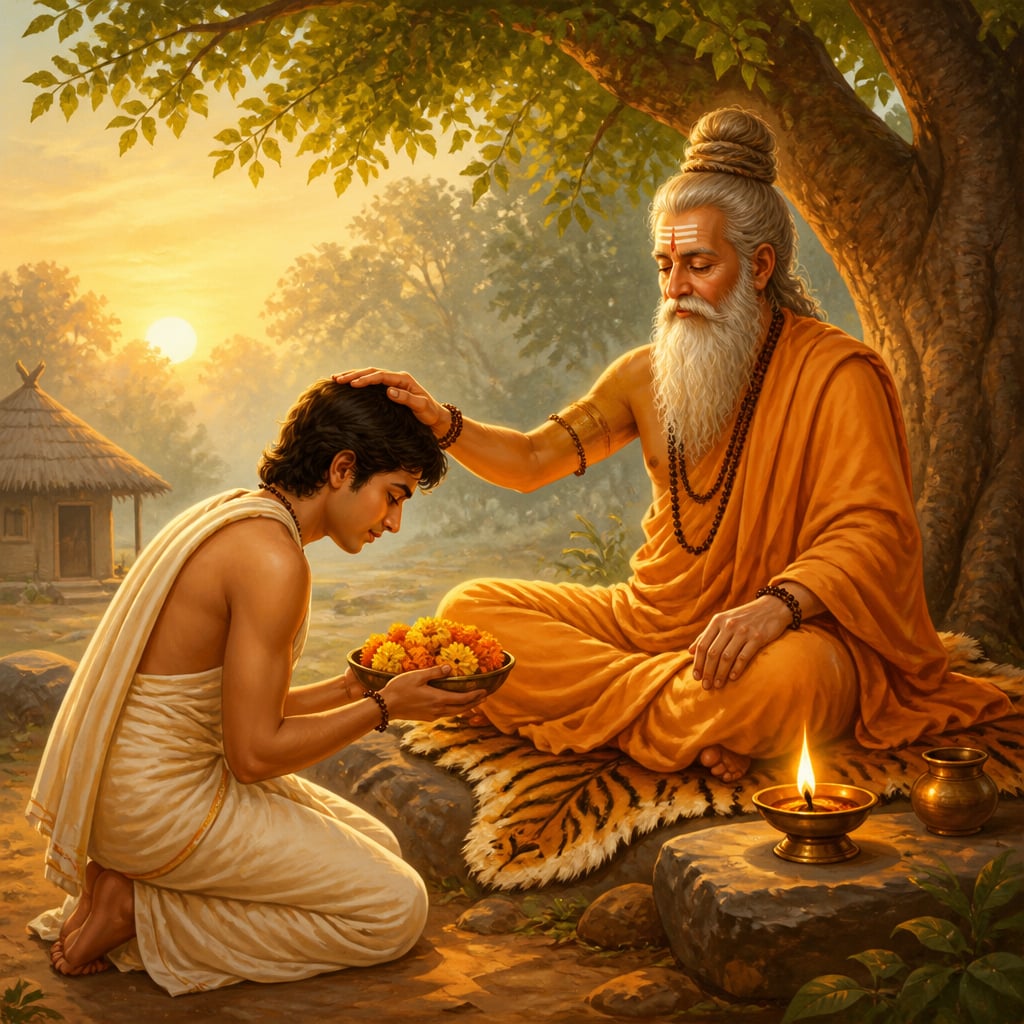
A guru and disciple in quiet transmission at dawn in a hermitage

This final lesson examines what has been lost most systematically: the ethical, disciplinary, and devotional foundations that traditional systems considered inseparable from meditation practice. Modern mindfulness offers technique without context, calm without transformation, peace without virtue.

The question we must ask: Is meditation without ethics still meditation? Or is it something else entirely, perhaps useful, perhaps even beneficial, but fundamentally different from what the traditions offered?

The Structure of the Complete Path

Patañjali's Aṣṭāṅga (Eight Limbs)

The Yoga Sūtras present meditation not as an isolated technique but as the seventh of eight interconnected limbs:

  1. Yama (ethical restraints), non-violence, truthfulness, non-stealing, moderation, non-grasping
  2. Niyama (observances), purity, contentment, discipline, self-study, surrender to the divine
  3. Āsana (posture), stable, comfortable sitting
  4. Prāṇāyāma (breath regulation), mastery of vital energy
  5. Pratyāhāra (sense withdrawal), internalization of attention
  6. Dhāraṇā (concentration), fixing attention on a single point
  7. Dhyāna (meditation), sustained flow of attention
  8. Samādhi (absorption), complete unity of meditator and object

Notice that dhyāna appears only after five preparatory practices. This isn't arbitrary sequencing, each limb creates conditions for the next.

Why Yama-Niyama First?

A mind disturbed by guilt from harmful actions cannot settle into meditation. A life of dishonesty creates constant anxiety about being discovered. Excessive consumption agitates the system. Grasping at possessions and relationships produces attachment that meditation then has to overcome.

The yamas remove gross obstacles. The niyamas cultivate positive qualities. Together, they create a life context in which meditation can actually work.

The Buddhist Noble Eightfold Path

Buddhism presents a parallel structure:

Wisdom (Paññā):

Ethics (Sīla):

Meditation (Samādhi):

The three trainings, wisdom, ethics, and meditation, are explicitly interdependent. The Visuddhimagga states: 'Sīla is the foundation for samādhi; samādhi is the foundation for paññā.' Ethics enables concentration; concentration enables wisdom.

What Modern Meditation Strips Away

Ethics: The Missing Foundation

MBSR explicitly removes ethical teaching to remain secular. Corporate mindfulness programs avoid moral content to remain 'neutral.' The result: meditation becomes a performance enhancer for whatever life you're already living.

A Wall Street trader meditating amid market screens

A Wall Street trader can meditate to become calmer while executing predatory financial strategies. A soldier can meditate to become more focused while conducting operations of questionable ethics. A corporate executive can meditate to manage stress while overseeing exploitative labor practices.

This isn't a failure of meditation, it's meditation functioning exactly as designed when ethics are removed. Without yama-niyama, meditation becomes a tool that serves any master.

Traditional systems prevented this by making ethical conduct prerequisite. You couldn't begin serious meditation practice without first committing to non-harm, truthfulness, and moderation. The practice was embedded in a moral universe.

Discipline: The Missing Container

Traditional meditation occurred within structures of discipline:

Temporal Discipline: Specific times for practice, brahma muhūrta (pre-dawn hours), sandhyā times (dawn, noon, dusk). The rhythm of practice was synchronized with natural cycles.

Spatial Discipline: Dedicated practice spaces, meditation halls, personal altars, sacred sites. The environment supported the practice.

Physical Discipline: Dietary restrictions, sexual conduct guidelines, sleep regulation. The body was prepared to support meditation.

Social Discipline: Community practice, teacher guidance, accountability structures. One didn't practice alone but within sangha.

Modern apps offer '10 minutes whenever you want, wherever you are.' The flexibility is genuine, and genuinely problematic. Without discipline, practice becomes optional, irregular, shallow. The 'whenever, wherever' approach treats meditation as consumption rather than cultivation.

Devotion: The Missing Heart

Perhaps most significant is the removal of the devotional dimension. Traditional meditation was not merely psychological technique but relationship, with teacher, with tradition, with the sacred.

Guru-Śiṣya Paramparā: The teacher-student lineage provided not just instruction but transmission, the living presence of awakened consciousness that could recognize and guide the student's development.

Iṣṭa Devatā: Personal deity practice gave meditation an object of love, not just focus. The heart's capacity for devotion was engaged, not bypassed.

Sevā: Service to teacher, community, and tradition kept the ego in check. You weren't meditating to become a better individual but to serve something larger.

Secular meditation strips all this away, leaving technique without relationship, method without devotion, practice without surrender. What remains may reduce stress. It's unlikely to produce the transformation the traditions promised.

Saṃskāra: The Ancient Understanding of Conditioning

The concept of saṃskāra bridges ancient meditation psychology and modern trauma theory, revealing both the sophistication of traditional understanding and the limitations of purely secular approaches.

What Are Saṃskāras?

Saṃskāra literally means 'that which is made together', impressions formed through experience that accumulate into tendencies. The Yoga Sūtras describe them as the 'seeds' (bījas) from which future thoughts, emotions, and actions grow.

Every experience leaves an impression. Repeated experiences deepen the impression into a groove (vāsanā). These grooves shape perception, we see what our saṃskāras predispose us to see. They shape response, we react according to established patterns, often before conscious choice can intervene.

Saṃskāras operate largely below conscious awareness. This is why mere understanding doesn't change deep patterns, the saṃskāra continues to influence perception and response regardless of intellectual insight.

The Mechanism of Conditioning

The Yoga Sūtras describe a cycle:

  1. Avidyā (ignorance), mistaking the temporary for permanent, the painful for pleasurable, the not-self for self
  2. Kleśas (afflictions), this ignorance generates five afflictions: further ignorance, ego-sense, attachment, aversion, and fear of death
  3. Karma (action), afflictions drive action
  4. Saṃskāra (impression), action leaves impressions
  5. Vāsanā (tendency), impressions accumulate into tendencies that perpetuate the cycle

This is a sophisticated model of psychological conditioning, developed millennia before modern psychology.

Saṃskāra and Modern Trauma Theory

Contemporary trauma research has arrived at remarkably similar understandings:

Implicit Memory: Trauma is stored in the body and nervous system, not just cognitive memory. This parallels the yogic understanding that saṃskāras are stored not just in mind but in the subtle body.

Triggering: Present stimuli activate past patterns, causing reactions disproportionate to current circumstances. This is exactly how saṃskāras are described as functioning, past impressions shaping present perception.

Body-Based Processing: Effective trauma treatment increasingly recognizes that intellectual understanding isn't sufficient; the body must process the stored experience. Yoga's emphasis on prāṇāyāma, āsana, and subtle body work reflects this understanding.

The Therapeutic Relationship: Trauma healing requires relational context, a safe connection with another nervous system. This parallels the guru-śiṣya relationship, where the teacher's presence provides the container for deep work.

Why Ethics Matter for Saṃskāra Work

Here's where traditional wisdom becomes practically relevant:

Ethical conduct reduces the formation of new negative saṃskāras. If you're meditating to release old patterns while creating new harmful ones through daily life, you're filling the bucket while trying to empty it.

Non-violence (ahiṃsā) prevents the saṃskāras of harm, both the guilt from harming and the fear of retaliation.

Truthfulness (satya) prevents the saṃskāras of deception, the constant vigilance required to maintain lies, the fear of exposure.

Non-grasping (aparigraha) prevents the saṃskāras of attachment, the anxiety of potential loss, the compulsion to acquire.

Meditation without ethics is like trying to clear water while continually stirring up mud.

The Path Forward

How might we approach meditation more completely, honoring traditional depth while acknowledging contemporary context?

Gradual Limb Integration

Rather than abandoning secular meditation or demanding immediate adoption of all traditional elements, consider gradual integration:

Stage 1, Establish Practice: Begin with whatever form of meditation is accessible, app-guided, secular mindfulness, simple breath awareness. The most important thing is to start.

Stage 2, Add Ethical Reflection: As practice stabilizes, begin examining your life through the lens of yama-niyama. Not as rigid rules but as areas of inquiry: Where does harm enter my life? Where am I not fully honest? What am I grasping at unnecessarily?

Stage 3, Develop Discipline: Gradually add structure: consistent practice times, dedicated space, supporting practices like prāṇāyāma and appropriate āsana.

Stage 4, Find Community: Seek sangha, community of practitioners. This might be a meditation group, yoga community, or spiritual study circle. Practice within relationship, not isolation.

Stage 5, Explore Devotion: For those inclined, investigate the devotional dimensions. This needn't mean adopting Hindu deities, it might mean cultivating gratitude, service, or connection with whatever you hold sacred.

Stage 6, Seek Guidance: When practice deepens, qualified guidance becomes essential. This might be a meditation teacher, spiritual director, or therapist trained in contemplative approaches.

Building and Joining Saṅgha

A traditional sangha practising together at dawn

The Buddha emphasized three refuges: Buddha (the awakened teacher), Dharma (the teaching), and Sangha (the community). Modern meditation tends to emphasize dharma (technique) while neglecting buddha (living guidance) and sangha (community).

Community practice offers what individual practice cannot:

Accountability: Others notice when you skip practice, struggle, or stagnate.

Mirror: Community reflects back patterns you can't see in yourself.

Support: Deep practice can be destabilizing; community provides holding.

Transmission: Some dimensions of practice are caught, not taught, through presence, not instruction.

Honoring the Source

Finally, there's the simple matter of intellectual honesty and cultural respect. The practices that apps label 'mindfulness' came from somewhere. They were developed by practitioners who dedicated their lives to spiritual realization, often at great personal cost.

We can use these practices without understanding their source, as we can use electricity without understanding physics. But using them while understanding, acknowledging, and honoring their source creates a different relationship.

This isn't about converting to Buddhism or Hinduism. It's about recognizing that we've received something valuable and considering what, if anything, we owe in return, perhaps simply gratitude, perhaps deeper study, perhaps supporting the living traditions that preserved these practices.

The Question Remains

Modern meditation offers genuine benefits: stress reduction, improved focus, better emotional regulation. These are not trivial in a world of chronic stress and scattered attention.

But the traditional systems offered something more: complete transformation of character, liberation from suffering's root causes, awakening to the nature of reality. They claimed these goals required more than technique, they required ethical foundation, disciplinary container, devotional heart, and community support.

Perhaps they were wrong. Perhaps meditation alone, stripped of all context, can produce the same results.

Or perhaps we're getting exactly what we've paid for: the fruit without the root, the calm without the clarity, the relaxation without the liberation.

The traditions remain available for those who want more. The techniques have been secularized; the path has not. The question each practitioner must answer: Is stress relief enough? Or is there something deeper calling?

Start where you are. If you have an established meditation practice, begin adding ethical reflection: Take one yama (e.g., satya/truthfulness) and observe it in daily life for a month. Notice where you're already aligned and where there's friction. Don't judge, just observe. When insight arises, adjust naturally. Then move to another yama. Simultaneously, add small disciplines: consistent practice times, dedicated space, perhaps simple prāṇāyāma. Integration happens gradually, forcing faster progress often produces resistance rather than transformation.

If no suitable community exists, consider starting one. This needn't be grand, even two or three practitioners meeting regularly creates saṅgha. Begin simply: monthly meetings to practice together and discuss experience. If local community isn't possible, online options exist, though in-person practice together has dimensions virtual connection cannot replicate. When seeking or building community, look for: emphasis on practice over ideology, ethical foundation, absence of guru-worship or cultic dynamics, and welcoming of questions. The best saṅgha is one where you can be honest about struggles and receive both support and appropriate challenge.

Key figures

Patañjali

Buddhaghosa

Bessel van der Kolk

Case studies

Saṃskāra and Modern Trauma Theory: Ancient Wisdom Meets Clinical Science

In the late 20th century, trauma research underwent a revolution. Clinicians noticed that traditional talk therapy often failed to help trauma survivors - patients could understand their trauma intellectually while remaining trapped in its patterns. Bessel van der Kolk, Peter Levine, and others developed body-based approaches recognizing that trauma is stored somatically, not just cognitively. The parallels between modern trauma theory and the ancient concept of saṃskāra are striking: **Storage**: Modern theory says trauma is stored in the body - in muscle tension, breath patterns, nervous system activation. Yogic theory says saṃskāras are stored in the subtle body (sūkṣma śarīra), particularly in the nāḍīs (energy channels). **Triggering**: Both systems describe how present stimuli activate past patterns. A trauma survivor's nervous system reacts to triggers as if past danger were present. Similarly, saṃskāras 'color' perception, causing us to see present situations through the lens of past experience. **Implicit Operation**: Both recognize that these patterns operate below conscious awareness. Knowing intellectually that a reaction is disproportionate doesn't stop the reaction - the saṃskāra or trauma response activates before conscious intervention is possible. **Body-Based Processing**: Van der Kolk advocates yoga, EMDR, and other body-based modalities because trauma is somatically stored. Traditional yoga's use of prāṇāyāma, āsana, and mudrā to purify nāḍīs addresses the same understanding - mental patterns have physical correlates that must be addressed physically. **Relational Healing**: Trauma theory emphasizes that healing happens in relationship - the therapist's regulated nervous system helps regulate the client's. This parallels the guru-śiṣya relationship where the teacher's realized presence creates a field that supports the student's transformation. Where they differ: **Scope**: Trauma theory focuses on specifically traumatic experiences. Saṃskāra theory includes all conditioning - not just dramatic trauma but the countless impressions that shape perception and response. **Goal**: Trauma therapy aims at symptom relief and functional improvement. Yoga aims at complete liberation from saṃskāric conditioning - a more ambitious but also more demanding goal. **Context**: Trauma therapy operates within a clinical, secular framework. Saṃskāra work traditionally occurs within comprehensive spiritual practice including ethics, discipline, and often devotion.

The Chandogya Upanishad (7.26.2) states that 'when food is pure, the mind is pure; when the mind is pure, memory is firm; when memory is firm, all bonds are loosened.' This describes an integrated body-mind pathway that epigenetic research is now validating at the molecular level through studies on meditation and gene expression.

The convergence of ancient and modern understandings validates both. Trauma research confirms that body-based practices can access and shift deeply held patterns - vindicating traditional yoga's methods. Saṃskāra theory offers trauma work a broader framework - recognizing that all conditioning, not just trauma, shapes experience, and offering practices refined over millennia for working with these patterns. For practitioners, the implication is clear: working with deep conditioning requires more than technique. It requires ethical foundation (to stop forming new negative patterns), disciplinary container (to sustain the intensive work), community support (for relational healing), and often qualified guidance (to navigate difficult material safely).

Ancient and modern systems independently arrived at similar understandings of how conditioning works Body-based approaches are necessary for patterns stored somatically Intellectual understanding alone doesn't change deep conditioning Working with deep patterns requires relational and contextual support, not just technique

Trauma-informed yoga and somatic experiencing therapies are now mainstream clinical tools, validating the ancient insight that deep conditioning lives in the body, not just the mind. Bessel van der Kolk's bestselling 'The Body Keeps the Score' essentially restates the samskara framework in neuroscientific language.

A 2022 study in Translational Psychiatry found that 8 weeks of meditation practice altered DNA methylation patterns in 61 genes associated with immune function and stress response, providing molecular evidence for meditation's biological effects.

Historical context

Classical Period to Contemporary (200 BCE - Present)

Living traditions

Reflection

More in Dhyāna: From Liberation to Stress Relief

All lessons in Dhyāna: From Liberation to Stress Relief · Indian Wellness Traditions: Modern Connections course