Danda: The Last Resort
When Force Becomes Necessary
The fourth method - danda - isn't license for violence. It's the carefully constrained use of coercive power, legitimate only when all peaceful alternatives have been exhausted. Kautilya understood that danda protects precisely because it's used sparingly and justly.
The Reluctant Sword
Chandragupta had tried everything.
Sama: He'd sent envoys to the rebellious governor with offers of pardon, reconciliation, and continued authority.
Dana: He'd offered increased share of provincial revenues, titles, a marriage alliance with the imperial family.
Bheda: He'd isolated the governor from his supporters, winning over key subordinates with addresses to their genuine concerns.
Nothing worked. The governor - a former Nanda loyalist with bitter memories - had sworn to destroy the Mauryas or die trying. He was fortifying his province, hiring mercenaries, and sending messages to other potential rebels.
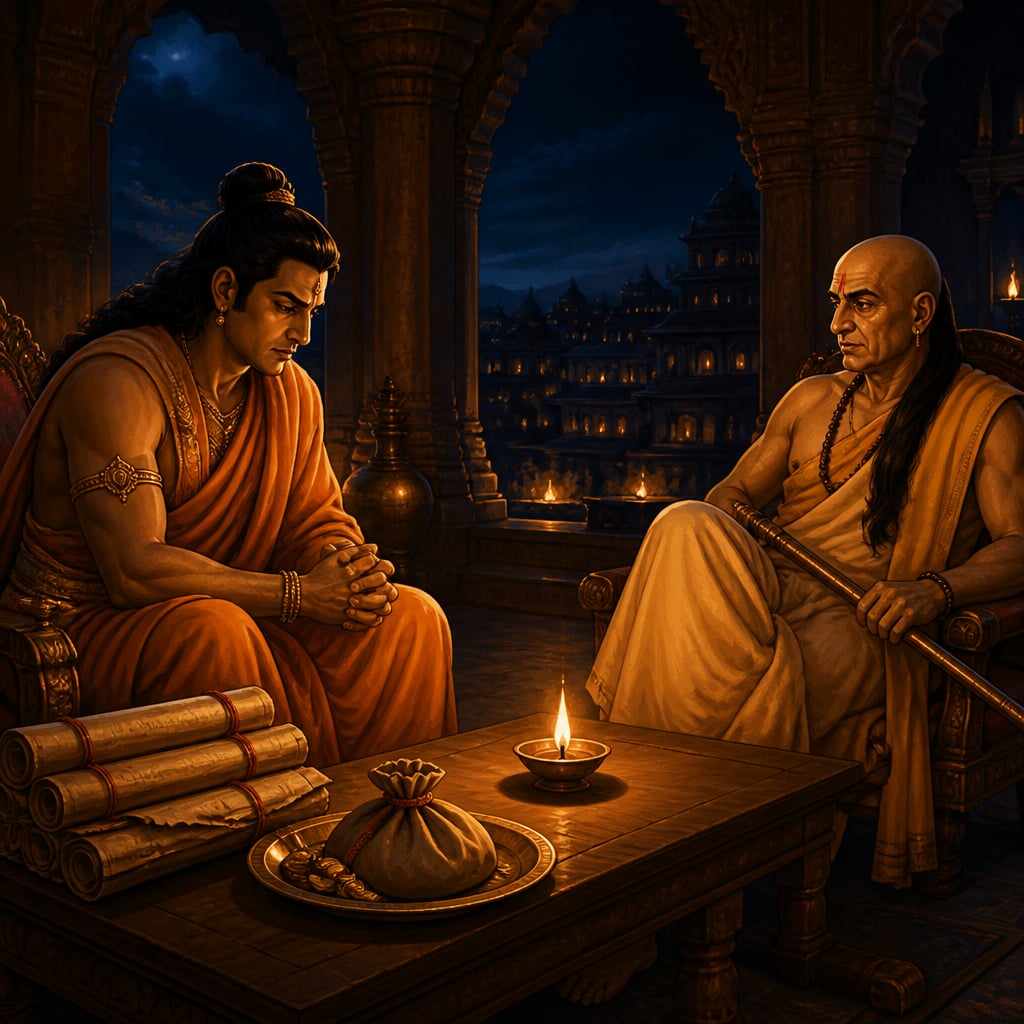
"Master," Chandragupta asked Kautilya, "what now?"
Kautilya looked old in the lamplight. "Now," he said quietly, "we use danda."
"दण्डः शास्ति प्रजाः सर्वाः दण्ड एवाभिरक्षति" "Danda governs all people; Danda alone protects them."
"But understand what this means. Every soldier who dies in this campaign - his blood is partly on our hands. Every widow, every orphan, every burned village. We carry this weight because we exhausted every alternative, and still this man threatens the peace of millions. Danda is not victory. It is tragedy made necessary."
What Danda Really Means
Danda literally means "rod" or "staff" - the symbol of royal authority and punishment. In Kautilya's framework, it represents:
Coercive power: The capacity to compel through force what cannot be achieved through persuasion, incentive, or manipulation.
Punishment: Consequences for wrongdoing that deter future violations.
Protection: The force that shields the innocent from those who would harm them.
Kautilya was clear: danda is the last of four methods, to be used only when sama, dana, and bheda have genuinely failed. But he was equally clear that danda is sometimes necessary.
The Paradox of Danda
Kautilya presents a profound paradox:
"न दण्डो न च राजा स्यात् न नेता न च पालकः" "Without danda, there would be no king, no leader, no protector."
Without the capacity for legitimate force, there can be no order. The strong would prey on the weak. The lawless would ignore the law. The violent would face no consequences.
But:
"अति दण्डो हि भूतानां विद्वेषमुपजायते" "Excessive danda creates hatred among people."
Too much force destroys what it claims to protect. Harsh punishment breeds rebellion. Constant coercion exhausts both ruler and ruled. The state that rules by fear alone collapses when fear fades.
The answer is measured danda - force that's proportionate, legitimate, and constrained by law.
When Danda Is Legitimate
Kautilya specified conditions for righteous use of force:
Against genuine threats: Not personal enemies or political opponents, but those who genuinely endanger the state and its people.
After alternatives exhausted: Danda is justified only when sama, dana, and bheda have been genuinely tried. Skipping to force forfeits legitimacy.
With proportionate response: The punishment should fit the crime. Excessive danda creates new injustices.
Within legal framework: Even the king is bound by law. Arbitrary punishment destroys the rule of law that makes governance possible.
For protection: The purpose of danda is protecting the innocent, not serving the ruler's ego or interests.
The Costs of Danda
Kautilya insisted that rulers understand what danda costs:
Material costs: War is expensive. Soldiers must be paid, equipped, fed, and their families supported. Campaigns drain treasuries.
Human costs: People die. Families are destroyed. Communities are shattered. These wounds may take generations to heal.
Political costs: Victory in war often creates new enemies. Conquered populations harbor resentment. Today's victory may plant seeds of tomorrow's rebellion.
Moral costs: Using force changes the user. The ruler who becomes comfortable with violence may lose the capacity for restraint.
Understanding these costs is not weakness - it's wisdom. The ruler who grasps what danda truly costs will use it sparingly.
Danda in Action

The campaign against the rebellious governor was swift and decisive.
Kautilya's intelligence network had mapped every fortress, identified every supply route, and cultivated informants throughout the province. When the Mauryan army moved, it knew exactly where to strike.
But Kautilya had also prepared something else: safe passage for soldiers who surrendered, amnesty for civilians who hadn't participated, and guarantees that the province's temples and traditions would be respected.
"We fight the governor," Chandragupta told his generals, "not his people. Every unnecessary death is our failure."
The campaign lasted three weeks. The governor, abandoned by supporters who saw which way events were moving, died in a final assault on his fortress. But casualties on both sides were minimal - because danda was applied with precision rather than rage.
Modern Danda: Legitimate Force
The principle of danda as last resort underlies modern just war theory:
Just cause: Force is justified only against genuine threats, not for conquest or revenge.
Last resort: All peaceful alternatives must be exhausted before force is used.
Proportionality: The force used must be proportionate to the threat faced.
Discrimination: Combatants and civilians must be distinguished; non-combatants protected.
Reasonable chance of success: Force shouldn't be used if victory is impossible; futile violence accomplishes nothing.
These principles, articulated by thinkers from Augustine to the Geneva Conventions, echo what Kautilya taught two millennia earlier.
Danda Beyond War
Danda applies beyond military force:
Law enforcement: Police power - the capacity to arrest, detain, and punish - is domestic danda. It must be exercised within legal constraints.
Economic sanctions: Restricting trade or financial access is economic danda. It should be proportionate and aimed at changing behavior, not punishing populations.
Disciplinary action: In organizations, the power to fire, demote, or penalize is internal danda. It must be fair, consistent, and within established procedures.
Parental authority: Even in families, danda exists - the power to set boundaries and enforce consequences. It must be loving, not abusive.
In every context, the principle remains: danda is legitimate when necessary, proportionate, and constrained by rules.
The Danda Mindset
Using danda wisely requires specific attitudes:
Reluctance: Force should feel like failure - the failure of all better methods. The ruler who's eager for danda has already lost.
Precision: Danda should be surgical, not indiscriminate. Target the threat, protect the innocent.
Restraint: Even in victory, restraint. Vengeance is not justice. Humiliation breeds future conflict.
Accountability: The user of danda is responsible for its effects, intended and unintended. Own the consequences.
Exit strategy: Before using force, know how it ends. Danda without a path to peace is just violence.
When Danda Corrupts
Kautilya warned about the moral dangers of danda:
Becoming what you fight: Using violence changes you. The ruler who fights monsters may become one.
Addiction to force: Success with danda can make it seem easier than alternatives. But every use makes the next more likely.
Loss of legitimacy: Excessive danda destroys the moral authority that makes governance possible. The tyrant rules only through fear - and fear eventually fades.
Creating enemies: Today's defeated foe is tomorrow's rebel. Harsh treatment ensures he'll never forget or forgive.
The wise ruler uses danda to restore peace, not to dominate. The goal is always to return to sama - negotiation, cooperation, mutual benefit.
Your Turn
Think of a situation where you have some form of authority - as a parent, manager, leader, or simply someone with influence.
What is your "danda"? What coercive power do you have? The ability to fire, punish, withhold, exclude?
When do you use it? Do you reach for authority quickly, or only after exhausting alternatives?
How do you use it? Is your exercise of power proportionate, consistent, and constrained by principles?
What does it cost? Every use of authority has costs - to relationships, to trust, to your own character. Are you aware of them?
The rebellious governor had to be stopped. His continued defiance would have encouraged others, destabilized the empire, and ultimately cost more lives than the campaign to remove him. But Chandragupta carried the weight of that necessity for the rest of his life. That weight - the reluctance to use force, the awareness of its costs, the commitment to restraint - is what makes danda legitimate. Without it, danda is just violence.
Max Weber defined the state as having 'monopoly on legitimate use of force.' But legitimacy requires restraint. Constitutional democracies constrain state violence through law, courts, and civil liberties.
Kautilya places danda fourth in sequence - after sama, dana, and bheda have been tried. This structural constraint ensures force is genuinely last resort, not first option. The sequencing itself creates legitimacy.
The Mauryan campaign against the rebellious governor gained legitimacy precisely because every alternative had been tried. Soldiers, subjects, and allies could see that force was truly necessary.
CIA coined 'blowback' for unintended consequences of operations. Military strategists distinguish between tactical success and strategic victory - winning battles while losing wars through alienating populations.
Kautilya integrates this warning into his core doctrine. The ruler must understand that today's excessive danda plants seeds of tomorrow's rebellion. Restraint isn't weakness - it's strategic wisdom.

Ashoka's Kalinga campaign achieved military victory but at such human cost that Ashoka himself was transformed. The conquered population's suffering haunted him, leading to his famous conversion and policy changes.
Rule of law requires that law applies equally to all. Constitutional provisions for equal protection (14th Amendment in the US) codify what Kautilya understood: legitimacy requires consistency.
Kautilya connects equal application to dharma - it's not just practical but morally required. The ruler who exempts friends from punishment has violated dharma, regardless of political convenience.
Chandragupta's own relatives were not exempt from law. The Mauryan system applied punishment equally across classes - revolutionary for its time and essential to the empire's legitimacy.
Verses
दण्डः शास्ति प्रजाः सर्वाः दण्ड एवाभिरक्षति
daṇḍaḥ śāsti prajāḥ sarvāḥ daṇḍa evābhirakṣati
Danda governs all people; Danda alone protects them.
Without legitimate force, there's no order - the strong prey on the weak, the lawless ignore the law. But this sutra doesn't glorify violence; it acknowledges that protection requires the capacity to enforce.
Book 1, Chapter 4, Verse 3-4 (R.P. Kangle)
अति दण्डो हि भूतानां विद्वेषमुपजायते
ati daṇḍo hi bhūtānāṃ vidveṣam upajāyate
Excessive punishment produces hatred among people.
This is Kautilya's crucial counterbalance. Force may be necessary, but excessive force destroys its own purpose.
Book 1, Chapter 4, Verse 10-11 (L.N. Rangarajan)
समदण्डः प्रजासु स्यात् धर्मेण परिपालयन्
sama-daṇḍaḥ prajāsu syāt dharmeṇa paripālayan
Punishment should be equal among subjects, protecting them according to dharma.
Danda must be impartial - applied equally regardless of status. And it must serve dharma - righteous purpose, not personal vendetta.
Book 1, Chapter 4, Verse 8-9 (R. Shamasastry)
Case studies
Ashoka's Kalinga War
Around 260 BCE, Emperor Ashoka invaded Kalinga, a prosperous coastal kingdom that had resisted Mauryan expansion. The war was devastating - Ashoka's own inscriptions record 100,000 killed, 150,000 deported, and many times that number who perished from famine and disease.
By Kautilyan standards, the Kalinga war raises questions. Had sama, dana, and bheda been genuinely exhausted? Was the force proportionate to the threat Kalinga posed? Did Ashoka consider the human costs before deploying such overwhelming violence?
Ashoka won militarily but was so horrified by the suffering that he converted to Buddhism and renounced aggressive warfare. His rock edicts express profound remorse: 'The Beloved of the Gods felt remorse... the slaughter, death, and deportation of people is extremely grievous.'
Even successful danda carries moral weight. Ashoka's transformation shows what happens when a ruler truly confronts what force costs. His later reign - emphasizing dhamma, welfare, and moral persuasion - represents an alternative path to governance.
The human cost of military intervention remains the central challenge in foreign policy debates. The Iraq War's aftermath, the Syrian civil war, and ongoing conflicts in Sudan and Myanmar all force the same reckoning: even when force achieves its immediate objective, the downstream consequences often exceed what any cost-benefit analysis predicted.
Ashoka's Rock Edict XIII records the Kalinga War casualties: 100,000 killed, 150,000 deported, and many times that number who perished afterward. His empire then pivoted to building 84,000 stupas and establishing hospitals for humans and animals.
Historical context
c. 4th century BCE
Ancient India's political landscape was shaped by constant warfare among competing kingdoms. Kautilya's genius was recognizing that sustainable power required more than military dominance - it required legitimate authority that populations would accept.
Kautilya's treatment of danda anticipates modern just war theory by two millennia. His insistence on restraint, proportionality, and legitimate purpose reflects deep wisdom about what makes force acceptable - wisdom that remains relevant in an age of nuclear weapons and asymmetric warfare.
Living traditions
Kautilya's teachings on danda underlie modern concepts of legitimate force. Just war doctrine, laws of armed conflict, police use-of-force policies, and corporate disciplinary procedures all grapple with questions Kautilya addressed: When is force legitimate? What constraints must govern its use? How do we prevent necessary force from becoming tyranny?
- Just War Theory: The ethical framework governing when war is justified and how it should be conducted echoes Kautilyan principles of last resort, proportionality, and protection of non-combatants
- Dhauli Peace Pagoda: Site where Ashoka is believed to have surveyed the carnage of the Kalinga war and experienced his transformation. The white peace pagoda, built in 1972, commemorates his conversion from violence to dharma.
- Ashoka's Rock Edicts: Ashoka's rock edicts express his remorse over Kalinga and commitment to dhamma. The Kalinga rock edicts at Dhauli specifically address his transformation.
Reflection
- Think of a situation where you used some form of authority or force. Did you genuinely exhaust alternatives first, or did you skip to coercion because it seemed easier?
- Kautilya says danda 'alone protects' - yet excessive danda creates hatred. How do you reconcile these apparently contradictory statements?
- What makes the use of force legitimate? Is it the cause, the process, the outcome, or something else? Can force ever be truly just?